Mail Slot Door Versus Wall Mount Box Comparison
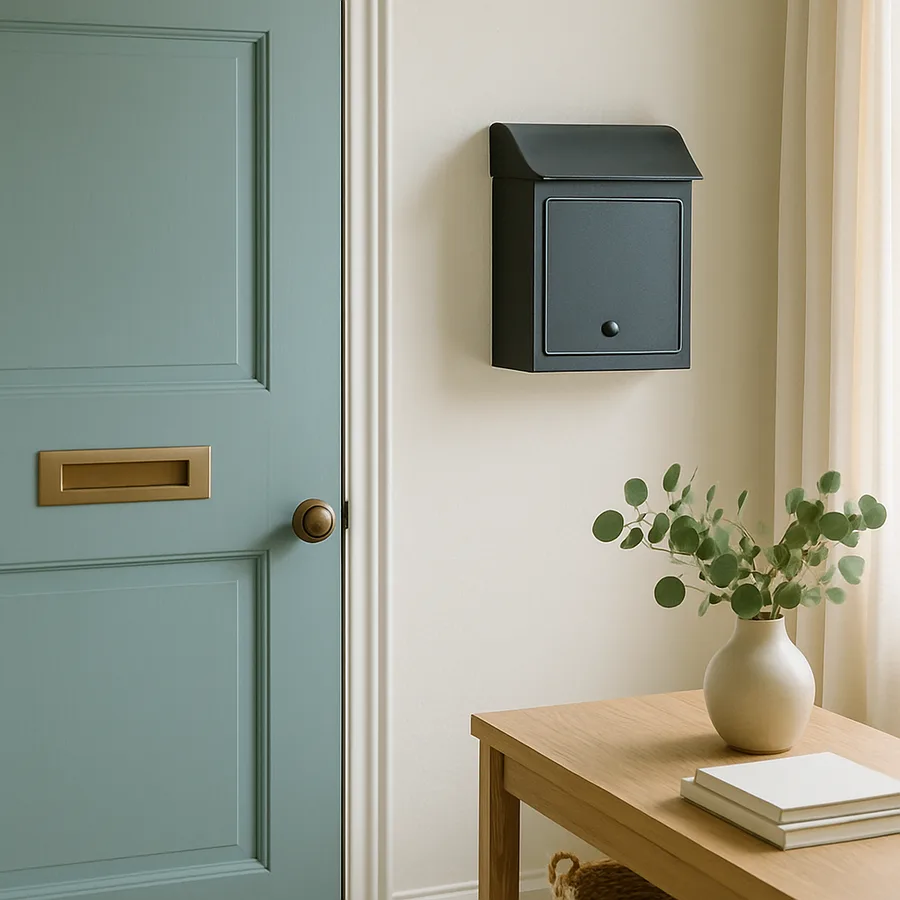
Mail delivery is one of the few daily rituals that still happens at the front of the house. The way mail enters your home - through a slot cut into the door or into a box mounted beside it - shapes the entry's appearance, your routine, and the security of every envelope that arrives. Choosing between a door-mounted mail slot and a wall-mount mailbox is therefore a decision worth thinking through carefully, especially during a renovation or new build when changing course later means patching holes.
This comparison covers security, weather resistance, accommodation of modern mail and packages, installation cost, curb appeal, and the practical day-to-day differences that homeowners rarely consider until they live with their choice. Each option has clear strengths, and the right pick depends heavily on your climate, your front door material, and how much package volume your household receives.
How Each Option Actually Works
A door mail slot is a rectangular cutout, typically 10 to 13 inches wide and 1.5 to 3 inches tall, finished with a hinged metal flap on the exterior and either a matching flap, a brush seal, or a basket on the interior. Mail drops directly into the home onto the floor or into a catch device behind the door. The slot is part of the door itself, so it travels with the door if you ever replace the slab.
A wall-mount mailbox is a separate container fixed to the wall beside or near the front door, usually at or just above shoulder height. The carrier deposits mail through an opening in the box, and you retrieve mail by opening a hinged lid or front panel - sometimes locked, sometimes not. The mailbox stays with the wall, independent of the door.
Both options satisfy United States Postal Service delivery requirements when properly installed. The USPS Domestic Mail Manual specifies minimum opening sizes (the slot must be at least 1.5 by 7 inches) and mounting height ranges (typically 41 to 45 inches from the ground to the bottom of the slot). Check the current standards before installing either option, particularly if you live in a community with specific carrier requirements.
Security Differences in Practice
Security is where the two options diverge most sharply, and it is where most homeowners underestimate the gap.
Door slots are inherently more secure for a simple reason: mail enters the inside of your home immediately. Once an envelope drops through the slot, it sits behind a locked door, beyond the reach of porch pirates, casual thieves, and curious passersby. The mail is as secure as the rest of your house. There is no window of vulnerability between delivery and retrieval.
Wall-mount mailboxes vary widely. An unlocked decorative box offers essentially no security - anyone walking past can lift the lid and remove mail. A locked drop-style mailbox, where mail enters through a one-way slot and exits only with a key, offers strong protection comparable to a door slot. A 2023 report by the National Association of Letter Carriers identified mail theft as a growing concern in suburban areas, with locked wall boxes recommended as a meaningful deterrent when door slots are impractical.
If your neighborhood has any history of mail or package theft, this consideration alone may decide the question. A door slot or a high-quality locked wall box are both reasonable; an unlocked decorative wall box is increasingly hard to recommend in many regions.
Weather, Drafts, and Energy Performance
Cutting a hole in a front door has consequences. The slot creates a path for air, sound, and sometimes water to move between the outside and the inside of your home - a path that did not exist before installation.
Modern insulated door slots include foam-filled flaps, brush seals, and gasketed interior covers that minimize air infiltration. Quality units approach but do not match the energy performance of the surrounding door panel. In cold climates, a low-quality slot can produce a noticeable cold draft along the entryway floor on windy winter days. The Department of Energy notes that small gaps in the building envelope contribute disproportionately to heating costs in cold-climate homes.
Wall-mount mailboxes have zero impact on door performance. The door remains an uninterrupted insulated panel. The mailbox itself is exposed to weather and protects only the mail inside it, not the home. In heavy rain or driving snow, a wall mailbox may collect moisture if its hood is not designed for the local climate, leading to damp envelopes. Inspect any candidate wall box's drainage features and hood depth before buying for a wet climate.
For sound, slots transmit more exterior noise into the entryway than walls do. If your front door faces a busy street, a slot may noticeably increase audible traffic inside the foyer, particularly when the inner flap is not gasketed.
Package Handling in the Era of E-commerce
Neither option is designed for packages. This is the biggest practical limitation both share, and it deserves honest discussion.
Door slots can accept large envelopes and small flat parcels but nothing thicker than the slot opening - typically 2 to 3 inches at most. Magazines, manila envelopes, and slim boxes fit; standard shoe boxes and most e-commerce parcels do not. Anything that does not fit gets left on the porch, which defeats the security advantage of the slot for that specific delivery.
Wall-mount mailboxes vary enormously in capacity. Small decorative boxes hold only standard envelopes. Larger drop-style parcel boxes - sometimes called package mailboxes or curbside parcel lockers - can accept boxes up to roughly 12 by 15 by 6 inches. These hybrid mailbox-parcel-locker designs have grown significantly in market share over the past five years as e-commerce volume has surged.
If your household receives more than a few packages per week and you care about keeping them secure, a large locked wall-mount parcel box outperforms a door slot for total mail and package security. The slot still wins for traditional letter mail, but letters are an ever-smaller share of what most households receive. According to the USPS, household package volume has grown roughly threefold over the past decade while first-class letter volume has fallen by half.
Curb Appeal and Architectural Fit
Both options can look beautiful or terrible depending on selection and installation. Architecture and door material are the dominant factors.
Door slots integrate seamlessly with traditional architecture. On a paneled Colonial, Georgian, or Federal door, a brass or bronze slot positioned in the lower rail or centered on a stile reads as authentic and intentional. The slot becomes part of the door's symmetry. On modern flush doors, particularly fiberglass or steel doors, slots can look awkward unless carefully placed. Many fiberglass door manufacturers void their warranties when the door is cut for a slot, so check before drilling.
Wall mailboxes work across more architectural styles. A black metal mailbox suits Craftsman, modern farmhouse, and Spanish Revival entries. A polished brass or copper box suits traditional and transitional homes. A sleek powder-coated box suits modern and mid-century designs. Because the box is detached from the door, you have flexibility to replace or update it without altering the door itself.
Have you considered how the mailbox will look against your siding or stone? A glossy brass box mounted on rough natural stone often looks fussy; the same box on smooth painted siding looks elegant. Match the box's visual weight to its background, not just to the door.
Installation Cost and Practical Logistics
Installation costs differ significantly between the two options.
A door slot costs roughly $40 to $250 for the hardware and another $100 to $300 for professional installation if you cannot do it yourself. The installer measures, marks, and cuts a rectangular opening through the door, then mounts the exterior and interior flaps with through-bolts. The job takes about an hour for an experienced installer on a standard wood door. Cutting fiberglass or steel doors is more complex and may not be advisable at all for some products.
A wall-mount mailbox costs roughly $35 to $400 for the box itself and $50 to $150 for installation if you need an electrician or carpenter to mount it securely. Mounting onto wood siding or sheathed walls is straightforward; mounting onto brick, stone, or stucco requires masonry anchors and more time. The job typically takes thirty minutes on wood and an hour or more on masonry.
For renters or anyone planning to move soon, wall boxes are usually easier to remove without leaving large repairs behind. A door slot leaves a rectangular hole that requires either replacing the door or installing a slot cover plate, which rarely looks as good as an intact door.
Carrier Habits, Accessibility, and Neighborhood Norms
Beyond the hardware itself, a few real-world factors quietly shape whether your mail solution actually works day after day. These are the considerations that experienced installers and longtime homeowners raise that catalogs and product reviews rarely mention.
The first is carrier habits. Mail carriers walk the same route hundreds of times per year, and they develop strong preferences for the homes that are easy to deliver to. A door slot at a comfortable height with a wide enough opening makes their job faster; a wall mailbox positioned beside the door at standing height does the same. A mailbox tucked behind a column, blocked by a screen door, or mounted at an awkward angle slows the carrier and increases the chance that mail gets bent, jammed, or left on the porch instead of in the box. Walk the path from the sidewalk to your delivery point and ask honestly whether a stranger carrying a heavy bag of mail will find your setup intuitive.
The second is accessibility for aging in place. A door slot puts mail on the floor inside your home, which means bending over to retrieve it. For homeowners with mobility limitations or planning to age in their home, an interior catch basket mounted at waist height transforms the slot from a barrier into a convenience. The Americans with Disabilities Act guidelines for accessible mail delivery in multi-family housing offer useful benchmarks even for single-family homeowners thinking ahead. Wall-mount boxes, depending on their mounting height, can be easier or harder to use than slots; mounting closer to elbow height rather than shoulder height suits a wider range of users.
The third is neighborhood norms and HOA rules. Some historic districts restrict any change to the original door, which can prohibit cutting a slot into a contributing house. Some homeowner associations require specific mailbox styles or locations. Before purchasing either option, check whether your neighborhood has rules - most public records are searchable online - and look at neighboring homes to gauge whether your choice will fit in or stand out. Have you noticed which option dominates on your street? That single observation often reveals the local default more clearly than any catalog.
The final factor is weatherproofing the transition after installation. Door slots need a quality interior hood or catch basket to prevent rain from blowing through during storms; without one, mail can land on a wet doormat. Wall-mount boxes need adequate drainage at their bottom edge to prevent standing water in heavy rain. A few minutes of attention to these details at install time saves years of soggy envelopes.
Conclusion
Choosing between a door slot and a wall-mount mailbox is a question of priorities. If security of standard mail matters most and your architecture favors traditional detailing, the door slot is hard to beat - letters land safely inside your locked home the moment the carrier walks away. If you receive significant package volume, value a draft-free front door, or own a home whose door does not lend itself to cutting, a quality locked wall-mount box serves you better.
For many households the best answer is actually both: a small decorative door slot for the satisfying daily ritual of letter mail dropping into the foyer, paired with a larger locked wall-mount parcel box for everything thicker than a magazine. This combination preserves the architectural charm of a traditional entry while solving the real-world problem of growing package volume. The added cost is modest compared with the convenience over years of use.
Whichever direction you choose, invest in quality hardware. Cheap slot flaps rattle, cheap mailbox lids sag, and cheap finishes fail within a season of weather. A solid brass slot or a heavy steel mailbox with a powder-coat finish will outlast the choice itself. You can find detailed installation guidance at USPS and curb-appeal direction from the National Association of Home Builders if you want to compare current product standards before purchasing.
Ready to move forward? Walk to your front door, look at it honestly, and ask which option fits the architecture, your security needs, and your package volume. Photograph the door and the area beside it, sketch a slot or a box in each location, and live with the sketch for a few days. The answer almost always becomes obvious by the end of the week.
More Articles You May Like



Comments
Post a Comment