RGB Color Changing Bulbs For Mood Lighting In Bedrooms
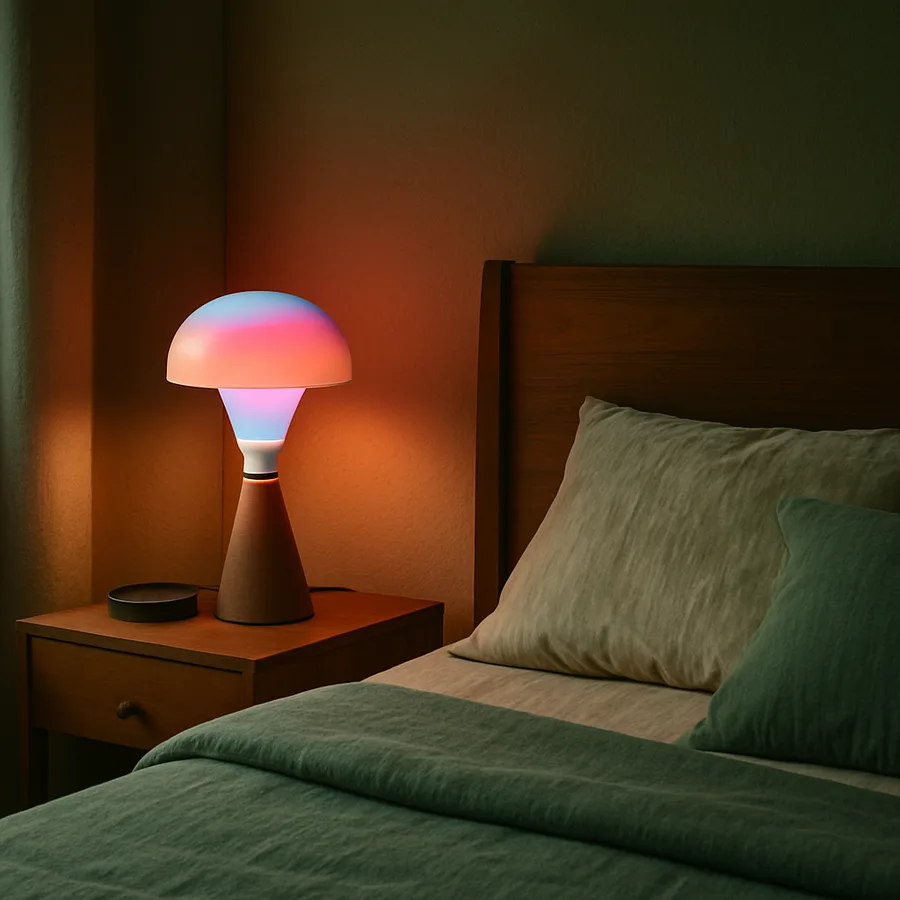
A bedroom is the most personal room in any home, the one space where the lighting must serve sleep, intimacy, reading, dressing, and the slow rituals of beginning and ending the day. RGB color changing bulbs have transformed what is possible in this room by offering not just dimming and color temperature shifts but the full spectrum of saturated color, programmable scenes, and synchronized effects. Used thoughtfully, they elevate a bedroom from a place where you sleep into a small theater of mood and emotion. Used carelessly, they produce something closer to a teenager's gaming setup. This guide is about getting it right.
Understanding RGB Versus RGBW And RGBWW Bulbs
It helps to think of RGB bulbs as a Venn diagram of capabilities rather than a single feature. The RGB channels handle saturated color and mood. The white channel (or two white channels in RGBWW designs) handles functional lighting and color quality. The control system handles scenes, scheduling, and integration. A bulb that excels in one of these dimensions but skimps on the others tends to produce frustration in daily use, which is why the most successful RGB bedroom installations choose hardware that does all three competently.
The acronym RGB stands for red, green, and blue, the three primary colors of additive light mixing. An RGB bulb contains separate LED chips for each of these three colors, plus driver electronics that vary the brightness of each chip independently. By mixing the three primaries, the bulb can produce nearly any visible color, including the pastels and saturated jewel tones that ordinary white-only bulbs cannot reach.
Pure RGB bulbs have a significant limitation: their "white" is the simultaneous emission of all three color channels at full brightness, which produces a slightly purple-tinted or greenish white rather than a true neutral. To address this, manufacturers have introduced RGBW bulbs that add a fourth dedicated white LED chip and RGBWW bulbs that add two white chips at different color temperatures (warm and cool) for true tunable white capability alongside the RGB color range.
For bedroom use, RGBWW is almost always the right choice. The two dedicated white chips deliver high-quality, high-CRI white light for reading, dressing, and general task work, while the RGB channels handle the mood and scene effects. Pure RGB bulbs are perfectly adequate for accent fixtures behind a headboard or under a bed frame where you never need them to produce reading-quality white light. ENERGY STAR certified color-changing bulbs are now widely available and represent the safest starting point for any new buyer.
One specification to scrutinize on any RGB bulb spec sheet is the lumen output specifically in the white modes versus the saturated color modes. A bulb that produces 800 lumens in white but only 200 lumens in deep red is normal because color filtering inherently sacrifices brightness. A bulb that produces 800 lumens in white but only 60 lumens in deep red is a low-grade product with weak red channel performance, and it will disappoint in any scene that relies on rich color saturation.
Smart Hub Ecosystems And Control Platforms
RGB bulbs require a control system. Unlike a fixed-color or even a tunable white bulb, you cannot operate an RGB bulb meaningfully from a simple wall switch. The four major control ecosystems each have strengths and tradeoffs worth understanding before you commit.
Philips Hue uses Zigbee through a dedicated bridge that connects to your home network via Ethernet. The Hue system is the most mature, the most reliable, and supports the widest range of third-party integrations. The downside is cost: Hue bulbs run $30 to $60 each and the bridge adds another $50 to $70. Quality and consistency are excellent.
LIFX uses Wi-Fi directly with no hub required. Each bulb connects independently to your router, which simplifies setup but increases router load in large installations. LIFX bulbs typically have higher brightness ratings than equivalent Hue bulbs and competitive color accuracy. Prices are similar to Hue.
Matter-compliant bulbs from a growing list of manufacturers, including IKEA Tradfri, Innr, and recent Sengled products, work across Apple HomeKit, Google Home, Amazon Alexa, and SmartThings without ecosystem lock-in. Pricing is more competitive ($12 to $25 per bulb) but feature sets are sometimes more limited than the flagship Hue and LIFX products. For a new bedroom deployment, Matter is increasingly the smart default.
The fifth option, increasingly competitive in 2025 and 2026, is the Apple Home ecosystem built directly on Matter. With a HomePod or Apple TV acting as the home hub, Matter-certified RGB bulbs can be controlled by Siri, scheduled through the Home app, and automated through Shortcuts. The user experience is polished, the setup is genuinely simple, and the cost is moderate. For households already invested in Apple devices, this is often the path of least resistance.
Designing Scenes For Sleep, Intimacy, And Wake
The magic of RGB bedroom lighting lives in the scenes you design, not in the hardware itself. A scene is a saved combination of bulb states (color, brightness, and color temperature) that can be activated with a single tap, voice command, or schedule trigger. Well-designed scenes turn a bedroom into a responsive environment that anticipates the activity at hand.
Consider four foundational scenes. A wake scene that gradually rises from off to a warm 2700K white at 70 percent brightness over 15 minutes, simulating a sunrise. A day scene at neutral 4000K and full brightness for cleaning, exercise, or video calls from bed. An evening scene at warm 2400K and 40 percent brightness with subtle amber RGB accent lighting for reading and relaxation. A sleep scene at deep red 1800K equivalent at 5 to 10 percent brightness for the final 30 minutes before lights-out, designed to preserve melatonin production.
The red sleep scene is worth a deeper explanation. Multiple studies cited by the U.S. Department of Energy show that long-wavelength red light has minimal melatonin-suppressing effect compared to blue-shifted white light. Astronomers and submariners have used red lighting for decades to preserve night vision; the same principle helps your circadian rhythm wind down into natural sleep onset. A bedroom equipped with RGB bulbs can dial down to actual deep red instead of merely "warm white," which is a meaningful difference for sleep quality.
One nuance for couples or households with mixed sleep schedules: bedroom RGB scenes should respect the lowest common denominator, which is whoever needs the dimmest light to fall asleep. A scene optimized for one person at full brightness can keep their partner awake even if it feels comfortably dim to the first person. Design scenes around the more light-sensitive sleeper and let the less sensitive sleeper compensate with a focused reading lamp if needed.
Bulb Placement And Layering For Visual Interest
One bulb is rarely enough for sophisticated bedroom mood lighting. Professional lighting designers think in layers: ambient (general overhead illumination), task (reading or dressing), and accent (decorative or directional). RGB bulbs can fill any of these layers, but they shine brightest in the accent role where their color flexibility makes the most visual impact.
Consider placing two or three RGB bulbs in the bedside lamps for the primary mood expression, paired with a single high-CRI white bulb in the overhead fixture for task and ambient light. Add an RGB strip behind the headboard or along the underside of a floating bed frame for atmospheric backlighting. The combination creates depth and dimension that a single overhead bulb, no matter how sophisticated, cannot achieve alone.
Bulb count matters for scene quality. A bedroom with two RGB bulbs feels intentional. A bedroom with five or six RGB bulbs feels theatrical. A bedroom with ten or more RGB bulbs starts to feel cluttered unless the scenes are designed with restraint. The Illuminating Engineering Society, the IES, generally recommends a total of 10 to 20 lumens per square foot for bedroom ambient lighting; budget your RGB bulbs against that target rather than installing more than the room can absorb gracefully.
Common Mistakes And How To Avoid Them
The most common mistake new RGB bedroom users make is leaving the bulbs at full saturation when a desaturated pastel would look more sophisticated. A vivid hot-pink bedroom photographs well on social media but lives uncomfortably as a daily environment. Pull saturation down to 30 or 40 percent for ambient scenes and reserve full saturation for brief moments like party mode or holiday accent lighting.
The second common mistake is using cool blue or green light close to bedtime. Both colors are highly effective at suppressing melatonin, even at low brightness levels. Reserve cool colors for morning wake routines, midday alertness scenes, or social occasions and avoid them in the hour before sleep. The 2 percent of the visible spectrum centered on 480 nanometers blue light is the most disruptive to circadian rhythm according to research summarized by ENERGY STAR.
The third mistake is over-automation. Bedroom lighting should feel responsive and helpful, not robotic. Limit automatic scene changes to two or three transitions per day (wake, evening shift, sleep) and let everything else respond to voice or app commands. Bedrooms where the lights change unexpectedly every 20 minutes wear out their welcome quickly with the people who live in them.
Cost, Reliability, And Long-Term Considerations
Building out a complete RGB bedroom lighting plan typically costs between $150 and $500 depending on bulb count and ecosystem choice. A modest setup with two bedside lamp bulbs and one overhead bulb in the Hue ecosystem runs about $200 with the bridge. A more elaborate setup with five bulbs plus accent strips can approach $500 in premium ecosystems or stay closer to $250 in the Matter ecosystem with budget brands.
Reliability has improved markedly across the industry. The first generation of smart RGB bulbs from 2014 to 2017 suffered from firmware issues, color drift, and premature LED failure. Current-generation products from the major brands routinely deliver 15,000 to 25,000 hours of rated life with stable color performance across the lifespan. Look for an ENERGY STAR certification mark and a manufacturer warranty of three to five years as baseline quality indicators.
One stat to keep in mind: the Department of Energy estimates that smart LED bulbs consume roughly 0.3 to 0.5 watts in standby mode while connected to the network. Across a bedroom of five bulbs, that adds up to perhaps 2 watts of continuous draw, or about 17 kilowatt-hours per year. At average residential rates, that is under $3 annually, a negligible cost for the convenience the system provides.
Worth flagging: if you are renting rather than owning, RGB bulbs are one of the few smart home upgrades that travel cleanly between residences. The bulbs unscrew, the bridge fits in a moving box, and the entire system reinstalls in a new apartment in under an hour. Compare that to smart switches, smart thermostats, or smart locks which generally cannot move with you. For renters, RGB bulbs deliver an outsized share of smart home capability per dollar invested.
Conclusion
RGB color changing bulbs offer a profoundly different experience than traditional bedroom lighting. They unlock the full visible spectrum, support sophisticated scene programming, and respond to schedules and voice commands in ways that fixed bulbs simply cannot. When deployed thoughtfully, they support better sleep, more flexible daily routines, and a richer aesthetic experience in the most personal room of the home.
Begin with a clear sense of what you actually want from the lighting. Are you primarily seeking better sleep through circadian-aware scenes? More flexibility for varied activities? A more theatrical aesthetic for occasions and entertainment? Different priorities suggest different bulb counts, ecosystem choices, and scene designs. Define the goal before you buy the hardware.
Pay attention to the quality of the white light alongside the color performance. RGBWW bulbs with dedicated warm and cool white chips deliver dramatically better daily usability than pure RGB bulbs, even if the RGB color range is what initially drew you to the category. The white scenes will end up being the ones you use most often, so do not skimp on white light quality in pursuit of more vivid color.
This evening, sketch out four bedroom scenes you would actually use: wake, day, evening, and sleep. Note the rough color and brightness for each. Then research RGBWW bulbs in your preferred ecosystem and order a small starter set of two or three bulbs to test the concepts before scaling up. The hands-on iteration loop is the fastest path to a bedroom lighting plan that genuinely improves your daily life.
More Articles You May Like


Comments
Post a Comment