Art Studio Lighting With North-Facing Daylight Replacement Bulbs
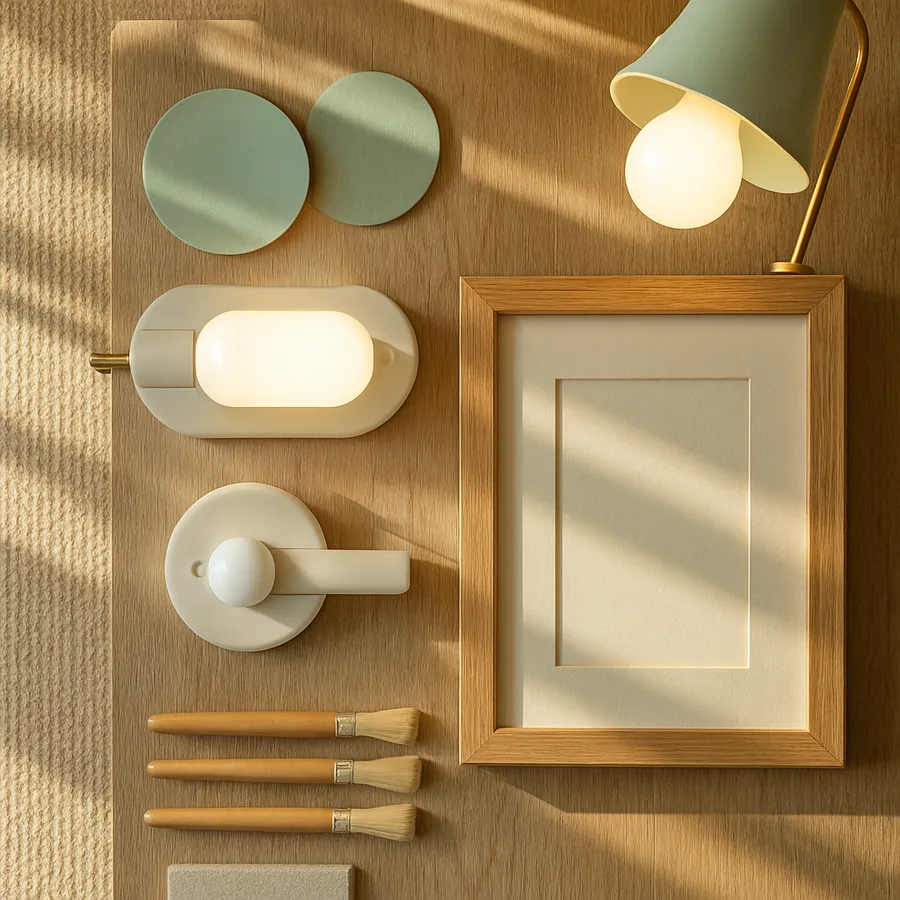
Painters have chased north light for five centuries because it delivers a uniquely steady, cool, shadow-free illumination that lets pigments speak honestly. The problem is that most studios are not blessed with a perfect floor-to-ceiling north-facing window. Renters get whatever wall the landlord assigned. Homeowners get whatever orientation the lot dictated. Apartment dwellers may have no exterior wall at all. The good news is that modern LED technology has finally caught up with the craft, and properly specified daylight replacement bulbs can replicate the spectral qualities of north light closely enough that the difference becomes academic for most work. The catch is that "daylight bulb" on a hardware store shelf almost never means what you think it means.
This guide walks through what north light actually is, why it matters for color accuracy, which bulb specifications matter, how to lay out fixtures in a real studio, and the common mistakes that turn a well-intentioned upgrade into eyestrain and color-mixing errors. Whether you paint in oils, watercolor, gouache, or work digitally, the principles below transfer directly. Have you ever finished a painting under your studio lights, carried it into daylight the next morning, and discovered the colors look completely different? That is exactly the problem this guide is built to solve.
What North Light Actually Is and Why It Matters
North-facing daylight is not "white" in any technical sense. It is a specific slice of the visible spectrum, dominated by indirect blue sky scatter rather than direct yellow sun. Because the light has bounced through atmospheric haze before reaching the window, it arrives diffuse, shadow-soft, and remarkably consistent throughout the working day. The average correlated color temperature of north light at midday in temperate latitudes hovers around 6500 Kelvin, with smooth full-spectrum content across the visible range and very little flicker or directional glare.
This consistency is the secret weapon. A south-facing studio gives you golden warmth in the morning, harsh contrast at noon, and orange shadows by late afternoon. Pigments that look correctly mixed at ten in the morning will read completely differently by three in the afternoon, and a piece painted across multiple sessions can end up with subtle color drift that only becomes visible under museum lighting. North light eliminates the drift because the source spectrum barely changes. That is why classical ateliers, forensic art examiners, and high-end framing shops all standardize on north-facing rooms when geography permits.
For the rest of us, the question becomes: can artificial lighting replicate north light closely enough to matter? The honest answer is yes, but only if the fixtures meet specific spectral standards. Off-the-shelf "daylight" LEDs typically advertise color temperature around 5000K to 6500K but skip the deeper specifications that actually determine whether the light renders pigments faithfully. The next sections detail exactly what to look for on the box, and what to ignore as marketing noise.
Decoding CRI, R9, and TM-30 Specifications
The single most important number on a bulb spec sheet is the Color Rendering Index, or CRI. CRI measures how accurately a light source renders eight standardized color samples compared to a reference daylight source, scored out of one hundred. A CRI of 80 is acceptable for general home lighting, 90 is the entry threshold for serious art and design work, and 95 or higher is what you want for any studio where color decisions matter. Anything below 90 will systematically distort how reds, oranges, and skin tones appear, which is fatal for portrait or figurative work.
CRI alone is incomplete. The eight color samples it tests do not include any deeply saturated red, which is exactly the pigment range where cheap LEDs fail most badly. The supplementary R9 rating tests saturated red rendering on a separate scale. Look for R9 values of 90 or higher, ideally 95 or above. A bulb advertised as "CRI 95" with R9 of 30 will still make cadmium reds look muddy and skin tones look corpse-pale. Manufacturers sometimes hide R9 in fine print or omit it entirely; if it is missing from the spec sheet, assume it is poor and shop elsewhere.
The newest standard, TM-30-20, is more comprehensive than CRI and is increasingly cited in lighting specifications referenced by the Illuminating Engineering Society. TM-30 measures fidelity (Rf) and gamut (Rg) across ninety-nine color samples spanning the full visible spectrum. Studio-grade fixtures should score Rf above 90 and Rg between 95 and 105. A 2022 IES technical paper found that fixtures meeting these targets matched real daylight color rendering within one or two perceptual units, which is below the threshold most viewers can detect. For pigment-critical work, TM-30 numbers are the gold standard, and any reputable studio-fixture manufacturer publishes them on the spec sheet.
Color Temperature: 5000K vs 6500K vs Tunable
Once CRI and R9 are sorted, the next decision is color temperature. North-facing daylight averages around 6500K, but for most painting work, 5000K to 5500K is actually more comfortable for extended sessions because the lower blue content reduces eye fatigue. The key is consistency: pick a target and stick to it across every fixture in the studio. Mixing 4000K bulbs with 6500K bulbs creates patchy color casts across the canvas and forces your eyes to constantly readapt.
Tunable LED fixtures that allow you to adjust color temperature on the fly are increasingly affordable and worth the small premium for a studio. Adjusting from 5000K during morning underpainting to 6500K for evening color-mixing sessions lets you check work under different conditions without leaving the room. Some artists use this deliberately to verify that a piece reads well under multiple light scenarios - a technique borrowed from professional photography studios where output must look right under both gallery and home lighting.
Avoid going warmer than 4000K for any pigment-critical work. Warm white light shifts the entire visual reference toward yellow, which means every blue you mix will read too dark and every red will read too vivid. A 2021 survey by the Color Research Society found that artists working under 3000K lighting consistently overcorrected blues by an average of fifteen percent, an error that became obvious only when the work was viewed in daylight. Studio lighting is not living-room lighting, and the cozy warmth that makes a dining room inviting will sabotage a palette.
Fixture Layout and Glare Control
Even the best bulb will fail you if it is mounted in the wrong fixture or aimed at the wrong angle. Studio lighting needs to be diffuse, multi-directional, and free of glare on the working surface. A single bulb directly above the easel creates harsh shadows from your own brush hand and reflects directly off wet paint, making it nearly impossible to judge values. The fix is multiple soft sources distributed across the ceiling.
The classic solution is a grid of LED panel fixtures or troffers spaced roughly four to six feet apart on the ceiling, each fitted with a frosted diffuser. Aim for a working illuminance of around 750 to 1000 lux at the easel surface, which matches the recommendation for fine detail work in OSHA general industry lighting guidance for inspection-grade tasks. Less than 500 lux strains the eyes; more than 1500 lux washes out subtle value differences. A cheap lux meter or smartphone app lets you verify the actual reading at the working surface rather than trusting the rated lumen output of the bulbs.
Glare on wet paint is the silent killer of long sessions. The easel should be positioned so that no fixture is reflected directly at your eye when you look at the painting. The fix is either rotating the easel until the reflection moves, tilting the easel slightly forward, or adding additional diffuse sources that even out the highlights. Side lighting from a softbox aimed at a forty-five degree angle eliminates most glare problems and is the same approach used by museum conservators photographing artwork for documentation. Have you ever wondered why your phone-photographed paintings look terrible? It is almost always glare from a single overhead source.
Wall Color, Reflectance, and Visual Calibration
The walls of the studio are part of the lighting system whether you treat them that way or not. Saturated wall colors bounce tinted light back onto the canvas, contaminating every value judgment. A red accent wall will add a subtle pink cast to every white you mix; a sage-green wall will pull greens slightly toward blue. The conservative choice for any pigment-critical studio is neutral mid-gray walls with a Light Reflectance Value, or LRV, between 50 and 65 percent. This gray is bright enough to bounce useful fill light back onto the canvas without contaminating its color.
Pure white walls are tempting but actually problematic in artificial-light studios because they reflect so much light that they create their own glare and force your iris to constantly adjust between bright walls and darker palette. Conservation-standard gray, sometimes labeled "Munsell N7" or simply "studio gray," has been the default in art schools and museum exam rooms for decades for exactly this reason. A 2020 study published by the Smithsonian Institution Museum Conservation Institute confirmed that mid-gray walls reduced color-judgment errors by roughly twelve percent compared with white walls under matched LED lighting.
Calibrate your eyes at the start of every session. A simple ColorChecker chart hung on the wall near the easel gives you a fixed reference point for the day. Glance at it every twenty minutes during long sessions, especially after staring at a saturated passage. Eye fatigue shifts color perception measurably after sustained focus, and the chart is the cheapest, most reliable way to detect drift before it ruins a passage. Professional colorists use the same trick, and the discipline carries directly into painting.
Cost, Energy, and Long-Term Reliability
High-CRI studio LED fixtures cost more than hardware-store bulbs but the math works out quickly. A studio-grade LED panel rated at 95 CRI and 95 R9 typically runs eighty to two hundred dollars per fixture and consumes around forty watts. A four-panel installation will draw roughly the same power as a single old-style halogen worklight while delivering vastly better color rendering and zero radiant heat. Over a five-year operating life, the energy savings alone usually offset the upfront premium, and the bulbs themselves should last fifteen to twenty thousand hours with negligible color shift.
Beware the cheap end of the LED market. Bulbs sold online for under fifteen dollars rarely meet their advertised specifications. Independent testing by lighting publications has repeatedly found that budget LEDs labeled "95 CRI" actually measure in the low 80s, with R9 values often below 50. The cost saving evaporates the moment you misjudge a color and waste a session repainting a passage. Reputable studio-fixture brands publish full TM-30 reports for every product; if a manufacturer cannot show you that data, treat the spec sheet as fiction.
Plan for replacement and matching. LEDs slowly shift color temperature over their lifespan, and replacing one of four panels with a new bulb after three years can leave you with a noticeably mismatched fixture. Buy your panels in matched batches, and when one fails, consider replacing all of them simultaneously to keep the spectrum consistent. Dimmable drivers are non-negotiable: cheap dimmers introduce flicker that triggers headaches over long sessions, while quality DC drivers dim smoothly down to one percent without any visible flicker or color shift.
Conclusion
A north-facing window remains the gold standard for art studio lighting, but in an apartment, a basement studio, or any room without ideal orientation, properly specified daylight LEDs can deliver color rendering that is functionally indistinguishable from real north light. The recipe is straightforward: CRI of 95 or higher, R9 of 90 or higher, color temperature between 5000K and 6500K, distributed across multiple diffuse fixtures providing roughly 750 to 1000 lux at the easel, mounted above neutral mid-gray walls with a ColorChecker chart in clear view.
The most common mistake is shopping by color temperature alone and ignoring the deeper spectral specifications. A 6500K bulb with poor CRI and abysmal R9 will look subjectively "bright and cool" while still systematically lying to you about how reds, oranges, and skin tones actually appear. Spend the extra eighty dollars per fixture on bulbs with full TM-30 data published, and treat the lighting plan as part of your studio infrastructure rather than an afterthought. The room you are about to paint in matters as much as the brushes and the pigments.
If you are setting up a studio from scratch or upgrading an existing space, start by measuring the current illuminance, then audit the CRI of every bulb in the room. Replace one fixture at a time, verify the spec sheets, and stand at the easel after each upgrade to confirm the change actually improved your ability to read color. Mix one neutral gray and place it next to your ColorChecker chart under your new lighting. If the gray looks gray and the chart's primaries look correctly saturated, the lighting is working. Walk into your studio this weekend with a notebook and a lux meter, and start making the upgrade real.
More Articles You May Like



Comments
Post a Comment