Motion Sensor Bulbs For Hallways And Closets Compared
Motion Sensor Bulbs For Hallways And Closets Compared
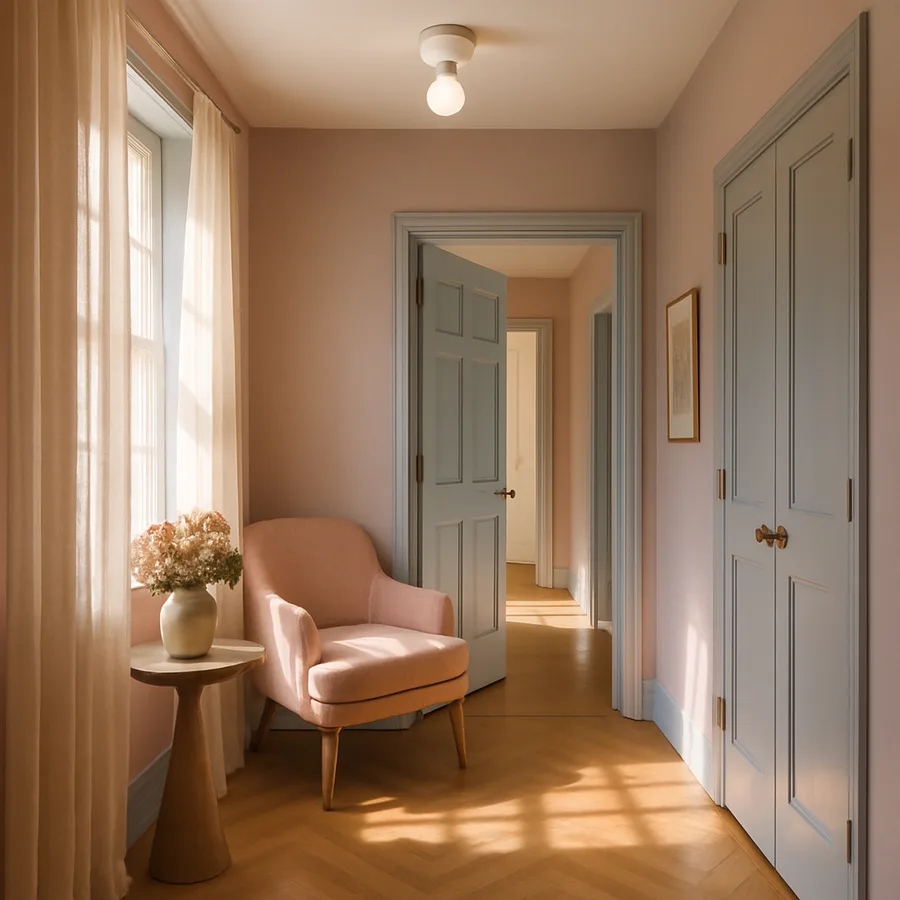
Few lighting upgrades deliver as much daily satisfaction per dollar as a well-chosen motion sensor bulb in a hallway or closet. The light comes on the moment you need it, stays on as long as you are present, and switches off automatically when you leave. No fumbling for switches in the dark, no nightlights to keep awake by, and no wasted energy when you forget to turn the bulb off after a midnight trip to the kitchen. The category is mature enough that several brands compete on price, performance, and feature set. This guide compares the major options and helps you pick the right one for each space in your home.
How Motion Sensor Bulbs Work And What To Look For
Before evaluating specific brands, it helps to understand what a motion sensor bulb is not. It is not a security device. It is not an occupancy sensor calibrated for office or commercial spaces. It is not a substitute for a properly designed lighting plan in rooms where you spend significant time. A motion sensor bulb is a convenience accessory for transitional spaces, and treating it as anything more sets up unrealistic expectations that will inevitably disappoint.
Motion sensor bulbs combine an LED light source with a passive infrared (PIR) detector and a small integrated controller, all packaged inside a standard screw-base or pin-base form factor. The PIR detector senses changes in infrared radiation caused by body heat moving across its field of view. When motion is detected, the controller switches the LED on for a preset duration. After the timeout expires with no further motion, the LED switches off automatically.
The key specifications to evaluate are detection range, field of view, timeout duration, lumen output, and color temperature. Detection range typically falls between 10 and 25 feet for residential motion sensor bulbs. Field of view varies from 90 degrees for narrow-focus designs up to 360 degrees for omnidirectional ceiling-mount applications. Timeout duration ranges from 30 seconds to 5 minutes, sometimes user-adjustable via a small switch on the bulb housing.
Lumen output for a hallway bulb should generally land between 600 and 1000 lumens, equivalent to a 60-watt incandescent. Closet applications can use slightly less, around 400 to 800 lumens. Color temperature in the 2700K to 3500K range works well for both spaces, with 3000K being a popular middle ground that flatters most wall colors and skin tones. According to the Illuminating Engineering Society, hallways benefit from approximately 5 to 10 foot-candles of average illuminance, which motion sensor bulbs in this lumen range easily achieve.
One often-overlooked specification is the warm-up behavior of the bulb at the moment of activation. Quality motion sensor bulbs reach full brightness within 200 to 500 milliseconds of detecting motion, which feels instantaneous to the user. Lower-quality bulbs may take one to two seconds to stabilize, which feels noticeably slow when walking through a dark hallway. Always check user reviews specifically for comments about activation speed, since this is a spec that manufacturers rarely publish but users notice immediately.
The Major Brands And What They Offer
Four brands dominate the residential motion sensor bulb market in North America. Sengled SmartSense offers a basic A19 motion sensor bulb at $12 to $18, with 800 lumens, a 30-second to 90-second adjustable timeout, and a 15-foot detection range. The product is reliable, has a 4.5-star average rating on most retail sites, and does not require any smart hub or app. It simply screws into a standard socket and works.
Geeni Sense offers a similar product at a slightly lower price point ($10 to $14) with comparable specifications. Build quality is acceptable but the timeout adjustment is less convenient and the bulb housing is slightly larger, which can interfere with some shaded fixtures. The Geeni bulbs are a good budget choice for utility closets and basement hallways where the form factor compromise does not matter.
Philips Hue with motion sensor takes a different approach, separating the motion detector from the bulb itself. You buy a Hue White or Hue White Ambiance bulb and a dedicated Hue motion sensor accessory, then pair them through the Hue bridge. This configuration costs significantly more ($60 to $90 for the bulb plus sensor plus bridge if not already owned) but offers far greater flexibility: the sensor can trigger multiple bulbs, multiple sensors can trigger one bulb, and the timing logic is fully customizable through the Hue app.
Lutron Caseta with Pico remote and motion sensor is a similar enterprise-tier solution, though Lutron's strength is more on the wall-switch side than on direct bulb control. For new construction or major renovation projects where you want sophisticated automation, the Lutron and Hue platforms outperform the standalone bulb category significantly.
Installation And Common Placement Considerations
Motion sensor bulbs install exactly like any other screw-base LED bulb. Turn off the power at the wall switch, remove the existing bulb, screw in the new motion sensor bulb, and turn the power back on. The wall switch must remain on for the sensor to function; if you flip the wall switch off, the bulb is fully de-energized and cannot sense motion.
Placement matters significantly. The PIR sensor on most motion sensor bulbs points straight down from the base, which works well for ceiling-mounted fixtures but poorly for table lamps or sconces where the sensor ends up pointed at a wall or a lampshade. For best results in hallways, install the bulb in a ceiling-mounted flush fixture or downward-facing pendant. For closets, an overhead can light or simple keyless ceiling lampholder works perfectly.
The National Electrical Code requires that fixtures in closets meet minimum clearance requirements from combustible storage. NEC Article 410.16 specifies six inches for surface-mounted LED fixtures and twelve inches for pendant or exposed-bulb installations. Motion sensor bulbs themselves are no different from other LED bulbs in this respect, but verify the fixture they are installed in also meets the clearance requirement.
If you are installing motion sensor bulbs in a multi-story home, give particular attention to the stair landing fixtures. These are high-traffic transitional spaces where motion-activated lighting delivers significant safety benefits, especially for older residents who navigate stairs at night. A bulb with a slightly longer timeout (90 to 120 seconds) and a brighter output (1000 lumens or more) is appropriate for stair landings even if you specify shorter timeouts and lower output elsewhere.
Smart Versus Dumb Motion Sensor Bulbs
The standalone motion sensor bulbs from Sengled, Geeni, and similar brands operate completely independently of any smart home system. They have no app, no Wi-Fi, no Bluetooth, and no cloud connection. You screw them in and they work. The simplicity is a feature: no accounts to create, no firmware updates to manage, no privacy concerns about a manufacturer logging your motion patterns.
Smart motion sensor systems from Hue, Lutron, and similar platforms add powerful capabilities but also complexity. With a smart system you can configure different timeouts for different times of day, dim the light to a low level for nighttime motion (preserving night vision and not waking other family members), and integrate the motion event into broader home automations such as adjusting the thermostat when activity is detected in the hallway.
For most residential applications, dumb motion sensor bulbs deliver 80 percent of the value at 20 percent of the cost and complexity. Reserve smart systems for households where you are already invested in a smart home platform and where the additional flexibility justifies the added expense and ongoing maintenance burden. Have you been tempted to over-engineer the lighting in spaces where a simple solution would do? Many of us have.
Energy Savings, Lifespan, And Total Cost Of Ownership
The energy savings from a motion sensor bulb come from eliminating the time the light burns unnecessarily after the user has left the space. The U.S. Department of Energy estimates that automatic lighting controls can reduce lighting energy consumption by 30 to 50 percent in spaces with intermittent occupancy. Hallways and closets are textbook intermittent-occupancy spaces, so savings on the higher end of that range are realistic.
For a typical hallway bulb burning 4 hours per day under manual control versus 30 minutes per day under sensor control, the savings amount to roughly 3.5 hours per day. With a 9-watt LED, that translates to about 11.5 kilowatt-hours saved per year per bulb. At the U.S. average residential electricity rate of 16 cents per kilowatt-hour, that is $1.84 per bulb annually. Across the four or five hallway and closet bulbs in a typical home, the household saves around $8 to $10 per year.
Bulb lifespan is rated at 15,000 to 25,000 hours for most quality motion sensor bulbs, similar to ordinary LED bulbs. With sensor-controlled run times, the effective calendar lifespan often extends to 20 to 30 years per bulb in a low-traffic closet. ENERGY STAR certification, where available, provides additional assurance of efficiency and longevity through the ENERGY STAR program which has certified over a billion LED bulbs since the program's inception. Replacement intervals of 15 to 25 years dramatically reduce the maintenance burden in hard-to-reach fixtures like high-ceiling stairwells and vaulted hallway lights, where the savings on ladder rental, professional service calls, and homeowner injury risk often exceed the direct energy savings several times over.
Troubleshooting Common Issues
The most common complaint with motion sensor bulbs is false triggering. A bulb that turns on without anyone in the space is usually responding to a pet, a heating or cooling vent blowing warm air across its field of view, or sunlight shifting through a nearby window. The fixes range from repositioning the bulb so the sensor avoids the offending source, to choosing a brand with a more focused field of view, to accepting that perfection is unattainable and adjusting your expectations.
The opposite complaint, a bulb that fails to trigger when motion is clearly present, usually indicates that the user is approaching the bulb from a blind spot, that the detection range is being exceeded, or that the bulb's sensor is partially obscured by a lampshade or fixture housing. Test the actual coverage by walking through the space at varying speeds and from different angles, noting where the sensor responds and where it does not. Adjust placement until coverage matches the practical traffic pattern.
Premature failure of the sensor electronics, while uncommon in quality products, does occasionally occur. Most reputable brands offer a one to three year warranty against defects. If a sensor bulb stops responding to motion while still producing light when forced on through a wall switch power cycle, the sensor module has likely failed and the bulb should be replaced under warranty if possible.
Conclusion
Motion sensor bulbs are one of the rare consumer products where the value proposition is genuinely strong across nearly every household. The energy savings are modest but real. The convenience of automatic lighting in transitional spaces like hallways and closets is significant and noticed daily. The installation difficulty is approximately zero, requiring nothing more than swapping out an existing bulb. The price premium over a basic LED bulb is small enough to amortize quickly.
For most homes, the right strategy is to deploy dumb motion sensor bulbs from a reputable brand like Sengled or Geeni in every hallway and closet that currently has a manually switched LED. The total upfront investment is around $50 to $80 for a typical home, the savings begin immediately, and there is no ongoing maintenance, app management, or technology obsolescence to worry about. The bulbs simply work for the next two decades.
Reserve smart motion sensor systems for new construction, major renovations, or homes already deeply invested in a particular smart home ecosystem. The additional flexibility is real but the cost premium and complexity are substantial. There is no shame in choosing the simple solution where simple does the job; over-engineering is a more common failure mode in residential lighting than under-engineering.
This weekend, walk through every hallway, closet, pantry, and laundry room in your home and note the current lighting hardware. Identify two or three locations where a motion sensor bulb would deliver the most daily benefit, and order replacements from a reputable brand. Install them in an afternoon and live with the upgrade for a month before deciding whether to expand the deployment to the rest of the home. The compounded daily convenience tends to surprise people who have lived their whole adult lives flipping switches manually.


Comments
Post a Comment