Refrigerator Lighting Brightness Comparison New Versus Old Models
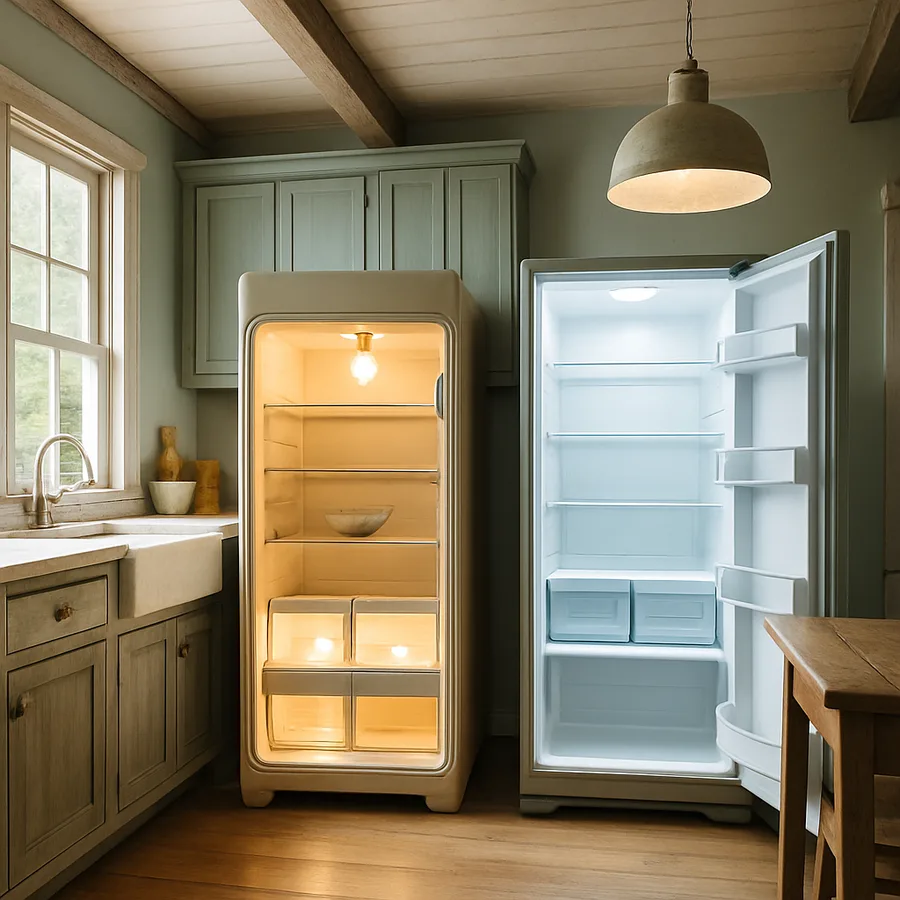
Refrigerator interior lighting has changed more in the last decade than at any point since the appliance was invented. Older units relied on a single forty-watt incandescent bulb mounted at the top center of the cabinet, casting a yellow light that left the back corners and lower drawers dim. New units use multi-zone LED arrays that brighten every shelf, every drawer, and every door bin evenly, with a color temperature tuned to make food look appetizing rather than aged. The difference is dramatic, and most homeowners do not realize how dramatic until they open a new refrigerator after years with an old one.
This article compares the two generations directly. We will look at measured lumen output, color temperature and color rendering, energy consumption per year, lifespan, and how the lighting actually affects food visibility and behavior. By the end you will understand what changed, why it matters, and whether your existing refrigerator is worth retrofitting or whether the lighting upgrade alone justifies replacement. Have you ever stood in front of your open refrigerator squinting at the back of the bottom shelf trying to remember if there is still mustard? Old fridge lighting created that problem; new fridge lighting solves it.
The Old Standard Single Incandescent Bulb
For roughly seventy years, the standard residential refrigerator shipped with a single appliance-rated incandescent bulb of twenty-five to forty watts. The bulb sat at the top center of the fresh food compartment, often behind a plastic cover, and lit the upper half of the cabinet adequately while leaving the lower half progressively dimmer. The freezer compartment in most older units had no light at all, or a single smaller bulb that struggled to reach the back.
The light output from a forty-watt incandescent appliance bulb is roughly four hundred lumens, with most of that energy converted to heat rather than light. The color temperature ranges between 2400K and 2700K, and the color rendering index is technically perfect at 100, but the warm yellow cast makes leafy greens look slightly wilted and white surfaces look cream. The Department of Energy estimates that incandescent bulbs convert only about ten percent of their input energy into visible light, with the remaining ninety percent released as heat directly into the refrigerated compartment.
That heat is the hidden cost. Every time you opened the door, the bulb came on, and the bulb dumped roughly thirty-five watts of heat into a space the compressor was actively trying to cool. The compressor then ran longer to compensate, which used more energy at the wall. ENERGY STAR estimates that interior heat loads from incandescent lighting added between fifteen and thirty kilowatt hours per year to refrigerator operating costs, on top of the lighting energy itself.
The New Standard Multi Zone LED Arrays
New refrigerators ship with LED arrays distributed across multiple zones in both the fresh food and freezer compartments. A typical premium unit has at least four LED zones: top of fresh food, side wall vertical strips, top of freezer, and individual bin or drawer lights. Each zone draws between half a watt and three watts, with total interior lighting consumption often under ten watts even with every zone illuminated.
Measured output is dramatically higher. A modern refrigerator interior delivers between eight hundred and fifteen hundred lumens, depending on size and trim level, distributed evenly across all shelves and drawers. The color temperature ranges between 3500K and 4500K, which reads as crisp and clean without becoming clinical. Color rendering index sits between 80 and 90 for most consumer-grade units, with premium models reaching 95 or higher. ENERGY STAR specifications for refrigerators now include lighting energy and uniformity as part of the certification process.
The visibility improvement is immediate and obvious. Foods at the back of a deep shelf are clearly identifiable. Items in opaque drawers are no longer black holes; the drawer-bottom lights make produce contents visible without pulling the drawer all the way out. Vertical strip lights along the side walls eliminate the shadowing that older fridges produced when a tall item blocked the central bulb. Even illumination changes food behavior because you actually remember what you have.
Lumens Color Temperature And Color Rendering Compared
Direct comparison numbers tell the story clearly. An older single-bulb refrigerator delivers roughly four hundred lumens to the fresh food compartment with significant falloff toward the back and bottom. A modern multi-zone LED refrigerator delivers between one thousand and fifteen hundred lumens evenly distributed. That is roughly a three to four times improvement in usable interior brightness.
Color temperature matters for food appearance. The 2700K incandescent light made leafy greens look pale and white surfaces look ivory. The 4000K LED light keeps greens looking fresh and white surfaces looking white, while still reading as warm enough to feel like an interior light rather than a clinical fixture. The American Lighting Association recommends 3500K to 4000K for food display and preparation areas because the cooler temperature improves the perception of freshness without distorting natural colors.
Color rendering separates premium from budget LEDs. A CRI of 90 or higher means you can accurately judge the ripeness of fruit, the freshness of meat, and the color of leafy greens. A CRI below 80 makes everything look slightly washed out, which defeats the purpose of brighter lighting. The Illuminating Engineering Society identifies CRI 90 as the threshold for residential food preparation areas, and the same threshold applies to the inside of the refrigerator.
Energy Consumption Across A Decade
The energy comparison compounds over time. An older refrigerator with a forty-watt incandescent bulb that operates roughly two hours per day across all door openings consumes about thirty kilowatt hours per year in lighting energy alone, plus the heat load that drives an additional fifteen to thirty kilowatt hours of compressor runtime. Total annual lighting impact: forty-five to sixty kilowatt hours.
A modern refrigerator with LED zones consuming a combined ten watts across the same two daily hours uses about seven kilowatt hours per year for lighting and contributes negligible heat load to the compartment. The compressor runs no longer than it would with the lights off entirely. Total annual lighting impact: roughly seven kilowatt hours.
Across a ten-year ownership cycle, the difference adds up to roughly four hundred kilowatt hours of saved electricity per refrigerator, or about sixty dollars at current average residential rates. That is not enough to justify replacing a working refrigerator on its own, but it is meaningful when stacked with the larger compressor and insulation improvements in modern units. ENERGY STAR certified refrigerators must demonstrate at least nine percent better energy efficiency than the federal standard, and the lighting transition is part of that gain.
Lifespan And Maintenance Differences
Incandescent appliance bulbs last roughly one thousand hours, which translates to about eighteen months of normal refrigerator use. Most homeowners replace the bulb at least once during the lifespan of an older refrigerator, sometimes several times. The bulbs are cheap, but the access can be awkward, and a burned-out bulb often goes unreplaced for weeks because nobody wants to figure out which size and base fits.
LED zone lighting in modern refrigerators is rated for the lifetime of the appliance, typically fifteen to twenty thousand hours. In most cases the LED arrays will outlast the compressor and the unit will be retired with the original lighting still functional. The Department of Energy notes that solid state lighting in appliance applications has dramatically reduced consumer service calls related to interior lighting failures.
The trade-off is that when an LED zone does fail, replacement requires a service technician rather than a screwdriver and a trip to the hardware store. The cost of a single LED panel replacement is typically between fifty and one hundred and fifty dollars in parts plus labor, which is far more than a bulb but is also far less frequent. Have you ever opened your fridge in the evening and noticed one zone was darker than the others? That is your cue to schedule service before the failure spreads.
Is Retrofitting An Old Refrigerator Worth It
Aftermarket LED replacement bulbs exist that fit the standard appliance socket of an older refrigerator. They are inexpensive, typically under twenty dollars, and they deliver immediate improvements in brightness, color temperature, and heat reduction. A 2-watt LED replacement bulb produces roughly the same lumens as the original 40-watt incandescent while running cool to the touch, which slightly reduces compressor load.
The catch is that a single-socket replacement does not deliver the multi-zone benefit of a modern refrigerator. The back of the bottom shelf will still be dim because there is no side wall lighting to reach it. The improvement is real but incremental, perhaps thirty percent better visibility rather than the three hundred percent improvement of a true multi-zone unit. For a refrigerator under ten years old, the LED retrofit bulb is an excellent low-cost upgrade. For a refrigerator nearing the end of its life anyway, the cost is better spent toward a new ENERGY STAR certified unit.
Verify the replacement bulb is rated for refrigerator use. Standard household LED bulbs are not rated for the cold environment or the frequent on-off cycling of an appliance, and they fail quickly. Appliance-rated LED bulbs have hardened drivers designed for the temperature range and switching frequency. The American Lighting Association maintains guidance on appliance-rated retrofits that is worth reviewing before purchase.
The Behavioral And Food Preservation Effects Of Better Lighting
Brighter, more evenly distributed refrigerator lighting changes how you interact with the appliance in ways that go beyond pure visibility. When the back corners of the bottom shelf are clearly lit, you actually use the food stored there. When opaque drawers have integrated bottom lighting, the produce inside gets eaten rather than forgotten. Industry research cited by the Department of Energy suggests that household food waste correlates inversely with refrigerator interior visibility, and modern LED illumination is one factor that quietly reduces waste over time.
The color temperature shift also matters for perceived freshness and food safety. Older 2700K incandescent lighting masked subtle color changes in meat, dairy, and produce that signal early spoilage. A 4000K LED with CRI above 90 reveals those changes clearly, which helps you discard items at the right time rather than discovering the problem later by smell. The American Lighting Association and food safety organizations both recommend cooler temperatures with high color rendering for any refrigerated food display, residential or commercial.
The energy implications compound with the visibility benefit. A refrigerator with better interior lighting tends to be opened for shorter durations because the user can locate items quickly without standing with the door open. ENERGY STAR estimates that reducing average open-door time by ten seconds per opening saves roughly twenty kilowatt hours per year for a typical household, which is a non-trivial fraction of the appliance's total annual energy use.
The shopping takeaway is concrete. When you compare refrigerators on the showroom floor, do not just look at the published energy rating. Open the door, look at the back of the bottom shelf, and check whether the drawers have their own lighting. The interior lighting quality is a leading indicator of how the appliance will perform in your kitchen over the next fifteen years, and it is a feature that gets dramatically less attention than it deserves in most buying decisions.
Conclusion
The transition from incandescent to LED refrigerator lighting is one of the quieter revolutions in modern appliance design. The technology change happened gradually, but the cumulative effect on visibility, energy use, and food preservation is dramatic. A modern multi-zone LED refrigerator interior is brighter, more evenly lit, more accurate in color, and significantly cooler in operation than an older single-bulb unit, and the lighting itself will outlast the appliance.
For consumers, the practical takeaway depends on the age and condition of the current refrigerator. If your existing unit is under ten years old and otherwise running well, an appliance-rated LED retrofit bulb delivers a meaningful improvement at a trivial cost and is the right move. If your unit is approaching the end of its useful life or is showing other signs of decline, the lighting improvement is one of several reasons to upgrade to a new ENERGY STAR certified model. Either way, the days of squinting into a dim refrigerator are over.
The broader lesson is that interior lighting in appliances matters more than most buyers realize when they shop. Showroom comparisons tend to focus on capacity, finish, and feature lists, while interior lighting often gets overlooked until the unit is installed at home. Open every refrigerator you are considering, look at the back of the bottom shelf, and check the drawer interiors. The brightness and uniformity tell you a lot about the engineering quality of the appliance overall.
Make your next move informed. If you are shopping for a refrigerator, prioritize models with multi-zone LED lighting and a published color rendering index above 80. Reference the ENERGY STAR refrigerator certified product database, review the Illuminating Engineering Society guidance on food display lighting, and consult the American Lighting Association resources on appliance-rated LED retrofits before buying or upgrading.
More Articles You May Like



Comments
Post a Comment