
Mansard Roof Style For Adding Third Floor Space
Mansard Roof Style For Adding Third Floor Space
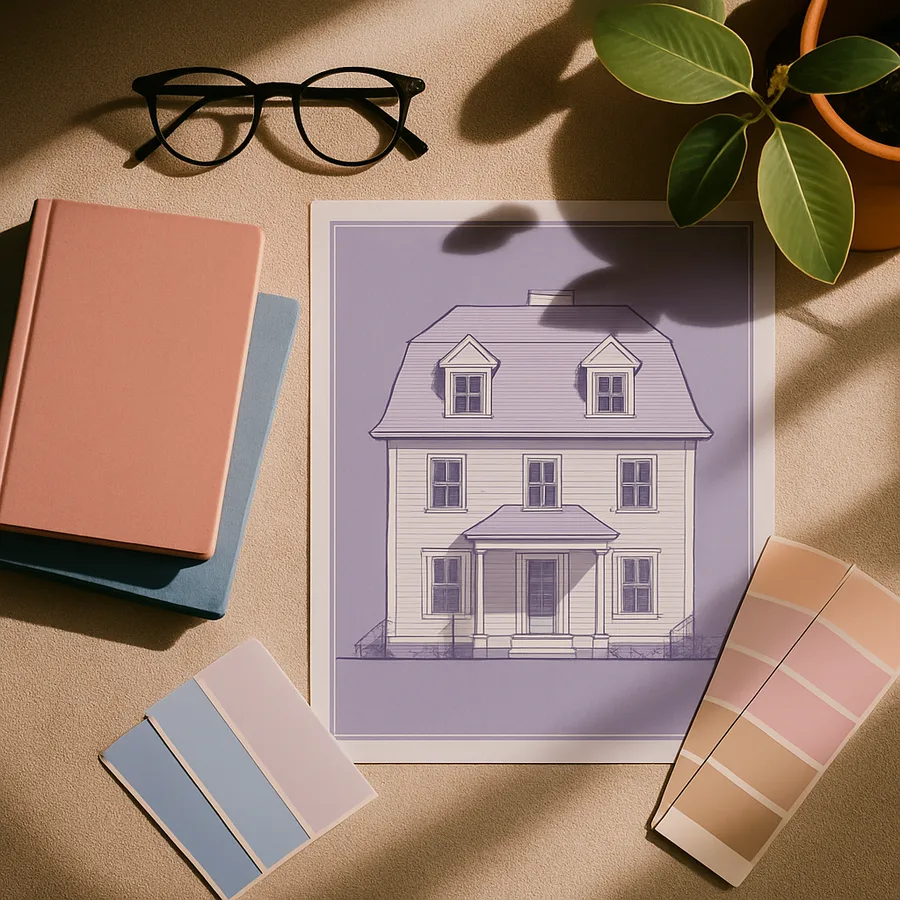
Few residential roof shapes promise as much usable square footage as the mansard. With its near-vertical lower slopes and shallow upper deck, this Second Empire silhouette transforms what most homeowners write off as cramped attic volume into a fully habitable third floor. Whether you live in a brownstone neighborhood in Brooklyn, a Victorian pocket of San Francisco, or a midcentury ranch in the suburbs of Atlanta, retrofitting a mansard can add between 400 and 900 square feet of conditioned space without expanding the building footprint. The appeal is structural, not just stylistic.
Why The Mansard Outperforms Other Roof Types For Vertical Expansion
Compared with a standard gable or hip roof, a mansard captures dramatically more volume in the upper story. A gable roof at a 9/12 pitch leaves you with sloped knee walls under five feet, which the International Residential Code does not count toward habitable area. A mansard, by contrast, presents full-height walls of seven to eight feet behind its lower slope, meaning every square foot of floor plate becomes legally livable. According to data published by the National Association of Home Builders, attic conversions return roughly 75 percent of project cost at resale, but mansard-style additions tend to outperform that benchmark because the resulting rooms feel like a true story rather than a tucked-away loft.
Have you ever walked into a third-floor space and immediately felt the ceiling press down on you? That is the diagnostic problem the mansard solves. The American Institute of Architects highlights this geometry in its residential design guides as one of the few historic forms that addresses both daylight and headroom simultaneously. Dormers punched through the steep lower slope deliver tall windows, while the flat upper deck allows recessed mechanical equipment, skylights, or even a small green roof.
Anatomy Of The Mansard Profile
A true mansard has two distinct slopes on every side. The lower slope sits between 70 and 80 degrees, which is steep enough that snow sheds easily and the wall reads as nearly vertical from street level. The upper slope, often only 10 to 30 degrees, can be invisible from the ground entirely. This two-pitch logic is what allows the form to maximize interior volume while preserving a low overall ridge line for zoning compliance.
Three subtypes dominate American practice: the straight mansard, with planar lower slopes; the convex mansard, which bows outward like a bell; and the concave mansard, which curves inward and is typical of Parisian Haussmann buildings. Each profile reads differently from the street, but all three deliver comparable interior square footage. Your structural engineer will care less about silhouette and more about how the new framing ties into the existing top plate.
Code, Zoning, And The Height Question
Before you commit to a mansard retrofit, pull your local zoning code. Most municipalities measure building height to the midpoint between eave and ridge, or to the highest occupied floor, and the mansard's flat deck can sometimes squeeze under a height cap that a gable would violate. The International Code Council publishes the model residential code that most jurisdictions adopt, and it specifies that habitable rooms must have a ceiling height of at least seven feet over 50 percent of the required floor area. A well-designed mansard easily clears this threshold.
Historic districts add another layer. If your home sits in a designated district, the local landmarks commission may require slate or synthetic slate cladding, copper flashing, and specific dormer proportions. These requirements push cost upward but also preserve resale value in neighborhoods where authenticity commands a premium. Expect a review process of eight to sixteen weeks before construction can begin.
Cost Realities And Budget Planning
A mansard retrofit is not cheap. Industry estimates place the all-in cost between $185 and $310 per square foot of new conditioned space, with the higher end reflecting slate, custom copper, and historic district detailing. For a typical 600 square foot third-floor conversion, that translates to a project budget of roughly $110,000 to $185,000. Structural reinforcement of the existing second-floor framing often adds another $15,000 to $25,000, since most original joists were never sized to carry full residential live loads above.
What does that buy you? A two-bedroom master suite with a private bath, or a primary suite plus a home office, or a self-contained accessory dwelling unit with its own kitchen. In high-cost metros, the resulting rentable square footage often pays back the construction loan within six to nine years. Are you planning to stay in the home long enough to capture that return, or are you optimizing for resale within three years? The answer reshapes the materials specification entirely.
Materials That Define The Look
Slate remains the gold standard. A natural slate mansard can last 100 years with minimal maintenance, and the variegated tones of Vermont or Spanish slate give the roof a depth that synthetic substitutes struggle to match. That said, modern synthetic slates from manufacturers profiled by Architectural Digest now carry 50-year warranties and weigh roughly a third as much, which simplifies the structural calculations significantly.
Standing seam metal is the contemporary alternative. A dark bronze or matte black standing seam mansard reads as modern rather than historicist, and it pairs beautifully with large fixed-glass dormers. Asphalt shingles remain the budget option but compress the visual richness of the form and rarely look right on a steep lower slope. Whatever you choose, specify self-adhering ice and water shield behind every dormer cheek and over the entire flat deck.
Interior Layout Strategies For The New Third Floor
The vertical walls behind the mansard slope unlock layout possibilities that an attic conversion cannot match. Built-in wardrobes can run floor to ceiling along the entire perimeter without diagonal cuts. A clawfoot tub can sit directly under a dormer window with a real view rather than a triangle of sky. Bookshelves can be six feet tall instead of the awkward 42-inch knee-wall units that plague typical attic libraries.
Consider zoning the new floor by daylight rather than by traditional room divisions. Place sleeping zones away from the steepest dormer light and bathing or grooming zones directly beneath the largest windows. The American Society of Interior Designers has documented in member surveys that natural light access ranks as the single most-requested feature in primary suite renovations, ahead of square footage and finish quality.
Regional climate adds another consideration that mansard designers cannot ignore. In hot-humid climates like the Gulf Coast, the steep lower slope absorbs significant solar radiation and can drive attic-floor temperatures uncomfortably high without aggressive insulation. The Building Science Corporation has published research showing that continuous exterior insulation behind the slate or synthetic slate cladding outperforms cavity-only insulation by reducing thermal bridging through the rafters. Expect to specify at least R-30 in the slope assembly, with R-49 or higher in colder zones, and to use a properly detailed ventilation channel between the insulation and the underside of the roof deck. Skipping this detail produces ice dams in winter and condensation problems in summer that no amount of mechanical conditioning can fully correct.
Mechanical integration deserves dedicated attention. The new third floor typically requires its own zone of conditioned air, and the flat upper deck of the mansard provides an ideal location for a small heat pump condenser that remains invisible from the street. Plumbing risers for a new bathroom should be planned during framing, not improvised afterward, and structural drawings should account for the dead load of a tub or shower over existing second-floor framing. The contractors who do this work routinely build the mechanical chase into a closet wall on the second floor and ride it up into the new third floor without any visible bulkhead. A mansard retrofit done with attention to these mechanical details feels native to the home rather than tacked on, which is the entire point of choosing the form in the first place.
Resale considerations vary by market. In dense urban neighborhoods where lot expansion is impossible, a mansard third floor can add $300 to $700 per square foot to appraised value, far exceeding construction cost. In suburban markets where buyers expect comparable homes to add a separate addition rather than build vertically, the return is more modest but still typically exceeds the National Association of Home Builders average attic-conversion benchmark. Talk with a local appraiser before final design decisions to confirm how the work will be valued in your specific market, and request comparable sales data for recently completed third-floor additions within a five-mile radius. The numbers tell a story that style preferences alone cannot.
Construction sequencing matters because the existing home must remain habitable during the work. The best mansard retrofits remove the existing roof in a single weather-tight day, install temporary protection over the second-floor ceiling, and dry in the new framing within three to five working days. Stretching that schedule longer exposes the home to rain damage that can dwarf the budget contingency. Discuss weather protection strategy with every contractor you interview, and confirm that they carry adequate liability insurance to cover an event where temporary protection fails. The horror stories homeowners tell about mansard projects almost always involve water damage from inadequate weather sealing during the open-roof phase.
Window selection on a mansard deserves the same attention as the cladding. Dormer windows are the visual signature of the form, and their proportions determine whether the third floor reads as historic or generic. Traditional mansards use casement or double-hung dormers in vertically oriented rectangles, often with a small arched or pedimented head detail. Modernist interpretations use larger fixed-glass dormers or even ribbon windows that read as horizontal slots. Either approach can succeed, but mixing the two within a single roof produces visual confusion. Pick a vocabulary and commit to it across every dormer on the building.
The interior trim package inside the new floor often gets value-engineered in ways that undermine the architectural quality of the project. Baseboards at three inches rather than five, door casings without backbands, and window trim flush with the drywall produce rooms that feel cheaper than the construction cost would suggest. Specify trim profiles during design rather than during punch-list cleanup, and budget appropriately. The trim package on a mansard third floor typically runs $8,000 to $18,000 for a 600 square foot installation, and that investment pays back in every photograph and every walk-through for decades.
Stair access to the new floor is a frequently underestimated design problem. Most existing homes have stair runs sized for two floors, and adding a third floor requires either extending the existing stair upward, which may not be possible without restructuring the second-floor framing, or building a new stair within the new floor footprint, which consumes valuable space. The cleanest solutions extend the existing stair, accept the loss of a second-floor closet or small room at the landing, and treat the new stair flight as part of the architectural composition rather than as a utility appendage. A skylight over the stair head adds dramatic vertical light to all three floors simultaneously.
Conclusion
A mansard retrofit is one of the rare architectural moves that delivers both immediate functionality and lasting curb appeal. The form has survived three centuries because it solves a genuine spatial problem, and modern materials have made it more durable and less heavy than the original Parisian examples ever were. If you have the lot, the structure, and the appetite for a serious capital project, the mansard converts unused volume into a full story of premium living space without expanding outward.
Start by pulling your zoning ordinance and confirming maximum height limits. Bring in a structural engineer to verify that the existing second-floor framing can carry the new live loads, and budget for reinforcement even if you think it might not be needed. Interview at least three architects who have completed mansard work in your region, and ask each one to walk you through a recently permitted project. The learning curve on this roof type is steep, and experience matters more than the lowest bid.
The decision ultimately comes down to how you weigh upfront capital against long-term value. A mansard costs significantly more than a dormered gable conversion, but it delivers a third floor that lives like a true story rather than a compromise. If you are ready to invest in a roof that performs as architecture rather than just shelter, start scheduling consultations now. The permitting timeline alone often runs a year, and the right design partner will be busy.
Whether the project ends up as a primary suite, a guest floor, or a rental unit, the mansard adds something more durable than square footage. It adds character that buyers and appraisers consistently recognize and reward.


Comments
Post a Comment