Princess Bed Frame Designs for Kids Without Looking Cheap
Princess Bed Frame Designs for Kids Without Looking Cheap
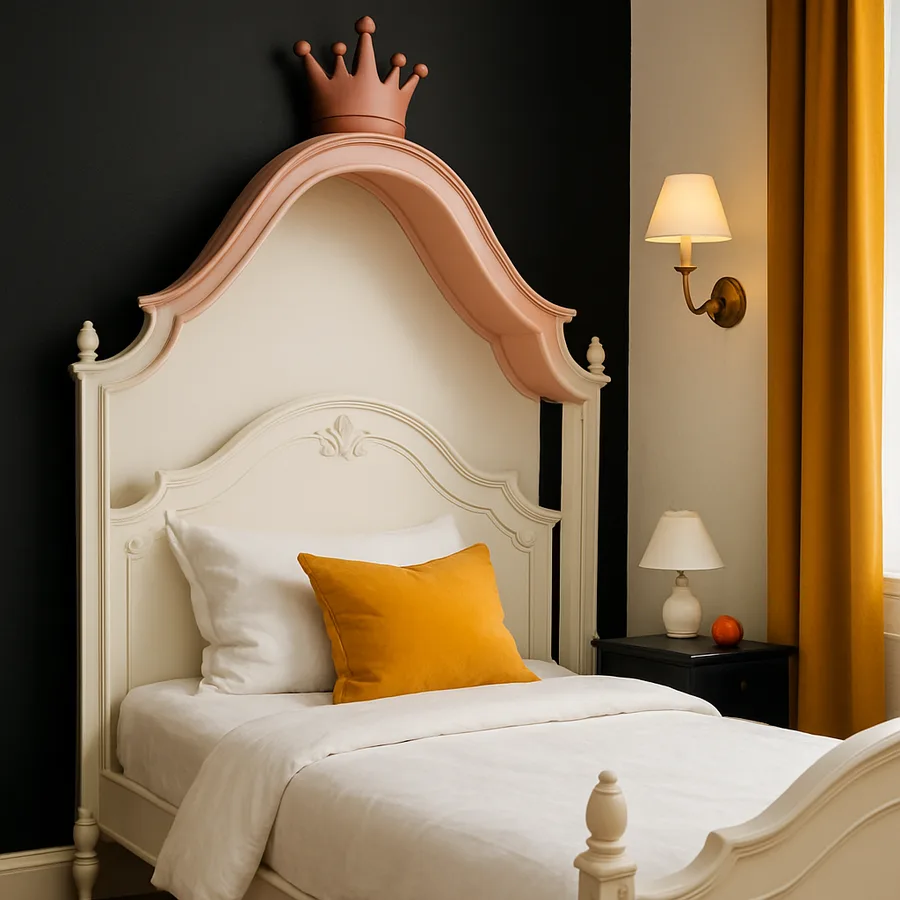
The princess bed has long held a coveted place in childhood imagination, conjuring images of canopied retreats, scalloped headboards, and gilded finials. Yet for parents who care deeply about how a child's bedroom reads aesthetically, the typical big-box rendition can feel disappointing: thin laminate, gaudy plastic accents, decals that peel within months. There is a quieter, more refined way to deliver the same fantasy. By selecting the right materials, restrained palettes, and architectural silhouettes, a princess bed can feel like a small piece of heirloom furniture rather than a costume. Have you ever wondered why some children's rooms look styled in glossy magazines while others feel like a toy aisle threw up? The answer almost always begins with the bed.
Why So Many Princess Beds Look Cheap
Most affordable princess beds fail on three fronts: material honesty, scale, and finish detail. They mimic carved wood with embossed MDF, simulate gold leaf with chrome-paint sprays, and rely on cartoon tiaras instead of real classical motifs. According to a consumer survey from the National Association of Home Builders, more than 62 percent of parents replace their child's primary bedroom furniture within five years, with poor build quality cited as the top reason. That churn rate is not just expensive; it is environmentally indefensible.
The visual giveaways are predictable. Plastic finials shaped like crowns. Pink-on-pink palettes with no contrast or grounding tone. Posts so thin they appear spindly under any drape. The hardware, often visible at the joints, is stamped rather than turned. By contrast, even a modestly priced bed can look refined if its proportions are correct and its finish is consistent. Proportion is the single most important variable: a low-profile twin with substantial corner posts and a tall, sculptural headboard always reads more elevated than a tall, narrow frame with skimpy posts.
The Material Choices That Elevate the Look
Solid hardwood, even in small quantities, transforms the perception of a princess bed. Look for frames listing poplar, birch, oak, or maple in the bed posts and headboard frame, even if the side rails are engineered wood. Painted finishes hide the species, but solid wood holds carved detail crisply and accepts a hand-rubbed finish that simply cannot be achieved on melamine.
Upholstered options offer a softer, more European feel. Linen, performance velvet, and washed cotton in chalky neutrals (ivory, oat, dove, ballet pink, dusty sage) replace the sugary fuchsia palette with something a child can grow into. The Better Homes & Gardens design editors have noted a steady migration away from gendered juvenile palettes toward muted, art-directed bedroom schemes that suit both younger and older children. For metalwork, opt for brushed brass, aged pewter, or matte iron over shiny chrome.
Canopy Frames Done Right
A canopy is the most theatrical element of any princess bed, and it is where cheapness most often shows. The frame must be heavy enough not to wobble, the joins must be flush, and the top crossbars should sit at a height that allows for graceful drape, not a tight tent. Four-poster canopies in turned wood read traditional and architectural; slim iron canopies read French and editorial.
For drape itself, sheer linen, lightweight cotton voile, or unbleached muslin look infinitely better than the polyester tulle that arrives bundled with cheap kits. Consider how the drape pools at the floor: a small puddle of fabric, like a proper curtain, signals intention. Avoid pre-printed stars, butterflies, or character motifs entirely. The fantasy comes from form and shadow, not from imagery.
Color Palettes That Age Gracefully
Children's color preferences shift dramatically between ages 4 and 10, and again between 10 and 14. A bed bought for a five-year-old should still work at twelve. That argues for a palette built on neutrals with a single accent, rather than a saturated theme. Designers at Architectural Digest regularly feature children's rooms in chalk white, putty, antique cream, and soft sage, then layer accent color through bedding and pillows that can be swapped inexpensively.
If pink is non-negotiable for the child, consider the more sophisticated end of the pink spectrum: Sherwin-Williams Intimate White, Benjamin Moore Pink Bliss, or Farrow & Ball Calamine. These read as architectural plaster tones rather than candy. A painted bed in one of these shades, paired with brass hardware and white linens, sits comfortably in any interior style. The Color Marketing Group has reported that nearly 70 percent of families now prefer "muted heritage" tones for children's spaces over primary saturations, a shift that has held steady for several years.
Hardware, Finials, and Architectural Detail
The small details separate a serious bed from a toy. Look at the finials capping each post: are they hand-turned and proportional, or are they oversized stamped plastic? Examine the carving on the headboard at a glance from across the room. Real relief carving creates shadow even at distance; embossed faux carving disappears the moment the light flattens.
Quality bed frames often feature subtle classical motifs: fluted posts, scalloped headboard cresting, dentil molding, or a delicate cartouche at center top. These references to architectural classicism do more to suggest "palace" than any literal crown applique ever could. When examining a bed in person, run a hand over every surface. If you feel a seam where a printed paper wraps around an edge, walk away. If you feel a continuous, smooth painted wood surface with crisp router work at the edges, you are looking at something that will photograph beautifully and survive years of use.
Where to Source Without Overspending
Heirloom-quality princess beds exist at multiple price points if you know where to look. Vintage and secondhand markets are extraordinary resources: French provincial twin beds from the 1940s through 1970s regularly appear on estate-sale sites, often for under $400, and can be repainted in any modern color. Independent furniture makers on Etsy and small-batch heritage brands frequently offer better proportions and joinery than mass retailers at similar price points.
When buying new, ask three questions before purchase: Is the frame solid wood or engineered? Is the finish a multi-step hand process or a single spray? What is the warranty on structure and finish separately? According to the American Society of Interior Designers, families who invest in one well-built furniture piece per child report significantly higher satisfaction with the overall room than those who buy complete matched sets at lower price points. The lesson is clear: spend on the bed, save on the accessories.
Styling the Bed Within the Whole Room
Even the most beautiful princess bed will photograph poorly if the room around it betrays it. Consider the bed as the architectural anchor, and treat every other choice as a supporting cast member. Start with the rug. A soft wool, vintage or new, in a muted palette that includes one accent shared with the bed's finish or upholstery will pull the floor and bed together. Avoid synthetic shag rugs in saturated colors; they instantly cheapen the room and they trap dust against a child's face. A flat-weave or low-pile wool in oat, dove, dusty rose, or pale sage works for almost any princess bed configuration. The rug should extend at least eighteen inches beyond the bed on the long sides so a child's bare feet land on softness, not floor.
Window treatments deserve equal thought. Skip the pre-packaged princess curtains entirely. Instead, choose simple linen panels in a slightly darker shade than the wall, hung from a slim brass or matte black rod, with floor-pooling length. This single move can elevate the room more than any furniture upgrade. Layer in art that the child can grow into: vintage botanical prints, small framed letter sets, hand-illustrated alphabet posters from independent artists, or a single oversized abstract piece in soft tones. The pieces should look intentional from across the room. According to surveys conducted by the National Kitchen and Bath Association design committees, the most cited regret among parents who decorated themed rooms was the brief lifespan of those themes, with most families redecorating within three to four years.
Bedding is where you can play with seasonal personality without committing financially. Choose a high-quality fitted sheet and duvet cover in a neutral, then layer two or three throw pillows in changeable colors. Velvet, linen, and embroidered cotton all hold up well to washing. A single small bolster pillow with subtle scallop trim or vintage lace nods to the princess theme without screaming it. The bed itself remains the quiet anchor; the textiles do the seasonal storytelling. This separation between permanent and seasonal layers is the working principle of every well-styled child's room you have ever envied in a magazine spread.
Maintenance, Safety, and Long-Term Use
A bed that looks beautiful but fails on safety or durability is a failed purchase. Confirm that any princess bed you consider meets current ASTM children's furniture safety standards, with particular attention to guardrail height, slat spacing, and tip-over resistance. Bunk-bed adapted princess beds in particular deserve scrutiny: the carved corner posts and finials should not present pinch points or sharp edges accessible from the sleeping surface. The Consumer Product Safety Commission has periodically issued recalls on decoratively detailed children's furniture, and the lesson is consistent: ornamental complexity should never compromise structural integrity. Ask the retailer specifically about the slat system supporting the mattress; cheap beds often skimp here, leading to sagging within a year.
Maintenance over the years requires light touch but real attention. Painted finishes will accumulate small marks; keeping a small jar of the original paint, properly labeled, makes touch-ups effortless. Upholstered headboards should be vacuumed weekly with a brush attachment, and most performance fabrics can be spot-cleaned with mild soap. Avoid placing the bed directly against an exterior wall in cold climates without an insulating gap, as condensation can damage finishes and trap moisture in upholstery. A simple felt pad under each foot protects floors and dampens noise during play. Tighten visible hardware every six months; children's beds endure significant lateral force from climbing and jumping, and loose joints accelerate frame failure faster than any other cause.
Think too about the second life of the bed. A well-built princess bed in a neutral painted finish can transition into a young teen's room with a swap of bedding and the removal of the canopy. It can eventually become a guest bedroom bed, a sibling's bed, or a piece resold at strong value. Have you considered how rare it is to make a child's furniture purchase that holds value years later? The right bed does, and that resale or pass-down potential is part of what justifies the upfront investment. Quality compounds; cheapness depreciates. That is the simplest argument for investing once and well, and it applies to almost every category of furniture you will purchase for a growing family over the coming decade.
Conclusion
A princess bed does not have to be a regrettable purchase. The fantasy a child holds in their mind is more abstract than the literal interpretations sold in catalogs, and that abstraction is where good design lives. By choosing solid materials, restrained palettes, classical proportions, and honest hardware, you create a piece of furniture that supports both imaginative play and a beautifully composed room. The child still gets the canopy, the drape, the soft sculpted headboard, the sense of retreat. The parent gets a piece that photographs well, survives moves, and can be passed down or resold.
Consider too that the bed sits at the visual center of the room. Every other choice, from wall color to rug to art, must respond to it. A cheap-looking bed forces the rest of the space into compensation mode, and the room never quite resolves. A well-chosen bed, by contrast, gives the room a confident anchor and lets simpler accent pieces do their work. That is why this single purchase deserves more thought than it usually gets.
If you are starting a child's bedroom from scratch this season, begin with the bed and let it dictate the rest. Visit a few showrooms, run your hand over the finishes, examine the joinery in person, and resist the temptation of the all-in-one themed package. Your child will not remember which brand it was. They will remember the feeling of climbing into a bed that felt like it had always belonged to them. Start your search this week with the questions above in hand, and you will find something far better than the algorithm will recommend.


Comments
Post a Comment