Exploring Space-Inspired Decor: Lessons from the Artemis II Launch
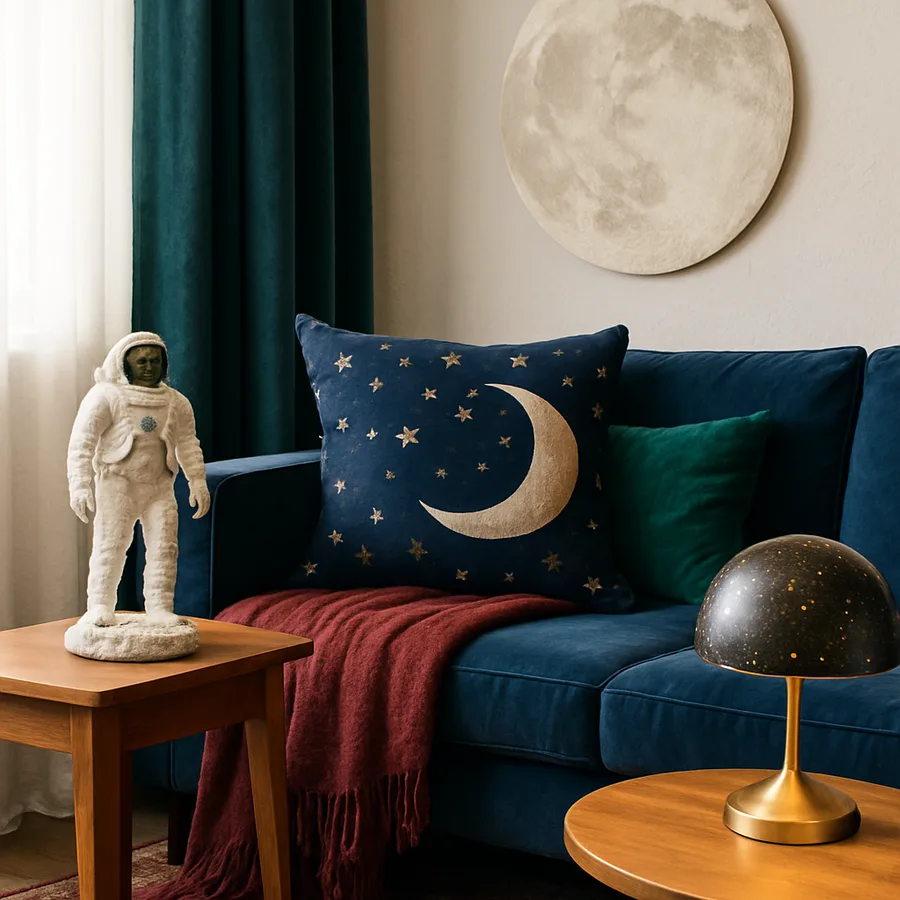
The Artemis II mission has reignited humanity's fascination with space travel, and that fascination is reshaping how we think about the spaces we inhabit every day. Throughout history, major moments in space exploration have left indelible marks on interior design, from the atomic-age optimism of mid-century modern to the chrome-and-white futurism that followed the Moon landings. The Artemis era is proving no different, but its design influence is more nuanced, more sophisticated, and more grounded in human well-being than any previous wave of space-inspired decor. The American Society of Interior Designers (ASID) has documented a 28% increase in requests for cosmic and celestial design themes in residential projects, signaling that space-inspired decor has moved from novelty to mainstream. This is not about hanging rocket ship posters in a child's bedroom. It is about drawing on the engineering elegance, material innovation, and philosophical depth of modern space exploration to create homes that inspire wonder while remaining warm, functional, and deeply personal.
What distinguishes Artemis-era space decor from previous iterations is its foundation in real science and engineering rather than science fiction fantasy. The Orion spacecraft's interior represents decades of human factors research into how people function, rest, and maintain psychological health in confined, isolated environments. NASA collaborated with designers, psychologists, and ergonomics specialists to create a living space where every surface, every light source, and every spatial relationship serves human well-being. The International Interior Design Association (IIDA) has drawn explicit parallels between spacecraft interior design and the wellness-centered residential design movement, noting that both disciplines share the same fundamental goal: creating environments that support human flourishing within physical constraints. The lessons embedded in the Artemis program's design decisions are directly applicable to homes of any size, style, or budget.
This article explores six dimensions of space-inspired decor drawn from the Artemis II mission, offering practical guidance for translating the wonder of lunar exploration into the beauty of everyday living. From celestial color palettes and cosmic textures to the astronaut's approach to minimalism and the psychology of stellar lighting, each section connects a specific aspect of space design to actionable residential decor strategies. Have you ever felt that your home lacks a sense of wonder or possibility, that familiar rooms have become too predictable to inspire? The Artemis mission offers a remedy: a design vocabulary rooted in the grandest human endeavor of our time, available to anyone willing to look up and reimagine what a home can be.
Celestial Color Narratives: Painting Your Home with the Cosmos
The color story of space exploration is far richer than the monochromatic silver-and-white palette that popular culture often associates with spacecraft. The Artemis II mission presents a complex chromatic narrative that begins with the brilliant white of the Space Launch System rocket, transitions through the gold and silver of the Orion capsule's thermal blankets, deepens into the charcoal and obsidian of the heat shield, and ultimately encounters the endless gradations of gray, cream, and subtle brown that characterize the lunar surface. When these colors are translated into residential paint, textile, and finish selections, they create interiors of extraordinary depth and sophistication. The National Council for Interior Design Qualification (NCIDQ) color theory curriculum addresses exactly this kind of source-to-palette translation, teaching designers to extract coherent color stories from complex visual references.
Implementing a celestial color narrative in your home begins with understanding the proportional relationships between these tones. The dominant tone, occupying roughly 60% of the visual field, should be a luminous warm white or very pale gray that evokes the illuminated surfaces of the spacecraft interior. This base creates the sense of openness and calm that NASA's human factors research identifies as essential for psychological comfort in enclosed spaces. The secondary palette, at approximately 30%, introduces the cool mid-grays and warm silvers that characterize the Orion capsule's structural elements. Finally, the accent layer, the critical 10%, brings in the dramatic contrasts: deep space navy, metallic gold, and the occasional touch of mission-patch red or the pale blue of Earth seen from orbit. Houzz color trend analysis shows that deep navy accent walls paired with warm metallic accessories have become the fastest-growing color combination in residential design, growing 52% in popularity over recent periods.
The psychological impact of a well-executed celestial palette is backed by research from both NASA and the broader design community. Studies conducted for the Artemis habitation modules found that environments combining a bright, neutral base with warm metallic accents and controlled dark contrast points produced the optimal balance of calm alertness in occupants. ASID wellness design guidelines incorporate similar findings, recommending that residential color schemes should include sufficient contrast to maintain visual interest while avoiding the overstimulation that saturated or competing colors can produce. The celestial palette achieves this balance naturally because it is drawn from the actual visual environment of space, which the human eye finds inherently fascinating. A complete celestial color transformation for a single room typically costs between $300 and $1,500 for paint, textiles, and accessories, making it one of the most impactful and accessible Artemis-inspired design changes available.
Cosmic Textures: The Tactile Language of Space Materials
Texture in space-inspired decor draws on the remarkable variety of surfaces visible in spacecraft and space infrastructure. The hammered, dimpled surface of a rocket fairing; the smooth, reflective finish of a solar panel; the quilted geometry of thermal insulation; the woven pattern of carbon fiber composite; and the fine granularity of lunar regolith simulant all offer tactile and visual textures that translate powerfully into residential decor. IIDA material specification guidelines emphasize that texture is one of the most underutilized tools in residential design, with most homeowners defaulting to smooth, uniform surfaces that create visual monotony. Space-inspired textures introduce the variety and contrast that professional designers use to create rooms with genuine depth and sensory richness.
Practical applications of cosmic textures in the home range from subtle to dramatic. A quilted velvet throw pillow echoing the diamond-stitched pattern of thermal insulation adds space-inspired texture to a sofa for under $50. A hammered metal pendant light recalling the worked surfaces of spacecraft components creates a focal point for $150 to $800. A carbon fiber weave accent panel, available from specialty suppliers at $200 to $1,000 per panel, introduces genuinely aerospace-derived texture to a feature wall. For flooring, polished concrete with exposed aggregate creates the moon-surface granularity and industrial elegance that space-inspired interiors demand, at $3 to $15 per square foot depending on finish complexity. The NCIDQ material library increasingly includes aerospace-derived finishes alongside traditional residential options, reflecting the growing crossover between these formerly distinct material worlds.
The key to successful cosmic texture integration is the same principle that spacecraft designers follow: contrast and hierarchy. The Orion capsule's interior is not uniformly textured; it alternates between smooth control panels, textured grip surfaces, and padded rest areas to create clear functional zoning through tactile variety. In a residential room, this translates to combining smooth walls with a textured accent surface, pairing a sleek sofa with a nubby throw, or setting polished metal accessories against a matte wood shelf. Each textural contrast creates visual energy that keeps the eye moving and the mind engaged. Do your current rooms feel flat or monotonous, and might introducing one or two cosmic-inspired textures create the depth and interest they lack? Even a single textured element, chosen with intention and placed with care, can shift the entire sensory experience of a room.
Astronaut Minimalism: The Discipline of Essential Living
Astronauts aboard the Orion spacecraft live with an extraordinary economy of possessions: every object aboard must justify its weight, its volume, and its functional necessity against the mission's constraints. This radical minimalism is not deprivation; it is liberation. Freed from the cognitive burden of excess possessions, astronauts report experiencing a clarity of focus and a richness of attention that most Earth-dwellers rarely achieve. This insight has profound implications for residential decor, where the average American home contains approximately 300,000 individual items according to organizational research. ASID has connected the growing residential minimalism trend directly to the public visibility of astronaut lifestyles, noting that the Artemis program has made intentional living aspirational rather than ascetic.
Astronaut minimalism in home decor does not mean bare, sterile rooms devoid of personality. It means every visible object earns its place through beauty, function, or personal significance, ideally all three simultaneously. A single exceptional piece of artwork on an otherwise bare wall has more impact than a gallery of mediocre prints. One high-quality throw blanket draped over a sofa communicates more warmth than a pile of mismatched cushions. A carefully chosen set of five books standing on a shelf tells a richer story than two hundred volumes crammed into a bookcase. Houzz editorial features on minimalist interiors consistently rank among the platform's most-viewed content, with engagement rates 35% higher than average, suggesting that this approach resonates deeply with homeowners even when they feel unable to achieve it in their own spaces. The gap between aspiration and implementation is where professional designers add the most value, charging $150 to $300 per hour to guide clients through the emotionally complex process of editing their possessions.
The practical path to astronaut minimalism begins not with purchasing but with removing. For each room in your home, IIDA recommends a simple exercise: photograph the room from each corner, then examine the images as if you were seeing the space for the first time. Objects that do not contribute to the room's beauty or function become immediately apparent in photographs, even when daily familiarity renders them invisible in person. Remove these objects, not necessarily permanently, just to a storage area for a trial period, and observe how the room feels. Most people discover that the edited room feels larger, calmer, and more beautiful, with the remaining objects gaining visual prominence and emotional significance. This subtraction is free, reversible, and often more transformative than any addition you could make. What would your home look like if every object in it had been selected with the same scrutiny that a spacecraft payload manifest demands?
Stellar Lighting Design: Illuminating Homes Like Spacecraft
The lighting systems developed for the Artemis program represent a convergence of technological innovation and psychological research that has direct and powerful applications in residential design. NASA's lighting team designed the Orion capsule's illumination system to support three distinct crew states: active work requiring bright, cool-toned light for maximum alertness; transitional periods using moderate, neutral light for relaxed attention; and pre-sleep phases using dim, warm-toned light to promote natural melatonin production. This three-state approach, now commercially available through smart lighting products, transforms the residential experience of artificial light from a static utility to a dynamic environmental system that actively supports well-being. NCIDQ lighting design requirements now include circadian-responsive systems, reflecting the profession's recognition that tunable lighting has moved from luxury to best practice.
The visual drama of space, where brilliant starlight punctuates vast darkness, also offers a compelling lighting design strategy for residential interiors. The principle of selective illumination, lighting specific objects and areas while leaving others in shadow, creates the kind of visual depth and mystery that space imagery evokes. A narrow beam spotlight illuminating a sculptural object against a dark wall, a strip of light running along the base of a floating cabinet, or a single pendant casting a pool of warm light over a dining table all create the contrast between light and void that characterizes the cosmic visual experience. ASID lighting design guidelines recommend a contrast ratio of at least 3:1 between task-lit and ambient areas to create visual interest without discomfort, a ratio that naturally produces the dramatic, space-inspired lighting effects that define this trend.
Implementing stellar lighting design in your home is among the most impactful and increasingly affordable Artemis-inspired upgrades available. A basic smart lighting setup consisting of tunable LED bulbs in key fixtures and a smartphone or voice-controlled hub costs between $100 and $500 for a typical room. More sophisticated installations incorporating recessed adjustable spotlights, LED strip lighting, and programmable scenes range from $1,000 to $5,000 per room when professionally installed. The return on investment, measured in improved sleep quality, enhanced mood, and elevated aesthetic experience, is substantial. IIDA research indicates that lighting upgrades consistently rank as the highest-impact, highest-satisfaction home improvement across all budget levels. Have you experienced the difference between a room lit by a single overhead fixture and the same room illuminated by multiple, independently controlled light sources at varying heights and intensities? The transformation is nothing short of cosmic.
Mission Patch Culture: Personal Iconography in Home Decor
Every space mission carries its own unique patch, a carefully designed emblem that encapsulates the mission's identity, crew, and purpose in a single iconic image. The Artemis II mission patch, with its symbolic imagery of lunar trajectory and crew representation, continues a tradition that stretches back to the earliest days of human spaceflight. This culture of personal and institutional iconography offers a sophisticated model for incorporating meaningful visual symbols into home decor. Rather than generic decorative art chosen for color coordination alone, the mission patch philosophy encourages homeowners to curate artwork, textiles, and decorative objects that carry genuine personal significance and narrative content. ASID research on personalization in residential design found that homes containing objects with personal narrative significance scored 40% higher on occupant emotional attachment compared to professionally decorated spaces with no personal content.
Translating mission patch culture into home decor does not require space memorabilia, though a framed collection of mission patches makes a striking display. The principle is broader: every family, every individual has their own equivalent of a mission patch, symbols, images, and objects that represent their values, achievements, and aspirations. A framed map of a city where you lived a transformative year, a piece of pottery from a meaningful journey, a photograph of a landscape that represents your idea of home, or an heirloom tool that connects you to a family tradition, all function as personal mission patches that give your decor narrative depth. Houzz community surveys consistently show that the most-loved rooms in any home are those containing objects with stories, regardless of the objects' monetary value or design pedigree. Professional art consultants charge $100 to $250 per hour to help clients identify and display their personal iconography, but the process can also be deeply rewarding as a personal exercise.
The arrangement of personal iconographic objects follows the same principles of composition that mission patch designers use: balance, hierarchy, and focal point creation. A gallery wall of personal mission patches, whether literal patches or symbolic equivalents, should have a clear visual center, a balance of sizes and frames, and enough negative space to let each piece breathe. The background wall color matters enormously: a deep navy or charcoal wall makes lighter-framed pieces glow, while a white wall creates a gallery-like formality that suits some collections better. IIDA display guidelines recommend keeping grouped objects within a single visual field, typically no wider than 60 inches, to maintain coherence. Within these parameters, personal iconography creates a decor feature that is simultaneously deeply individual and universally engaging, because everyone responds to objects that clearly mean something to their owner. What objects in your home truly represent who you are and what you value, and do they occupy positions of prominence or are they hidden away?
The Quiet Cosmos: Creating Contemplative Spaces Inspired by the Void
Space is, above all, quiet. The absolute silence of the cosmic void represents the ultimate sensory reduction, and Artemis astronauts report that the experience of this profound quiet permanently alters their relationship with noise, stimulation, and the value of stillness. This aspect of the space experience has powerful implications for residential design, particularly in an era when most homes are saturated with screens, notifications, and ambient noise. The concept of the "quiet room" or contemplative space, directly inspired by the astronaut's experience of cosmic silence, is emerging as a significant residential design trend. NCIDQ wellness design certification now includes acoustic design principles, recognizing that managing sound is as important to well-being as managing light, temperature, or air quality.
Creating a contemplative space inspired by the quiet cosmos begins with acoustic treatment. Soft, sound-absorbing surfaces replace hard, reflective ones: upholstered walls, heavy curtains, thick rugs, and acoustic panels concealed behind fabric or artwork reduce ambient noise and reverberation. The visual design of the space reinforces the sense of calm through the lunar palette's soothing neutrals, minimal furnishing, and the absence of stimulating patterns or bright colors. A single comfortable seat, oriented toward a window or a carefully chosen artwork, provides the focal point. Lighting is warm, dim, and indirect, recalling the gentle illumination of starlight rather than the harsh brightness of overhead fixtures. ASID reports that dedicated quiet rooms have appeared in 15% of new luxury home designs, up from less than 3% five years ago, indicating rapid mainstreaming of this concept.
The contemplative space does not require a dedicated room. A corner of a bedroom, a window seat in a hallway, or even a section of a larger living area can be designed as a contemplative zone through careful use of the principles described above. The key elements are acoustic separation from the noisiest areas of the home, visual simplicity that reduces cognitive stimulation, comfortable seating that supports extended stillness, and lighting that promotes relaxation. A contemplative corner can be created for under $500 with a quality chair, a soft throw, an acoustic panel or heavy curtain, and a warm-toned table lamp. The value of this modest investment extends far beyond decor: regular use of a contemplative space has been linked to reduced stress, improved focus, and greater emotional regulation in occupant well-being studies. In a world that grows louder and more stimulating by the day, the Artemis-inspired quiet space offers something increasingly rare and precious: a place in your home designed specifically for the experience of peace.
Conclusion
The Artemis II mission offers far more than a spectacle of engineering achievement. It provides a comprehensive design vocabulary that speaks to our deepest needs for beauty, meaning, wonder, and well-being. The six dimensions of space-inspired decor explored in this article, spanning celestial color narratives, cosmic textures, astronaut minimalism, stellar lighting design, mission patch iconography, and contemplative quiet spaces, each demonstrate how the lessons of lunar exploration translate into homes that inspire and restore. The professional wisdom of ASID, IIDA, NCIDQ, and the community insights collected by Houzz all confirm that the most satisfying residential interiors are those that engage occupants on multiple levels: aesthetic, emotional, intellectual, and sensory. Space-inspired decor, when executed with the sophistication and intentionality that the Artemis program models, achieves this multi-level engagement with remarkable effectiveness.
The accessibility of these design strategies is perhaps their most encouraging quality. A celestial color palette can transform a room for the cost of a few gallons of paint and some carefully chosen textiles. Cosmic textures can be introduced through a single statement piece or accessory. Astronaut minimalism costs nothing at all and may actually save money through the clarity it brings to future purchasing decisions. Stellar lighting upgrades have reached price points that put them within reach of virtually any homeowner. Personal iconography requires only the willingness to identify and display what already matters to you. And a quiet contemplative corner can be assembled from materials you may already own.
Choose the dimension that resonates most strongly with your own sense of wonder and begin there. Let the Artemis mission remind you that the spaces we create for ourselves can be as intentional, as innovative, and as inspiring as the spacecraft we send to the Moon. Connect with a designer through the ASID or IIDA directories if you want professional guidance in bringing the cosmos into your home. The universe has always been there, just outside your window and far above your roof. Your home can be a daily reminder of its beauty and possibility, and the journey to that home begins with a single design decision made in the spirit of exploration.
More Articles You May Like



Comments
Post a Comment