Custom Front Door Build With Sidelights And Transom Together
Custom Front Door Build With Sidelights And Transom Together
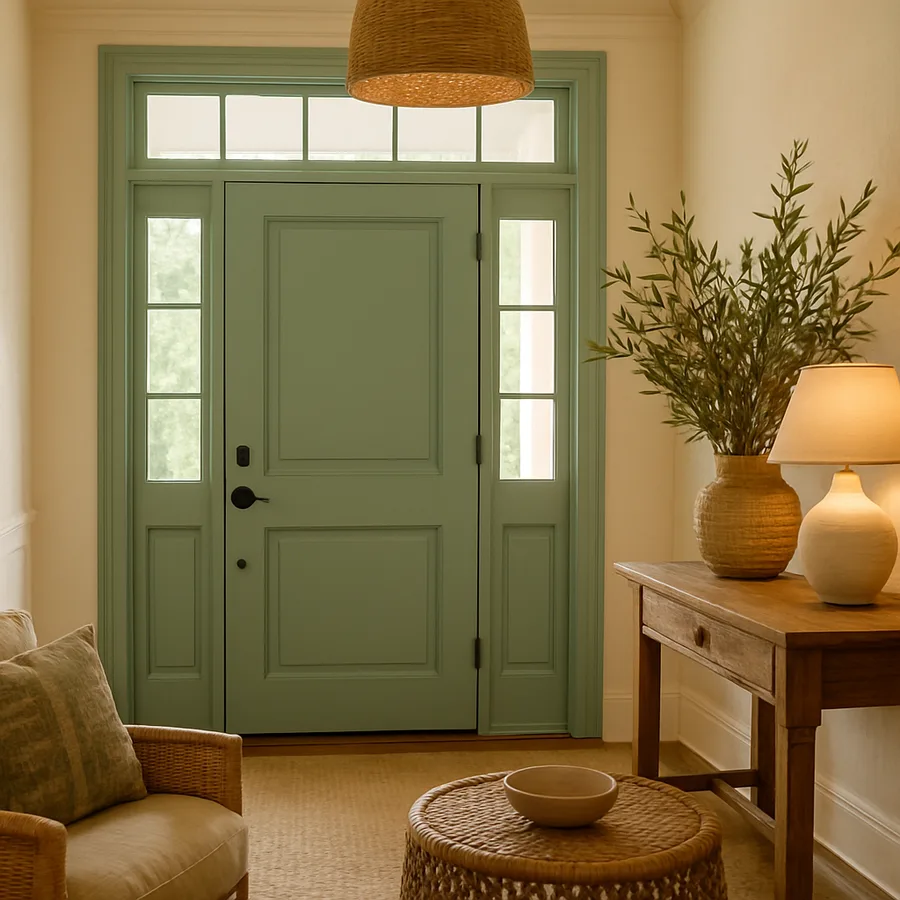
There is a meaningful difference between a front door with sidelights and transom installed as three separate elements, and a custom entry system in which all three pieces are designed and built as a single architectural unit. The first approach produces a perfectly functional entry. The second produces a piece of architecture. Homeowners commissioning custom builds increasingly understand this distinction, and millwork shops have responded with sophisticated unified entry systems that treat the door, sidelights, and transom as one continuous design conversation.
This guide walks through the technical reasoning behind unified entry construction, the design decisions that separate a coherent system from a collection of parts, the structural framing implications, sourcing strategies for custom millwork, and the questions to ask any builder you are considering for the work.
What Unified Construction Actually Means
In most American homes, the front entry consists of three independent units. A pre-hung door is installed first, then separate sidelights are framed and trimmed, and finally a transom is added above. Each piece carries its own framing, its own casing, and its own weather seal. The result works, but the visual reading often suffers from small misalignments: trim profiles that almost match, sight lines that nearly line up, and proportions that feel close to right without quite arriving there.
A unified entry system, by contrast, is engineered and built as a single object. The frame for the door, sidelights, and transom is constructed as one continuous structure, often from a single piece of carefully selected lumber. The casing wraps the entire assembly without interruption. The glass, hardware, and finishes are coordinated as a set. The American Society of Interior Designers has observed that custom unified entries have become one of the most-requested high-end residential features, with specification volume up by an estimated 89 percent over the past five years.
Have you ever stood at the entry of an old, well-built home and felt that everything around the door simply belonged together? That sensation almost always comes from unified construction, even when the door itself is relatively modest. The frame, the casing, the glass divisions, and the hardware all speak a common language, and the eye reads the entry as a single architectural statement.
Design Decisions That Define The System
The first decision in any unified entry build is the overall visual rhythm of the assembly. A typical configuration is door-flanked-by-sidelights with a transom above, but variations include arched transoms over flat side lights, full-height side lights without a transom, multiple narrow side lights instead of two wide ones, and pivoting transoms that operate for ventilation. Each variation produces a different facade reading and serves different architectural styles.
The second decision is the division pattern of the glass. Unified entries gain enormous visual coherence when the glass divisions in the side lights, transom, and any door glazing all share a common grid. A common modern approach is a single large pane in each unit; a traditional approach divides each unit into rectangular or square panes matched in proportion. Mixing division styles between door, side lights, and transom is the most common rookie mistake and immediately reads as awkward.
- Single-pane modern: One large piece of glass per unit, clean and contemporary, requires premium glazing for energy performance.
- Three-by-three Craftsman: Square grid divisions, traditional, works with shingle and bungalow styles.
- Vertical mullion contemporary: Tall narrow panes, modern Mediterranean and prairie compatible.
- Leaded or stained accent: Decorative glass only in the transom or upper sidelight portions, traditional and luxury markets.
The third decision is casing profile and width. Generous casing of five to seven inches wide creates a stately reading, while flat trim of two to three inches feels modern and restrained. The profile should be consistent across the door, side lights, and transom, with no visible interruptions or seams where one piece meets another.
Wood Species And Construction Methods
Custom unified entries are almost always built from solid hardwood, with mahogany, white oak, walnut, and cherry being the most common species. Each carries a different cost, stability profile, and aesthetic character. The choice is constrained partly by exposure: south-facing entries in hot climates need species that resist UV damage and dimensional movement, while sheltered north-facing entries have more latitude.
Construction methods divide along a quality spectrum. At the high end, the frame is built from quartersawn lumber, with grain orientation optimized for stability and joints cut with traditional mortise-and-tenon or modern Domino-style floating tenons. Mid-range custom shops use straight-grain solid lumber with biscuit or pocket-screw joinery and are usually adequate for sheltered installations. Factory pre-hung units with sidelights and transoms attached, sometimes marketed as custom, generally use finger-jointed or laminated components and should not be confused with true unified construction.
According to This Old House, the price differential between a true custom unified entry and a high-end assembled system can run $8,000 to $20,000, but the durability and aesthetic differential typically justifies the cost on homes intended to be held long term.
Structural Framing And Header Considerations
Unified entries impose substantial structural demands on the rough opening. A typical configuration of an eight-foot door, two two-foot side lights, and a one-foot transom requires a rough opening more than seven feet wide and nine feet tall. The header above this opening must span the entire width, which on most exterior walls means either a deep engineered lumber beam or a steel flitch plate header.
On new construction, this is straightforward, requiring only that the structural engineer specify appropriate header sizing and that the framer install according to specification. On renovations, the opening expansion often requires temporary shoring of the upper floor or roof while the existing header is replaced. The International Code Council publishes detailed header sizing tables that contractors should consult before any opening expansion.
Are you considering a unified entry retrofit in an existing home? Get a structural engineer involved early, ideally before finalizing the entry design, because the structural constraints may push back on dimensional ambitions. A four-foot door with three-foot side lights might be aesthetically perfect but structurally prohibitive in an existing wall, while a three-and-a-half-foot door with two-foot side lights might achieve nearly the same visual effect with vastly simpler framing.
Hardware And Weather Sealing
Smart lock integration has become an increasingly common request on custom unified entries, and the integration deserves careful thought during the design phase rather than as a retrofit. Modern electronic locksets are larger and deeper than traditional mechanical hardware, and the door must be specified with appropriate stile width and reinforcement to accept them without compromising structural integrity. Wiring runs for hardwired smart locks also need to be planned into the frame, ideally through the hinge side, before the door is built.
Doorbell and intercom placement is another small decision with outsized aesthetic impact. The most elegant solutions integrate the doorbell into the side light casing or the door frame itself, with finish hardware matched to the entry hardware family. Surface-mounted plastic doorbells from a hardware store will undermine an otherwise beautiful custom entry, and the best custom shops will incorporate the doorbell location into the original design rather than treating it as an afterthought.
Hardware on unified entries needs to coordinate across all three units, not just the door. The hinges and lockset are obvious; less obvious but equally important are the weather seals at every meeting point. Where the door meets the side light jamb, where the side light meets the head jamb, and where the head jamb meets the transom sill, each transition is a potential air leak point that must be sealed during fabrication, not as an afterthought during installation.
Premium custom shops use magnetic weatherstrip on the operable door, compression seals at every fixed glass perimeter, and continuous threshold sweeps that span the entire entry width. This level of detailing produces an entry that performs nearly as well as a standard door at full size, despite the much larger surface area.
Hardware finishes deserve careful coordination. The hinges, lockset, handleset, and any visible fasteners should all share the same finish family, whether that is aged bronze, satin nickel, oil-rubbed copper, or matte black. According to the American Society of Interior Designers, mismatched hardware finishes are the single most common detail mistake on otherwise excellent custom entries.
Sourcing And Working With A Custom Shop
Identifying the right custom millwork shop is the most consequential sourcing decision in any unified entry project. The best shops typically have a portfolio of completed entries with photographs of the construction process, references from architects and high-end builders, and a willingness to walk you through their wood selection and joinery methods before pricing the project.
A reasonable timeline for a fully custom unified entry runs eight to sixteen weeks from final design approval to delivery, with installation typically requiring an additional one to two weeks of finish carpentry. Rushing this timeline almost always produces compromises in wood selection, joinery, or finish quality. Plan accordingly, and start the conversation with the shop at least six months before the desired installation date.
Contract structure with a custom shop deserves careful negotiation. Reputable shops typically require a deposit of 30 to 50 percent at order placement, a progress payment at the start of finish work, and a final payment on delivery. The contract should specify the exact wood species and grade, the joinery method, the hardware brand and finish, the glass specification, and a clear timeline with milestones. Disputes on custom millwork projects almost always trace back to vague specifications, and a thorough contract front-loads the conversation about exactly what is being built.
Warranty terms vary widely and are worth scrutinizing. The best custom shops warrant their joinery and structural integrity for ten years or more, with separate shorter warranties on finish and hardware. Cheaper shops may offer only one-year warranties or limit coverage to material defects rather than workmanship. The American Institute of Architects recommends requesting written warranty terms before any contract is signed, and being skeptical of shops that hesitate to put their guarantees in writing.
Finally, plan for the inevitable maintenance cadence. Custom wood entries require refinishing every five to ten years depending on exposure, and the refinishing process is significantly more involved on a unified system than on a standalone door because the side lights and transom must be refinished simultaneously to maintain visual coherence. Budget for this from the outset, and consider whether the original shop offers refinishing services or whether a qualified finish carpenter in your area can take on the work when the time comes.
Cost expectations should be calibrated to the scale of the system. A modest unified entry with a three-foot door, two narrow side lights, and a simple transom in mahogany might run $12,000 to $18,000 installed. An ambitious system with an eight-foot door, generous side lights, an arched transom, and premium hardware can easily exceed $40,000. Recent reporting in Architectural Digest indicates that bespoke entries above $50,000 have become routine in the high-end coastal markets of California, Florida, and the Hamptons.
Conclusion
A custom front door with integrated sidelights and transom is one of the most architecturally consequential investments a homeowner can make, and one of the most frequently undervalued. The unified system reads as a single deliberate gesture rather than three assembled parts, and that coherence is the difference between an entry that looks expensive and an entry that looks intentional. The two are not the same.
The decision framework for a unified entry centers on three questions: does the home's architecture support the visual ambition of a true custom system, does the budget allow for high-quality materials and joinery rather than upgraded factory components, and does the timeline accommodate the months required for proper custom millwork? When all three answer affirmatively, the unified entry is almost always the right choice. When any answer is negative, simpler alternatives may serve better.
The most successful custom entries are those built in close collaboration between homeowner, architect, and millwork shop, with all three parties contributing to the design conversation from the earliest sketches. Entries designed by one party and built by another rarely achieve the coherence that distinguishes the best work in this category. Cross-disciplinary collaboration costs more in coordination time, but the result is genuinely different.
If you are beginning to plan a custom entry, the first step is not to choose a door style or a wood species but to find a millwork shop whose existing work resonates with your aesthetic. Spend an afternoon visiting their showroom or completed projects, ask hard questions about their materials and joinery, and bring your architect into the conversation early. The right partnership produces an entry that will be the defining feature of the home for as long as you own it, and the months you invest in finding the right team will repay themselves many times over in the result.


Comments
Post a Comment