Front Door Hardware Updates That Boost Curb Appeal in a Day
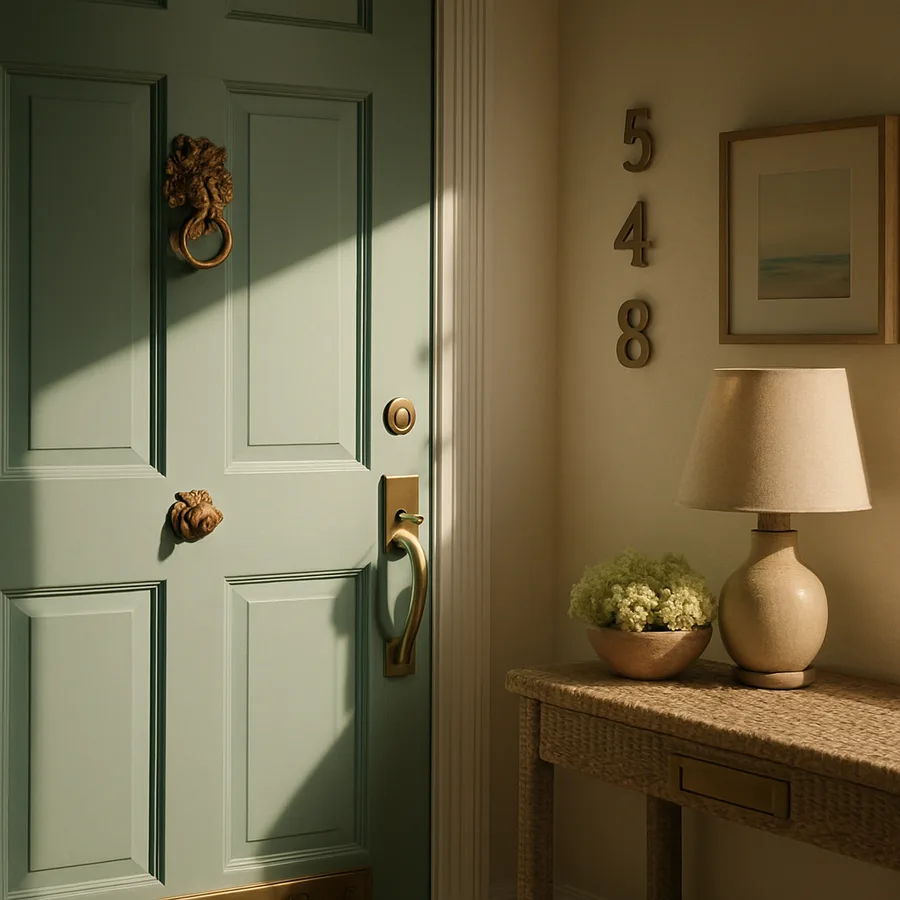
If your front door is the face of your home, then your hardware is the jewelry. It is the first thing a hand touches and the last thing the eye lingers on as the door swings open. Yet for most homeowners, hardware is treated like a builder-grade afterthought, picked from a discount aisle in a hurry and forgotten for two decades. That is a missed opportunity. A weekend afternoon and a few thoughtful purchases can transform a tired entry into something that looks expensive, considered, and entirely yours.
Curb appeal carries real economic weight. The National Association of Realtors (NAR) reports that 71% of buyers say curb appeal is important when choosing a home. Meanwhile, a Zillow survey cited across the trade press found that small exterior upgrades, including hardware, often deliver a 75% to 100% return on investment, far outpacing many interior renovations. NAR's annual Remodeling Impact Report consistently ranks exterior projects among the highest-joy-score upgrades, with homeowners saying they wish they had done them sooner.
Why Hardware Punches Above Its Weight
Hardware sits at eye level, at hand level, and at memory level. It is the touchpoint where the architecture meets the human, and that intimate scale gives it disproportionate visual power. A beautifully painted door with cheap hardware reads as cheap. A modest door with rich, well-chosen hardware reads as designed. The math is unfair, but it is consistent. Editors at the Better Homes & Gardens exterior team have written that hardware is the highest-leverage exterior swap a homeowner can make, both visually and economically.
The reason is that hardware operates on multiple senses at once. Visually, it provides a focal point and a tonal anchor. Tactilely, it provides weight, temperature, and resistance. Acoustically, it provides the satisfying click of a quality latch or the resonant tap of a real knocker. Builder-grade hardware feels light, hollow, and noisy. Quality hardware feels solid, cool, and quiet. Visitors register the difference within seconds, even if they cannot articulate it.
Start With the Handset: The Anchor Piece
The handset, the combination of latch, deadbolt, and grip, is the largest piece of front-door hardware and the natural anchor for the rest of the composition. If you only update one element, make it this one. Look for a thumb latch handset with a long backplate or a single-piece escutcheon that elongates the door visually. Builders commonly install round-knob deadbolts because they are cheap, but a thumb-latch grip immediately signals an upgrade.
Consider the metal first. Unlacquered brass has dethroned polished chrome as the designer favorite, because it patinates beautifully over years of weathering and use. Aged bronze offers a quieter alternative for rustic or transitional homes. Matte black has surged for modern farmhouses and minimalist builds. Whatever you choose, commit to a single metal family for every piece you can see from the street. Mixed metals work indoors, but on a front door they tend to look unfinished.
Handsets from brands like Emtek, Baldwin, Rocky Mountain Hardware, and Sun Valley Bronze are considered reference points among designers. They cost more than big-box options, but a well-built handset will outlive several paint jobs. Cheaper alternatives exist that look close at a glance, but the heft, the finish, and the latch action distinguish the original. Have you ever closed a door that felt like a vault? That sensation is engineered into quality hardware, and visitors notice.
The Knocker: Small Object, Outsized Personality
A knocker is half hardware, half ornament. It signals that the home values craft and a sense of arrival. Many modern doors omit knockers entirely, defaulting to a doorbell button, but adding even a small lion-head, ring, or geometric knocker reintroduces a sense of theater. The knocker also balances the deadbolt visually, adding mass to the upper third of the door.
Choose a knocker in the same metal family as the handset. Scale matters more than ornateness. Undersized knockers, common on cheap reproductions, look toy-like on a full-size door. A knocker should read clearly from across the street and feel substantial in the hand. For traditional doors, a brass ring or lion-head reads as classic; for modern doors, a simple horizontal bar or geometric medallion reads as architectural.
Even if you have a working doorbell, a knocker remains useful. It signals to delivery drivers, gives guests a tactile option, and serves as an architectural punctuation mark. A knocker priced between $80 and $250 is enough to feel substantial without veering into custom-forge territory.
Hinges, Kick Plates, and the Details Most People Forget
The hardware story does not end at the handset. Hinges, kick plates, mail slots, and weatherstripping all contribute to the polished impression of an entryway. Most builder hinges come in a default brass or nickel that mismatches whatever upgraded handset you install. Replacing them is one of the most overlooked, highest-impact swaps you can make. Match the hinge metal to your handset, and the entire door reads as a single composition rather than a parts catalog.
A kick plate is the brass, bronze, or black metal panel mounted across the bottom of the door. It protects the wood from dents, scuffs, and weather, and it adds a horizontal stripe of metal that visually grounds the composition. Kick plates are inexpensive (often $40 to $120) and screw on in fifteen minutes. They are particularly effective on solid-color doors where they introduce a second material without overwhelming the surface.
Mail slots, if your home has one, deserve the same attention. A vintage cast brass mail slot can be the single most distinctive detail on an entire facade. Even if your mail is delivered to a curbside box, a decorative mail slot adds character and historical depth. House numbers, while technically separate from the door, fall in the same visual family and should match the door hardware in metal and style.
Choose Your Metal Story
Designers talk about the metal story of an entryway, the dominant family of finish that ties the hardware, lighting, and accents together. There are three metal stories that dominate exterior design today: warm brass (unlacquered or aged), warm bronze (oil-rubbed or aged), and matte black. Polished nickel and chrome have largely fallen out of fashion for exteriors because they read as cold and dated.
Unlacquered brass is the choice of the moment. It begins life mirror-bright and develops a soft, mottled patina over years of weathering. The patina is a feature, not a flaw, and it makes the door feel like it has always been there. Aged bronze starts dark and stays dark, offering a steady, rustic look that pairs especially well with stone, brick, and warm wood. Matte black creates the strongest graphic contrast and is most often paired with sage green, navy, white, or natural wood doors.
Whichever metal story you choose, commit to it across every visible piece: handset, knocker, kick plate, hinges, mail slot, house numbers, and porch lights. Mixed metals can work indoors with careful styling, but at the front door, consistency reads as luxury. The American Society of Interior Designers (ASID) has noted that exterior consistency is one of the strongest indicators of a designed (versus decorated) home.
Tools, Time, and Order of Operations
The good news is that almost every hardware swap on a front door is a beginner-friendly DIY project. The bad news is that the order of operations matters, and skipping ahead can mean drilling a hole twice or scratching a finish you cannot repair. Start with the handset because it sets the metal story for everything else. Then move to hinges, then kick plate, then knocker, then house numbers, then any porch lighting that needs to match.
You will need a drill with a Phillips head bit, a flathead screwdriver, a tape measure, painter's tape, and a soft cloth to protect finishes. Most handsets come with a template that pre-marks the holes. Hinges typically use existing screw holes, though you may need to fill and redrill if you change manufacturers. Kick plates require careful measurement and a steady hand to drill straight pilot holes through the metal.
Plan for a half day on a dry weekend. Remove the old hardware first, lay the new pieces on a clean towel beside the door, and dry-fit each one before committing. Apply a small amount of clear silicone behind exterior backplates to prevent water intrusion behind the door surface. When you are finished, wipe each metal piece with a soft cloth to remove fingerprints and inspect from the curb. The transformation is often startling, and it has cost a fraction of any major renovation.
Conclusion: A Day Well Spent
Few home projects deliver the ratio of effort to impact that a front door hardware refresh delivers. For an investment of $300 to $1,200 and a single Saturday, you can move your entry from generic to distinctive, from forgotten to deliberate. The door looks better, feels better, and signals to every visitor that the household pays attention to the details that matter.
The principles are simple. Choose one metal family and commit to it across every visible piece. Upgrade from builder-grade weight to substantial, well-engineered weight. Replace the small things that nobody talks about, like hinges and kick plates, because their absence is the difference between designed and decorated. Sample finishes outdoors before committing, since every metal reads differently in natural light versus showroom fluorescents.
The data backs the strategy. NAR's Remodeling Impact Report and exterior surveys from the National Association of Home Builders (NAHB) both rank curb-appeal upgrades among the highest-satisfaction projects homeowners can take on. Hardware is the most concentrated form of that upgrade. It rewards taste over budget and patience over speed.
If you are reading this on a weekday, walk to your front door tonight, photograph the existing hardware, and start a short shopping list. Order the handset first, then the matching pieces in the same metal family. By Sunday afternoon, you will be standing on the curb looking at a different home. Schedule the upgrade for this weekend, and let the smallest project on your list become the proudest one.
One additional consideration is how hardware ages. Builder-grade hardware uses a thin lacquer coating that is intended to keep the metal looking factory-fresh, but the lacquer cracks and peels within a few years, leaving an unsightly mottled finish that cannot be repaired. Quality hardware, particularly unlacquered brass and aged bronze, is meant to evolve. The brass darkens at touch points where hands rest, the bronze deepens in low-traffic recesses, and the entire piece develops a patina that tells the story of years of use. Designers describe this as living finish, and it is one of the strongest signals of considered design. Visitors register the difference between a hardware piece that is trying to look new and one that is allowed to age gracefully, even if they cannot articulate why.
If you are concerned about maintenance, plan for a simple cleaning routine rather than aggressive polishing. Wipe the hardware monthly with a soft, damp cloth to remove fingerprints and pollen. Avoid commercial brass polishes, which strip the patina and leave the metal looking artificial. For homes near the ocean, where salt accelerates corrosion, choose hardware in solid brass or marine-grade stainless rather than plated alternatives. The Sherwin-Williams exterior team and several specialty hardware retailers have published guides on maintaining living finishes in coastal climates, and the consensus is that less intervention almost always produces better long-term results than aggressive polishing.
One last consideration is security. Modern hardware has integrated significant security improvements over the past decade, including bump-proof and pick-resistant deadbolts, smart locks with keypad and biometric entry, and reinforced strike plates that resist forced entry. Upgrading to a Grade 1 or Grade 2 deadbolt (the higher security ratings issued by the Builders Hardware Manufacturers Association) significantly reduces the likelihood of a successful break-in attempt. Many quality handset manufacturers integrate these higher-rated deadbolts into their aesthetic offerings, so you do not have to choose between style and security. Ask your hardware retailer about the security rating of any handset you are considering, and if you are upgrading the deadbolt separately, look for a Grade 1 or Grade 2 designation on the packaging.
More Articles You May Like



Comments
Post a Comment