Vertical Garden Pockets for Renters That Mount Without Drilling
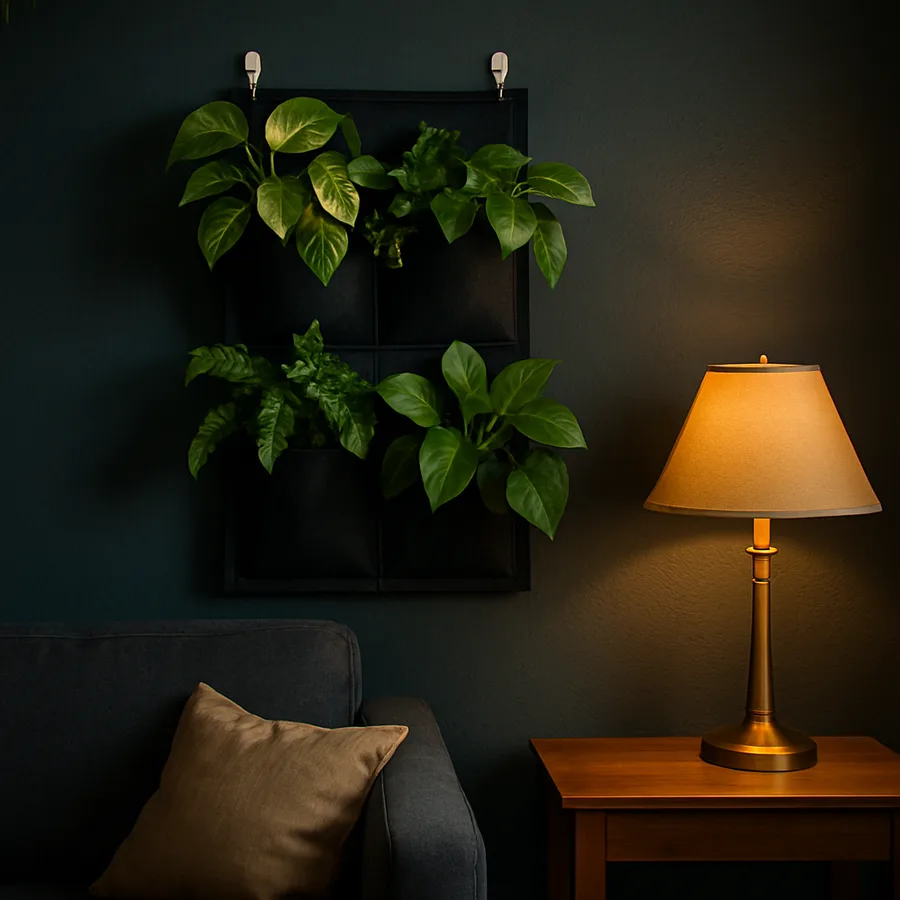
Renting a home should not mean renting a personality. Yet for years, anyone living in a leased space has been told that lush, vertical greenery is for homeowners only, because it requires anchors, framing, and the kind of permanent damage that costs deposits. That premise is officially obsolete. A new generation of vertical garden pocket systems mounts using removable adhesive strips, tension rods, and over-the-door brackets that leave nothing behind, transforming bare walls into living installations without a single drill bit touching the drywall.
The shift matters because, according to a 2024 housing report from Pew Research, more than 36 percent of American households rent their primary residence, and that number rises sharply in major urban centers. For these millions of households, the design industry has historically offered limited compromises and a lot of guilt about cluttered tabletops. Vertical garden pockets that mount without drilling resolve the tension by giving renters genuine vertical real estate to plant on, often at a fraction of the cost of a permanent installation. The trick is understanding which mounting systems hold up and which ones disappoint.
Why Vertical Pockets Suit Apartment Living
The case for vertical pockets in a rental starts with floor space. Apartments often run between 500 and 900 square feet, with every horizontal surface already accounted for by furniture, dishes, or paperwork. Walls, by contrast, are usually underused. A vertical garden recovers space that the lease included in the rent but the floor plan never let you enjoy. Even a single eight-pocket panel measuring two feet wide by three feet tall delivers the equivalent planting capacity of a full bookshelf without occupying any horizontal real estate.
The second case is light. Apartments rarely have ideal natural light in every room, but most have at least one wall that catches strong indirect light at some point in the day. A vertical pocket system can be repositioned as the seasons shift, something that no built-in installation can offer. This adaptability is one of the reasons renters often have surprisingly green-friendly setups despite the lack of permanence.
The third reason is portability itself. A renter typically moves every three to five years, and a vertical garden that can be unmounted, rolled, and rehung in a new home holds its value over multiple leases. A standard pocket panel can be unmounted in under fifteen minutes, with the plants either left in place during the move or temporarily transferred to a tray. The Royal Horticultural Society notes that this kind of mobile growing setup has become especially popular in dense cities where outdoor space is scarce.
Have you ever held off on planting indoors because you assumed your apartment would not accommodate a real garden? The truth is that the only requirement for vertical gardening is a mostly flat wall, a way to mount, and access to indirect light. Almost every rental satisfies these basics, which means the constraint has always been imagination and information, not physics.
Mounting Systems That Leave No Marks
The category of damage-free mounting has grown substantially in the past decade. There are four primary methods, each suited to different wall types and weight loads. Heavy-duty adhesive strips are the most popular for lightweight panels under fifteen pounds, and the leading brands rate their products to hold up to twenty pounds per pair of strips when applied properly. Application requires cleaning the wall with isopropyl alcohol, allowing adhesive to cure for an hour, and waiting a full day before loading the planter.
Tension rods are the second method, and they shine in narrow spaces such as between cabinets, inside closets, or in window alcoves. A heavy-duty curtain tension rod can support a hanging fabric pocket panel up to thirty pounds dripping wet, depending on rod quality. Tension installations leave zero residue and disassemble in seconds. The trade-off is that they require two parallel walls or fixtures spaced no more than the rod's maximum extension apart.
Over-the-door brackets turn any standard interior door into a planting wall. A two-bracket setup can hold a panel of fifteen to twenty pockets, supporting roughly twenty-five pounds saturated. The trick with door-hung gardens is choosing low-spill plants and plants that tolerate the small movement of door operation, since each open and close gives the panel a gentle nudge. Surprisingly, most pocket plants tolerate this fine because gentle movement strengthens stems rather than damaging them.
The fourth method is freestanding leaning trellises and ladder planters, which use the wall only as a backstop rather than as a structural anchor. These are technically not mounted at all, which makes them the most renter-friendly option of all. They tend to require slightly more floor space, but for renters with even a few extra square feet to spare, they offer the most plant capacity per dollar and require no installation skill whatsoever.
Choosing Pocket Materials That Last
Not all pocket panels are created equal, and the material choice will determine whether the panel lasts six months or six years. The four common materials are recycled felt, polyester canvas, woven natural fiber, and rigid plastic. Each has a distinct moisture handling profile that affects which plants will thrive and how often the panel will need replacement.
Recycled felt is the most popular and most affordable, with prices typically running between twenty and sixty dollars per panel. Felt holds water well, breathes nicely, and tolerates root growth, but it begins to break down after about three years of heavy use. Polyester canvas is more durable, often lasting five to seven years, but it is less breathable and can hold moisture too long for some species. The Better Homes and Gardens editorial team has highlighted hybrid felt-canvas blends as the best balance of breathability and longevity for residential use.
Woven natural fiber pockets, often made of jute, coconut coir, or hemp, are the most aesthetically beautiful option, with rich texture that adds warmth even before the plants grow in. They tend to dry out faster, however, which means they suit drought-tolerant plants like succulents and herbs better than thirsty ferns. Material should always match plant choice, and the most common renter mistake is buying a beautiful jute panel and then planting it with moisture-loving species that drain and droop within weeks.
Rigid plastic modular systems are the heaviest of the four but also the most controlled. They drain through engineered channels, preventing the wall behind from staining, and they accept slip-in pots that can be swapped seasonally. Slip-in design is what makes them ideal for renters who want the visual stability of a permanent garden without the species commitment of a sewn-in pocket panel.
Plant Selection for Damage-Free Vertical Gardens
Plant selection for a renter-friendly garden is a careful negotiation between visual ambition and practical constraints. Adhesive-mounted panels generally cap out around twenty pounds saturated, so heavy soils and large root masses are out. The best plant candidates are lightweight, shallow-rooted, and tolerant of a few missed waterings, since renters move and travel more than the average homeowner.
The renter-friendly all-stars include pothos, philodendron, spider plants, peperomia, string of pearls, and herbs like mint, basil, and parsley. Spider plants and pothos are particularly forgiving, recovering from drought, low light, and neglect with minimal complaint. The original NASA Clean Air Study identified spider plants among the most effective natural air purifiers, removing measurable amounts of formaldehyde and xylene from sealed environments, which makes them a triple win for small apartments where air circulation is limited.
Edible verticals deserve a special mention because they convert decorative space into productive space. A single pocket panel can host enough herbs to supply a household's cooking, with thyme, oregano, basil, parsley, and chives all happy in shallow soil. Renters can effectively grow a year-round herb garden in less than four square feet of wall, an option that homeowners with sprawling yards rarely outperform in terms of culinary convenience.
What about flowering plants? Most are too demanding for vertical pockets in low-light apartments, but African violets and hoyas are notable exceptions. Both tolerate stable indoor conditions and reward consistent watering with seasonal blooms. They tend to flower better when slightly root-bound, which actually suits pocket pots well, since the contained space simulates the bound conditions they prefer.
Watering Without a Plumbing Hookup
The challenge of watering a wall garden without permanent plumbing turns out to be solvable with simple, affordable hardware. The simplest approach is hand watering with a long-spout can, but a more elegant solution is a self-contained reservoir system that hangs above the panel and feeds drip lines by gravity. Reservoir bags ranging from one to five gallons in capacity can run a small wall for several days between refills.
Battery-operated mini pumps add automation without requiring an outlet on the wall itself. Pumps in this category typically run on a single charge for three to four weeks and pulse water through tubing on a programmable schedule. They are quiet enough to use in a bedroom and small enough to hide behind the panel itself. According to a 2025 survey by Garden Center Magazine, sales of battery-operated drip irrigation kits to apartment dwellers grew by 62 percent in the past two years, signaling how mainstream this approach has become.
Catching overflow is the part most renters overlook. A drip tray, planter saucer, or even a folded towel placed beneath the panel during watering protects floors and prevents the kind of slow water damage that lands on a security deposit deduction list. The two-minute habit of placing a tray before watering protects both your floor and your reputation as a renter when the lease ends.
Are you worried about overwatering when you travel? Self-watering pocket inserts solve this problem with built-in reservoirs of their own, sized to release water gradually over five to seven days. These inserts typically cost between five and twelve dollars per pocket and pay for themselves the first time you take a long weekend without coming home to crispy plants.
Styling Tricks That Make Pocket Gardens Look High End
Vertical pocket gardens have a reputation problem in some design circles, where they are assumed to look craftier than chic. The truth is that a thoughtfully styled pocket garden can rival custom installations costing ten times more, but it requires attention to composition, color rhythm, and density. Think of the wall as a painting rather than a planter.
Composition starts with a focal point. Place the largest, most visually striking plant in either the upper third or center of the panel, then arrange medium plants around it and trailing plants along the bottom edge. This creates a visual cascade that draws the eye downward across the wall. Trailing plants along the lower edge soften the panel's silhouette and disguise the boundary between the planter and the wall, which is what gives the installation its custom feel. Editors at House Beautiful describe this trick as the difference between a planter that looks added and one that looks built in.
Color rhythm matters more than people expect with green-on-green. Subtle variations in leaf color, from chartreuse to deep forest, create depth that a single shade cannot. Adding even one or two plants with variegated foliage, such as marble pothos or variegated tradescantia, creates pinpoint highlights that make the entire panel look more dimensional. Aim for roughly three distinct foliage colors across a single panel.
Density matters most of all. A sparsely planted panel reads as incomplete, while an overstuffed one reads as messy. The sweet spot is around eighty percent fill, where most pockets are planted but a few are intentionally left for air or for a single sculptural object like a small driftwood piece, a vintage botanical print, or a tiny ceramic object. These accent pockets give the eye places to rest between the dense planted zones, and they elevate the panel from craft project to genuine interior design.
Conclusion: Renting With Roots
Vertical garden pockets that mount without drilling represent a small revolution in renter-friendly design. They turn the most underused surface in any apartment, the bare wall, into a productive, beautiful, and emotionally restorative feature. The mounting hardware is now mature enough to hold real weight reliably, the pocket materials are durable enough to last several leases, and the watering systems are simple enough that anyone can maintain a thriving wall in fifteen minutes a week.
The deeper benefit is psychological. Renters often defer their interior dreams until they buy, but homeownership is increasingly delayed for entire generations. Living well now, in the home you have, is not a compromise, and a wall full of growing plants is a daily reminder that even temporary homes deserve real beauty. The plants do not know the lease length, and neither does anyone visiting your apartment.
Practically, the cost-to-impact ratio of a vertical pocket garden is among the highest in interior design. A modest budget of one hundred to two hundred dollars covers a beautiful panel, mounting hardware, plants, and reservoir, and the result transforms the room more visibly than nearly any other comparably priced upgrade. The wall pays for itself in the first month of how the room feels to walk into, and it goes on giving for years afterward.
Ready to claim a wall? Pick the brightest indirect-light wall in your home, measure the available space, and choose a panel that matches your weight tolerance and aesthetic. Stock up on plants you already love rather than chasing exotic species, and give yourself a slow weekend to install and plant. Your future self will thank you every time the morning light hits the wall and reveals what was there waiting all along.
More Articles You May Like



Comments
Post a Comment