The Art of Transformation: How KDArchitects' Morph is Redefining Interior Design
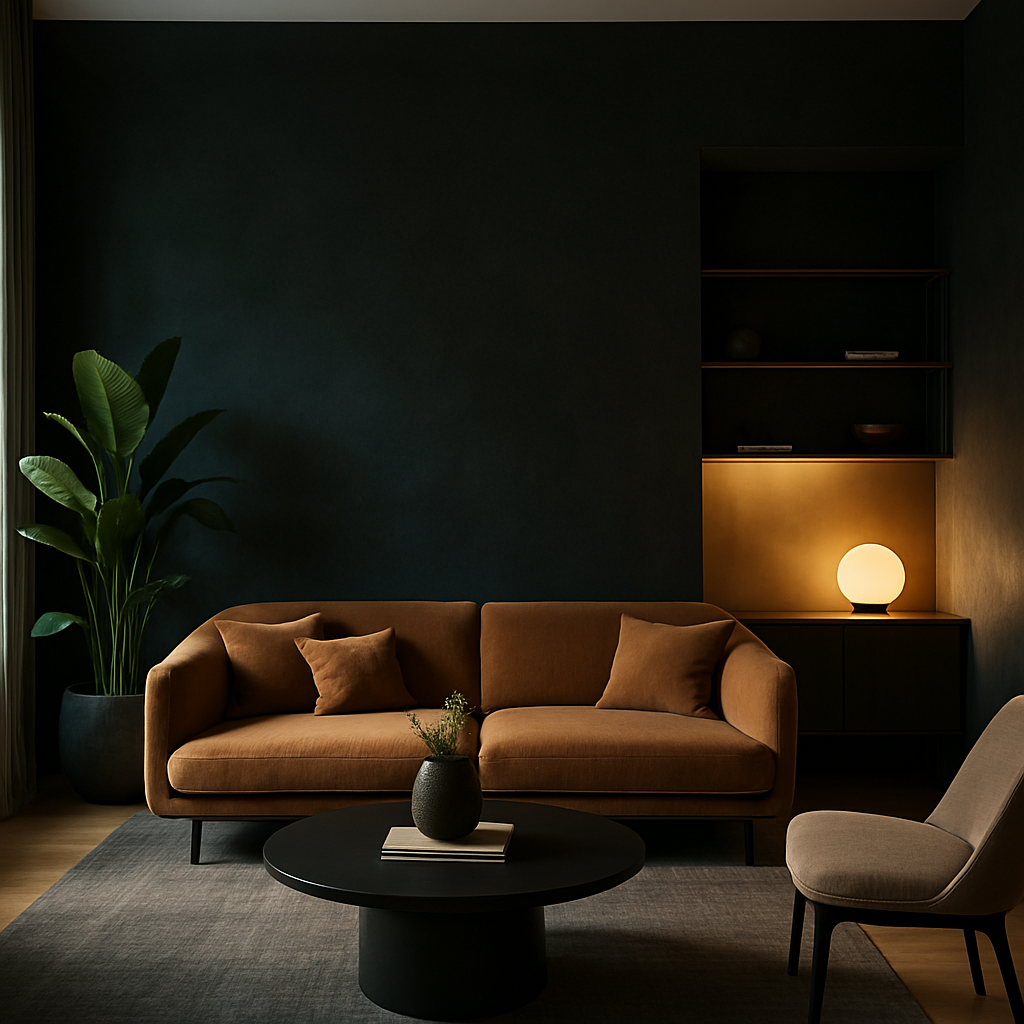
Interior design has always been about change -- converting empty volumes into spaces that shelter, inspire, and support human activity. But a new wave of transformation-centered methodology pushes that premise further, treating design not as a single event that produces a fixed result but as an ongoing process that enables spaces to evolve alongside their occupants. This morphing approach to interiors draws on principles from adaptive architecture, systems thinking, and behavioral psychology to create environments that respond to shifting needs rather than resisting them. The methodology has attracted attention from industry authorities including the American Society of Interior Designers (ASID) and the International Interior Design Association (IIDA), both of which have featured adaptive design frameworks in recent educational programming.
For homeowners and commercial clients accustomed to the traditional design model -- hire a designer, select finishes, build it once, live with it for a decade -- the morphing paradigm requires a fundamental recalibration of expectations. You are not buying a finished room; you are investing in a spatial system capable of producing multiple room experiences from the same footprint. This distinction explains why transformation-focused designers typically charge $250 to $500 per hour or 15 to 25 percent of total project cost: the analytical and technical scope of their work exceeds conventional decorating by a significant margin. The results, however, justify the premium. Have you ever walked into a room and felt that it was working against you rather than for you? Transformation design exists to ensure that feeling never recurs.
Redefining the Relationship Between Space and Function
Traditional interior design assigns each room a primary function and optimizes for it: the bedroom for sleeping, the kitchen for cooking, the living room for socializing. Transformation methodology rejects this one-to-one mapping in favor of a many-to-one model where a single space supports multiple functions through deliberate infrastructure and flexible furnishing. The intellectual roots of this approach extend to Japanese residential architecture, where tatami rooms historically served as sleeping, dining, working, and ceremonial spaces depending on the furnishings deployed. The contemporary Western expression of this principle, filtered through the Japandi aesthetic that merges Japanese spatial philosophy with Scandinavian material warmth, has become one of the most discussed design directions in publications like AD PRO and on platforms like Houzz.
The practical execution of multi-functional space design requires rigorous activity mapping. A transformation designer spends the first phase of any project documenting exactly how the client uses each room across a representative week -- not how they think they use it, but how they actually use it, often through time-lapse observation or structured journaling exercises. This data reveals patterns invisible to both client and conventional designer: the dining table that serves as a home office for six hours daily, the guest bedroom occupied only twelve nights per year, the living room corner where the client instinctively retreats for phone calls. Each pattern represents either a design opportunity or a spatial conflict that the transformation layout must address.
The NCIDQ examination, administered by the Council for Interior Design Qualification, tests the spatial analysis skills that underpin effective transformation design. Certified designers are trained to evaluate structural constraints, mechanical system locations, egress requirements, and accessibility standards -- all of which determine which walls can become movable, where electrical infrastructure can be embedded in floors, and how multiple furniture configurations can maintain code-compliant clearances. Without this technical foundation, transformation design risks becoming impractical fantasy rather than buildable reality. Understanding what a space can become depends on understanding what it already is -- and the next section examines how technology amplifies the morphing capability of well-designed rooms.
Technology as the Engine of Spatial Transformation
Smart home integration has evolved from a luxury novelty to a practical enabler of transformation design. Motorized partition walls, retractable ceiling-mounted screens, automated lighting scenes, and voice-activated furniture mechanisms allow a room to shift between configurations in seconds rather than hours. A living room that transforms into a home theater no longer requires physically rearranging furniture and manually closing blinds -- a single command triggers motorized blackout shades, dims overhead lighting, raises ambient LED strips behind the seating area, lowers a projection screen from a ceiling pocket, and activates the surround sound system. The technology makes the transformation frictionless enough that occupants actually use it daily rather than defaulting to a single static arrangement out of convenience.
AR/VR visualization has become equally important to the design and sales phases of transformation projects. Designers create immersive digital twins of the proposed space in each of its intended configurations, allowing clients to virtually walk through their future living room as an office, a gathering space, a workout area, and a media room before committing to construction. This visualization capability reduces change orders, increases client satisfaction, and accelerates decision-making. ASID members who have adopted AR/VR presentation tools report that client approval cycles for complex projects have shortened by 30 to 50 percent, and post-completion satisfaction scores have increased correspondingly. Houzz has integrated AR visualization features into its platform specifically to support this growing segment of design practice.
The cost of smart home technology has declined steadily, making transformation design accessible to broader market segments. A comprehensive motorized partition and automated lighting system for a primary living area now costs $8,000 to $20,000 installed -- a fraction of the $50,000 to $100,000 that equivalent systems commanded a decade ago. This price reduction means that transformation design is no longer limited to luxury penthouses and celebrity residences; middle-market homes with budgets of $5,000 to $15,000 per room can incorporate meaningful adaptive features. Designers who position themselves as experts in accessible transformation technology tap into the largest and fastest-growing segment of the residential market. Technology enables the transformation, but the aesthetic choices that give each configuration its emotional character represent the designer's most visible contribution -- explored in the next section.
Aesthetic Frameworks for Morphing Environments
Creating a space that looks coherent across multiple configurations demands a design language flexible enough to support variety while maintaining visual unity. The quiet luxury aesthetic has proven exceptionally well-suited to transformation environments because its emphasis on material quality over decorative detail creates neutral backdrops that complement any furniture arrangement. A room finished in hand-troweled Venetian plaster, wide-plank white oak floors, and natural linen drapery reads as elegant whether it is configured as a minimalist workspace, an intimate dining setting, or a casual lounge. The absence of pattern-heavy wallpaper, statement light fixtures, and bold color blocks -- elements that anchor a room in a single aesthetic mood -- gives the space permission to become something different when the furniture shifts.
Biophilic design elements provide the variable layer that prevents neutral backdrops from feeling sterile. Living plants, water features, natural light management, and organic material textures introduce the sensory complexity and visual warmth that purely architectural finishes lack. A transformation-focused room might feature a modular living wall system where planted panels can be rearranged to define different spatial zones -- clustering near the desk area during work hours to create a green cocoon, then redistributing along the perimeter during social gatherings to open the central floor space. The IIDA has recognized biophilic integration as a key competency for designers working in adaptive environments, noting that natural elements ease the psychological adjustment that occupants experience when their surroundings change configuration.
Color strategy in transformation design favors depth over contrast. Rather than painting accent walls that lock a room into one focal orientation, transformation designers work with tonal gradients -- subtle shifts from warm white to putty to greige that provide visual interest from every angle without privileging any single vantage point. Lighting plays a crucial role in this strategy: warm LED strips at 2700K create intimate atmosphere for evening social configurations, while cool 4000K task lighting energizes the same space for daytime work. The ability to shift color temperature by 1300 Kelvin without changing a single surface finish exemplifies how transformation design achieves dramatic mood variation through infrastructure rather than decoration. Aesthetic strategy creates the visual framework, but the long-term value proposition requires understanding how transformation design affects property economics -- the topic of the following section.
The Economic Case for Adaptive Interior Design
Transformation design alters the economic equation of residential real estate by increasing the functional capacity of existing square footage. A 1,200-square-foot apartment designed with adaptive principles can deliver the functional equivalent of 1,800 to 2,000 square feet of conventionally designed space, because rooms that serve three or four purposes eliminate the need for dedicated single-use spaces. In urban markets where residential real estate costs $500 to $1,500 per square foot, the effective square footage gain represents $300,000 to $800,000 in equivalent real estate value -- a return that dwarfs the $30,000 to $60,000 investment in transformation design and adaptive infrastructure. Real estate appraisers have not yet developed standardized methods for valuing adaptive design features, but AD PRO reports growing interest among luxury brokerages in marketing multi-functional spaces as a premium amenity.
The renovation avoidance calculation adds further economic justification. Conventional interiors typically undergo major renovation every seven to ten years as family needs change, styles evolve, or functional requirements shift. Each renovation costs $20,000 to $80,000 for a primary living area, generates significant construction waste, and disrupts daily life for weeks or months. A transformation-designed space absorbs functional changes through reconfiguration rather than reconstruction, potentially eliminating one or two full renovation cycles over a twenty-year ownership period. The cumulative savings -- $40,000 to $160,000 in avoided renovation costs plus the intangible value of uninterrupted daily life -- represent a compelling return on the incremental investment in adaptive infrastructure.
For commercial clients, the economics are even more persuasive. Office spaces designed with transformation principles can accommodate team growth of 20 to 30 percent without additional lease space, conference rooms can convert to workshop studios or quiet focus zones as organizational needs evolve, and retail environments can reconfigure for seasonal merchandise changes without construction crews. Commercial designers who present transformation proposals backed by lease-avoidance math and productivity improvement data consistently win projects against competitors proposing conventional fixed layouts at lower design fees. The financial case is strong, but the human experience of living and working in morphing spaces -- explored next -- is what generates the word-of-mouth referrals that sustain a transformation design practice.
Living Inside a Space That Responds to You
The daily experience of inhabiting a transformation-designed space is qualitatively different from living in a conventional interior. Occupants describe a sense of agency and control that extends beyond the physical environment into their psychological relationship with home. When you can reshape your living room to match your mood -- opening the space for an energetic morning workout, enclosing it for focused afternoon work, warming it for an evening dinner party -- you develop a participatory relationship with your environment that static rooms cannot offer. Environmental psychologists at institutions cited in WELL Building Standard research have documented that perceived environmental control correlates strongly with reduced stress, improved cognitive performance, and higher self-reported life satisfaction.
The ritual dimension of spatial transformation adds another layer of experiential value. The physical act of reconfiguring a room creates a transitional moment that signals the brain to shift cognitive modes. Folding away the desk and repositioning the reading chair becomes a tangible boundary between work and rest -- a boundary that remote workers desperately need and that no amount of mental discipline can fully replicate in a room that looks identical in both modes. Designers who explain this ritual benefit during client consultations find that it resonates powerfully with clients who have struggled to maintain work-life boundaries in open-plan homes. ASID continuing education programs have begun incorporating environmental psychology research into their curricula specifically to equip designers with the language to articulate these experiential benefits convincingly.
Children and elderly occupants respond particularly strongly to environments that morph. Children experience the transformation as a form of play and agency development -- participating in the reconfiguration of their room from study space to play area to sleep environment builds spatial reasoning and a sense of responsibility. Elderly residents benefit from spaces that can adapt to changing mobility needs without the disruption and stigma of a medical renovation. A transformation-designed master suite that gradually incorporates wider clearances, grab bar mounting points, and seated-height work surfaces as the occupant ages provides both practical accessibility and emotional continuity with the space as it was during more mobile years. This life-stage adaptability represents the deepest promise of transformation design, but realizing it requires working with qualified professionals -- which the final section addresses.
Working with a Designer Who Specializes in Spatial Transformation
Finding a designer qualified to execute transformation-focused interiors requires looking beyond portfolio aesthetics to technical credentials and methodology. Start with the ASID or IIDA professional directories and filter for designers who hold NCIDQ certification, as the technical knowledge validated by that exam is essential for specifying movable partition systems, flexible electrical infrastructure, and code-compliant multi-configuration layouts. During initial consultations, ask candidates to describe their activity-mapping process, their experience with smart home integration partners, and their approach to presenting multiple configurations. A designer who responds with a structured methodology rather than a portfolio of pretty rooms is far more likely to deliver a successful transformation project.
Fee structures for transformation design typically exceed conventional interior design because of the additional analytical, technical, and coordination scope. Expect consultation rates of $200 to $500 per hour or project-based fees of 15 to 25 percent of total construction and furnishing costs. For a primary living area transformation project with smart home integration, total design fees commonly range from $8,000 to $15,000 -- roughly double the fee for a conventional redesign of the same space but covering a scope that is three to four times more complex. Request a detailed scope document that specifies the number of configurations included, the infrastructure systems to be specified, and the AR/VR visualization deliverables you will receive. Transparency on scope and fees at the outset prevents misunderstandings that can derail projects mid-stream.
The most important question to ask a prospective transformation designer is deceptively simple: can you show me the same room in three different configurations? A designer who can produce this demonstration -- whether through physical models, AR walkthroughs, or detailed floor plan overlays -- has internalized the morphing methodology at a level that enables confident execution. A designer who responds with a single stunning rendering, however beautiful, is still thinking in the conventional fixed-layout paradigm. The difference between these two responses tells you everything you need to know about whether a designer can deliver the adaptive, evolving living environment that transformation design promises. Choose the designer who shows you possibilities, not just a picture.
Conclusion
Transformation-centered interior design redefines what it means to live well within a space. By treating rooms as adaptable systems rather than fixed compositions, this methodology creates environments that evolve with their occupants -- supporting work, rest, socializing, creativity, and personal growth within the same square footage. The technical requirements are demanding, spanning structural analysis, smart home integration, material science, and environmental psychology. The financial returns are compelling, with effective square footage gains and renovation avoidance that far exceed the incremental design investment. And the experiential rewards -- agency, ritual, adaptability -- address fundamental human needs that static interiors cannot fulfill.
Take the first step by conducting your own informal activity audit this week. Track how you use each room in your home across five typical days, noting conflicts, wasted space, and moments when the room feels like it is fighting you rather than supporting you. Share those observations with an NCIDQ-certified designer found through the ASID or IIDA directories, and ask specifically about transformation design approaches for your most problematic spaces. The consultation alone will reshape how you think about your home, and the design that follows will reshape how you live in it.
More Articles You May Like



Comments
Post a Comment