Daybed Living Room Use as Sofa Guest Bed Combination Furniture
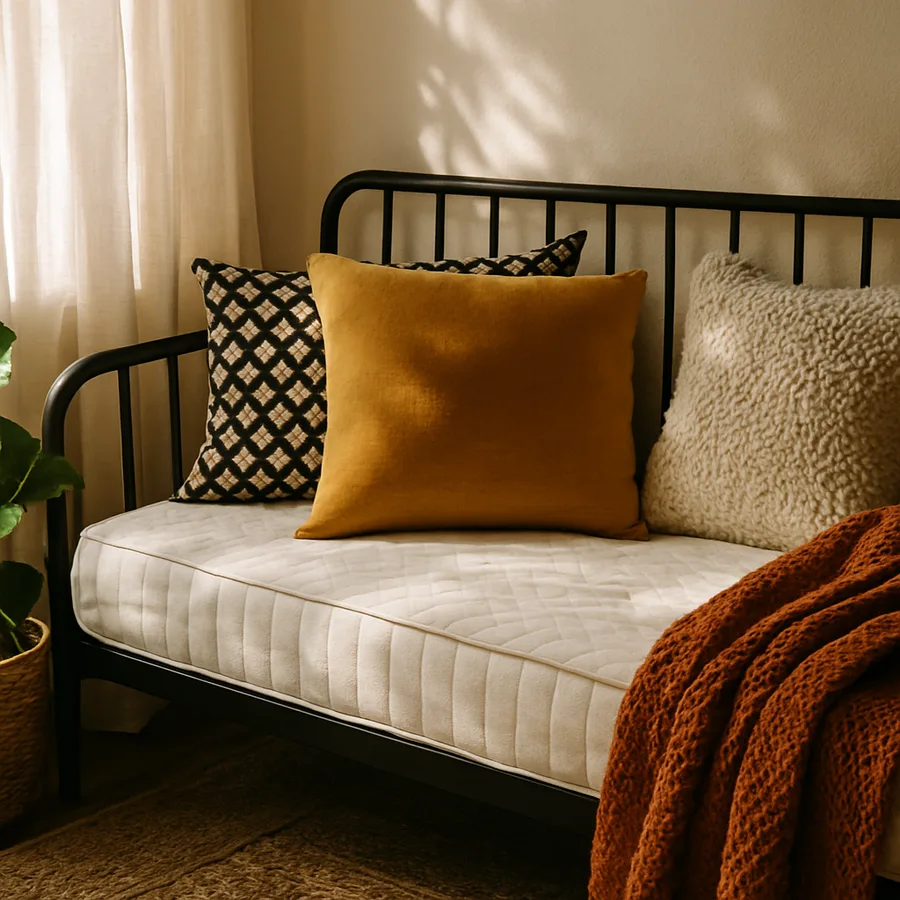
The daybed sits in an unusual category of furniture. It is older than the sofa as a form, predates the modern guest bed by centuries, and is more flexible than either. In a contemporary living room, particularly in the small-footprint apartments and urban homes that now define a growing share of American households, the daybed solves two expensive problems with one piece: it provides primary seating during the day and a real, comfortable bed at night. According to U.S. Census Bureau housing data, the median size of newly built apartments has decreased meaningfully over the past decade, and more than 36 percent of American households now live in homes under 1,500 square feet. For those households, the daybed is not a stylistic choice. It is an architectural necessity.
What separates a daybed from a sofa bed is the mattress and the comfort. A sofa bed conceals a thin, often-uncomfortable folding mattress inside a frame designed primarily for seating. A daybed uses a full standard mattress as both the seat and the sleeping surface, with no compromise on either function. Guests sleep on a real bed. Daytime users sit on a real cushion. The piece does both jobs honestly.
The Honest Geometry of a Daybed
A daybed's geometry is straightforward. It is built around a twin or twin XL mattress, which gives it overall dimensions roughly comparable to a loveseat or small sofa: typically 78 to 80 inches long and 38 to 42 inches deep. The frame has a back rail and one or both side rails, all roughly mattress-height, which means the seated user has back and arm support without the deep recline of a contemporary sofa.
The trade-off compared to a standard sofa is depth. A typical three-cushion sofa runs 36 to 40 inches deep with cushions 22 to 24 inches deep. A daybed's seating depth is the full mattress depth, often 38 to 42 inches, which is too deep for comfortable upright sitting unless you stack pillows along the back rail. This is the daybed's one design quirk, and it is solved easily with three to four large lumbar pillows that bring the effective seat depth back to a sofa-like 22 inches while preserving the full mattress for sleeping.
Have you considered how often you actually entertain overnight guests versus how often you use your living room sofa? For most urban households, the answer is daily sofa use and occasional guest sleeping, which is exactly the use ratio the daybed is designed for. The piece earns its keep every day and pays a bonus dividend a dozen times a year when guests visit.
The publication Apartment Therapy has tracked the daybed's growing popularity in small-space editorial features and consistently identifies the same core advantage: the piece eliminates the conflict between a comfortable primary seating arrangement and a real guest sleeping arrangement. In an apartment too small for both a sofa and a dedicated guest bed, the daybed is the only piece that resolves the conflict without compromise.
Mattress Selection Is the Whole Conversation
Because the mattress is both the seat and the bed, mattress selection is the most important decision in the entire setup. A standard innerspring mattress is too soft for daytime seating. A medium-firm latex or hybrid mattress is the right answer. The firmness supports the seated user without the back rail and pillows doing all the work, and the same firmness produces a sleeping surface that most guests find comparable to a quality bed.
Mattress thickness affects both function and aesthetics. A six to eight-inch mattress is the right range for daybed use. Thinner mattresses sleep poorly. Thicker mattresses sit too high relative to the back rail and look awkward in the frame. Many daybed manufacturers publish recommended mattress thickness for their specific frames, and the recommendations should be followed.
The mattress cover deserves attention. A standard fitted sheet on a daybed reads as a bed, not as a sofa, and undermines the piece's daytime function. The better solution is a quilted or tailored daybed cover that fits the mattress like upholstery, covers the sides cleanly, and tucks invisibly at the corners. Several manufacturers produce these covers in standard mattress sizes, and a competent local upholsterer can fabricate one to order in any fabric.
For households that host guests frequently, layering a clean fitted sheet under the daybed cover means guest setup involves only removing the cover and adding pillowcases and a top sheet. The transition takes under five minutes and produces a properly made bed. This is the workflow that makes the daybed function as a real guest accommodation rather than a compromised pull-out.
Placement: Where the Daybed Belongs in the Room
Daybed placement differs from sofa placement in important ways. A sofa anchors a seating arrangement and faces inward toward a coffee table and opposing seats. A daybed pushed against a wall reads as a bed in the room. A daybed pulled into the floor plan and treated like a sofa reads as a sofa.
The strongest placement is parallel to a long wall, ideally with the head of the daybed against an adjacent perpendicular wall so the piece reads as a corner banquette. This positions the back rail against the long wall and the side rail against the perpendicular wall, leaving the long open side facing into the room as the primary seating face. Pillows along the back rail and head create the seated configuration.
A second placement that works beautifully is under a window, with the daybed running parallel to the window wall. This treats the daybed as a window seat with a full mattress, and the natural light makes the daytime seating function feel airy and non-residential. Better Homes and Gardens has published numerous small-space layouts that use this window-parallel placement, and the consistent observation is that the daybed disappears into the architecture when placed this way, ceasing to read as a bed at all.
What to avoid: placing the daybed in the middle of the floor plan with no wall behind it. Without a back rail and a wall, the piece reads as a bed waiting to be made and never recovers its sofa function. The daybed needs architectural anchoring to do its dual job.
Styling for the Daytime Seating Function
The styling work that converts the daybed from "bed pushed against a wall" to "primary seating piece" is mostly about pillows and throws. The goal is to layer the mattress with enough textile interest that it reads as upholstery rather than as bedding.
The pillow formula that works most consistently is three large lumbar or square pillows along the back rail, sized at 22 to 24 inches square, plus two to three smaller accent pillows in front, sized at 14 to 18 inches. The large pillows create the back support that converts the deep mattress into proper seating. The small pillows add color and pattern without overwhelming the piece.
A folded throw at one end of the daybed adds visual softness and serves a real function for guests who pull it over their legs in the evening. Mohair, alpaca, and high-quality wool throws have the visual weight to read as deliberate styling rather than as a forgotten blanket. A small side table at the head of the daybed completes the seating arrangement and provides a surface for drinks and reading material.
Have you thought about how the piece will look from across the room versus up close? The daybed is most often viewed from across the room during daytime use, which means the silhouette and the pillow arrangement matter more than the fabric details. A strong silhouette with well-proportioned pillows reads as sofa from across the room even with simple textiles.
Trundles, Storage, and the Hidden Capability
Many daybed frames include either a pull-out trundle for a second mattress or built-in under-mattress drawers. Both add capability that further justifies the piece in a small home.
The trundle option turns a single daybed into accommodation for two guests, with the trundle pulling out either alongside the main mattress or, on better designs, rising to platform height to create a king-sized sleeping surface. This is a meaningful upgrade for households that occasionally host couples and would otherwise need a second guest bed entirely.
Under-mattress drawers convert the daybed's footprint into significant linear storage, comparable to a chest of drawers' worth of capacity hidden under the seat. For small-space households, this often replaces a separate dresser or storage chest entirely. The drawers typically hold guest bedding, off-season blankets, and the lumbar pillows that get removed when the piece transitions from sofa to bed.
The Architectural Digest editorial team has covered several small-space residential projects that use the daybed-with-trundle combination as the primary seating and guest accommodation strategy, and the consistent feedback from owners is that the piece replaces multiple pieces of furniture without compromising any individual function. The math is the strongest argument for the form.
Material, Frame Style, and Buying Considerations
Daybed frames divide into three broad material categories. Wrought iron frames are the most traditional, with a long lineage in European country and American Victorian design. They are durable, visually distinctive, and forgiving of mixed-decor rooms because they read as architectural rather than as upholstered furniture. Wood frames, in styles ranging from Mission to Mid-Century to contemporary minimalism, integrate into rooms with strong existing wood furniture. Upholstered frames, with fully fabric-wrapped sides and back, read most like a sofa and disappear most thoroughly into a contemporary living room.
The choice depends on the rest of your room. A living room with significant existing wood furniture wants either a wood-framed daybed or a fully upholstered one to avoid competing with the existing wood. A more eclectic or industrial room can absorb a wrought iron frame as a strong character piece. The American Society of Interior Designers consistently advises matching frame material to the room's dominant furniture vocabulary, and the principle applies cleanly to daybeds.
What to look for in construction: a solid wood or steel frame, mortise-and-tenon or welded joinery (avoid bolted-together frames that loosen over time), a slat or platform support system rated for the mattress weight plus typical occupancy, and feet or casters that can be replaced when worn. Avoid frames assembled with cam-lock fittings, which are common in low-cost imports and fail under daily seating loads within a few years.
For sourcing, House Beautiful has profiled both vintage daybed sourcing strategies and contemporary makers producing well-built new frames. Both paths can produce excellent results. Vintage iron daybeds are particularly good values in the current market, often available through estate sales and regional auctions for a fraction of new-frame pricing, with the only meaningful project being mattress purchase and cover fabrication.
Conclusion
The daybed is the rare piece of furniture that does two distinct jobs at full capability rather than compromising both. As a primary seating piece, properly styled with back pillows and accent textiles, it reads as a sofa from any reasonable viewing distance and provides comfortable daily seating. As a guest bed, with a real medium-firm mattress and proper bedding workflow, it provides accommodation that guests genuinely enjoy rather than merely tolerate. No sofa bed accomplishes both of these things, and no separate guest bed can also serve as primary daytime seating.
The keys to success are mostly invisible to first-time buyers. Mattress selection in the medium-firm latex or hybrid range, with thickness in the six to eight-inch window, is the most important single decision. Tailored daybed covers in the right fabric weight convert the bedding read into an upholstery read. Three large back pillows plus a few accent pillows handle the seating geometry. Placement against a long wall, anchored by a perpendicular wall or a window, gives the piece architectural presence rather than leaving it as a bed in the middle of the room.
The economic case is strong for any household with limited square footage. The daybed replaces both a sofa and a guest bed in a single footprint, and frame options range from affordable contemporary new builds to undervalued vintage iron pieces. The capability bonus of a trundle or under-mattress drawers adds further justification for households that host couples or need additional storage.
If you have been negotiating between a real sofa and a real guest bed in a space that cannot fit both, stop negotiating and start measuring for a daybed. Visit a showroom this month to sit on a few frames, lie on a few mattresses, and see how the piece feels in person. The right daybed will solve a problem you have been working around for years and will earn its place in your home daily.
More Articles You May Like



Comments
Post a Comment