Timer and Humidity Sensor Switches for Bathroom Vent Fans
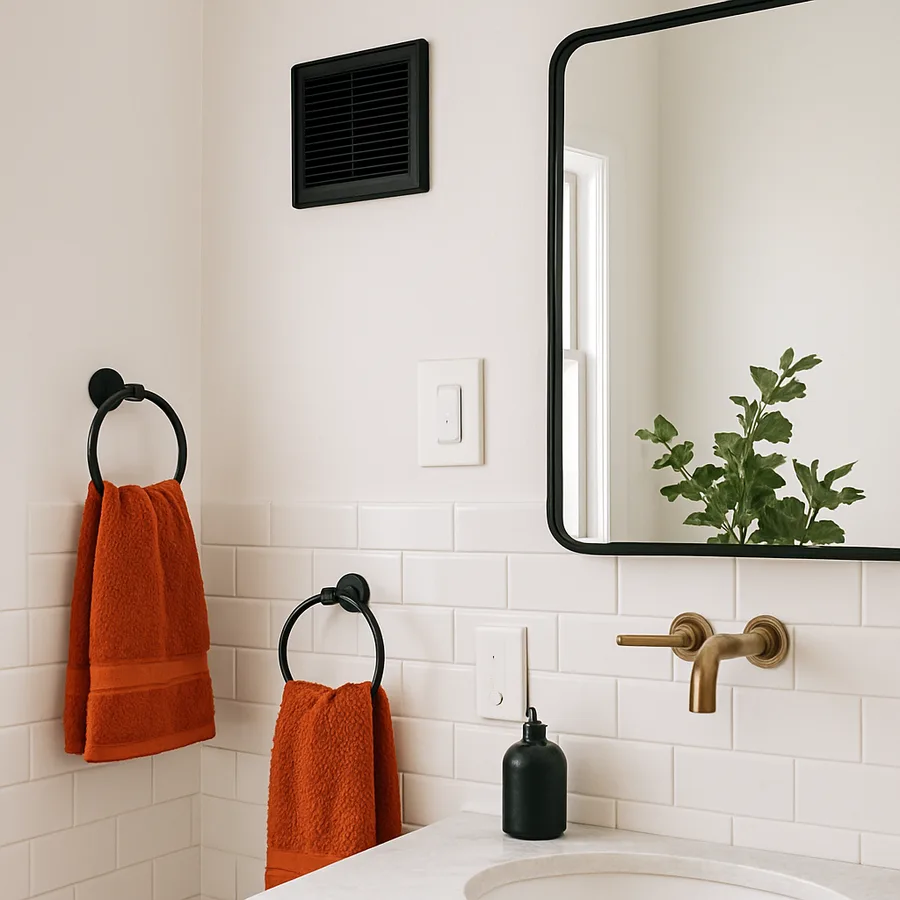
The single biggest source of wasted bathroom fan operation is human forgetfulness. A simple toggle switch leaves the fan running for an hour after the shower because someone got distracted, or it leaves the fan off entirely because the user finished and never bothered to flip it on. Both failure modes are addressed by replacing the dumb switch with either a countdown timer switch, a humidity sensor switch, or some combination of the two. The result is a fan that runs exactly when it should, for as long as it should, and then turns itself off without any thought from the occupant.
This piece walks through the four switch categories worth knowing, the wiring requirements that determine which switches will work in your existing setup, and the specific scenarios where each option earns its keep. Ever come home from work and realized the bathroom fan had been running all day because someone forgot? Or noticed mildew creeping into grout because nobody runs the fan long enough? The right switch is a small upgrade that addresses both problems for under $50 and an hour of work.
The Mechanical Spring Timer: Old, Reliable, and Still Useful
The original mechanical spring timer is a wind-up dial, typically 15 or 60 minutes, that mechanically closes a switch contact for the chosen duration and then opens it. These have been installed in bathrooms since the 1950s and remain available today because they are cheap, simple, and require no neutral wire. The user twists the dial, the fan runs, and a clockwork mechanism counts down to off. There is no electronics, no display, and no settings to configure.
The downside is the audible ticking, which some users find oddly soothing and others find maddening. Mechanical timers also have limited duration choices, usually a single span like 60 minutes that you can stop early but not extend. The National Kitchen and Bath Association generally recommends moving past mechanical timers in new construction because the digital options offer more flexibility for the same wall footprint.
Where mechanical timers still earn their place is rental properties, basements, and any situation where the wall box lacks a neutral wire and rewiring would be impractical. Mechanical timers are essentially failure-proof, with service lives commonly exceeding 30 years, and they can be replaced by anyone with basic electrical comfort in under 15 minutes.
Digital Countdown Timer Switches
The dominant modern timer is a digital countdown switch with preset duration buttons, typically 5, 10, 20, 30, and 60 minutes. The user presses the appropriate button, an LED counts down the remaining time, and the switch automatically turns the fan off when the timer expires. Most digital timers include a small "always on" override for users who want the fan to run continuously, and some include a "10-minute boost" auxiliary button for quick humidity bursts.
The wiring requirement matters: most digital timers need a neutral wire in the switch box because the timer's internal electronics need power even when the switch is technically "off." Older homes built before the mid-1980s often have a switch box with only a hot wire and a return, which means a digital timer cannot be installed without running new cable. The National Electrical Code updates in 2011 required neutral wires at all switch locations in new construction, which is why digital switches have become standard.
According to fan-runtime data published by the U.S. Department of Energy, residential bathroom fans on simple toggle switches average about 40 minutes of runtime per use, while fans on digital timers average closer to 22 minutes for the same effective humidity removal. That difference adds up to meaningful annual electricity savings, particularly in households with multiple bathrooms and frequent showers, and the timer also extends the fan's service life by reducing total operating hours.
Humidity Sensor Switches: Measuring Instead of Guessing
A humidity sensor switch, sometimes called a humidistat, includes a small relative humidity sensor that activates the fan automatically when bathroom humidity rises above a programmed threshold and turns it off when humidity drops back to baseline. The user sets the threshold once, typically between 50 and 70 percent relative humidity, and the switch handles all subsequent operation without manual input.
The clever insight is that the sensor measures the actual problem rather than approximating it with a timer. A 5-minute hand wash does not need 30 minutes of fan runtime, but a 20-minute hot shower might need 45 minutes for full humidity recovery. A timer cannot tell the difference; a humidity sensor can. The result is shorter average runtimes during light use and longer runtimes during heavy use, both more accurate than any fixed timer.
Sensor accuracy is the key spec. Premium models from Leviton, Lutron, and Pass and Seymour use capacitive humidity sensors with an accuracy of plus or minus 3 percent relative humidity, which is enough precision for reliable triggering. Cheaper sensors can drift 10 percent or more over a few years, which leads to either constant nuisance triggering or, worse, a fan that never activates because the sensor reads humidity as 5 percent lower than reality. Look for sensors that are field-replaceable or self-calibrating; both features extend useful life dramatically.
Combo Switches: Timer Plus Humidity Sensor in One Unit
The most flexible category combines both technologies into a single switch. The fan activates automatically when humidity exceeds the threshold, runs until humidity drops back to baseline, then turns off, and the user can also press a manual button to run the fan for a fixed countdown duration regardless of humidity. This combination handles the full range of bathroom use cases: an automatic response to showering, a timed boost for odor control, and an override for cleaning or painting the bathroom.
Lutron's Maestro Sensor and Leviton's IPHS5 are the two most widely deployed combo switches in residential construction. Both qualify under the ENERGY STAR certification framework when paired with a certified fan, and both publish accuracy specs and adjustable settings in their product documentation. The cost premium over a simple timer is typically $25 to $45, which most homeowners recover within a year through reduced fan runtime alone.
The combo switches typically include a small "minimum runtime" setting that ensures the fan runs for at least 10 or 15 minutes once humidity triggers it, even if humidity drops quickly afterward. This prevents short-cycling during borderline humidity conditions and ensures the fan completes a meaningful air exchange. The ASHRAE Standard 62.2 ventilation guidelines effectively assume continuous or humidity-triggered operation, which is what these combo switches deliver out of the box.
Smart Switches and Whole-Home Ventilation Integration
The newest category is the smart bathroom fan switch that connects to a home network via Wi-Fi, Zigbee, Z-Wave, or Matter. These switches handle timer and humidity functions like their non-connected counterparts, but they also expose data to the user's home automation system: runtime logs, humidity history, energy consumption, and remote on/off control via app or voice assistant.
The practical benefit beyond the gadget appeal is integration with broader home systems. A smart switch can coordinate with the home's HVAC system, suspending fan operation during HVAC dehumidification cycles to avoid working at cross purposes, or activating an inline ventilation fan that serves multiple bathrooms when any one of them detects humidity. The EPA Indoor airPLUS program's emerging guidelines explicitly mention smart ventilation control as a path to improved indoor air quality without sacrificing energy efficiency.
The downsides are setup complexity, occasional firmware update requirements, and the long-term concern of relying on a manufacturer's cloud service for basic switch function. Some smart switches fall back to manual operation if the network or cloud is unavailable; others stop responding entirely. Read product specifications carefully for "local control" or "Matter local" support if your concern is decade-plus reliability rather than current-day convenience.
Choosing Based on Bathroom Use and Household Patterns
The right switch depends less on price and more on the bathroom's role in the household. A primary bathroom used for daily showers benefits most from a humidity sensor or combo switch because the moisture load is high and consistent. A guest bathroom used occasionally is best served by a simple digital timer because humidity rarely climbs high enough to reliably trigger a sensor. A powder room with no shower benefits from a short-duration timer, often 5 or 10 minutes, because the use case is purely odor and brief moisture rather than sustained humidity.
Households with children also deserve special consideration. Kids forget to turn fans off, run showers far longer than necessary, or leave the fan running all day after a morning rush. A combo switch with a maximum runtime cap of 60 or 90 minutes prevents the all-day-fan scenario regardless of which buttons get pressed. According to industry surveys cited in HVI educational materials, households with children show roughly 25 to 35 percent higher fan runtime than equivalent adult-only households, which means the savings from automated control are even larger.
Have you noticed that the fan runs constantly in winter even when no one has showered recently? In tightly insulated cold-climate homes, the bathroom can stay above the humidity threshold for hours after a shower because the warm humid air has nowhere to escape. A combo switch with a slightly higher humidity threshold and a maximum runtime cap handles this gracefully. Without those controls, a sensor-only switch can run continuously and undermine the energy advantage it was supposed to deliver.
Installation Tips and Wiring Verification
Before purchasing a digital timer or humidity sensor switch, open the existing switch box and verify what wires are present. Look for a hot wire (typically black), a switched return (often red or black), a ground (bare or green), and critically a neutral (white). Many older homes lack a neutral at the switch box, in which case a digital switch will either fail to power on or, worse, cause LED bulbs to flicker. The National Electrical Code has required switch-box neutrals in new construction since 2011, but pre-2011 homes are hit-or-miss.
If your switch box lacks a neutral, you have three options: install a mechanical timer that needs no neutral, run new cable from the panel or junction box to add a neutral, or use one of the newer digital switches designed to work without a neutral by drawing tiny current through the load. The no-neutral digital switches work well with most modern fans but can cause issues with very low-wattage LED-only fixtures. Read the manufacturer's compatibility notes carefully before buying.
Once installed, give the humidity sensor a few days to learn the bathroom's baseline humidity and adjust the sensitivity setting if needed. Most combo switches arrive with a default trigger threshold around 65 percent relative humidity, which works well in most homes but may be too sensitive in coastal humid climates or too insensitive in arid mountain climates. The ASHRAE Standard 62.2 reference values can help you pick an appropriate setpoint for your geographic region and home tightness.
Conclusion
Replacing the basic toggle switch on a bathroom vent fan with a timer, humidity sensor, or combo switch is one of the highest-return upgrades available in residential ventilation. The hardware is inexpensive, the installation is straightforward for anyone with basic electrical experience, and the operational improvement begins immediately. Fans run when they should, stop when they should not, and stop demanding attention from the household occupants.
For most modern homes with neutral wires at the switch boxes, a combo timer-plus-humidity switch is the right default choice. It handles automatic activation during showers, timed boosts for non-shower use, and automatic shutoff once humidity drops back to normal. For older homes without neutral wires, a mechanical spring timer remains a reliable and inexpensive upgrade that at least solves the "left running all day" problem. Smart switches add value when integration with broader home automation matters, but they introduce complexity that not every household wants.
Whichever category fits your situation, the underlying principle is the same: ventilation is a measurable problem, and fans should respond to actual conditions rather than the user's imperfect memory. Modern switches make that responsiveness automatic. Ready to upgrade? Open your existing switch box, confirm whether you have a neutral wire by looking for a bundle of white wires, then choose a switch that matches both your wiring and your household's bathroom use patterns. The change pays back in lower runtime, lower humidity-related maintenance, and the small daily satisfaction of a fan that simply does its job.
More Articles You May Like



Comments
Post a Comment