Teak Outdoor Furniture Care to Maintain Honey Color or Let It Gray
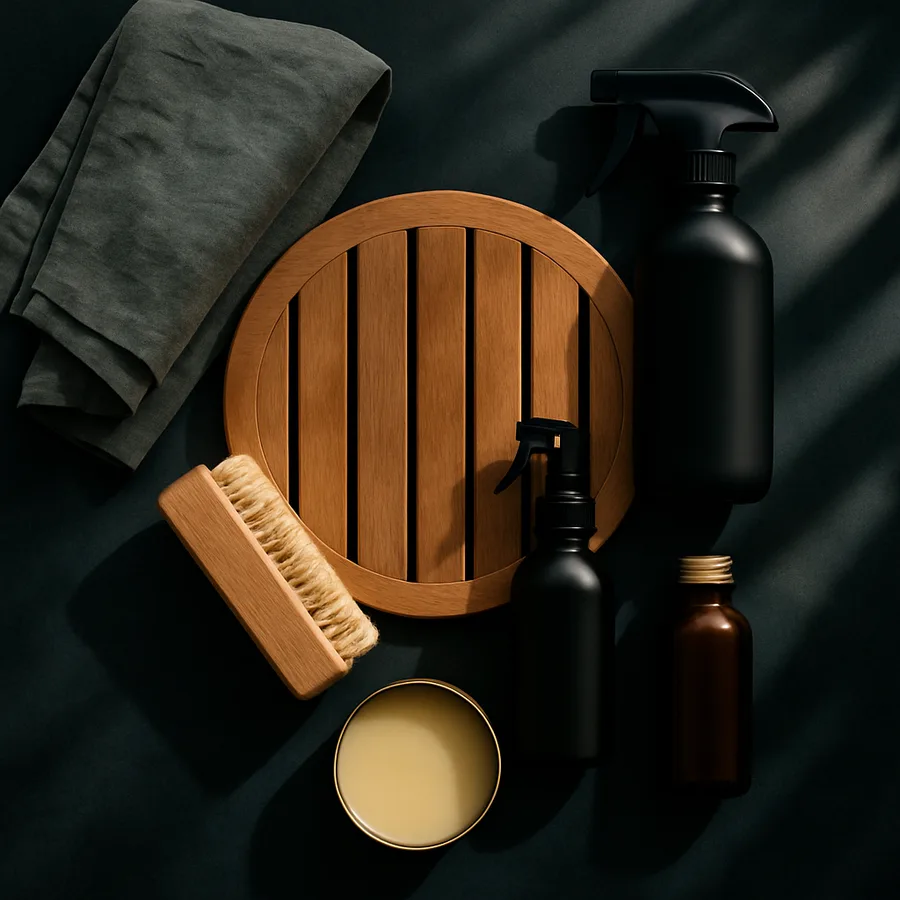
Every teak owner eventually faces the same fork in the road. Within the first season of outdoor exposure, that rich golden honey color begins shifting toward a soft silver-gray patina, and you must decide whether to fight the change or embrace it. Both choices are completely legitimate. Both produce beautiful results when maintained correctly. Both require commitment to specific routines that many owners discover only after they have accidentally locked themselves into a third option that no one wants, which is teak that looks blotchy, neglected, and tired.
This guide explains the chemistry behind teak's color change, walks through complete maintenance routines for both the honey-preserved and the gracefully-grayed approaches, and offers honest guidance on which path is right for your climate, your aesthetic, and your willingness to do annual work. We will draw on guidance from the Forest Stewardship Council, the American Society of Interior Designers, and decades of accumulated wisdom from professional teak refinishers.
Why Teak Changes Color in the First Place
Teak, harvested primarily from Tectona grandis trees grown in South and Southeast Asia, contains naturally occurring oils and silica that make it extraordinarily resistant to rot, insects, and structural decay. Those same compounds give freshly milled teak its warm honey-gold color. When the wood is exposed to ultraviolet light and oxygen, the surface lignin slowly degrades and washes away, leaving behind the silvery cellulose layer that produces the famous gray patina.
The color change is purely cosmetic. The structural integrity of the wood remains essentially unchanged for fifty years or more, even when fully weathered, and properly maintained teak benches built in the 1970s remain in service today on park sites across Europe and North America. According to estimates from the Forest Stewardship Council, certified-source teak furniture has an expected outdoor service life of between sixty and seventy-five years, regardless of which color path the owner chooses.
Have you ever wondered why some weathered teak looks elegantly silver while other pieces look dirty and blotchy? The difference is rarely the wood itself. Even-grain teak from older trees weathers uniformly to a pleasant silver, while younger plantation-grown teak with irregular grain weathers in patches that can read as stains. If you are buying new teak with the intention of letting it gray, ask the supplier about the source and the grain consistency, since those factors predict your aesthetic outcome more than any maintenance routine.
Choosing Your Color Path Honestly
Before committing to either approach, take an honest inventory of your own habits. Maintaining the honey color requires roughly four to six hours of work twice a year, every year, for the life of the furniture. Letting teak gray gracefully requires about an hour of work twice a year, mostly cleaning. Neither is hard, but both require consistency, and the most common failure mode is choosing one path and then quietly abandoning the routine after the first year.
Climate also matters. In rainy temperate regions like the Pacific Northwest or coastal Northeast, teak grays in roughly six to nine months and stays consistently silver thereafter. In dry desert climates, teak grays more slowly, perhaps over two to three years, and tends to develop a more uneven patina. In humid tropical climates, teak grays quickly but also accumulates surface mildew that requires more frequent cleaning regardless of which color path you choose.
Aesthetic context is the third factor. Honey-colored teak reads as warm and traditional, complementing classic patios, English-garden plantings, and craftsman-style architecture. Silver-gray teak reads as modern and architectural, complementing contemporary homes, minimalist landscaping, and Scandinavian-influenced exteriors. Decide which mood you want for your outdoor space, and choose the color path that supports it. According to design surveys cited by Architectural Digest, modern residential clients now choose the gray path roughly two-to-one over the honey path, a complete reversal from twenty years ago.
The Honey-Color Maintenance Routine
Maintaining honey-colored teak begins with a thorough spring cleaning. Mix a quart of warm water with a tablespoon of liquid dish soap and a tablespoon of bleach-free oxygen brightener. Scrub the entire piece with a soft natural-bristle brush, working with the grain rather than against it. Rinse thoroughly with a garden hose at low pressure and let dry for at least twenty-four hours before any further treatment. The cleaning step is non-negotiable, since any surface dirt will be sealed under the protective coating.
Once the wood is clean and fully dry, apply a quality teak sealer rather than traditional teak oil. Modern sealers offer significantly better UV protection and longer service intervals than oils, which were the standard recommendation for decades. Apply with a high-quality natural-bristle brush, working in the direction of the grain, and apply two thin coats with appropriate flash time between coats. Wipe excess immediately to avoid sticky residue.
Repeat the sealing step in early fall, after summer sun exposure has had its full effect, to protect the wood through winter. This twice-yearly cycle keeps the honey color stable indefinitely. Avoid traditional teak oil products, which provide only short-term color benefits and actually accelerate gray weathering when they degrade. The American Society of Interior Designers outdoor finishing guidance has shifted firmly toward sealers over oils for residential teak applications.
The Graceful Gray Maintenance Routine
Letting teak gray gracefully is the simpler path, but it is not no-maintenance. Clean the furniture twice a year with the same soap-and-brightener mixture described for the honey path, and rinse thoroughly. The cleaning prevents surface mildew from establishing, removes the dirt that produces blotchy weathering, and lets the underlying gray develop evenly across the entire piece.
For pieces in shaded or partially shaded locations, you may need to address mildew growth more aggressively. A solution of one part household white vinegar to four parts water, scrubbed into the surface and then rinsed, controls mildew without damaging the wood. Avoid bleach-based mildew removers, which can lift the natural silica compounds and leave the wood prone to splitting along grain lines.
If you ever decide that the gray has become uneven enough to bother you, the wood can be brought back to honey color through sanding or chemical brightening. Sand with 80-grit followed by 120-grit, working with the grain, until the gray surface layer is removed. Or apply a commercial two-part teak brightener according to package instructions, which uses oxalic acid to dissolve the gray layer without sanding. Roughly one in three gray-path owners eventually returns to the honey path according to surveys cited by House Beautiful, so know that the choice is not permanent.
Common Mistakes That Damage Either Path
The single most damaging habit is pressure washing teak. The high-pressure water blast lifts the surface fibers and creates a fuzzy, raised grain that holds dirt, mildew, and stains. Once raised, the grain requires sanding to recover smoothness, which removes valuable wood and shortens the service life of the piece. Always clean teak with a brush and low-pressure rinse, never with a pressure washer.
The second most common error is using the wrong cleaner. Bleach-based cleaners damage the lignin and accelerate gray weathering even on pieces being maintained as honey. Acidic cleaners like undiluted vinegar can stain the wood. Stick to mild soap and oxygen brightener for routine cleaning, and reserve specialized teak cleaners for cases where mild cleaning is insufficient.
Have you ever been tempted to apply a glossy outdoor varnish to teak for maximum protection? Resist completely. Hard-film varnishes trap moisture under the coating, lift in patches as the wood expands and contracts, and require complete stripping and refinishing within two years. Teak should always be finished with penetrating sealers or oils, never with film-forming coatings according to wood-finishing experts at the American Coatings Association.
When Professional Help Pays for Itself
For high-end teak pieces or pieces with sentimental value, professional restoration every five to seven years can extend the useful life by decades. Professionals have access to commercial-grade brighteners, finer-grit sanding equipment, and marine-grade sealers that consumer products cannot match. The cost typically runs between two and four hundred dollars per major piece, against replacement costs that can easily exceed two thousand dollars for premium teak.
Look for restorers who specialize in outdoor furniture rather than general furniture refinishers, since the chemistry of weathered teak is fundamentally different from indoor wood restoration. Ask for before-and-after photos of recent work, and request references from clients with similar pieces. The AHFA maintains a member directory that includes outdoor furniture specialists, and most major metropolitan areas have at least one shop with deep teak experience.
For owners who cannot decide between honey and gray, consider a professional consultation before committing. A specialist can evaluate the specific grain pattern of your piece, assess your local climate, and recommend a path that suits both. Sometimes a hybrid approach makes sense, with honey maintenance on visible feature pieces and gray weathering on lower-profile bench seating. Roughly forty percent of clients who consult a specialist end up choosing differently than they originally planned, which alone justifies the small consultation fee.
Storage, Covers, and Off-Season Considerations
Even the most patient maintenance routine cannot fully protect teak from the worst weeks of any climate. In regions with heavy snow loads, freezing rain, or hurricane-season storms, off-season storage extends the life of furniture significantly regardless of which color path you have chosen. A simple covered porch, garage corner, or dedicated storage shed reduces UV exposure to nearly zero and keeps direct precipitation off the surface for months at a time. Even partial protection of three to four months per year doubles effective service life.
For owners without indoor storage options, fitted breathable furniture covers are the next best alternative. Avoid sealed plastic tarps, which trap moisture against the wood and accelerate mildew growth, splitting, and joint failure. Look for covers made from breathable polyester fabric with mesh vent panels, ideally with elastic hems or drawstrings for secure fit. The American Society for Testing and Materials publishes outdoor cover standards that some premium manufacturers explicitly meet, and the certification is worth seeking out at the time of purchase.
Have you considered the impact of cushion storage on the underlying teak? Cushions left out through wet weeks can hold moisture against the wood and produce dark patches that look stained even after the cushions dry. Bring cushions indoors before any extended rain forecast, and store them in a dry indoor location with good airflow. A simple bench seat in a mudroom or basement that holds cushions through the off-season prevents both fabric damage and teak staining in a single move.
Finally, think about the transition season. The two-week windows in early spring and late fall when temperatures swing dramatically are the hardest time for teak, since the wood expands and contracts faster than at any other time of year. Schedule your spring cleaning for late spring after the swing has stabilized, and your fall sealing for early fall before the swing begins. The timing matters more than most owners realize, and aligning your routine with the wood's behavior pays dividends in finish longevity for both the honey path and the gray path alike.
Conclusion
Teak rewards consistency far more than effort. Whether you choose to preserve the honey color with twice-yearly sealing or let the wood weather gracefully to silver with twice-yearly cleaning, the work is modest and the rewards are decades of beautiful outdoor furniture. The path that fails is the one that gets started and then abandoned, leaving teak in a half-maintained state that looks neglected regardless of underlying color.
Decide your path before your next spring cleaning, gather the appropriate supplies, and put two reminders on your calendar for the routine. Spring and early fall are the natural maintenance windows, and ninety minutes of focused work twice a year is all that stands between your teak and its full sixty-year service life. The discipline takes care of itself once the routine becomes habit.
Ready to commit to a path for your teak? Take a long look at your pieces this weekend, assess their current state honestly, and choose honey or gray with the climate and aesthetic factors discussed above in mind. Then schedule your spring cleaning session for the next available weekend, and start the routine that will protect your investment for decades.
More Articles You May Like



Comments
Post a Comment