Screened Porch Furniture That Tolerates Pollen and Humidity
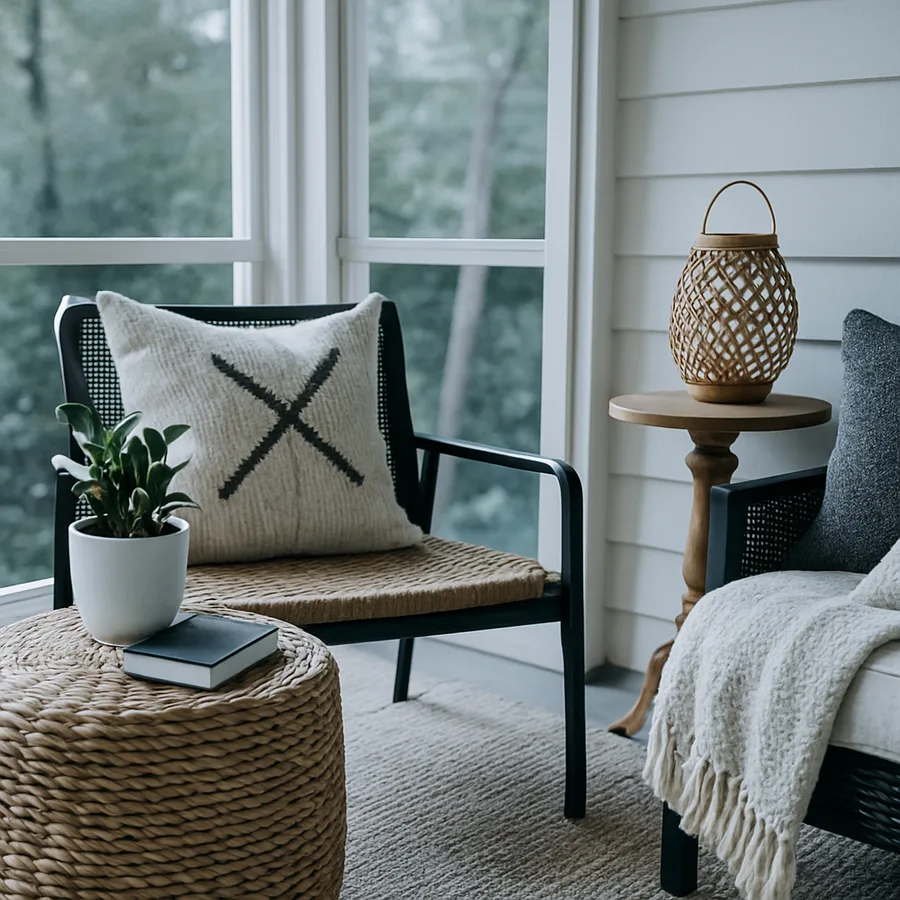
Screened porch furniture occupies a frustrating middle ground. It is too sheltered to need the rain-shedding qualities of full outdoor furniture, but too exposed to survive the season if you simply roll your living room sofa onto it. The mesh screens that protect you from mosquitoes and wasps are happy to admit pollen, dust, salt mist, and humidity, and the shoulder-season temperature swings can warp wood, corrode metal, and disintegrate fabrics that were never engineered for the conditions. According to the American Home Furnishings Alliance (AHFA), outdoor furniture is the fastest-growing residential furniture category, with sales rising more than 40% between 2020 and 2025 as homeowners invested in extending their living spaces outward. Yet warranty claims on porch furniture have grown even faster than sales, and the underlying problem is almost always the same: buyers selecting pieces designed for fully indoor or fully outdoor use, without understanding what a screened porch actually demands. This guide covers the frame materials, fabrics, fasteners, and maintenance practices that produce porch furniture you will still love five and ten years from now.
Why Screened Porch Conditions Are Uniquely Demanding
The microclimate of a screened porch is genuinely difficult for furniture to survive. Relative humidity routinely exceeds 70% on summer mornings and can stay there for weeks during the rainy season. Surface temperatures swing 30 to 50 degrees between dawn and afternoon. Pollen counts during spring oak and pine seasons can deposit a visible yellow film overnight. Salt air reaches porches within five miles of a coast. Bird droppings, tree sap, and the occasional opossum visitor add their own contributions. None of these stressors is severe individually, but in combination they overwhelm furniture made for either fully sheltered or fully exposed use.
Indoor furniture fails on porches for predictable reasons. Solid wood swells and contracts with humidity, opening glue joints. MDF and particleboard literally crumble when moisture content exceeds 12%. Iron fasteners rust and stain surrounding wood. Foam cushions absorb and hold moisture, becoming permanent reservoirs for mildew. Standard cotton, linen, and polyester upholstery fades within a single season and develops fungal staining within two. Even high-end indoor pieces priced at thousands of dollars fail in months when placed on a porch.
Outdoor furniture, despite the marketing, is also not perfectly suited to screened porches. Outdoor pieces are designed to drain and dry quickly, which means open weaves, drainage holes, and minimal cushioning. Used in a screened porch where direct rain almost never reaches them, these design choices feel sparse and uncomfortable. The sweet spot is furniture engineered specifically for covered outdoor or three-season use, which combines the durability of outdoor construction with the comfort and refinement appropriate for an indoor-feeling space.
Frame Materials: What Actually Survives
The frame is the most important durability decision because it determines whether the piece will be repairable or disposable in ten years. Five frame materials dominate the porch furniture market in 2026, each with distinct strengths.
Powder-coated aluminum is the most popular choice for serious porch furniture and for good reason. It does not rust, it shrugs off humidity, and modern powder coatings resist fading and chalking even with partial UV exposure. Cast aluminum frames are heavy enough to feel substantial and stay put in wind that pushes through screens, while extruded aluminum tube frames are lighter and more contemporary in appearance. Look for a powder coat applied over a chemical pretreatment, not directly onto bare aluminum, because the pretreatment is what produces the long-term adhesion that prevents flaking.
Teak remains the gold standard for wood porch furniture. The wood's high natural oil content makes it almost impervious to moisture and rot, and properly cared for teak develops a silvery patina that many homeowners actively prefer to the original golden tone. The catch is cost; quality teak furniture starts at roughly twice the price of equivalent aluminum. Eucalyptus offers similar appearance at lower cost but lacks teak's long-term durability and requires annual oil treatment to prevent cracking. Acacia is the budget option among hardwoods and works adequately for shoulder-season porch use but does not match teak or eucalyptus for multi-decade lifespan.
Synthetic resin wicker, often sold as HDPE wicker, has improved dramatically over the last decade. Quality synthetic wicker is woven over an aluminum frame and uses UV-stabilized polyethylene strands that resist fading and brittleness. It looks softer and more traditional than aluminum tube frames and weighs less than cast aluminum or teak. Avoid PVC wicker, which becomes brittle within a few seasons in any meaningful UV exposure, and inspect the frame underneath because the wicker only protects whatever lies beneath it.
Stainless steel and wrought iron also appear on the market but have specific limitations on porches. Marine-grade 316 stainless steel performs beautifully but is expensive and visually cool in a way that does not suit every aesthetic. Wrought iron is heavy and visually substantial but rusts the moment its protective coating is breached, and breaches happen during normal use. Use iron only if you are committed to inspecting and touching up the finish annually.
Performance Fabrics and Cushion Construction
Fabric and cushion choices determine how comfortable the porch furniture will be and how often you will replace it. The category to look for is solution-dyed acrylic performance fabrics, the most prominent brand being Sunbrella but with strong competition from Outdura, Bella-Dura, and several Italian and Belgian alternatives. Solution-dyed means the color is mixed into the acrylic before the fiber is extruded, producing colorfast performance that piece-dyed and yarn-dyed alternatives cannot match. Expect a quality solution-dyed acrylic to retain at least 90% of its original color after five years of meaningful UV exposure, compared to 30 to 50% for standard outdoor polyester.
Cushion construction matters as much as the fabric. Quality porch cushions use a quick-dry polyurethane foam wrapped in polyester fiber batting and covered in fabric with reverse-coil zippers and drainage grommets. The foam should be specifically rated as outdoor or marine-grade open-cell foam that allows water to pass through and air to circulate, preventing the mildew problem that destroys conventional foam cushions on porches. Reverse-coil zippers prevent moisture from wicking into the cushion through the zipper itself, and drainage grommets allow any water that does reach the foam to exit rather than pool inside.
Pollen tolerance is a separate fabric consideration that most buyers overlook until their first spring. Tightly woven solution-dyed acrylics with smooth surfaces shed pollen with a quick wipe of a damp cloth, while textured weaves and slubby linens trap pollen in the fiber and require vacuuming or wet cleaning. Choose smooth weaves and mid-tone colors that hide pollen between cleanings; pure white furniture looks magazine-perfect on installation day and miserable by April.
Have you considered how often you will realistically clean the cushions? If the answer is "rarely," choose darker colors and tighter weaves. If you enjoy the maintenance ritual or have help, you can choose lighter colors and more textural fabrics. Match the furniture to your honest maintenance commitment, not to your aspirational one.
Fasteners, Joinery, and Hidden Failure Points
Inspect any porch furniture you are considering at the joints and fasteners, not the surface finish. Fasteners are the single most common failure point on porch furniture, and the difference between a five-year piece and a twenty-year piece often comes down to the screws and bolts that hold it together. Specify and verify marine-grade 316 stainless steel fasteners on any porch furniture in coastal or high-humidity environments. The 316 alloy contains molybdenum, which provides dramatically better corrosion resistance than the more common 304 alloy. Cheaper furniture often uses 304 stainless or even zinc-plated steel, both of which will corrode in screened porch conditions, particularly within ten miles of a coast.
Joinery on wood porch furniture deserves equal scrutiny. Mortise-and-tenon joints with stainless steel pins or marine-grade epoxy outperform doweled or biscuited joints over time because they accommodate the seasonal movement that humidity changes produce. Avoid furniture that uses metal corner brackets as primary joinery; these brackets tear out of the wood as the joints loosen over years of seasonal cycling, and the repair is rarely cosmetically clean.
On aluminum and steel furniture, look at the welds. Continuous welds along the entire joint perimeter are stronger than spot or stitch welds and far less likely to develop hairline cracks that admit moisture into the tube interior. The interior of welded aluminum tubing is a hidden failure zone; if untreated aluminum is exposed inside the tube, condensation will eventually corrode it from the inside out. Quality manufacturers either anodize the interior or provide drain holes; ask the salesperson to confirm which.
Buying Strategy: New, Used, and Custom
Quality porch furniture is a substantial investment. A complete deep-seating set with sofa, two chairs, ottoman, coffee table, and two side tables in good powder-coated aluminum with solution-dyed acrylic cushions will typically run $4,500 to $9,000 in 2026. A teak set in the same configuration runs $7,000 to $14,000. Synthetic wicker sets fall between these ranges. These are not impulse purchases, and the buying strategy matters as much as the product selection.
Buy from manufacturers and retailers who offer meaningful warranties on both frame and cushions. A frame warranty of 10 to 15 years is reasonable to expect from quality manufacturers; a cushion warranty of 3 to 5 years is reasonable for fabric and 5 to 10 years for the foam underneath. Read the warranty exclusions carefully, because terms like "normal wear" and "exposure" can be defined narrowly enough to void coverage on the kinds of damage screened porches actually produce. Reputable manufacturers like Brown Jordan, Gloster, Lloyd Flanders, and Kingsley-Bate publish their warranty terms openly and honor them.
Used furniture can be a smart way to acquire premium brands at half the cost, but inspect carefully. Aluminum frames that have been through one re-powder-coat are usually fine for another decade. Teak that has weathered to silver can be sanded and oiled back to near-original appearance. Cushions, on the other hand, should generally be replaced when buying used; the foam life is the limiting factor and replacing it during purchase is much easier than after delivery. Custom cushion replacement from a regional upholsterer typically runs $400 to $900 for a deep-seating sofa and is an investment that often makes a used premium piece feel new.
Custom furniture is worth considering if you have a porch with unusual proportions or a specific aesthetic vision. Several manufacturers offer made-to-measure modular sectionals and dining sets at prices only modestly above their stock configurations. The American Society of Interior Designers (ASID) notes that custom-configured outdoor furniture has grown from less than 5% of the residential outdoor market in 2020 to roughly 15% in 2025, driven largely by the screened-porch and three-season-room category.
Maintenance Routine That Actually Works
The right maintenance routine extends porch furniture life dramatically and takes less time than most homeowners expect. The key is consistency rather than intensity; weekly light maintenance prevents the buildup that requires intensive cleaning and accelerated replacement. Plan your routine around the four conditions your furniture faces: pollen season, summer humidity, autumn leaves and storms, and winter storage or covering.
During pollen season, wipe down all hard surfaces and cushions weekly with a damp microfiber cloth. Focus on horizontal surfaces where pollen accumulates and on the screen-side faces of cushions and frames where airborne pollen tends to deposit first. A leaf blower set on low can clear pollen from textured surfaces and screen-side corners that a cloth cannot easily reach. Skip pressure washing on cushions and on any wood furniture, because the pressure forces moisture into the foam and the wood pores faster than they can dry, accelerating the very problems you are trying to prevent.
For summer humidity, the priority is air circulation. Pull cushions away from the screen wall periodically to dry the back face. Stand cushions on edge against a wall during multi-day rainstorms when humidity is at its peak. Inspect for the first signs of mildew at cushion seams and on the underside of cushions; address with a 1:10 white vinegar solution rather than chlorine bleach, which damages most performance fabrics. Most quality fabric manufacturers publish detailed care guides; follow them rather than improvising.
Autumn brings leaf accumulation and the first storms. Clear leaves daily during peak fall, because wet leaves trapped against cushions or wood frames stain and stress finishes. For winter, decide whether to cover, store, or leave uncovered. Covers can do more harm than good on screened porches by trapping moisture against the furniture; if you cover, choose breathable fabric covers rather than waterproof vinyl, and lift covers periodically to check for trapped moisture. Storage in a dry garage or basement is the best option if you have the space.
Conclusion
Screened porch furniture is one of the small categories where the difference between a thoughtful purchase and an impulsive one shows up as thousands of dollars over a decade. The materials and construction details that survive pollen, humidity, and shoulder-season swings are not exotic, but they are specific, and they cost meaningfully more than the indoor or generic outdoor furniture that often gets pressed into porch service. Paying that premium up front almost always saves money over a ten-year horizon.
The decision framework is straightforward. Choose a frame material you can live with visually for at least a decade because the frame is what survives. Insist on solution-dyed acrylic cushions over outdoor-rated foam, with reverse-coil zippers and drainage grommets. Verify marine-grade fasteners and high-quality joinery before purchase. Match cushion colors and weaves to your actual maintenance habits, not your aspirational ones. Establish a weekly maintenance routine that takes 15 minutes rather than a quarterly one that takes hours.
Whether you spend $4,000 or $14,000 on a complete porch set, the same principles apply. Spend more on the frame and the fasteners, less on decorative elements that can be added or replaced over time. Add throw pillows, area rugs, side tables, and accent pieces in a second wave once you have lived with the core furniture for a season and understand how you actually use the space. Many homeowners over-furnish their porches initially and then under-use them; restraint at the start tends to produce more usable rooms.
Ready to upgrade your screened porch? Measure your space, photograph it in morning and afternoon light, and bring those measurements and photos to a showroom that specializes in covered-outdoor and three-season furniture. The right pieces, properly maintained, will reward the investment with a porch you genuinely use most months of the year and that still looks intentional and inviting a decade from now.
More Articles You May Like



Comments
Post a Comment