Sectional Sofa vs Two Sofa Layout for Family Rooms Compared
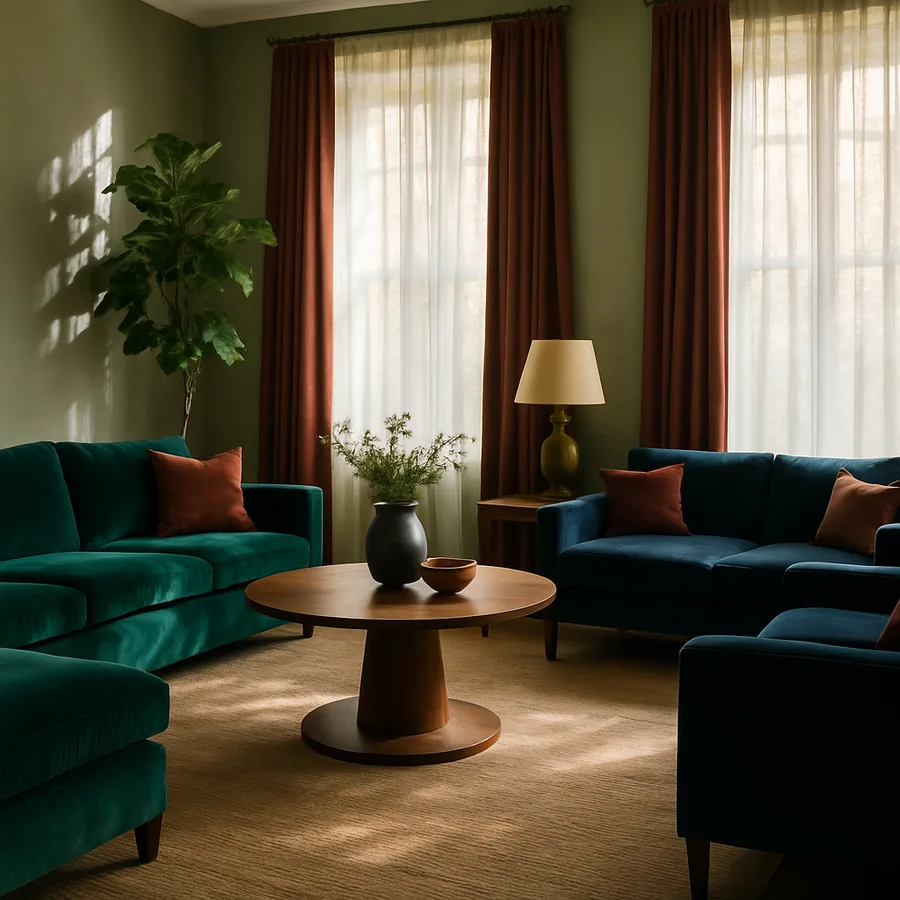
The single biggest furniture purchase most families ever make for a family room comes down to one question with surprisingly few honest answers online: should you buy a sectional sofa or two matching standard sofas arranged face-to-face or in an L? The salesperson on the showroom floor has an opinion shaped by which piece is on sale this month. The Pinterest board has an opinion shaped by photogenic rooms that often do not function the way they look. The right answer depends on how your family actually uses the room, the dimensions of the space, the traffic patterns through it, and whether you expect to rearrange the layout when life changes.
This comparison walks through the practical tradeoffs the way an experienced designer would talk through them at a kitchen-table consultation. According to recent reporting from the American Home Furnishings Alliance, sectionals have grown to account for nearly 40 percent of all upholstered seating sold in the United States, up from roughly 25 percent a decade ago. The growth is real, but it has also produced a wave of buyers who chose a sectional because it was trending and discovered too late that two sofas would have served them better. The reverse mistake is just as common.
Seating Capacity and the Family Math
Sectionals usually win on raw seat count for a given footprint. A typical 110-by-92-inch L-shaped sectional comfortably seats five adults, and a U-shaped configuration of similar exterior dimensions can seat seven. Two facing three-seater sofas in the same footprint seat six but require a wider room because of the open channel between them. If your family hosts movie nights for the kids and their friends, the sectional often wins by raw arithmetic alone.
The arithmetic flips when you count conversation seats versus passive seats. A chaise on a sectional is a wonderful place to stretch out alone but a poor seat for a conversation, because the person on the chaise is facing the side of everyone else on the long arm of the L. Two facing sofas, by contrast, put every seat in conversation with every other seat. A family room that hosts a book club or a regular Sunday dinner crowd usually functions better with two sofas than with a chaise sectional, even if the seat count is one or two lower.
Traffic Flow and the Open Channel
Two sofas facing each other create what designers call a conversation pit with two open ends. Anyone walking through the room can cross at either end without disturbing the people seated. That open-channel layout is one of the reasons hotel lobbies and traditional formal living rooms are so often arranged this way. It also makes vacuuming and rug rotation dramatically easier than with a sectional that has to be lifted in pieces.
Sectionals do the opposite. The long arm and the chaise (or second long arm in a U-configuration) form a partial wall that funnels traffic around the outside of the seating. In a room with a single doorway and a clear focal wall, this is fine and even desirable, because it concentrates everyone inside the seating cluster and leaves the rest of the room as circulation. In a room with two or three doorways, however, a sectional can block the natural traffic line and force people to walk a long way around the outside of the room. Have you mapped the actual paths your family walks through the room on a typical evening? That five-minute exercise reveals more about which layout will work than any showroom visit.
Room Shape, Scale, and the L-Shape Trap
Sectionals strongly prefer rooms with a clear long wall and a perpendicular short wall to nest into. They struggle in square rooms because an L-shaped sectional in the middle of a square room leaves three of the four corners visually awkward. They struggle even more in long, narrow rooms because the chaise extension blocks the natural flow from one end to the other. Two sofas, on the other hand, work in nearly any rectangular room because they scale with the long axis and leave the short axis open.
The most expensive mistake in this category is buying a sectional that is too large for the room. Industry guidance from the National Association of Home Builders suggests leaving at least 36 inches of clear floor between any seating piece and the nearest wall or major obstacle. Many homeowners measure the footprint of the sectional they want, find that it technically fits, and forget to account for the circulation zones around it. Two sofas are more forgiving because each piece can be repositioned independently when the room turns out to be tighter than expected.
Flexibility, Reconfiguration, and Life Changes
Two sofas are dramatically more flexible than a sectional over the lifetime of a household. A new baby arrives and the sofas can be pulled closer to the play area. A teenager wants the room rearranged for a movie night and the sofas can be turned ninety degrees. A move to a new home means the sofas can be redeployed to any room of similar size. A sectional, by contrast, is sized and shaped for one specific configuration in one specific room. Try to fit it in a different room and you may discover that the chaise is now blocking a doorway or the L is fighting a load-bearing column.
This flexibility argument is the single most underweighted factor in the showroom. Salespeople rarely mention it because it works against the sectional, which usually carries the higher ticket price. But the average American family moves roughly every nine years according to U.S. Census Bureau data, and the average upholstered sofa lasts seven to ten years with normal use. The math suggests that most sofas will be asked to perform in at least one room they were not originally specified for. Two sofas almost always survive that transition; sectionals frequently do not.
Cost, Quality, and Cushion Construction
At any given price point, two sofas of equivalent quality will usually cost slightly less in total than a sectional with the same total seat count, because sectionals carry a small premium for the corner unit and the engineering required to align the cushions across the seam. The premium is typically 10 to 20 percent at mid-market price points and narrows at the high end where construction quality dominates the price.
The cushion question matters more than the price. Sectionals with a fixed corner cushion tend to compress unevenly, because the corner is rarely sat on while the adjacent seats are used daily. Two sofas with individual reversible cushions can be rotated front-to-back and end-to-end on a regular schedule, which doubles or triples the visible lifespan of the upholstery. If long-term appearance matters more to you than maximum seat count today, that single maintenance fact tilts the decision toward two sofas. Houzz regularly publishes professional reviews of cushion construction that are worth reading before any major upholstery purchase.
Resale, Style Longevity, and Trend Risk
Sectionals carry more trend risk than two matching sofas. The dominant sectional silhouette has changed three times in the last twenty years: from the puffy oversized sectionals of the early 2000s, to the lower-slung modern sectionals of the 2010s, to the deep-seat lounge sectionals popular today. A two-sofa pairing in a classic three-seat silhouette tends to read as timeless across all three eras and beyond. If you intend to keep the sofa for a decade or more, the two-sofa choice is the safer bet against changing fashion.
From a resale perspective, builders and stagers report mixed results. A well-scaled sectional in a great room demonstrates how the space can host a crowd and tends to help the listing photos. A poorly scaled sectional in a smaller family room makes the room read as cramped and tends to hurt them. Two sofas almost always read as appropriately scaled because each individual piece is smaller and easier to position relative to the architecture. The American Society of Interior Designers has published staging guidance that consistently recommends two-sofa arrangements for homes in the entry and mid price tiers.
Maintenance, Cleaning, and Long-Term Wear Patterns
Daily maintenance is rarely discussed in the showroom but determines whether a piece still looks good at year five. Sectionals concentrate wear in the corner cushion and along the chaise, both of which are the most-used seats in the cluster. Because most sectionals are sold with attached or non-rotatable cushions, that wear cannot be evened out by rotation, and the most-used seats compress and discolor while the least-used seats remain pristine. The visual mismatch becomes obvious within three to four years on light-colored fabrics.
Two sofas distribute wear more evenly because both pieces are typically used as a balanced pair, and the reversible cushions on each can be rotated quarterly. A simple rotation schedule, written on the calendar at the start of each season, doubles the visible lifespan of the upholstery. The same rotation discipline can be applied to a sectional only if the cushions are designed to be reversible across modules, which is a question worth asking the showroom salesperson before the purchase rather than after.
Cleaning logistics also favor two sofas. A standard sofa fits through most doorways and can be carried out for professional cleaning if needed. A large sectional often must be disassembled to be moved, and many sectionals were never engineered for repeated disassembly. The National Association of the Remodeling Industry has noted that consumers underestimate the future cleaning and reupholstery costs of sectionals by a wide margin in the purchase decision, which inflates the apparent value of the larger piece.
Pet households deserve a special note. Cat owners often discover that a sectional's chaise becomes the cat's preferred sleeping surface within days of delivery, and the upholstery in that one location wears at three or four times the rate of the rest of the piece. Two sofas spread the cat's preferences across more cushions, which is the same logic that protects the human-driven wear pattern.
Delivery, Doorways, and the Move-In Test
One of the most common post-purchase regrets in the upholstery category is the discovery, on delivery day, that the chosen piece will not actually fit through the doorway, around the stairwell turn, or into the elevator. Sectionals are particularly vulnerable to this problem because their largest single piece, typically the chaise or the corner module, often exceeds 90 inches in one dimension and cannot be tilted at angles that smaller pieces accept. A delivery team confronted with a piece that will not fit has only three options: take it back, hoist it through a window for an additional fee, or attempt a frame disassembly that frequently voids the warranty.
Two sofas almost always pass the move-in test because each piece is independently sized to standard residential dimensions. A 36-by-84-inch sofa fits through every standard 32-inch doorway with a manageable tilt and rounds most stairwell turns without difficulty. The flexibility is one of the unsung advantages of the two-sofa layout, particularly for buyers in older urban homes with narrow staircases or in mid-rise apartments with restrictive elevator dimensions. Measuring every doorway, every turn, and every elevator on the path from the curb to the room before the order is placed is the simplest way to avoid this category of disaster, and reputable retailers will provide piece dimensions specifically for this measurement exercise.
Conclusion
The honest answer to the sectional-versus-two-sofas question is that each layout serves a different family. A sectional is the right choice when the room has a clear long wall, the family treats it primarily as a media room, and the goal is to maximize seat count and lounge comfort for a fixed group of regular users. Two sofas are the right choice when the room must serve multiple functions, when conversation is as important as television, when the family entertains in changing groups, or when flexibility across future rearrangements matters.
The most useful test you can run before deciding is to tape out both footprints on the actual floor of the actual room. Painters tape and a measuring tape will reveal more in fifteen minutes than three weekends of showroom visits. Sit on dining chairs placed inside each taped outline. Have a family member walk the natural traffic paths. Watch where the conversation and the foot traffic want to go.
Whichever layout you choose, invest in cushion quality and frame construction before you invest in fabric or color. The frame is what determines whether the piece survives a decade; the fabric is what determines how it looks for the first three years. Block off this Saturday morning to tape both layouts on your family room floor and live with the outlines for a full day before you put down a single deposit. The room will tell you which option it wants if you give it the chance.
More Articles You May Like


Comments
Post a Comment