Sauna Build-Out at Home Inside or Detached Outdoor Cabin
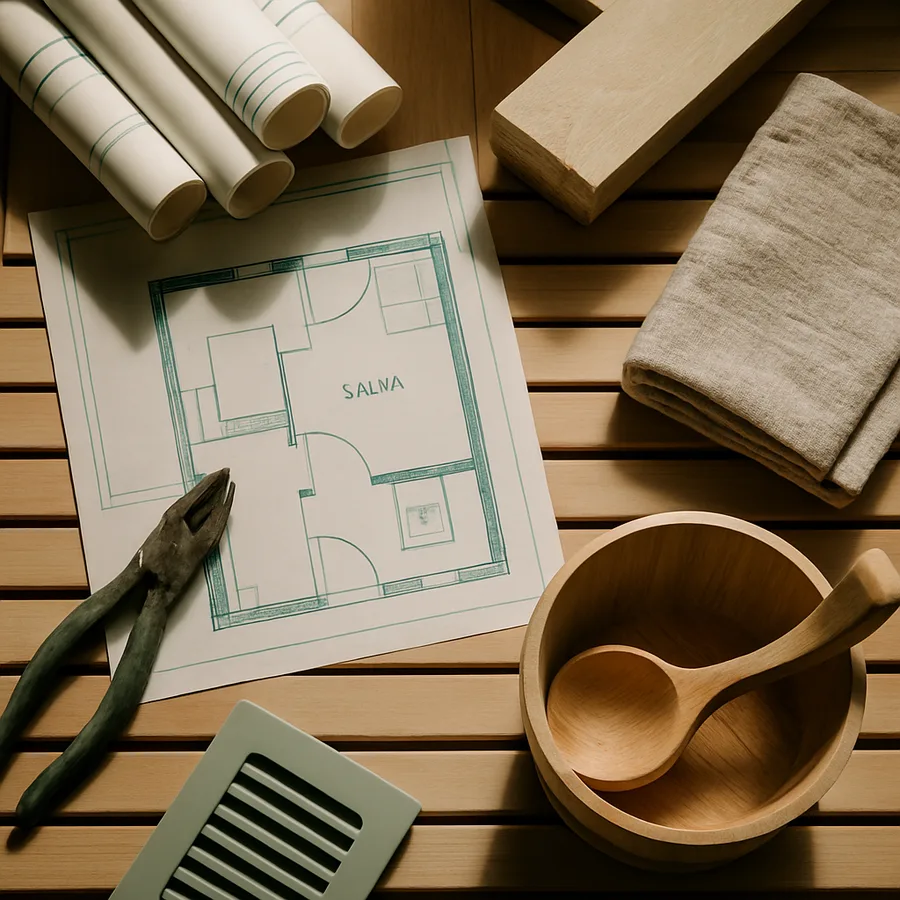
Building a sauna at home was once the kind of project reserved for Finnish expats and serious wellness enthusiasts willing to spend $30,000 with a specialist. That has changed. Prefabricated kits, modular electric heaters, and a flood of online plans have brought the entry price for a respectable home sauna down to the $4,000 to $12,000 range, with custom builds running higher. The decision homeowners now wrestle with is not whether to build, but where: a converted closet or basement room indoors, or a freestanding cabin in the backyard.
Both paths work and both have meaningful tradeoffs. An indoor build is faster, cheaper, and weather-independent but constrained by ceiling height, ventilation, and the existing electrical panel. An outdoor cabin is more atmospheric, easier to ventilate, and effectively unlimited in size but requires a foundation, weatherproofing, and a longer permitting conversation. This guide walks through the structural, electrical, and code questions in enough detail to choose well and to brief a contractor competently.
Indoor Conversion: Working Within Your Existing Envelope
The most efficient indoor sauna build converts an existing finished or unfinished space, typically a basement utility room, a large bathroom, or a generous walk-in closet. Minimum interior dimensions for a comfortable two-person sauna are roughly five by six feet with a seven-foot ceiling. Anything smaller and the upper bench cannot reach the temperature stratification that defines the sauna experience.
The framing inside the existing envelope is conventional 2x4 stud wall construction at 16 inches on center, but the wall assembly is unusual. From outside in, you build the structural wall, fill the cavity with mineral wool insulation rated for high temperatures, install a continuous foil vapor barrier with all seams taped to keep moisture out of the wall cavity, then fasten tongue-and-groove cedar, hemlock, or alder cladding to furring strips. The foil layer is not optional. Without it, moisture migrates into framing and the wall rots from the inside out within a few years.
The benches are typically clear cedar at two heights: a lower bench around 18 inches off the floor and an upper bench at 36 inches. The upper bench is where the sauna actually works because the air at head height runs 20 to 30 degrees Fahrenheit hotter than at floor level. Door swing is always outward for safety, with no latch that can stick. The International Code Council publishes minimum ventilation and clearance requirements that should be checked against your local amendments before framing begins.
Detached Outdoor Cabin: The Backyard Wellness Move
The freestanding cabin is more ambitious and arguably more rewarding. A typical backyard sauna footprint is six by eight feet for a two-bench layout or eight by ten if you want a small changing vestibule, which is a nice luxury in cold climates. The cabin can be a kit, a custom timber-frame, or a converted shed; all three work if the building science is right.
Foundation matters more outdoors. Concrete piers, a poured slab, or a properly sized concrete pad on compacted gravel are the three accepted approaches, with frost-line depth governed by your local climate. The National Association of Home Builders recommends extending footings at least 12 inches below the local frost line, which in northern climates means three to four feet down. Skipping this step in a freeze-thaw climate guarantees a sauna that racks and twists within five years.
Cladding the exterior in cedar, larch, or charred Shou Sugi Ban gives the cabin its character; the structural wall underneath is conventional sheathing and house wrap. The roof should be vented even if the interior ceiling is sealed against vapor, because a hot interior plus a cold exterior plus an unvented roof cavity is a recipe for condensation that drips back into your insulation. A simple cold roof assembly with a one-and-a-half-inch air gap above the insulation solves this.
Electrical, Heater Sizing, and Panel Capacity
Most home saunas in the United States run on a 240-volt electric heater drawing between 4.5 and 9 kilowatts, which translates to a dedicated 30-amp or 40-amp circuit on a double-pole breaker. The general sizing rule from heater manufacturers is roughly one kilowatt per 50 cubic feet of insulated sauna interior. A typical six-by-six-by-seven-foot room (252 cubic feet) is well-served by a 6-kilowatt heater on a 30-amp circuit.
Confirm panel capacity before falling in love with a heater. Adding a 30-amp 240-volt circuit to a panel that is already at 80 percent of its rated load triggers a service upgrade that can add several thousand dollars to the project. The National Electrical Code, published by the National Fire Protection Association, requires that the heater be hardwired (not plug-and-cord) and that the disconnect be visible from the heater location. Wood-burning heaters are an alternative for outdoor cabins and bypass the electrical question entirely, but they require a Class A insulated chimney, a non-combustible floor pad, and clearances that the NFPA 211 standard specifies down to the inch.
Have you considered how often you will actually use the sauna and at what time of day? Heat-up time on a 6-kilowatt heater in a properly insulated room is typically 30 to 45 minutes from cold. If you imagine a quick post-workout session, electric is the right call. If you are committed to the ritual and live somewhere with available firewood, a wood-burning heater changes the experience qualitatively, and the smell of wood smoke is part of why people travel to Finnish lakeside saunas in the first place.
Ventilation: The Detail That Separates Working Saunas From Failed Ones
Ventilation is the most consistently botched element of home sauna builds, and it is the difference between a sauna that feels pleasant at 180 degrees and one that feels suffocating at the same temperature. The standard arrangement is a fresh air inlet near the floor beneath or beside the heater and a passive exhaust vent on the opposite wall, ideally near the ceiling but with an additional low exhaust controllable by a slider for cooldown.
The American Society of Heating, Refrigerating and Air-Conditioning Engineers recommends that sauna spaces achieve roughly six air changes per hour during operation. In practice this is achieved with adjustable vents sized to the room rather than mechanical ventilation, which would cool the sauna excessively. The inlet near the heater is typically a four-inch round opening; the high exhaust is similar. Both should have closable louvers so you can tune the airflow to taste during a session.
The ventilation strategy also dictates how the sauna dries out between uses. After a session, leave the door open and the high vent open for an hour. A sauna that is not properly dried will develop mildew between the cladding boards within months, particularly in basements. This is not theoretical; it is the most common warranty call for sauna installers.
Materials, Cladding, and Heat-Tolerant Hardware
Wood selection in a sauna is functional, not decorative, although the result is beautiful. Western red cedar, eastern white cedar, hemlock, basswood, and aspen are the standard interior species because they have low resinous content, low thermal conductivity (so the bench does not burn the back of your legs), and pleasant aromatics when heated. Avoid pine and spruce for benches and benches backs; the resin pockets will weep at sauna temperatures and stain skin.
All hardware visible inside the sauna should be stainless steel or brass. Plain steel screws will rust within months in the high-humidity environment, and any visible head will be hot to the touch. Counter-bore and plug all bench fasteners with wood plugs so nothing metal contacts skin. The flooring should be a non-slip surface that tolerates water; common choices are sealed concrete, large-format porcelain tile with a textured finish, or a removable cedar duckboard over a tiled floor with a drain.
The door is a high-leverage detail. A full tempered-glass door with a wooden frame is the contemporary standard and dramatically improves the perceived quality of the room because it lets daylight or vestibule light in. Full wood doors are traditional and slightly better thermally. Either option must include a non-latching wooden handle on the inside; an entrapment-capable latch is a code violation in nearly every jurisdiction.
Permits, Insurance, and Resale Considerations
Most jurisdictions require a permit for any sauna build because of the electrical work and, in the case of detached cabins, the structure itself. Indoor saunas are typically permitted as a finished room with a dedicated electrical circuit; the inspector will check the breaker, the wire gauge, the GFCI protection on adjacent receptacles, and ventilation. Outdoor cabins fall under accessory structure rules, which vary widely. A 10-by-10 cabin on a frost-protected foundation will trigger a structural permit; a 6-by-8 on a gravel pad may not, depending on the locality.
Notify your homeowners insurance carrier before commissioning the heater. Some policies include saunas without surcharge, others classify them as a hazard requiring additional liability coverage, and a few exclude wood-burning heaters entirely. According to the Insurance Information Institute, undisclosed home modifications are the leading cause of denied claims after fires; a five-minute call protects a five-figure investment.
Resale data is genuinely positive. The National Association of Realtors reports that wellness amenities including home saunas are among the fastest-growing buyer requests, with roughly 78 percent of agents in their 2025 wellness survey reporting that buyers ask about them in mid-to-upper market homes. A well-built sauna does not always recoup its cost dollar-for-dollar, but it shortens days-on-market and differentiates a listing in a way that few other modest-cost upgrades can.
One detail homeowners should plan early is documentation. Keep the heater manual, the electrical permit, the inspection report, and a photograph of the wall assembly before cladding goes up in a single folder. Future owners, future inspectors, and future contractors will all want this paper trail. A sauna without documentation is treated by buyers and inspectors as a black box, which depresses both confidence and resale value despite the physical quality of the build itself. The folder takes ten minutes to assemble during construction and is essentially impossible to reconstruct afterward.
Conclusion
The choice between an indoor build-out and a detached outdoor cabin comes down to your existing space, your budget, and how much you want the ritual to feel like leaving the house. Indoor saunas are pragmatic, fast, and cheaper to commission. They drop into a basement or a generous bathroom with a single weekend of framing and a half-day of electrical, and you have a working sauna in a few weeks. The compromise is that you are still inside; the experience is closer to a spa amenity than a destination.
Detached cabins ask more of you. You need a foundation, a building permit, weatherproofing, and the patience to manage a small construction project. The reward is a structure with its own atmosphere, the option of a wood-burning heater, and a wellness ritual that involves stepping outside in any weather. In northern climates the contrast of stepping from a 180-degree cabin into snow and back is the entire point, and an indoor sauna cannot reproduce it.
Whichever direction you go, do not skimp on insulation, vapor barrier, and ventilation. These three details are invisible when the cladding goes up and they determine whether the sauna feels excellent or merely warm. Buy the heater your room actually needs rather than the largest one your panel will accept, because an oversized heater cycles too aggressively and dries out the wood. Plan the electrical with a licensed electrician familiar with sauna installations, and pull permits even when you think you can avoid them; an uninspected sauna is an insurance and resale problem waiting to surface.
Take the next step by booking a site walk with a contractor or sauna specialist this month. Bring rough dimensions, your panel capacity, and a clear answer to the indoor-versus-outdoor question. The sooner you scope the project, the sooner you can be sweating on a Saturday morning. For authoritative reference on building codes and electrical requirements, consult the International Code Council and the National Fire Protection Association directly before finalizing plans with your contractor.
More Articles You May Like



Comments
Post a Comment