Plate Wall Display Hanging Hardware From Plate Hangers to Disc Mounts
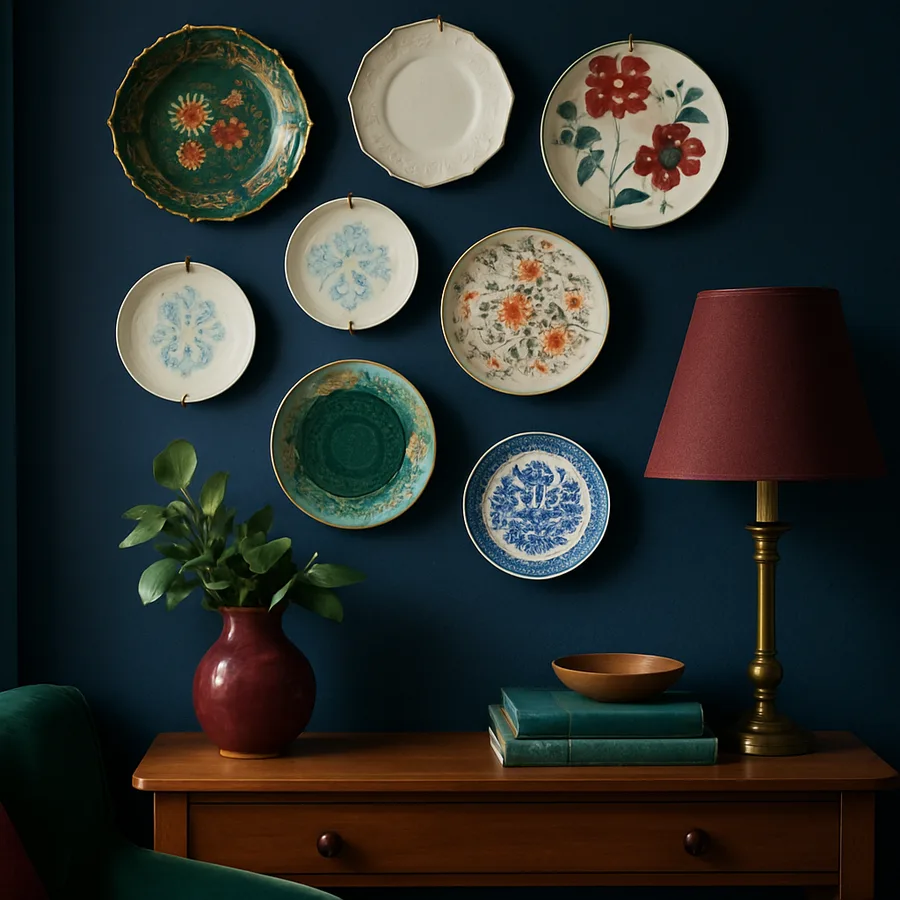
Plate walls have moved out of grandmother's dining room and into the design pages of major shelter magazines, but the hardware behind them remains the same fragile, hidden problem it has always been. A 9-inch porcelain plate weighs roughly 1 to 1.5 pounds, a hand-painted majolica platter can push 4 pounds, and a vintage delft charger can exceed 6 pounds. Hung incorrectly, any of those will eventually meet the floor, and the floor always wins. The good news is that plate-hanging hardware has improved dramatically over the last fifteen years, and the right system for your wall almost always exists.
This guide walks through the four main families of plate-hanging hardware, when to use each, and the questions you should ask before you buy. Have you ever leaned a plate against a wall to test placement, only to come back and find a hairline crack along the rim from the pressure of the lean? That story is more common than you think, and it traces back to the same root cause: hardware decisions made after the plate was already in motion.
Why Plate Hardware Is Different From Picture Hardware
A picture frame distributes its weight across two screws and a wire. A plate concentrates its weight at the rim, the foot, or both, with a fragile ceramic body in between. The forces involved are not the same, and using picture hardware on a plate is one of the most common reasons plates eventually fall. Plate hardware has to spread the load along the rim rather than at a single point, and it has to do that without scratching glaze or chipping unglazed feet.
The second difference is permanence. A picture hangs in one orientation for years. A plate display, especially in a household with children, pets, or earthquakes, faces shifting forces from passing footsteps, slamming doors, and the natural settling of drywall. The American Society of Interior Designers' technical bulletins note that "residential wall vibration" from foot traffic alone can shift hung objects by 2 to 4 millimeters per year, which is enough to dislodge a poorly secured plate.
The third difference is reversibility. Plate collectors rotate displays seasonally far more often than picture collectors do. The hardware needs to allow easy removal and reinstallation without leaving permanent marks on either the plate or the wall. Better Homes & Gardens has surveyed plate collectors who report rotating their displays an average of 2 to 3 times per year, which means hardware durability across multiple cycles matters as much as initial fit.
Family One: Spring-Tension Plate Hangers
The classic spring-tension plate hanger uses four metal arms with rubber-coated tips that grip the plate's rim from front to back. A coiled spring at the rear holds the arms in tension, and the entire assembly hangs from a single wire loop on a wall nail. These are the workhorses of plate display because they are inexpensive, widely available, and reusable.
The trade-off is that the four arms remain visible from the side and slightly from the front. For collectors who do not mind the visible hardware, this is fine. For collectors who want a museum-clean look, spring hangers are a compromise. The other limitation is size: most spring hangers max out around 12 inches in plate diameter, with heavy-duty models extending to 14 or 16 inches. Anything larger needs a different system.
When buying spring hangers, the spec to verify is the arm coating. Cheap hangers use bare metal hooks that will scratch glaze and chip painted rims over time. Quality hangers use clear vinyl, soft rubber, or even silicone-tipped arms that grip without abrading. Major brands like Foster & Stevens, Tripar, and Kemco have published consumer guides confirming that vinyl-coated hangers reduce reported glaze damage by more than 80 percent compared to bare-metal predecessors. The price difference is usually under three dollars per hanger.
Family Two: Adhesive Disc Mounts
The newest family of plate hardware is the adhesive disc mount, sometimes called an invisible plate hanger. A small fabric or plastic disc, usually 1 to 2 inches in diameter, attaches to the back of the plate with a permanent adhesive. The disc has a small hook or loop on its outer surface, and that loop catches a nail or screw on the wall. From the front, no hardware is visible at all.
The major advantage is the clean front view, which suits modern plate walls and Dark Academia or minimalist interiors where the visible spring arms of older hardware would feel cluttered. The major disadvantages are the permanent bond on the back of the plate and the weight rating. Most disc mounts are rated for plates up to 7 pounds, and they require a clean, unglazed area on the back of the plate for adhesion. Heavy-glazed porcelain with a fully glazed footring may not bond reliably.
Brands like Invisible English Plate Disc Hangers and Hartford Display have published technical specs and adhesive data through major retailers. The adhesive is typically a moisture-resistant acrylic that cures over 24 to 48 hours. Once cured, the bond is genuinely strong, but it is also not easily reversible. Plates with disc mounts are functionally permanent display pieces from then on, which matters if the plate is a family heirloom you intend to pass on intact.
Family Three: Plate Rails and Picture Ledges
The third family avoids attaching hardware to the plate at all. A plate rail is a horizontal shelf, typically 3 to 4 inches deep, with a shallow groove along the upper surface that catches the plate foot and a small front lip that prevents the plate from tipping forward. Plate rails have been standard in dining rooms since the early 1800s and remain one of the most reliable display methods.
The advantages are significant: zero hardware on the plates, full reversibility, ability to display plates of mixed sizes without reconfiguring, and the option to layer smaller plates and objects in front of larger ones. The disadvantages are visual weight (the rail itself becomes architecture in the room) and earthquake risk in seismic zones. The Smithsonian Institution's collection storage guidelines, available through the Smithsonian, recommend a back-tilt of 7 to 12 degrees for any rail-displayed ceramic in regions with seismic activity.
For installation, a useful plate rail must be mounted into wall studs with at least two anchor points per 4-foot run. Drywall anchors alone will not support the cumulative weight of a fully loaded rail, which can exceed 30 pounds across a sideboard-length installation. Plate rails painted to match the wall recede beautifully; plate rails left in raw wood become part of the architectural character, which suits cottage, French country, and Provencal interiors particularly well.
Family Four: Invisible Wire and Cleat Systems
The fourth family uses monofilament wire or museum putty in combination with a hidden hook or cleat behind the plate. This is the system used by professional installers for high-value pieces and museum displays, and it is the most labor-intensive but also the most secure for unusual sizes and shapes.
One common version uses a French cleat: a 45-degree-angled wood strip on the wall and a matching strip on a custom backing board attached to the plate. The two angles interlock and lift the plate slightly off the wall in a self-leveling install. This system suits oversized chargers, irregular ceramic platters, and sculptural plates that cannot accept conventional hardware.
Another version combines monofilament wire wrapped invisibly around the plate's foot with two small picture hooks. Done correctly with archival fishing-line-grade monofilament, the wire is nearly invisible at viewing distance and supports significant weight. The Museum of Modern Art's installation team has discussed similar techniques in published interviews available through the Museum of Modern Art's online collection notes, where conservators describe monofilament as the "least visible reversible support" for ceramics.
The catch with both invisible wire and cleat systems is install time. A plate that takes 30 seconds to hang on a spring hanger may take 20 minutes with a French cleat. For three or four anchor pieces in a room, that investment is worth it; for a wall of forty smaller plates, it would be impractical.
Choosing the Right Family for Your Plates
The decision tree is simpler than the four families suggest. For everyday ceramics under 12 inches and a casual display, vinyl-coated spring hangers are the right answer 80 percent of the time. For modern minimalist installations where visible hardware would feel wrong, adhesive disc mounts work well as long as the plates are display-only and under 7 pounds. For mixed collections you want to rotate often, a plate rail removes the hardware decision entirely and lets you redesign the wall in five minutes.
For oversized chargers, irregular shapes, and high-value heirlooms, invisible wire or French cleats are the professional answer despite the install time. A sensible plate wall often combines two or three of these systems on the same wall. The key is to plan the hardware before buying anything, because hardware choices determine the spacing, layout flexibility, and even the wall preparation needed for the installation.
Have you considered the wall surface itself? Drywall, plaster, brick, and shiplap all behave differently. Drywall accepts almost any anchor up to 50 pounds with the right hardware. Plaster requires careful pre-drilling to avoid cracking the plaster face. Brick demands a masonry anchor and a hammer drill, but once anchored, it is essentially permanent. Shiplap requires hitting the rail rather than the gap between boards. Architectural Digest has profiled designers who recommend a "hardware-first walk-through" of the wall before purchasing any plates, which is excellent advice.
Installation Tips That Prevent Falls
The single biggest cause of plate falls is under-rated hardware. A plate weighs more than people estimate by eye, especially when wet (some collectors clean plates in place rather than removing them). Always rate the hardware to at least double the plate weight. A 4-pound plate deserves an 8-pound-rated hanger and an 8-pound-rated wall anchor. The cost increase is negligible and the fall prevention is real.
The second biggest cause is misaligned weight distribution. A spring hanger sized too large for the plate will not grip the rim tightly and the plate can twist out under vibration. Buy hangers within 0.5 inches of the plate's actual diameter, and verify the grip by gently shaking the plate after hanging. If it moves more than 2 millimeters in any direction, the hanger is wrong.
Third, museum putty at the bottom edge is a free upgrade for any plate display. A small dab of removable putty between the bottom rim of the plate and the wall stops lateral motion entirely. Conservation-grade putty is reversible and leaves no residue when removed correctly. Museum collections worldwide use this technique on objects worth thousands of dollars, and it costs about four dollars per package at hardware stores.
Finally, do not overload a single wall stud. A 16-inch wide stud can comfortably support 4 to 6 medium plates if the load is distributed across multiple anchor points. Beyond that, hit a second stud or use rated drywall anchors. The American Society of Interior Designers' guidelines for residential wall loading suggest a working maximum of 15 pounds per linear foot of wall in average drywall construction, and a heavy plate display can easily hit that limit.
Conclusion
Plate walls succeed when the hardware decision happens before the layout decision. The four families of plate hardware (spring hangers, adhesive discs, plate rails, and invisible wire or cleats) each suit different plate sizes, display styles, and reversibility needs. A serious plate wall almost always uses two or three families on the same surface, picking the right one for each individual plate rather than forcing every plate into the same system.
The hardware choices you make also shape how the wall reads. Spring hangers communicate traditional collector. Adhesive discs communicate modern minimal. Plate rails communicate cottage or country. Invisible cleats communicate museum-grade collection. None of those readings are wrong, but they are different rooms, and the hardware is doing the talking long before anyone looks at the plates themselves.
The investment in good hardware pays back across years of stable display. A few extra dollars per hanger, a half-hour of stud-finding, and a tube of museum putty add up to the difference between a wall that lasts a decade and a wall that produces an unwelcome crash at 3 a.m. The latter is genuinely heartbreaking when the plate is a family piece, and it is almost always preventable.
Take an honest inventory of your plates this weekend. Weigh them on a kitchen scale, measure them with a ruler, and note which ones have fully glazed backs. With that data in hand, an hour at a hardware store or framing shop will outfit the entire collection with the right hardware for each piece. From there, the layout decisions become the fun part, and the plates can finally come out of the cabinet they have been waiting in.
More Articles You May Like



Comments
Post a Comment