Pizza Oven Placement in Outdoor Kitchens for Workflow Efficiency
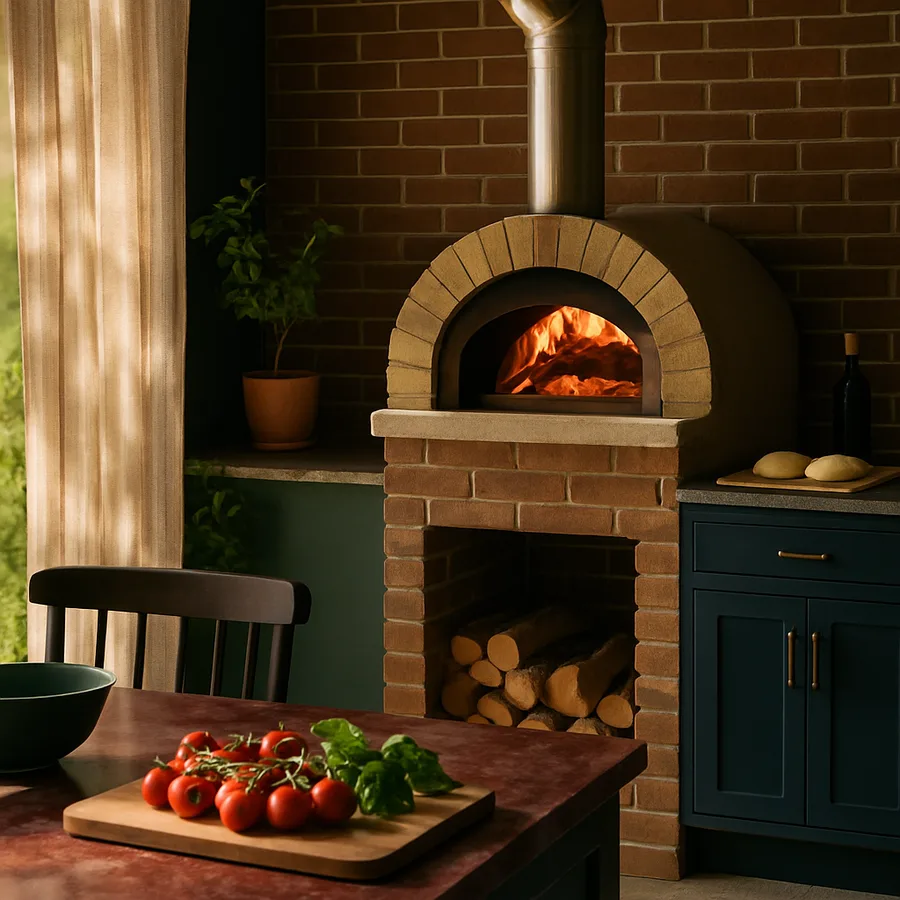
The Italian wood-fired oven on the back patio has gone from luxury accent to expected fixture in any premium outdoor kitchen build. The problem is that most installations treat the oven as decorative sculpture, tucked into a corner where it photographs well but cannot actually be used to feed a crowd of fifteen on a Saturday night. A pizza oven that fires to 800 degrees and bakes a Neapolitan in 90 seconds is a high-throughput appliance, and it needs the same workflow thinking as a commercial pizzeria, scaled to a backyard.
This guide covers where the oven goes, why, and how to set up the surrounding zones so one cook can launch six pizzas in twenty minutes without burning forearms, blocking the grill, or running back inside for flour. The placement decision drives the entire kitchen layout, so it should be the second decision after the cook island position, not an afterthought.
The Pizza-Making Workflow Decoded Into Zones
Before you can place the oven correctly, you have to understand what actually happens during a pizza service. The work flows through five distinct zones, and the physical layout has to support that flow in sequence, not bounce the cook back and forth.
Zone 1 is dough storage. Pre-portioned dough balls, ideally proofed in a covered container, need to be within arm's reach of the prep counter at room temperature. A drawer refrigerator at 38 degrees holds the dough in reserve, and small batches come up to room temperature on the counter for 30 minutes before stretching.
Zone 2 is stretching and saucing. A 36 to 48 inch counter run with a stone or wood surface, dusted with semolina or rice flour, lets one cook stretch a ball into a 12 inch round in about 30 seconds. Sauce, cheese, and pre-prepped toppings sit in a cold rail or simply on the counter in small bowls.
Zone 3 is the launch. The pizza moves from prep counter to peel, then peel to oven floor, in one motion. The peel needs a dedicated landing spot within 24 inches of the oven mouth, and the cook needs clear footing to step from prep to oven without turning around.
Zone 4 is the bake. A 90-second Neapolitan bake means the cook is rotating the pizza at 30 seconds with the turning peel, again at 60 seconds, and pulling at 90. There is no time to walk away. The launch peel and turning peel both need to live within a step of the oven mouth.
Zone 5 is the plate-and-serve. The pizza comes out onto a wire rack or wooden board immediately, gets sliced, and goes to the table. A 24-inch landing zone within reach of the oven, with a slicing wheel and a stack of boards, completes the flow.
The total flow path from dough storage to serving zone should not exceed 12 linear feet. Anything longer slows the cook, anything shorter creates traffic conflicts. The National Kitchen and Bath Association outdoor kitchen workflow guidelines, available at the National Kitchen and Bath Association site, recommend zones be linked by direct sight lines and that no zone require the cook to turn more than 90 degrees from any other.
The Three Workable Oven Placements
Across thousands of installed outdoor kitchens, three placement patterns prove out as functional. Everything else either looks great empty and fails in service, or photographs poorly but happens to work.
Placement A: End-of-island, perpendicular. The oven sits at the short end of a straight or L-shaped cook island, with its mouth facing perpendicular to the island length. This puts the oven launch zone on the end of the island counter, which becomes the dedicated pizza prep counter. The grill and side burners run down the long axis of the island, separated from the pizza zone by 24 to 36 inches of buffer counter so heat from the oven mouth does not bake the side burner.
This is the most common high-functioning layout and works for islands 9 feet long or longer. The cook stands in front of the island with the oven on their dominant-hand side, prep counter directly in front, and grill within one step. One person can run pizza service and tend a grill simultaneously.
Placement B: Standalone with attached prep counter. The oven sits as its own structure, separated from the main cook island by a walkway, with a dedicated 6 to 8 foot prep counter that wraps from the oven mouth. This is the right pick when the oven is large (a 36-inch interior or bigger), when the kitchen is built for hosting and pizza is the headliner, or when site constraints prevent integrating the oven into the main island.
The standalone layout requires more total square footage but creates a true pizzaiolo station. The downside is that the cook is now in a separate zone from the grill, so this layout works best when two cooks are working or when pizza nights and grill nights are separate events.
Placement C: Outboard from the island, parallel. The oven sits on its own base, parallel to the cook island and offset 36 to 48 inches behind or beside it, sharing one cook position. The cook stands between the two, pivoting between the grill on one side and the oven on the other. This works in tight footprints but requires precise spacing because there has to be room for both oven door swing and a peel to come straight out without hitting the grill.
Placement C is the most demanding to design correctly because the spacing tolerances are tight, but it is the most space-efficient solution for patios under 200 square feet that still want both grill and oven.
Clearances, Codes, and the Heat You Underestimate
A wood-fired oven hits 800 to 1,000 degrees on the dome and 600 to 800 on the floor. The heat radiating from the open mouth measures 350 to 500 degrees at 12 inches and remains around 150 degrees at 36 inches. Anything within that radiant field has to be either fireproof or far enough away to not matter.
The Hearth, Patio and Barbecue Association publishes outdoor wood-fired oven clearance standards that mirror the National Fire Protection Association code 211 for solid-fuel appliances. The HPBA outdoor cooking technical resources are at the Hearth, Patio and Barbecue Association site. The minimum clearances for a residential wood-fired oven are 36 inches from any combustible material in front of the mouth, 12 inches from the sides, and 18 inches above the chimney for a covered installation.
Three details often get missed. First, the counter directly beside the oven mouth needs to be a non-combustible material. Granite, porcelain, or concrete are fine; sealed wood, butcher block, or composite decking are not. The counter material extends at least 18 inches to either side of the oven mouth.
Second, the chimney exit point matters more than the chimney itself. If the oven sits under a pergola or covered patio, the chimney needs to extend at least 24 inches above the highest combustible roof surface within 10 feet, with a spark arrestor at the top. The HPBA reports that pergola fires from improperly vented outdoor ovens have grown roughly 18 percent year over year as installations have boomed, with most failures traced to chimney terminations that ended below the roof line.
Third, the floor in front of the oven sees ember spillage and ash drops. A non-combustible hearth extension, typically a 36 inch by 36 inch slab of stone or porcelain set into the patio surface in front of the oven mouth, prevents the inevitable ember from charring composite decking or burning a hole in an outdoor rug.
Fuel Access: Wood, Gas, or Hybrid
The fuel choice changes the placement requirements significantly. A wood-fired oven needs accessible firewood storage, kindling, and a tools rack. A gas oven needs a properly sized gas line and combustion air. A hybrid does both and adds the complexity of switching between modes.
Wood-fired ovens burn 4 to 6 pounds of dry hardwood per hour at cooking temperature, plus an additional 8 to 12 pounds during the initial 90-minute heat-up. A weekend pizza session for 6 people consumes roughly 25 to 40 pounds of seasoned wood. The wood storage needs to be within 6 feet of the oven, sheltered from rain, and large enough to hold a half-cord (64 cubic feet) for monthly restocking.
The best detail for wood storage is a built-in cubby below the oven base, faced with the same finish as the oven structure, sized for a 24 inch by 36 inch firewood bay with a 12 inch by 12 inch kindling cubby beside it. This puts the fuel within arm's reach during the bake and removes the need for an unsightly wood pile elsewhere on the patio.
Gas-fired ovens need a 1/2 inch gas line capable of delivering 60,000 to 90,000 BTU at the manifold. The line has to be sized in conjunction with the rest of the outdoor kitchen load, because a typical outdoor kitchen with a 100,000 BTU grill, two 15,000 BTU side burners, and a 75,000 BTU pizza oven totals 205,000 BTU peak demand, which exceeds the capacity of a standard 3/4 inch residential service line. Most installations require a dedicated 1 inch service line from the meter.
Hybrid ovens use gas to bring the oven to temperature in 20 to 30 minutes, then add wood for flavor and the final 200 degrees of heat that gives a Neapolitan its leopard-spotted crust. They are the most flexible option for serious cooks and the least flexible to install, because they need both the gas line and the wood storage and venting. Brands like Forno Bravo and Mugnaini make the highest-rated residential hybrids.
Counter Materials and Tool Storage Around the Oven
The pizza station counter has to handle both flour-dusted dough work and 600-degree pizza peels coming straight from the oven. Three materials work well: dense porcelain slab, dense honed granite, and 1.5 inch thick slabs of wood-grain compressed bamboo. Each has tradeoffs.
Porcelain is the lowest-maintenance and highest-performing surface, scrubs clean of flour and tomato sauce in seconds, and tolerates the 600-degree peel without scorching. Honed granite is the traditional choice and works equally well, with the caveat that the porous surface holds flour in microscopic pits and benefits from a quick scrub between sessions. The compressed bamboo slabs add visual warmth, handle direct contact with hot peels, but require quarterly oiling to maintain their water resistance. The Natural Stone Institute outdoor materials guide at the Natural Stone Institute site lists the absorption ratings for both porcelain and granite for outdoor pizza prep applications.
Tool storage for a serious pizza station needs five things within reach: a peel rack for two long-handled peels (one launch, one turning), a slicing wheel and serving boards in a vertical drawer, a flour station with semolina and rice flour in sealed containers, a small bowl rail for sauce and toppings, and an infrared thermometer for verifying floor temperature before launch. The total cabinet width to hold this gear is 24 inches, ideally as a vertical pull-out next to the prep counter.
One detail almost everyone misses: the peel handles are 48 to 60 inches long. Tool storage under or beside the counter has to accommodate that length, which usually means a horizontal rack on the inside of a tall cabinet, or a wall-mounted bracket on the back of the island. Standard kitchen drawer pulls cannot hold a peel.
Wind, Smoke, and the Neighbor Question
A wood-fired oven produces visible smoke during the heat-up and intermittently during the bake. The smoke plume rises 8 to 15 feet above the chimney and drifts on the prevailing wind. In suburban lots, this becomes a neighbor issue if the chimney is positioned upwind of the property line.
The fix is to orient the oven so the prevailing summer wind carries the plume across your own yard, not the neighbor's. Most North American sites have a prevailing summer wind from the southwest or west, which means the oven chimney should sit on the east or northeast edge of the patio, with the plume drifting eastward across your own property.
The second fix is hardwood selection. Oak, maple, and hickory burn cleanly and produce minimal smoke once at temperature. Pine, cedar, and softwoods produce visible smoke continuously and should never be used in a residential outdoor oven. The National Association of Home Builders includes outdoor wood-fired appliance guidelines in its land development standards, available at the National Association of Home Builders site, and notes that improper fuel choice is the leading cause of municipal complaints about residential outdoor ovens.
The third fix is operating hours. Most municipalities have nuisance ordinances that allow neighbors to file complaints if visible smoke crosses the property line during evening hours. Firing the oven for a 4 PM heat-up and a 6 PM bake puts the smoke phase well before sunset and avoids the typical complaint window.
Conclusion: The Oven That Actually Gets Used
Most outdoor pizza ovens get used six to ten times a year. The well-placed oven gets used 30 to 50 times a year because the workflow makes pizza night low-effort instead of a Saturday-long production. The difference between those two outcomes is entirely in the placement and the surrounding zones, not in the oven itself.
The placement framework that delivers the high-use outcome is straightforward. Position the oven at the end of a cook island or as a standalone with an attached prep counter, oriented so the prevailing summer wind carries smoke away from neighbors. Surround it with a 36 to 48 inch prep counter, a 24 inch tool storage cabinet, and a 24 inch landing zone for slicing and serving. Verify clearances meet HPBA standards: 36 inches in front, 12 inches sides, 24 inches above the chimney through any roof. Provide accessible fuel storage within 6 feet of the oven mouth.
Budget-wise, a quality residential pizza oven runs $3,500 to $12,000 for the oven itself, plus $2,000 to $5,000 for the integrated cabinetry, counter, and chimney installation. The hybrid gas-and-wood models sit at the higher end and are worth the premium for households that will use the oven weekly.
Two questions to bring to the design conversation: How often will you actually run pizza service for more than four people, because the answer determines whether you need a dedicated standalone station or a compact end-of-island integration? And which direction is the prevailing summer wind across your patio, because the answer determines the chimney orientation and may save you a neighbor dispute?
If you are considering a build this season, request quotes from at least three certified outdoor kitchen designers who have completed wood-fired oven installations specifically. The placement details are subtle, the codes are real, and the difference between the right install and the wrong one shows up in how often you actually use the oven for the next twenty years.
More Articles You May Like



Comments
Post a Comment