Pantry Shelf Depth Rules for Cans Cereal and Small Appliance Sizing
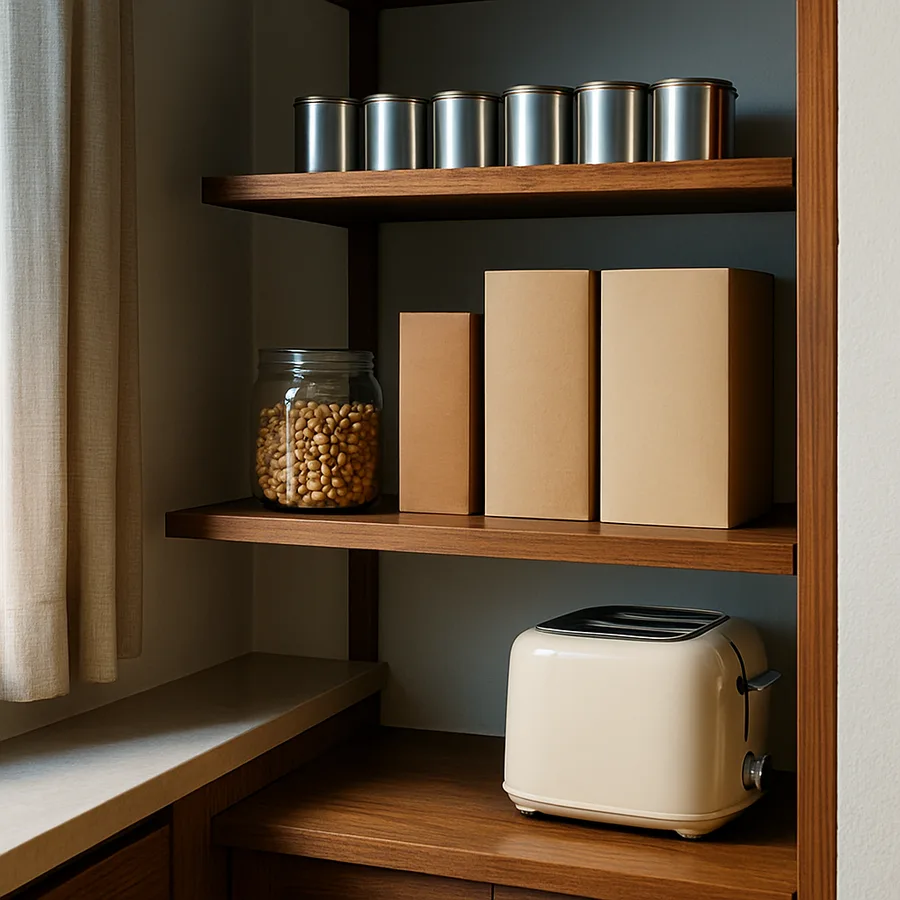
Shelf depth is the most underestimated decision in pantry design. A shelf that is two inches too deep buries the back row of canned goods behind the front row, and once a can disappears from sight it might as well not exist. A shelf that is two inches too shallow forces small appliances onto the floor or into upper cabinets where they are inconvenient to retrieve. Most pantries fail because every shelf was built to the same default depth, usually fourteen or sixteen inches, when the contents demand at least three different depths to function properly.
This guide establishes the actual depth rules for pantry shelving based on the dimensions of common contents: standard and oversized cans, cereal boxes and other tall packaged goods, small kitchen appliances, paper goods and bulk packaging, and the awkward in-between items that cause most planning headaches. By the end you will be able to specify a shelving system with three or four distinct depth zones that maximizes both visible storage and structural support, and you will know which shelving materials and supports actually carry the weight of a fully stocked pantry without sagging.
Why One Shelf Depth Cannot Serve Every Item
The contents of a typical American pantry span a depth range from three inches for spice jars to twenty inches for slow cookers and stand mixers. Asking a single shelf depth to accommodate that range produces compromise that fails at both ends. A sixteen-inch shelf that holds a stand mixer wastes thirteen inches of unused depth on the row of spice jars next to it. A twelve-inch shelf that holds spices and small cans cannot hold the slow cooker at all and forces it onto the floor.
The professional approach is to specify three or four depth zones within a single pantry, each tuned to the contents it will hold. The bottom zone runs sixteen to twenty inches deep for small appliances and bulk paper goods. The middle zone runs twelve to fourteen inches deep for cans, jars, and packaged dry goods. An upper zone runs eight to ten inches deep for spices, baking ingredients, and smaller items. This zoning approach uses vertical space efficiently and keeps every item visible from a single eye position rather than buried behind a front row.
The National Kitchen and Bath Association (NKBA) planning guidelines for pantry shelving recommend variable shelf depths in any pantry larger than twenty square feet, with adjustable supports that allow the homeowner to refine depths after move-in based on actual contents. The American Society of Interior Designers (ASID) reports that pantries with variable shelf depth scored substantially higher in post-occupancy satisfaction surveys than pantries with uniform shelving, with the largest satisfaction gap appearing in households that cook from raw ingredients more than four nights per week.
The Depth Rule for Canned Goods
A standard fifteen-ounce can measures roughly three inches in diameter. A twenty-eight-ounce can measures four inches. A standard twelve-ounce soup can measures two and five-eighths inches. The math suggests that a twelve-inch shelf will hold three rows of standard cans front to back, but in practice the back row becomes invisible and inaccessible the moment the front row is full. The correct depth for canned goods is twelve to fourteen inches, holding two visible rows with the back row tilted forward on a riser so labels remain readable.
Tiered can racks are a fifty-dollar improvement that doubles the visible capacity of any can-storage shelf. The racks tilt the back row up by an inch and a half, exposing labels above the front row at a comfortable reading angle. Wire-frame versions hold up to twenty-four cans per square foot of shelf area. Plastic and bamboo versions look better in glass-fronted pantries but cost more. Have you ever discovered a forgotten can of pumpkin puree from three Thanksgivings ago hiding in the back of a deep shelf? The tiered rack solves that problem permanently.
Oversized cans like number ten food-service cans, large tomato cans, and bulk-purchase items need their own dedicated shelf at fourteen to sixteen inches deep. Mixing oversized cans with standard cans on the same shelf wastes vertical space and creates an unstable storage geometry. The National Association of the Remodeling Industry (NARI) recommends a dedicated oversized-goods shelf in any pantry serving a household of four or more, with adjustable height to accommodate the specific brands the household actually buys.
The Depth Rule for Cereal and Tall Packaged Goods
Cereal boxes are the most awkward common pantry item because their dimensions vary wildly between brands. A standard family-sized cereal box measures roughly three inches deep, eight inches wide, and twelve to thirteen inches tall. Cracker boxes, pasta boxes, and granola bar boxes occupy similar geometry. The natural shelf depth for these items is ten to twelve inches, holding boxes upright with no wasted depth and full label visibility from the front.
The catch is that taller cereal and cracker boxes need vertical clearance of fourteen to sixteen inches between shelves, which means the cereal zone consumes more vertical space than other zones. The fix is to dedicate one or two specific shelves in the pantry to tall packaged goods, with adjustable shelf clips that let the homeowner refine the spacing once the actual contents are loaded. Generic uniform shelf spacing of twelve inches forces tall boxes to be laid on their sides, which buries everything behind the front box and creates the same invisibility problem as too-deep shelves for cans.
Bulk dry goods stored in clear airtight containers follow similar geometry. A standard six-quart container measures roughly seven inches square and ten inches tall. A twelve-quart container runs ten inches by ten inches by twelve inches tall. A pantry with a serious baking program needs a dedicated dry-goods shelf at twelve-inch depth with sixteen-inch vertical clearance, sized for the specific container system the household uses. The Illuminating Engineering Society (IES) recommends supplemental task lighting at the front edge of any shelf holding clear containers, since the lighting transforms the visual quality of the contents and makes the dry-goods shelf one of the most attractive elements in the pantry.
The Depth Rule for Small Appliances
Small appliance dimensions are the wild card in any pantry shelving plan. A standard stand mixer measures fifteen to seventeen inches deep, fifteen inches wide, and fourteen inches tall. A six-quart slow cooker measures roughly fourteen inches deep and twelve inches tall. A standard food processor base runs ten by ten by sixteen tall. A countertop espresso machine can run anywhere from twelve to nineteen inches deep depending on the model. The pantry needs at least one shelf zone at sixteen to eighteen inches deep with vertical clearance of sixteen to twenty inches to accommodate this range.
Pull-out shelves transform the appliance zone. Sliding the shelf out brings the back of the appliance forward where the cook can grasp it, eliminating the awkward two-handed reach into a deep cabinet. Heavy-duty pull-out hardware rated for one hundred pounds runs eighty to one hundred and fifty dollars per shelf installed, and the convenience pays for itself the first time the cook needs to retrieve a stand mixer for a Saturday baking session. The National Association of Home Builders (NAHB) lists pull-out shelving among the most-requested kitchen storage upgrades, with adoption rising significantly in pantries holding more than two heavy small appliances.
Outlet placement matters in any pantry that doubles as an appliance staging zone. A countertop receptacle inside the pantry at the appliance shelf level allows charging of cordless devices and powering of the espresso machine or coffee grinder without removing them from the pantry. The receptacle should be on a dedicated twenty-amp circuit if any of the appliances draw heavy load, and protected by a ground-fault interrupter if it is within six feet of a sink. Houzz remodeling cost surveys show that pantry electrical upgrades cost surprisingly little relative to the convenience improvement they deliver according to Houzz renovation databases.
Shelf Material and Structural Support
Shelf material choice depends on load and span. A standard fully loaded pantry shelf at thirty inches wide carries between forty and ninety pounds depending on contents. A three-quarter-inch melamine-finished particleboard shelf at this span will sag noticeably within a year under heavy load. The minimum material specification for a pantry shelf with serious load is three-quarter-inch plywood with a hardwood front edge, or one-inch-thick MDF with proper edge banding. Solid hardwood shelves are even better but cost three to four times as much.
Span between supports matters as much as material thickness. A three-quarter-inch plywood shelf spans up to thirty inches between supports without significant deflection under normal load. Beyond thirty inches the shelf needs either an intermediate support or a thicker material. Most pantry shelves should never exceed thirty-six inches between supports regardless of material, because long unsupported spans accumulate sag over time even when initial deflection is acceptable.
Shelf supports themselves divide into three categories. Pin-and-hole adjustable supports are the most flexible and allow the homeowner to refine shelf positions as contents change. Standard-and-bracket systems are stronger but limit adjustability to predefined intervals. Permanent dado-joint shelves are strongest but lock in the geometry forever. The right choice depends on the household's certainty about shelf positions, with adjustable systems preferred for first-time pantry builds and permanent systems preferred for renovations of established households whose storage patterns are already settled.
Putting It All Together: A Sample Depth Plan
A practical seven-shelf pantry plan looks like this from floor to ceiling. The bottom shelf at floor level runs eighteen inches deep and twenty inches tall, holding small appliances, paper goods, and large items. The second shelf at sixteen inches deep and sixteen inches tall holds the secondary appliance zone or oversized canned goods. The third shelf at fourteen inches deep and fourteen inches tall holds tall packaged goods like cereal and cracker boxes. The fourth shelf at twelve inches deep and twelve inches tall holds standard canned goods on tiered racks.
The fifth shelf at twelve inches deep and twelve inches tall holds bulk dry goods in airtight containers. The sixth shelf at ten inches deep and ten inches tall holds smaller jarred goods and condiments. The top shelf at eight inches deep and ten inches tall holds spices, baking extracts, and rarely-used items. Total shelving depth at the bottom narrows as the eye climbs the wall, which is both ergonomically correct because heavier items live at hip height and visually pleasing because the wall reads as a tapered storage system rather than a flat slab of identical shelves.
Adjust the specific dimensions to match the actual contents the household stores, but preserve the principle of variable depth. A pantry with three or four depth zones serves contents twice as efficiently as a pantry with uniform depth, and the cost difference at construction is negligible because adjustable shelving systems accommodate any reasonable depth variation. The investment is in planning and specification, not in materials.
Conclusion: Specify Depth Variation Before Shelving Is Installed
Pantry shelving fails when one shelf depth is asked to serve every item the household stores. The fix is to specify three or four distinct depth zones within a single pantry, each tuned to the contents it will hold. The bottom zone at sixteen to twenty inches handles small appliances. The middle zone at twelve to fourteen inches handles cans, jars, and packaged dry goods. The upper zones at eight to ten inches handle spices and smaller items. The variable depth approach maximizes visible storage and eliminates the buried-back-row problem that plagues uniform-depth shelving.
Tiered can racks, pull-out shelves for appliances, and adjustable shelf supports are the three accessory upgrades that deliver the highest convenience return per dollar spent. Each one costs less than two hundred dollars per shelf and dramatically improves daily usability. None of them can be retrofitted easily once shelving is mounted and stocked, so the time to specify them is during the cabinetry order rather than after move-in.
Material specification matters as much as depth specification. Three-quarter-inch plywood with hardwood edging or one-inch MDF with proper edge banding will serve a fully loaded pantry shelf for decades without sagging. Cheap melamine-finished particleboard will sag visibly within a year under realistic load and become a chronic eyesore in an otherwise well-designed pantry. The cost difference between cheap and adequate shelving is small relative to total kitchen budget, and the quality difference is permanent.
Before finalizing your pantry shelving order, walk through your current pantry contents item by item and measure the depth of each category before signing off on shelf specifications. Bring the measurements to your cabinet shop and request a depth-zoned shelving plan based on what you actually store rather than on generic defaults. The two-hour exercise prevents years of frustration with shelves that do not fit your contents, and it costs nothing beyond a tape measure and a notepad. A pantry built to your actual storage profile is a pantry that earns its square footage every day for the next twenty years.
More Articles You May Like


Comments
Post a Comment