Pantry Door Glass vs Solid Wood for Visual Connection or Hiding
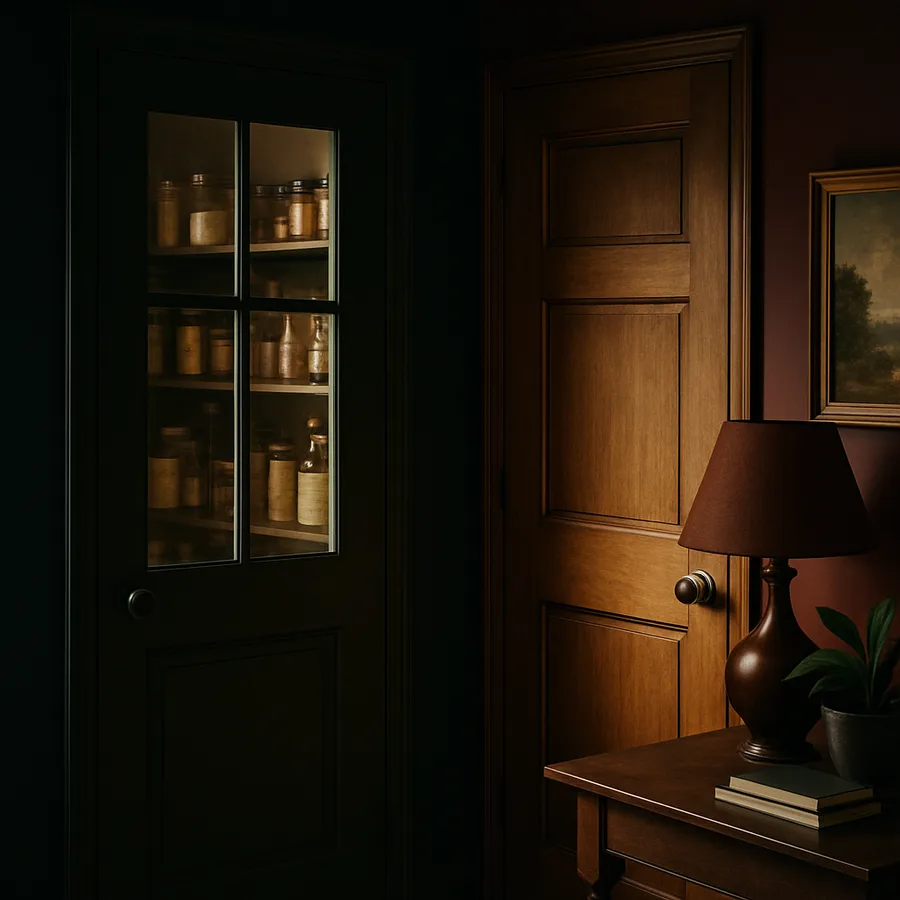
The pantry door is a small architectural decision with outsized consequences for how the room actually functions. A glass door creates visual continuity between kitchen and pantry, brings borrowed light into the kitchen, and makes the pantry contents part of the visual landscape. A solid wood door hides everything, preserves the calm of the kitchen elevation, and removes any pressure to keep pantry contents photogenic. Choosing between them is a question of personality, household discipline, and how often you want to see your own pantry from the breakfast table.
This guide compares glass and solid pantry doors on the dimensions that actually matter day to day: visibility and organization pressure, light and sound transfer, durability and maintenance, cost and lead time, and resale signaling. By the end you should know which door belongs on your pantry, whether a hybrid panel-and-glass approach makes sense, and what specifications to give your cabinet shop or door supplier so the result performs the way you imagined.
What the Door Actually Does Beyond Closing the Opening
A pantry door has four functional jobs beyond merely covering the doorway. It controls visual access, allowing or blocking sight lines into the storage space. It controls light transfer, either bringing pantry light into the kitchen or absorbing kitchen light to keep the pantry dim. It controls sound transfer, isolating the noise of a chest freezer or a wine cooler from the main living space. And it controls air movement, which matters if the pantry holds climate-sensitive contents like wine, root vegetables, or charcuterie.
Glass doors deliver visual continuity and light transfer at the cost of zero sound isolation and zero visual privacy. Solid doors deliver privacy and sound isolation at the cost of complete visual disconnection. Hybrid doors with a glazed upper panel and a solid lower panel try to balance the two priorities, with results that depend heavily on the specific glazing pattern and the height of the divider rail.
The National Kitchen and Bath Association (NKBA) survey data shows that solid pantry doors outnumber glass doors by roughly three to one in new kitchen installations, with glass selections concentrated in homes designed by interior designers and in higher-end markets. The dominance of solid doors reflects the practical truth that most households cannot or do not want to maintain pantry contents at display-ready standard around the clock.
Visibility, Organization Pressure, and the Psychology of Display
A glass pantry door turns every shelf into a display surface. Cans line up like soldiers, glass jars get filled with grains and pasta and labeled in calligraphy, and the pantry becomes part of the kitchen's design language. The visual reward is real, and a well-organized glass-front pantry can elevate an entire kitchen elevation. But the obligation is also real. Every time the household buys a brightly colored cereal box, a plastic-wrapped multi-pack of snacks, or a Costco-sized bag of paper towels, the contents either get decanted into matching containers or visually pollute the kitchen view.
The decanting workload is not trivial. A household that shops weekly and decants every grocery into clear containers spends roughly thirty to forty-five minutes per week on the maintenance, plus the upfront cost of one to three hundred dollars in airtight containers. The container investment pays back in food preservation and pest exclusion, but the weekly time commitment is genuine. Have you ever watched a friend's beautifully organized pantry slowly degrade over six months as the decanting routine slipped? That is the universal trajectory of glass pantry doors in households without strict discipline.
Solid doors carry no such pressure. Contents can be stacked, restacked, half-empty, brand-mixed, and chaotic without any visual consequence in the kitchen. The American Society of Interior Designers (ASID) has documented through post-occupancy interviews that homeowners with solid pantry doors report significantly lower stress around pantry organization compared to those with glass doors, even when the actual organizational state of the contents is similar between the two groups.
Light Transfer, Sound, and Climate
Glass doors transfer light in both directions. During the day, kitchen daylight extends into the pantry and reduces the need for interior pantry lighting, which is a meaningful energy benefit if the pantry has an unusually long door-open time during cooking. At night, pantry lights bleed into the kitchen and can create unwanted glow if the pantry includes motion-activated overhead fixtures that trigger every time someone walks past the doorway. The fix is either dimmable pantry fixtures controlled by a smart-home schedule, or frosted rather than clear glazing.
Solid doors block all light transfer in both directions. The pantry stays dark when closed, which is preferred for any pantry holding wine, oils, or other light-sensitive contents. The kitchen stays free of light spill from pantry sources. The trade-off is that the pantry interior depends entirely on its own lighting system, which makes the lighting plan even more important than it would be with a glass door.
Sound transfer is asymmetric. A glass door with a half-inch panel and standard weatherstripping blocks roughly fifteen to twenty decibels of sound, which is enough to muffle conversation but not enough to silence appliances. A solid-core wood door with full weatherstripping blocks thirty to thirty-five decibels, which renders most pantry appliances inaudible from the kitchen. If the pantry holds a chest freezer, an undercounter ice maker, or a wine cooler with a noticeable compressor cycle, the solid door is the better acoustic choice. The Illuminating Engineering Society (IES) does not directly address pantry door selection, but their documentation on residential lighting consistently emphasizes the importance of controlled light spill in adjacent spaces, which favors solid or frosted-glass doors in pantries that share a wall with sleeping or media areas.
Material, Construction, and Hardware Specifications
Glass pantry doors come in several construction types. Single-pane tempered glass with a wood or steel frame is the most common, with the glass typically three-eighths to half-inch thick for safety. Insulated glass with two panes and an air gap improves both thermal and acoustic performance but adds significant weight and cost. Decorative glass options include reeded, ribbed, fluted, frosted, and patterned glazings, all of which provide partial visibility while disguising the specific contents.
Frame material affects both aesthetics and durability. Wood frames in oak, maple, walnut, or painted finishes integrate naturally with cabinet runs and can be color-matched to surrounding millwork. Steel frames in black or bronze finish reference industrial and modern aesthetics and resist warping in humid climates. Aluminum frames are common in commercial-style installations and offer the slimmest sight lines, with frame widths under one inch on premium products. The National Association of Home Builders (NAHB) reports that glass pantry doors accounted for approximately twelve percent of pantry door installations in their most recent new construction survey.
Solid wood doors fall into two construction categories. Solid-core flush doors have a solid lumber-strand or particleboard core wrapped in a thin wood veneer, providing good sound isolation at moderate cost. True panel doors with stiles, rails, and raised or flat panels offer traditional aesthetics and excellent durability but cost two to four times as much as solid-core flush doors. The choice depends on the surrounding cabinet style, the desired visual weight of the door in the kitchen elevation, and the budget.
Cost, Lead Time, and Custom Considerations
A standard solid-core wood pantry door runs between three hundred and seven hundred dollars including hardware and installation. A panel door in painted poplar or stained oak runs eight hundred to fifteen hundred dollars. A custom panel door matched to specific cabinetry can climb to two or three thousand dollars. Lead times for stock doors are typically two to four weeks, while custom doors run six to twelve weeks depending on the millwork shop schedule.
Glass pantry doors carry a meaningful cost premium. A single-pane glass door in a wood frame typically runs eight hundred to two thousand dollars depending on size and frame material. Steel-frame glass doors with reeded or fluted glass run fifteen hundred to four thousand dollars. Insulated glass with custom frame work can climb past five thousand dollars. Lead times for stock glass doors are similar to wood, but custom-fabricated steel-frame units can stretch to fourteen weeks or more, which routinely becomes a critical-path item in kitchen renovations.
Hardware deserves its own budget line. A pantry door used five to ten times per day will cycle the latch and hinges hundreds of thousands of times over its life. Cheap hardware fails first, with knobs that loosen, latches that stick, and hinges that sag. Quality hardware in the seventy-five to two hundred dollar range per door delivers decades of reliable operation. The National Association of the Remodeling Industry (NARI) notes that pantry door hardware failure is one of the more common service callbacks in the first year after kitchen renovation, almost always traceable to undersized hardware.
Resale Signaling and the Hybrid Approach
Glass pantry doors signal an entertaining-focused, design-forward kitchen. They photograph well in real estate listings and create a visual moment that distinguishes the kitchen from comparable listings. Buyers who entertain or who lean toward design-forward homes respond positively to glass doors, particularly when the visible pantry contents are well-organized at the time of showing. The risk is that a poorly maintained glass-front pantry actively detracts from listing photos and creates a negative impression that the kitchen is not actually managed at the level its design suggests.
Solid pantry doors signal practicality and functional discipline. They appeal to a broader buyer pool because they impose no maintenance commitment and allow the pantry to function as the messy storage room it usually is. Houzz remodeling research suggests that solid doors deliver more consistent resale value across listing tiers, while glass doors deliver higher-than-average value in upper-tier listings but neutral or slightly negative value in entry-level and mid-tier listings according to Houzz regional remodeling data.
The hybrid approach has emerged as the most flexible solution. A door with a solid lower panel up to forty-two inches and a glazed upper panel above provides visual interest and borrowed light at the kitchen level while concealing the lower shelves where bulk goods and oddly shaped containers live. Reeded or fluted glass on the upper panel provides additional disguise, allowing some visual connection without exposing contents in detail. The hybrid approach is particularly effective in pantries that hold a mix of decanted display goods on upper shelves and bulk groceries on lower shelves.
Conclusion: Match the Door to the Household Reality
The single most important question to ask before specifying a pantry door is honest: will this household actually maintain pantry contents at display-ready standard, week after week, for the next ten years? If the answer is yes, a glass door rewards the discipline with a beautiful daily moment in the kitchen. If the answer is no, or even probably not, a solid door removes the maintenance pressure entirely and lets the pantry function as the working room it usually is.
Climate, content, and acoustic considerations should also weigh in. A pantry holding wine, oils, or other light-sensitive items needs either a solid door or an opaque glazing to protect contents from photodegradation. A pantry holding noisy appliances needs a solid-core door with full weatherstripping to keep compressor noise out of the kitchen. A pantry holding climate-sensitive root vegetables or cured meats needs controlled airflow that works better with a solid door than with a leaky glazed unit.
Budget should reflect the door's importance in the kitchen elevation. The pantry door is one of the most visible architectural elements in the kitchen and deserves spending at the same level as the surrounding cabinetry hardware and feature fixtures. Cutting cost on the pantry door to save three or four hundred dollars almost always reads as a missed detail in a kitchen that otherwise spent generously on countertops, backsplash, and lighting.
If you are torn between glass and solid, consider the hybrid approach with reeded or fluted glass in the upper panel and solid wood below. Ask your kitchen designer or NKBA-credentialed planner to mock up both options against your existing cabinetry layout before committing, and request photos of similar installations in other clients' homes so you can see how each option ages over time. The two-week pause for proper review is the cheapest insurance against a door choice you will live with daily for the next decade.
More Articles You May Like



Comments
Post a Comment