Gas Fire Pit vs Wood Burning for Backyard Patios Compared
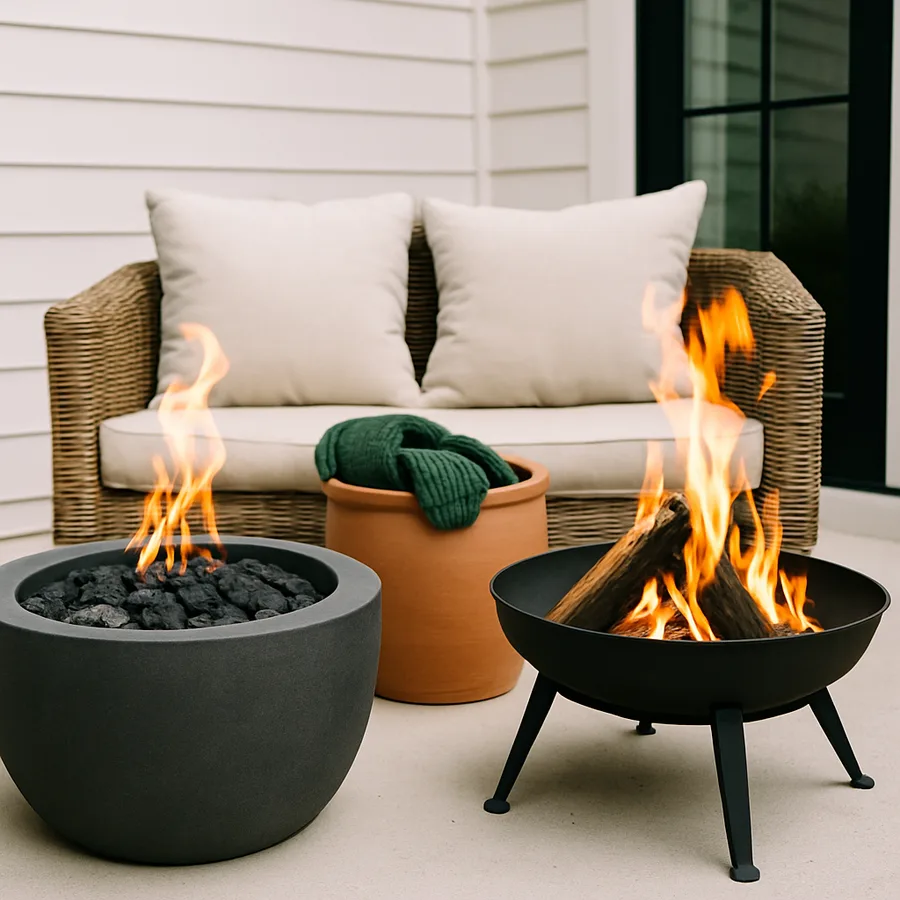
Choosing between a gas fire pit and a wood burning fire pit ranks among the most consequential decisions homeowners make when designing an outdoor living space. The choice affects everything from monthly fuel costs and patio safety to neighborhood relations and the sensory experience you and your guests enjoy on a Saturday evening. Industry data from the Hearth, Patio & Barbecue Association (HPBA) shows that nearly 70% of new patio installations in temperate climates now incorporate some form of permanent fire feature, and that share has climbed steadily over the last decade as outdoor rooms have become as carefully designed as kitchens.
This guide breaks down the trade-offs that matter, draws on building code references, and walks you through the questions a designer would actually ask before recommending one over the other. Because the right answer depends on your patio dimensions, local fuel access, prevailing wind, and how you intend to use the space, we will treat this as a comparison rather than a verdict. By the end, you will have a clear framework for matching a fire pit type to your specific backyard.
Fuel Economics and Long-Term Cost of Ownership
The sticker price is only the opening salvo in this comparison. A high-quality natural gas fire pit table with stainless burner pan and CSA-listed components typically lands between $1,800 and $4,500 installed when you factor in the gas line trenching, while a comparable wood-burning model can be assembled from a precast kit for under $900. That spread tilts heavily toward wood-burning at the moment of purchase, but the comparison reverses sharply once you add up burn hours, fuel cost, and accessory replacement.
Run a 65,000 BTU gas pit on natural gas for three hours an evening, twice a week, across a six-month outdoor season, and the U.S. Energy Information Administration's national average residential rate puts your fuel cost at roughly $35 to $55 for the entire season. Burn seasoned hardwood logs across the same hours and you will easily move through one and a half to two cords. According to the U.S. Department of Agriculture Forest Service, urban hardwood deliveries average $300 to $475 per cord depending on region, putting wood-burning fuel costs three to seven times higher annually.
That said, sweat equity changes the math. Homeowners with access to free storm-fall wood, woodlot harvesting rights, or a heated relationship with a local arborist can drive wood-burning operating costs near zero. Gas pits, by contrast, also require maintenance: igniters fail, lava rock dust clogs orifices, and the burner pan eventually corrodes. Plan on $80 to $200 in annual upkeep parts for a gas unit and a single chimney sweep or ash bucket for wood-burning models.
Ambiance, Heat Output, and Sensory Experience
Ask anyone who grew up at a lake cabin and they will tell you a wood fire is theater. The crackle, the dance of yellow flame against blue twilight, the resinous smell of pine, the way embers climb upward as logs collapse, the warmth that radiates outward in a generous, asymmetric cone, all of it is irreplaceable. Modern linear gas burners with crushed glass or lava media produce a beautiful, controlled flame, but the experience is quieter, cleaner, and frankly more architectural than primal.
Heat output is more comparable than the marketing on either side suggests. A 60,000 BTU gas pit produces roughly the same usable warmth as a moderate hardwood fire of two to three split logs. Where they differ is in how that heat is delivered. Gas runs at a consistent setpoint, so chairs eight feet away stay comfortably warm for the full evening without anyone tending the flame. Wood ramps up, peaks, and then fades, requiring at least one person to manage the burn. For a quiet date night, gas wins on consistency. For a four-hour storytelling circle, wood wins on character.
Have you considered how often you actually want to deal with the work? That single question separates buyers more reliably than any spec sheet. If you fantasize about ten-minute startups and a clean patio at midnight, lean gas. If the smell of woodsmoke on your jacket the next morning is part of why you want a fire pit at all, lean wood.
Smoke, Air Quality, and Neighborhood Considerations
Smoke is the single biggest source of fire pit conflict between neighbors, and it is not a small problem. Wood combustion releases fine particulate matter (PM2.5) that can aggravate asthma and cardiovascular conditions in nearby residents. The U.S. Environmental Protection Agency (EPA) classifies residential wood burning as a meaningful contributor to wintertime PM2.5 in many U.S. counties and has published a Burn Wise program with detailed guidance on cleaner burns. Gas combustion produces almost no particulate, only carbon dioxide and water vapor, which is why many municipalities exempt gas fire features from the seasonal burn bans that restrict wood fires.
Lot size matters more than buyers usually expect. On a quarter-acre suburban lot with houses 15 to 25 feet apart, prevailing wind will eventually push wood smoke into a neighbor's open window. On a two-acre rural parcel, the issue largely vanishes. If you live in a planned community with covenants, check them before you buy. Many Homeowners Association (HOA) covenants now restrict open-flame wood burning to specific hours or prohibit it entirely while permitting gas units without restriction.
If wood is non-negotiable for you but smoke risk is real, you can mitigate it. Choose properly seasoned hardwood with under 20% moisture content, build smaller hotter fires rather than smoldering large ones, and consider a smokeless secondary-burn fire pit design. These models reburn the rising smoke at a higher temperature and visibly reduce particulate output, though they do not eliminate it.
Installation, Code Compliance, and Permits
Before purchase, find out what your jurisdiction actually requires. The International Code Council (ICC) publishes the model codes most U.S. municipalities adopt, and the National Fire Protection Association (NFPA) publishes NFPA 1, the Fire Code that informs setback rules. NFPA guidance and most adopting jurisdictions require recreational fires to sit at least 25 feet from any structure, with smaller portable units allowed at 15 feet, although your local fire marshal has the final say.
Gas installations introduce permit complexity that wood-burning units rarely trigger. A natural gas line tap typically requires a licensed plumber, a permit, a pressure test, and a gas inspector sign-off before you can use the pit. Propane installations are simpler but still require a properly secured tank, an approved regulator, and clearances from windows and air intakes. Wood-burning portable units typically need only a clear pad, a non-combustible base extending 12 inches beyond the pit on all sides, and observance of local burn-day rules. Permanent masonry wood pits, however, often require building permits identical to those for an outdoor fireplace.
Insurance carriers care about this. Notify your homeowners insurance carrier before installing any permanent fire feature. Some carriers raise premiums or require an endorsement, and a few will decline coverage for permanent wood-burning installations within a defined distance of the home. The Hearth, Patio & Barbecue Association maintains a directory of qualified installers who carry the right insurance themselves, which protects you if something goes wrong during the install.
Patio Layout, Materials, and Surrounding Furniture
Your patio's hardscape and furniture should drive part of the decision. Wood-burning pits throw embers, and an ember landing on a polypropylene outdoor rug or a cedar deck can ignite within seconds. If your patio surface is composite decking, painted concrete, or any softwood, gas is the safer choice unless you build an inset hearth of stone or porcelain pavers around a wood pit. Bluestone, granite, and dense porcelain pavers handle wood-burning pits without staining or cracking; brick pavers can spall after repeated thermal cycling.
Conversation seating geometry is worth sketching before buying. A five-foot diameter gas pit table with a 12-inch border for drinks invites people to lean in and share appetizers. A traditional 36-inch wood pit demands a wider conversation circle because flames push people back. The HPBA recommends roughly seven feet of clear floor space around any fire feature, which means a 12-foot patio cannot comfortably hold a wood pit and four chairs without crowding the perimeter.
Built-in benches, pergola posts, and overhead structures all interact with the choice. A wood pit under a low pergola is a fire risk; gas pits with low flame profiles can sit safely under an open pergola if the structure is rated appropriately. The National Association of Home Builders (NAHB) outdoor living committee has published guidance suggesting at least eight feet of vertical clearance above any open flame and fully open sides for fire features placed under any roof structure.
Maintenance, Seasonality, and Daily Use Patterns
How a fire pit behaves on a Tuesday in November will determine whether you actually use it or whether it becomes an expensive sculpture. Gas pits start in seconds with a knob and a click, run cleanly through a single beverage, and shut off with the same gesture. Wood pits demand 10 to 20 minutes of fire-laying, kindling management, and a tending presence the entire burn. They also require a 30-minute cool-down before you can leave them unattended, and the next morning brings the ash bucket.
Year-round use favors gas in cold climates because you can briefly warm a frosty patio without committing to a full evening fire. In wet climates, gas wins again because dry kindling becomes harder to source and stack covered. In hot dry climates with elevated wildfire risk, gas may be the only legal option during fire season. EPA Burn Wise guidance and many state forestry agencies post seasonal burn restrictions that ban open wood fires entirely during high-risk windows.
Storage matters too. Wood requires a covered, ventilated stack at least 30 feet from the home, ideally on a raised pallet to keep ground moisture from wicking up. Gas requires either a buried line or a propane tank that needs annual inspection, secured upright, and refilled or exchanged. Wood storage takes real square footage; tank storage takes very little.
Are you the kind of household that will actually stack wood in October? That logistical question kills more wood-pit dreams than any other single factor. If the answer is no, gas will get used and wood will not.
Conclusion
The honest answer to gas vs wood burning fire pit is that both win, but for different households. Gas wins on convenience, code compliance, neighbor relations, and cold-snap usability. Wood wins on initial cost, sensory richness, and the kind of slow communal evening that gas cannot quite replicate. The worst outcome is choosing the wrong one and using it half as often as you imagined; the best outcome is matching the unit to how your family actually spends time outside.
Before you buy, walk your patio at the time of day you most want to use it. Note where the wind comes from, where the neighbors' windows sit, and how much storage your yard can spare. Call your local building department and ask what permits a permanent fire feature would trigger on your specific lot. Talk to one neighbor about smoke if you are even considering wood. Each of those small steps will save you thousands of dollars and many awkward conversations later.
If your honest assessment lands somewhere in the middle, consider a hybrid approach. Many homeowners install a primary natural gas fire pit table for everyday use and keep a portable steel wood-burning bowl in the garage for special occasions. That combination delivers the architectural calm of gas on a Wednesday and the campfire experience of wood on a Saturday, without forcing you to choose forever.
Ready to design your own patio fire feature? Walk your yard tonight, sketch the seating arc with sidewalk chalk, and bring photos plus dimensions to a local HPBA-certified installer for a free design consultation. The right pit is a decade-long investment in how you live outside, and a single hour of professional planning will save you years of regret.
More Articles You May Like



Comments
Post a Comment