Outdoor Kitchen Refrigerator Selection for Year-Round Use
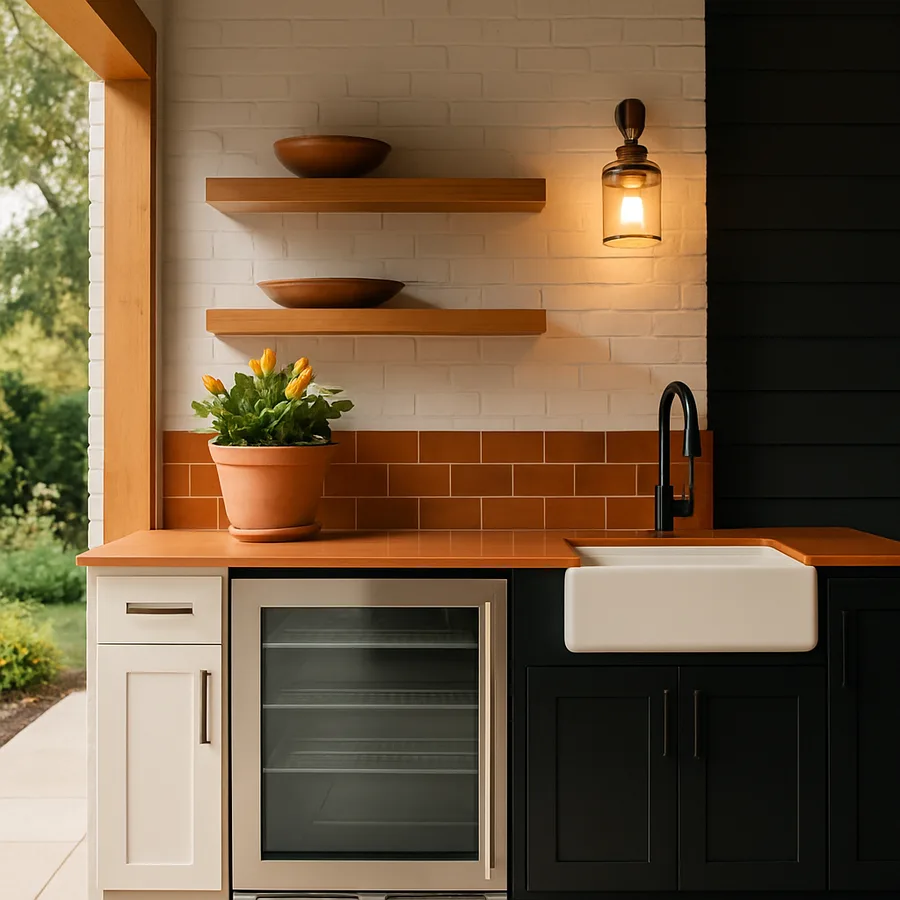
An indoor refrigerator placed outside is not an outdoor refrigerator. The standard kitchen unit has insulation rated for an ambient temperature range of 55 to 90 degrees, a compressor that overheats above 95 degrees, and a defrost system that fails below 55 degrees. Put it on a patio in Phoenix and the cabinet temperature climbs into the danger zone for food safety. Put it on a patio in Minneapolis and the compressor refuses to start in October. The unit might run for one season, but it will fail within two and the warranty will not cover the failure.
True outdoor refrigerators are built to a different specification, and the spec gap is wider than most consumers realize. This guide covers what makes an outdoor unit different, the four format options that suit a built-in kitchen, the electrical requirements that surprise homeowners, and the maintenance routine that keeps any outdoor unit running for ten years instead of three.
What Makes a Refrigerator Genuinely Outdoor-Rated
The label "outdoor rated" gets attached to a lot of units that should not carry it. A genuine outdoor refrigerator meets six specific engineering requirements, and any unit missing even one of them will fail in real outdoor service.
First, the cabinet insulation is rated for a wider temperature range, typically 32 to 110 degrees ambient. The polyurethane foam is denser, the door gasket is silicone instead of standard EPDM rubber, and the magnetic seal is engineered to maintain compression in subzero cold. A true outdoor unit will list its operating range on the data plate; if the spec sheet shows the standard 55 to 90 range, it is not actually outdoor rated regardless of the marketing.
Second, the compressor is upsized and either oversized or specified with low-ambient kits. Standard compressors lose 30 to 40 percent of their cooling capacity at 100 degrees ambient and fail to start below 50 degrees. Outdoor-rated units use compressors with a wider operating envelope, often 1.5 to 2 times the BTU capacity per cubic foot of an indoor unit, so they can hold cabinet temperature in 110-degree heat without running 100 percent duty cycle.
Third, the cabinet body is constructed of marine-grade 304 stainless steel, with welded seams and either a brushed or polished finish that resists pitting. The interior liner, fan blades, and shelf supports are also stainless or food-grade plastic that does not embrittle in cold or yellow in UV.
Fourth, the controls are sealed against moisture and rated for outdoor electrical service. The thermostat, control board, and any electronic display sit behind a gasketed cover with weather seals at every penetration. Standard indoor refrigerator controls accept condensation through unsealed control boards and fail within one humid summer.
Fifth, the venting is configured for outdoor cabinet integration. The condenser coil and compressor exhaust through the front grille rather than the rear or top, so the unit can be installed flush with the surrounding cabinetry without overheating. Indoor refrigerators that vent rear or top will overheat and fail within weeks when buried in an outdoor cabinet.
Sixth, the warranty explicitly covers outdoor installation. The Association of Home Appliance Manufacturers tracks outdoor appliance certifications and notes that nearly 65 percent of outdoor refrigerator warranty claims involve units that were never rated for outdoor use, with the manufacturer denying coverage on inspection. The AHAM certification database is at the Association of Home Appliance Manufacturers site.
Format Options: Drawer, Undercounter, Beverage, Full-Height
Four format options cover virtually all outdoor refrigeration needs, and each suits a different use case. Mixing formats in a single kitchen often works better than trying to pick one unit that does everything.
Refrigerator drawers are the workhorse of the high-end outdoor kitchen. A 24-inch wide double-drawer unit holds 5 to 6 cubic feet, sits flush in a base cabinet, and gives the cook eye-level access to ingredients without bending. Top brands include True, Sub-Zero, Perlick, and Marvel, with prices ranging $2,200 to $4,500. The format works because it puts cold storage exactly where prep happens, eliminating the trip to a tall fridge across the patio. Most kitchens specify one drawer unit dedicated to raw proteins next to the grill and a second beverage drawer near the bar.
Undercounter refrigerators are 24-inch single-door units with 4 to 5 cubic feet of capacity, designed for built-in cabinet integration with front venting. They are roughly half the price of drawer units ($1,200 to $2,500) and offer more interior flexibility because the door swings open to a single full-height cavity. The downside is the cook bends to reach the bottom shelf, which gets old during a long service. Best as a secondary unit dedicated to beverages or condiments.
Outdoor beverage centers are specialized refrigerators with three to four temperature zones tuned for beer, white wine, red wine, and clear sparkling water. They run 24 to 30 inches wide, typically have glass fronts so you can see contents, and prioritize bottle storage geometry over shelf flexibility. Prices range $1,500 to $3,800. They are the right pick for entertaining-focused kitchens but unnecessary if cocktail service happens at a separate bar.
Full-height outdoor refrigerators at 30 or 36 inches wide hold 12 to 18 cubic feet and serve as the primary cold storage for kitchens that operate independently from the indoor refrigerator. They are the most expensive format ($3,500 to $7,500) and require the most cabinet space, but they enable a true outdoor kitchen that does not need to run inside for anything. Best for kitchens that host frequently or that sit far from the indoor kitchen.
The recommended mix for most installations is one 24-inch refrigerator drawer for raw proteins and prep ingredients, one 24-inch beverage center or undercounter unit for drinks, and an ice maker as the third unit. Three 24-inch units occupy 6 linear feet of cabinet space and cover the working needs of a serious outdoor kitchen without requiring a dedicated refrigeration room.
Electrical Requirements That Surprise Most Homeowners
The electrical setup for outdoor refrigeration is more demanding than the indoor equivalent, and most general contractors underspec it. Five details matter.
Each refrigeration unit needs its own 20 amp dedicated circuit, GFCI protected, on a weather-resistant outlet behind the cabinet. Sharing a circuit between two refrigerators causes nuisance tripping when both compressors start simultaneously, especially in hot weather when both run extended duty cycles. Multiply by the number of refrigeration appliances: a typical outdoor kitchen with two refrigerator drawers and an ice maker needs three dedicated 20 amp circuits.
The outlet must be GFCI protected, ideally with a weather-resistant in-use cover. The 2020 National Electrical Code requires GFCI protection for any 15 or 20 amp outlet in an outdoor location, and this includes outlets behind built-in appliances. The in-use cover lets the unit run continuously while the cover stays closed against moisture.
The wire run from the panel should be sized for voltage drop. A 60-foot run from the panel to an outdoor kitchen on 12 gauge wire produces enough voltage drop that compressors run hard and fail prematurely. Spec 10 gauge wire for any run over 50 feet, and consider a subpanel at the kitchen if the total electrical load exceeds 60 amps.
The outlet location matters for service. The outlet has to be accessible without disassembling the kitchen, ideally behind a removable panel rather than buried behind the appliance. When (not if) the GFCI trips during a thunderstorm, you need to be able to reset it without an hour of cabinet work.
Surge protection at the panel matters because outdoor wiring is more exposed to lightning-induced voltage spikes. A whole-house surge protector at the panel, plus point-of-use surge protection at each outdoor outlet, dramatically reduces the failure rate of outdoor refrigeration electronics. The control boards in modern outdoor refrigerators are the second most common failure point after compressors, and most board failures trace to voltage spikes.
Climate-Specific Considerations: Hot, Cold, Humid
The same outdoor refrigerator performs differently in different climates. Three climate-specific issues deserve attention.
Hot climates above 100 degrees push the compressor to its design limit. The unit will run extended duty cycles, sometimes 80 percent of the hour during peak afternoon heat, which shortens compressor life. Two design choices mitigate this. First, position the unit out of direct afternoon sun, ideally with a shade structure overhead that does not trap heat. Second, choose a unit with an oversized condenser, often marketed as "tropical rated," that maintains performance above 105 degrees. Brands like True and Perlick offer tropical configurations specifically for hot climates.
Cold climates with subzero winters create the opposite problem. Most outdoor refrigerators are rated to 32 degrees ambient and shut down below that. Below freezing, the lubricating oil in the compressor thickens and the compressor refuses to start. Some units include low-ambient kits with crankcase heaters that keep the oil warm; verify this on the spec sheet, not the marketing copy. The alternative is to cycle off any outdoor refrigerator during deep winter months and store its contents inside.
Humid coastal or pool-area installations attack the unit chemically as well as thermally. Salt air pits stainless steel within five years if it is 304 grade and within ten if it is 316 marine grade. Chlorine outgassing from a nearby pool corrodes copper tubing in the cooling system and shortens compressor life. The mitigation is to specify 316 stainless throughout, position the unit at least 12 feet from the pool edge, and rinse the exterior with fresh water monthly to remove salt and chlorine residue.
Installation Details That Determine Lifespan
Three installation details separate a 12-year service life from a 4-year warranty fight, and all three are within the contractor's control during the build.
The first detail is ventilation clearance around the unit. Outdoor refrigerators with front-vent designs still need some breathing room: typically 1 inch on each side, 2 inches at the back, and 1 inch above. Without this, the condenser cannot dump heat efficiently and the compressor runs hotter and fails sooner. The installation manual specifies the clearance, but cabinet builders often ignore it to maximize storage.
The second detail is level installation. Refrigerators rely on gravity to circulate refrigerant correctly, and a unit installed off level by even a quarter inch will run inefficiently and produce condensation in the wrong places. Use a four-foot level to verify both axes during installation, and shim with stainless or composite shims, not wood.
The third detail is protection from sprinkler and rain runoff. The unit is rated for high humidity and incidental moisture, not for direct water spray from an irrigation head or roof runoff. Verify that no sprinkler patterns hit the front of the cabinet, and check that the patio surface drains away from the kitchen so rain cannot pool at the base of the units.
Maintenance: The Routine That Doubles Lifespan
Outdoor refrigerators last roughly twice as long with quarterly maintenance as without. The routine takes 20 minutes per quarter and prevents the most common failure modes.
The condenser coil, accessible behind the front grille, accumulates dust, grass clippings, pollen, and grease aerosol from the nearby grill. A dirty coil reduces cooling capacity by 25 to 40 percent and forces the compressor to run hotter. Vacuum the coil with a soft brush attachment every three months during the cooking season, more frequently if the unit sits adjacent to a heavily used grill.
The door gasket needs annual inspection and cleaning. Wipe with a mild detergent solution to remove cooking residue, then check the seal by closing the door on a dollar bill at five points around the perimeter; if the bill pulls out without resistance, the gasket has lost its seal and needs replacement. Replacement gaskets cost $80 to $200 and install in 30 minutes; ignored gaskets cause the compressor to run continuously and burn out in two to three years.
The drain pan, found at the bottom of the cabinet, collects condensate and needs annual cleaning to prevent mold and odor. Some units route the drain to evaporate; others have a drain hose that should empty into a gravel bed beside the kitchen. Verify the drain path during installation and clear it annually with a thin brush.
Finally, the National Association of Home Builders includes outdoor appliance maintenance schedules in its homeowner reference guides at the National Association of Home Builders site, and they note that nearly 80 percent of outdoor refrigerator failures within the first ten years trace to skipped maintenance rather than manufacturing defects.
Conclusion: Buying the Right Unit the First Time
The outdoor refrigerator decision is more consequential than most homeowners realize because the failure cost is high. Replacing a built-in unit means tearing out cabinetry, dealing with the old refrigerant, and matching the cabinet opening with whatever is currently in stock. Buying right the first time saves $2,000 to $5,000 in eventual replacement costs and roughly the same in tear-out and rebuild labor.
The decision framework comes down to three filters. First, verify the unit is genuinely outdoor rated by checking the operating temperature range on the data plate, the warranty language, and the construction (304 or 316 stainless, sealed controls, front venting). Second, choose a format that matches your workflow: refrigerator drawers for cooking integration, beverage centers for entertaining, full-height units for kitchens that operate independently. Third, plan the electrical for the actual load, including dedicated GFCI circuits and proper wire gauge for the run distance.
Budget-wise, a quality outdoor refrigeration setup runs $4,000 to $12,000 depending on the number of units and whether you specify drawer formats. The single biggest mistake is trying to save 30 percent by installing an indoor refrigerator with a marine-grade exterior; the unit will fail within three summers and the warranty will not pay.
Two questions to ask before choosing units: How often does your kitchen actually host beyond what the indoor refrigerator can support, because the answer determines whether you need primary outdoor cold storage or just secondary capacity? And what is the temperature range your kitchen actually sees across a typical year, because the answer determines whether you need a tropical-rated compressor or a low-ambient kit?
If you are spec'ing units this season, request the data plates and warranty documents from three brands before committing. The marketing pages all sound similar; the data plates do not. The brands that publish complete temperature, capacity, and warranty data on their spec sheets are typically the ones whose units actually survive a decade of outdoor service.
More Articles You May Like



Comments
Post a Comment