Outdoor Kitchen Counter Materials That Survive Snow and Sun
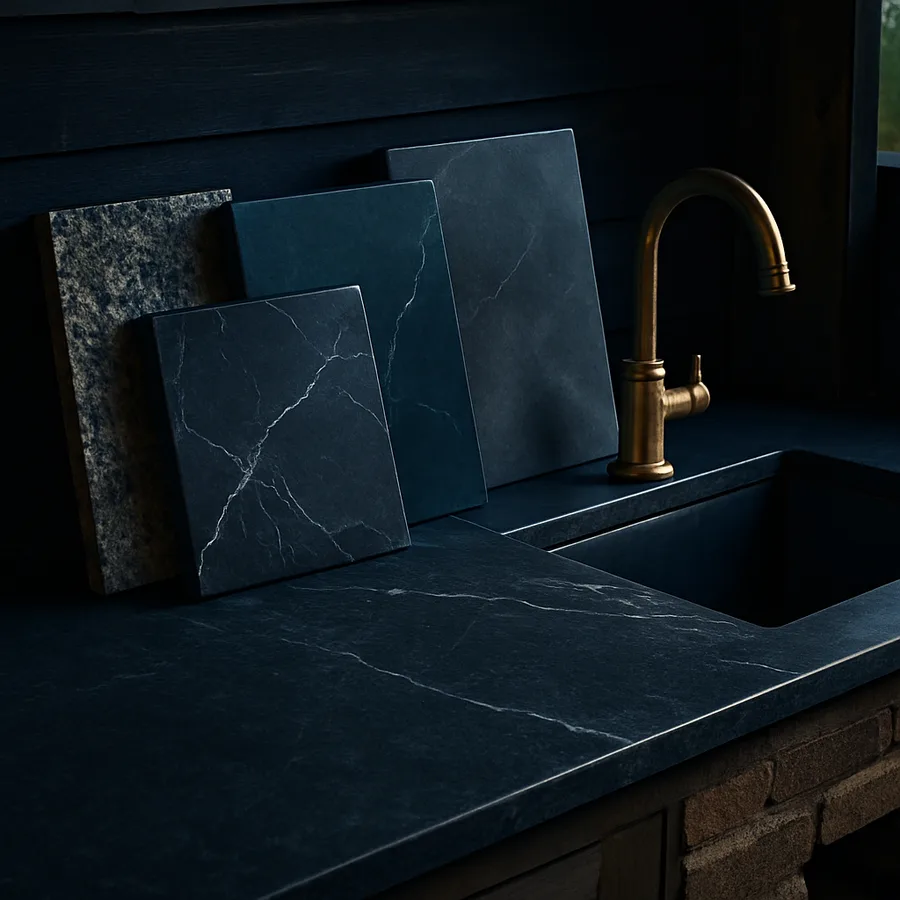
An outdoor counter does not get the same forgiveness as an indoor slab. It bakes at 140 degrees in July, freezes solid in February, takes a brine of barbecue sauce and citronella oil, and sits under sprinklers, sunscreen, and the occasional toppled wine glass. The materials that look stunning in a Pinterest reveal often crack, spall, or fade within two seasons when they meet a real climate. Choosing a surface that lasts a decade requires understanding three properties most homeowners never hear about: water absorption rate, UV stability, and thermal shock tolerance.
This guide walks through the seven most common outdoor counter materials, ranks them honestly against snow-belt and desert conditions, and shows you the maintenance routine that keeps each one looking new. By the end, you will know exactly which slab belongs under your grill hood and which ones to leave for covered loggias only.
Why Indoor Counter Logic Fails Outside
The single biggest mistake in outdoor kitchen planning is treating a patio install like a kitchen remodel that happens to be outside. Indoor counters live in a 68 to 75 degree envelope with controlled humidity. Outside, the same slab has to handle a 100-degree temperature swing in 24 hours, direct UV bombardment for ten hours a day, and water that does not evaporate in conditioned air but instead pools in seams and freezes inside microfractures.
The Natural Stone Institute publishes outdoor-specific care bulletins that warn against using interior-grade sealers and adhesives outside, because most polymer sealers degrade above 130 degrees and many epoxies yellow under UV in under 18 months. The institute notes that thermal cycling is the leading cause of premature counter failure outdoors, accounting for more warranty claims than staining or chipping combined. Read their outdoor stone care guide at the Natural Stone Institute for the technical bulletins.
The second issue is freeze-thaw. Water that absorbs into a porous slab expands roughly nine percent when it freezes. If your stone has a water absorption rate above 0.5 percent and you live anywhere that hits 32 degrees, you are running a slow demolition cycle every winter. The American Society for Testing and Materials specifies that exterior-grade stone should fall under 0.4 percent absorption, a threshold most quartzite and dense granite meet but most marble and limestone do not.
Before you pick a material, ask the fabricator for the ASTM C97 absorption test result for the specific slab, not the species in general. Two granite quarries can produce stones with absorption rates that differ by a factor of three.
Granite: The Default Workhorse, With Caveats
Granite remains the most-installed outdoor counter material in North America for reasons that hold up to scrutiny. Dense varieties from Brazil, India, and the American Southeast typically test under 0.4 percent absorption, handle thermal cycling without spalling, and resist UV fade indefinitely because the color comes from minerals rather than dyes. A black absolute or a Bahia blue installed in 2010 looks the same in 2026.
The caveats matter. Lighter granites with heavy quartz veining absorb water faster and stain from oil-based marinades if the sealer wears thin. White Kashmir, for example, can darken permanently from a single bacon-fat spill if it is not resealed annually. Honed and leathered finishes hide minor staining better than polished, which is why most outdoor designers specify leathered for cooking zones and reserve polished for bar tops or decorative inserts.
Sealing schedule for outdoor granite is non-negotiable. Use a penetrating, solvent-based, fluoropolymer sealer rated for exterior use, applied every 12 to 18 months. The water-based sealers sold at big-box stores work fine for indoor work but break down in UV and need reapplication every six months outside. Expect to pay $45 to $90 per square foot installed for an outdoor-grade granite, including the upgraded sealer and an extra row of mechanical anchoring at the cantilever.
Porcelain Slab: The Surprise Top Performer
Large-format porcelain slab, the kind sold in 126-inch by 63-inch sheets at 12 millimeters thick, has quietly become the favorite of high-end outdoor designers. It tests at near-zero water absorption, is completely UV stable because the pigments are fired into the body at 2,200 degrees, and shrugs off thermal shock that would crack natural stone in half.
The National Kitchen and Bath Association began including porcelain slab in its outdoor kitchen design certification in 2022 after a multi-year material survey found it had the lowest warranty failure rate of any tested counter surface, including stainless steel. The NKBA member directory and design standards are at the National Kitchen and Bath Association site.
Porcelain comes with two real downsides. First, the edge is the weak point. A direct hammer blow or a dropped cast-iron skillet on a square edge can chip a thumbnail-sized chunk out of the corner, exposing the lighter clay body underneath. Specify a 4-millimeter eased edge or a mitered edge with a urethane-toughened seam to mitigate this. Second, fabrication requires a ringsaw and a fabricator trained in slab handling. About one in four stone yards still refuses to cut it, and the ones who do charge a 30 to 50 percent premium over granite.
Will your fabricator warranty the edge work for outdoor use? That is the single most important question to ask before signing the contract. A reputable porcelain fabricator should offer a five-year warranty on edge integrity for outdoor installations.
Soapstone, Concrete, and Stainless: The Specialty Picks
Three materials deserve mention because they solve specific design problems even if they will not be the right answer for everyone.
Soapstone is the dark horse for cold climates. It is non-porous without sealer, completely freeze-thaw stable because it absorbs almost no water, and it actually tolerates direct flame contact better than granite. The downside is the soft surface scratches easily, the color shifts as oxidation deepens the grey toward black over years, and good outdoor-grade soapstone runs $100 to $140 per square foot. Owners either love the patina or hate it, with little middle ground.
Concrete counters offer custom shape, integrated sinks, and embedded accent pieces no other material can match. They are also the highest-maintenance outdoor surface by a wide margin. Without a high-end lithium silicate densifier and a UV-stable topical sealer, they crack at expansion joints, etch from acidic spills, and develop efflorescence that looks like a permanent white crust. If you go this route, hire a fabricator who has done at least 50 outdoor installs and ask to see their five-year-old work in person.
Stainless steel is the commercial-kitchen choice and it makes sense for serious cooks who run their patio like a restaurant line. It is hygienic, heat-proof, and rust-resistant in 304 grade. It also shows every fingerprint, scratches visibly under cast iron, and reflects sun glare painfully on bright days. Use it as a 24-inch landing zone next to the grill, not as a full counter run.
Materials to Avoid Outdoors, No Matter What the Salesman Says
Some surfaces simply do not belong outside, and a surprising number of contractors will install them anyway because the customer asked. Here is the avoid list and the reasoning.
Engineered quartz is the most common bad recommendation. Brands like Caesarstone, Silestone, and Cambria all explicitly void their warranty for outdoor installations because the resin binder, typically a polymer-modified polyester, yellows and breaks down under UV in 12 to 36 months. The slab will fade, develop hairline cracks at the resin lines, and eventually delaminate. No sealer fixes this because the failure is in the binder itself, not the surface. The major manufacturers all post outdoor warranty exclusions on their technical data sheets.
Marble and travertine belong indoors or under permanent cover only. Both have absorption rates above 1 percent, etch from any acidic exposure including acid rain in industrial regions, and stain permanently from rust runoff and tannin from fallen leaves. A travertine bar top under a covered pergola in Arizona can work; the same slab in Chicago weather is a teardown within five years.
Butcher block and exotic hardwoods require sealing every three to four months outdoors and still cup, check, and grow mold in seams. Even teak and ipe, the two most weather-stable hardwoods, look terrible after two seasons without obsessive maintenance. If you want a wood look, specify a porcelain slab printed with a wood grain pattern. They have become genuinely convincing.
The Hearth, Patio and Barbecue Association publishes an outdoor kitchen materials guide that lists tested products and avoids brand bias. Their outdoor living research is at the Hearth, Patio and Barbecue Association site, and they note that outdoor kitchen consumer spending crossed 9.4 billion dollars in North America during 2024, up roughly 11 percent year over year.
Climate-Specific Selection: Snow Belt vs. Desert vs. Coastal
The right material in Buffalo is the wrong material in Phoenix. Here is how the geography changes the answer.
Snow-belt climates with hard freezes: prioritize freeze-thaw resistance. The top three picks in order are dense granite, porcelain slab, and soapstone. All test under 0.4 percent absorption and have decade-plus track records in northern installations. Avoid concrete unless you can heat the underside, and avoid any limestone or marble. Specify a 1.5-inch slab thickness minimum, never the 0.75-inch thin slabs sold for indoor use, because the thicker slab tolerates flexing as the substrate moves through frost cycles.
Desert climates with intense UV and 130-degree surface temperatures: prioritize UV stability and thermal mass. Porcelain slab is the runaway leader because the fired pigments do not fade and the dense body distributes heat without cracking. Granite works but darker varieties get untouchable in direct sun. Soapstone heats up dangerously fast. Concrete needs a UV-grade sealer that will require reapplication every 18 months. Stainless steel becomes a literal burn hazard.
Coastal climates with salt spray: prioritize chemical resistance and corrosion-proof hardware. Porcelain wins again because salt does not affect the fired surface. Granite works if you upgrade the substructure to 316 marine-grade stainless steel screws and brackets, since standard 304 stainless will pit within five years in salt air. Avoid concrete near the ocean unless the sealer is a marine-grade epoxy. Stainless steel counters need 316 grade, not 304, and even then they will need waxing twice a year to prevent surface staining.
Installation Details That Make or Break Longevity
The slab choice gets all the attention, but the installation determines whether the counter makes it past year three. Five details separate a 20-year install from a 5-year warranty fight.
First, the substrate has to drain. A solid masonry base traps water under the slab, where it freezes and lifts the counter off its bed. The correct detail is a cement board substrate over a metal stud frame with a 1/8-inch slope to a drip edge. Water that gets through the seams should exit cleanly within minutes.
Second, the seam adhesive must be UV stable and rated for the temperature range. Standard knife-grade epoxy sold for indoor work yellows in six months and shrinks at 0 degrees. Specify a hybrid polymer adhesive like the Bostik or Akemi outdoor-rated formulas, both of which the Natural Stone Institute lists in its approved exterior product database.
Third, the overhang requires mechanical support, not adhesive faith. Outdoor counters flex more than indoor ones because the substrate moves with temperature, so any overhang past 8 inches needs steel angle brackets bolted into the frame. The American National Standards Institute publishes counter overhang load requirements that apply to both indoor and outdoor installations, and outdoor failures almost always trace back to ignored brackets.
Fourth, the sink and grill cutouts need expansion gaps. The opening should be 1/8 inch larger on each side than the appliance, with the gap filled with a UV-stable, high-movement sealant. Without the gap, the differential expansion between the metal appliance and the stone counter cracks the slab at the corner of the cutout, almost always within the first hot summer.
Finally, the edge profile matters more outside than inside. Square edges chip, ogee edges trap water, and beveled edges shed water but show wear. The eased edge with a 4-millimeter top radius is the universal best choice for outdoor work because it sheds water, resists chipping, and hides the small wear that outdoor counters inevitably collect.
Conclusion: The Buying Framework That Actually Works
Picking an outdoor counter material is a four-step exercise, not a style decision. Start with your climate zone and pull the freeze-thaw and UV requirements that match. Cross-check the material's ASTM C97 absorption rate and confirm it falls under 0.4 percent for cold climates. Verify the manufacturer's outdoor warranty in writing, not the showroom verbal assurance. Then layer the aesthetic preference on top of the materials that survived the first three filters.
For most homeowners in most climates, the right answer is either an outdoor-grade dense granite at $50 to $90 per square foot installed, or a 12-millimeter porcelain slab at $80 to $130 per square foot installed. Soapstone, concrete, and stainless serve specific use cases beautifully but require either higher maintenance or specialized installers who are harder to find. The materials that look great in indoor showrooms but fail outside, particularly engineered quartz and marble, are the most expensive mistakes in the outdoor kitchen category.
Two questions worth asking yourself before you sign a fabrication contract: Will I genuinely keep up with annual sealing, or do I need a zero-maintenance surface like porcelain? And does my outdoor kitchen sit under a roof, a pergola, or open sky, because the level of weather exposure changes which materials make the cut?
If you want a vetted shortlist for your specific climate and cooking style, request an outdoor kitchen consultation with a National Kitchen and Bath Association certified outdoor designer. They are trained in the materials science specifically and will steer you away from the showroom slabs that look stunning on a Tuesday and crack the following February.
More Articles You May Like



Comments
Post a Comment