Portable Kitchen Islands for Renters Needing Extra Counter Space
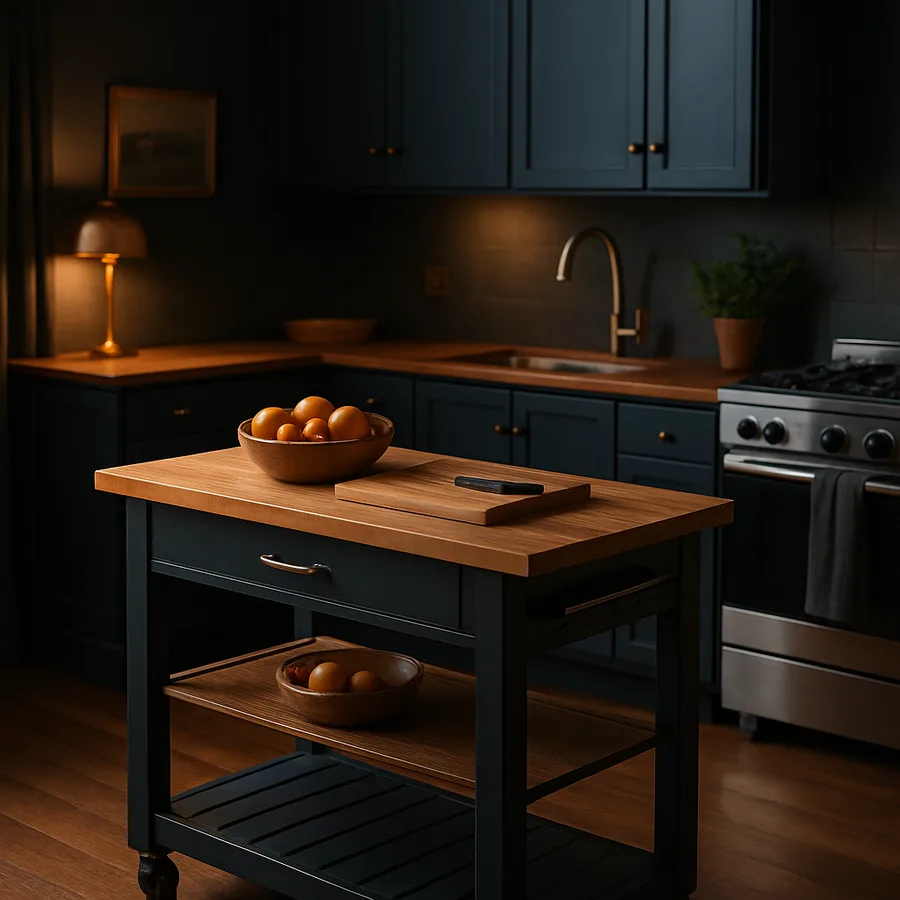
Renters face a specific and frustrating kitchen problem: almost every rental is built to a landlord's cost ceiling, which means small counters, limited storage, and zero permission to bolt cabinets into a wall. A portable kitchen island solves most of those constraints in a single purchase. It adds counter area, adds storage, adds wheeled mobility, and packs into a moving truck when the lease ends. For apartment cooks, it is arguably the highest-leverage single piece of furniture you can own.
Industry surveys from Houzz and the American Housing Survey suggest that about 36% of U.S. households rent rather than own, and within that group, under-40 renters are the fastest-growing segment of people cooking at home multiple times per week. Manufacturers have responded: portable islands from brands represented through the American Home Furnishings Alliance (AHFA) have expanded from a handful of models a decade ago to several hundred today. This guide covers how to choose one that actually works, rather than one that looks good in a product photo and disappoints in your kitchen.
Measuring Your Kitchen Before You Buy
The single biggest source of portable-island regret is buying one that does not fit. Before browsing, take three measurements and write them down. First, measure the longest open floor area in your kitchen where the island could park. Second, measure the narrowest path the island will have to travel, including doorways, to reach that parking spot. Third, measure the clearance you need around a closed oven door, a closed refrigerator door, and any cabinet doors along the route.
A portable island must clear the narrowest doorway in its path, typically 28 to 32 inches in older apartments. It must also leave at least 36 inches of aisle space around itself when parked, which is the NKBA minimum for comfortable kitchen movement. Renters sometimes try to squeeze in a larger island by cutting the aisle to 30 inches, which feels fine empty but becomes uncomfortable the moment you open the oven or have a second person in the room.
Think about where the island will live when you are not using it. Does it park against a wall? Under a window? Between the dining table and the kitchen proper? The answer affects whether you need one with a finished back, finished sides, or an open-back design. A portable island with open shelving on its back will look awkward pushed against a wall but is ideal as a room divider in a studio apartment.
Size Categories and What Each Offers
Portable islands fall into three broad size categories, and each solves a different problem. Narrow utility carts, roughly 16 by 30 inches, are essentially rolling side tables with a drawer and maybe a towel bar. They add about 3.3 square feet of counter area and suit very small kitchens where anything larger would block traffic. Their main value is mobility; they can be wheeled out for meal prep and tucked away after.
Mid-size portable islands, around 20 by 40 inches, add about 5.5 square feet of counter and typically include a small drawer, an open shelf, and sometimes a towel bar. This is the most common size for apartments because it doubles useful counter space without dominating the room. Many models in this range feature a butcher-block top sized for chopping directly on the surface, which is a genuine upgrade over most laminate rental counters.
Large portable islands, 24 by 48 inches and up, approach the capacity of a small built-in island. They often include two drawers, a wine rack, and a seating overhang sized for one or two stools. They are harder to relocate but transform a rental kitchen into something approaching a proper home kitchen. The trade-off is footprint: an island this size needs at least 42 inches of aisle on the working side to remain comfortable.
Countertop Materials: Butcher Block, Stainless, and Stone
The top of a portable island is the surface you touch most, so material choice matters. Butcher block, typically hard maple or acacia, is the most popular choice because it is warm, attractive, and friendly to direct chopping. It requires oiling every one to three months with food-safe mineral oil to prevent drying and cracking. The National Wood Flooring Association (NWFA) publishes care guidelines for maple hardwoods that translate well to butcher-block countertops.
Stainless steel tops are the choice for serious home cooks. They are impervious to water, heat, and stain, and they cost about 30% more than butcher block on comparable islands. Their only downsides are visual coldness and a tendency to show fingerprints; a stainless surface in a small apartment reads as commercial rather than homey. For rental kitchens, many cooks mix a stainless top with warmer cabinetry to soften the effect.
Quartz and granite tops appear on higher-end portable islands. They look closer to a built-in countertop and resist everything but direct knife contact. The weight is their main drawback: a 48-inch stone-topped island can weigh 180 to 220 pounds, which strains lighter casters and makes relocation awkward. If you move frequently, a stone-topped portable island is probably not the right choice.
Wheels, Locks, and Stability
Every portable island rolls on casters, and not all casters are equal. The baseline standard is four 3-inch casters with two locking in place. Locking casters are non-negotiable: an island that slides away while you are chopping is a genuine kitchen hazard. Better models include four locking casters, which lock the island rigidly in place regardless of how the force is applied.
Wheel material affects noise and floor protection. Rubber or polyurethane wheels roll quietly and will not mark hardwood or luxury vinyl plank floors. Hard plastic wheels are cheaper but louder and more likely to leave scuffs on softer flooring. If your rental has a delicate floor finish, budget for wheel upgrades or confirm the casters are already polyurethane before purchasing. The Resilient Floor Covering Institute (RFCI) recommends soft-wheel casters for LVP and engineered wood specifically.
Have you considered whether the island will feel stable while you push down on it to knead dough or chop through a squash? This is a real test. Lean on the top of the island with 20 to 30 pounds of pressure and see whether the frame flexes or the wheels creak. A wobbly island is unpleasant to work on and tends to worsen over time as joints loosen. Solid-wood or welded-steel frames stay tight longer than stapled particleboard, even at twice the price.
Storage Features That Actually Matter
Storage is what elevates a portable island from a counter extender to a full kitchen addition. The three most useful storage features, in order, are a silverware drawer, an open bottom shelf tall enough for a stockpot, and a towel bar on the short end. These three cover the daily frustrations of rental kitchens: cramped utensil drawers, no place to park a large pot, and dish towels draped over oven handles.
Less useful, despite appearing on many product pages, are integrated spice racks (too narrow for most common spice jar sizes), wine racks (often sized for bottles you do not own), and knife blocks (usually sized for a standard set you already store elsewhere). These features add cost and rarely add real utility. Better to choose a simpler island and customize it with your own drawer organizers.
Some portable islands include a drop-leaf extension, a hinged flap that folds up to increase the countertop area by 30 to 50%. This is genuinely useful in small kitchens where you need the counter for prep but not all day. When folded down, the island occupies its compact footprint; when raised, it becomes a dining surface for two. According to user-review data aggregated by Consumer Reports, drop-leaf models rank slightly higher in overall satisfaction than fixed-top models of similar price.
Landlord-Friendly Placement and Lease Considerations
Portable islands are attractive to renters partly because they do not require landlord approval. They do not bolt to walls, they do not modify plumbing, and they leave no installation marks when moved out. That said, a few small precautions protect your security deposit.
Use felt pads or floor protectors under the casters during long-term parking. Even locking casters can leave faint indentations on softer flooring if the island sits in the same spot for months with weight on top. A simple furniture coaster under each caster eliminates the risk at trivial cost. This is especially relevant for luxury vinyl plank, which the National Association of Realtors (NAR) reports is now the single most common new rental flooring.
Avoid running extension cords across high-traffic floor areas to power an electric appliance on the island. If you plan to use a stand mixer or blender regularly on the island, position it near an existing outlet. The NFPA cites misuse of extension cords among the top contributors to residential kitchen electrical incidents, and insurance complications can follow even minor events. This is a case where the safer arrangement happens to also be the cleaner-looking one.
Finally, plan for moving day. Measure the island against your moving truck door before purchase, or confirm that it disassembles. Many portable islands break down into three or four flat components with a screwdriver, which simplifies a move across town considerably. Buying an island that permanently assembles into a single large piece is a choice that future-you may regret.
Conclusion
A well-chosen portable kitchen island can transform a mediocre rental kitchen into a genuinely usable cooking space for a few hundred dollars and zero landlord negotiations. The keys are honest measurements, appropriately scaled sizing, quality casters, and storage features that match your actual cooking habits rather than a marketing fantasy. Spend the time to measure before you shop, and the purchase will pay itself back within a few weeks of daily use.
Renters who treat a portable island as a throwaway purchase often end up replacing it within a year, while renters who invest in a mid-quality solid-frame island with a butcher-block top typically keep the same island across multiple apartments for a decade or more. The cost difference between a disposable cart and a durable island is usually under $300, but the lifetime satisfaction difference is substantial. Think of the purchase as a ten-year decision rather than a stopgap.
If you are mid-lease and already frustrated by your counter space, a portable island is the fastest, least-committal fix available to you. If you are moving soon, now is the ideal moment to measure your new kitchen and buy an island sized for it before you are in the middle of unpacking. Either way, the math tends to favor acting sooner rather than later.
Browse the Interior Bliss guide to apartment-friendly kitchen upgrades for curated recommendations, detailed spec comparisons, and low-commitment renovation tactics tailored to renters. A well-planned hour of research prevents a lot of disappointed returns, and the kitchen you end up with will feel like yours even when the lease says otherwise.
It is also worth thinking about how a portable island integrates with small-appliance storage. Renters accumulate stand mixers, air fryers, rice cookers, and blenders faster than rental cabinets can absorb them, and a portable island with an open bottom shelf doubles as appliance parking. Keeping these appliances at waist height instead of lifted from a high perimeter cabinet reduces strain and encourages actual use of appliances that otherwise gather dust.
One last consideration is acoustic. Hard surfaces reverberate, and a small rental kitchen with tile floors and laminate counters can become surprisingly loud during meal prep. A butcher-block island top absorbs a measurable amount of chopping and clatter noise, and a wooden frame further dampens the sharp tones that travel through an open floor plan. Renters with downstairs neighbors may appreciate this benefit more than any design feature in the marketing copy.
Useful third-party references include the NKBA for general kitchen clearance standards, the Houzz portable island gallery for real-apartment examples, and the American Home Furnishings Alliance for manufacturer directories and safety standards.
More Articles You May Like



Comments
Post a Comment