Mail Sorter Wall Pocket System For Family Junk Mail Triage
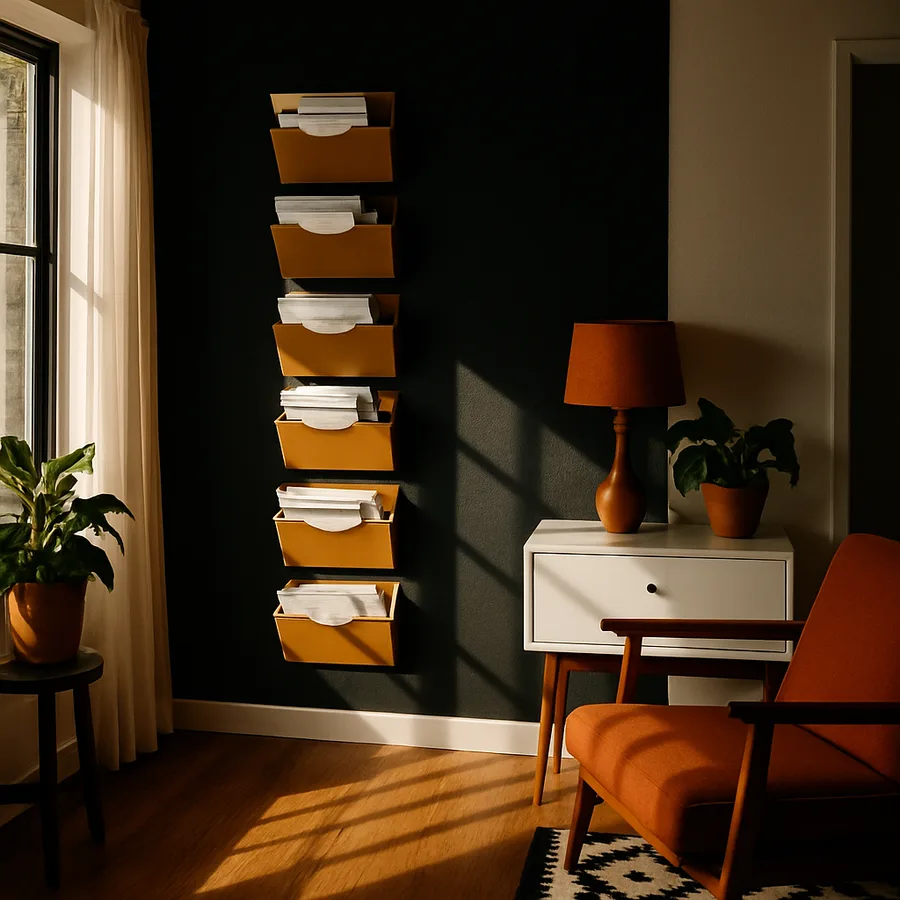
Every household generates a small mountain of paper every week, and most of it has no business landing on a kitchen counter, a dining table, or the surface of an entryway console. Bills, school notices, magazines, catalogs, political mailers, charity solicitations, insurance updates, and the occasional important letter all flow in through the same mail slot, and without a triage system they collect in growing piles that feel impossible to address. The result is missed deadlines, late fees, lost forms, and a low-grade household stress that has a measurable cost.
A wall-mounted mail sorter with multiple pockets, properly sized and positioned and tied to a clear weekly routine, fixes this problem permanently. The system gets paper off horizontal surfaces, separates time-sensitive items from background noise, and creates a single trusted location where every household member knows to look for what matters. This guide walks through the five-pocket method that works in real households, the wall layout and sizing math, the materials and aesthetics that fit different home styles, and the household routines that turn a sorter from a piece of organizational furniture into a reliable system.
Why Horizontal Mail Piles Always Lose
The fundamental problem with horizontal mail piles is that they invert the priority order. The most recent mail lands on top, the oldest mail sinks to the bottom, and the time-sensitive bill that arrived three weeks ago is now buried under a stack of catalogs. Every household member has to sort through the entire pile to find anything specific, which is exactly the friction that causes the pile to be ignored entirely.
The U.S. Postal Service reports that the average American household receives roughly 848 pieces of mail per year, of which a substantial majority is advertising material that requires no action beyond recognition and disposal. A wall pocket system handles this volume in seconds per day rather than the long, dreaded weekend sessions that horizontal piles demand.
Vertical pocket systems also use wall space that is otherwise dead. Most entryways and mudrooms have a stretch of wall above the bench, the console, or the hook rack that contributes nothing to the room. A mail sorter occupies that wall, adds visual interest, and removes paper clutter from the high-value horizontal surfaces below. According to organization-focused content from Better Homes and Gardens, vertical storage is consistently the highest-leverage move in small entryways and mudrooms because it converts unused square inches into functional capacity.
The Five-Pocket Triage Method
The system that works across household sizes and lifestyles uses exactly five pockets, each with a specific and non-overlapping purpose. The labels matter, the order matters, and the discipline of not adding a sixth pocket matters even more.
The first pocket is Action This Week. This is where bills with due dates inside the next seven days, RSVPs, school forms requiring signatures, and any other time-sensitive items go. This pocket should be the leftmost or topmost in the layout because the eye reads it first. Items here are processed weekly, ideally during a fixed Sunday or Monday session.
The second pocket is Action Later. This holds bills due more than a week out, longer-term forms, items waiting for a phone call response, and anything else that requires action but not immediately. The pocket gets reviewed during the same weekly session as Action This Week, and items migrate from Later to This Week as their dates approach.
The third pocket is To File. This holds completed paperwork that needs to be archived: tax documents, insurance confirmations, warranty paperwork, medical records, and anything else worth keeping. This pocket gets cleared monthly by transferring its contents to a real filing cabinet or a digital scan-and-shred workflow.
The fourth pocket is To Read. Magazines, newsletters, long-form mailers, and anything else that has informational value but no action requirement. This pocket is the safety valve that prevents reading material from clogging the action pockets, and it gets recycled quarterly whether read or not.
The fifth pocket is Per Household Member, one for each adult and older child. This pocket holds personal mail addressed specifically to one person: birthday cards, personal correspondence, items requiring individual attention. Each person clears their own pocket on their own schedule.
Wall Layout, Sizing, and Mounting Math
The physical sorter should be sized to the wall and the household. A typical five-pocket horizontal sorter measures roughly 24 to 36 inches wide and 12 to 18 inches tall, with each pocket sized to hold a stack of standard No. 10 envelopes plus a few catalogs without overflowing. Pockets that are too small force overflow and defeat the system; pockets that are too large invite hoarding and let items hide indefinitely.
Mount the sorter so the bottoms of the pockets sit at 56 to 60 inches from the floor, which matches average eye level for adults and keeps the contents accessible without reaching. If children participate in mail triage, lower the mount point by 6 to 12 inches accordingly. The mounting hardware should anchor into wall studs or use proper drywall anchors rated for at least 25 pounds, because a fully loaded sorter with magazines and catalogs can weigh 10 to 15 pounds and the loading is repetitive.
Below the sorter, leave at least 18 inches of vertical clearance down to any console, bench, or shelf. This space serves two purposes: it creates visual breathing room around the sorter, and it provides drop space for the few seconds between pulling mail from the slot and triaging it into pockets. Below that drop space, place a small lined wastebasket for immediate recycling and, ideally, a separate small bin for items requiring shredding.
Materials and Aesthetics by Home Style
Mail sorters come in every material from rough barnwood to polished brass to industrial steel mesh, and the right choice depends on the rest of the entryway. For a traditional or transitional home, look for stained wood frames with canvas or leather pockets. The combination feels timeless, ages well, and pairs with paneled walls, classic console tables, and brass hardware.
For a modern or minimalist home, consider powder-coated steel sorters with felt pockets, or simple matte black wood frames with off-white linen pockets. The visual weight should be light, the labels should be subtle, and the finish should disappear into the wall rather than announcing itself. According to interior styling content from House Beautiful, the most successful modern entryway organizers blend in tonally with the wall color rather than contrasting against it.
For a farmhouse or rustic home, galvanized metal pockets in a reclaimed wood frame have become the dominant aesthetic for good reason. The metal is durable and easy to clean, the wood softens the industrial element, and the combination reads warm rather than cold. Charity organizations and library systems have used this format for decades because it survives heavy use, which is exactly what a family mail sorter requires.
For a maximalist or pattern-loving home, do not be afraid to choose a sorter with patterned fabric pockets, painted wood, or vivid color. The sorter is small enough that even a bold version will not dominate the entryway, and a memorable sorter is more likely to be used than a forgettable one.
The Weekly and Monthly Routines
The hardware is only half the system. Without a routine, even the best sorter slowly fills until it becomes another version of the horizontal pile it was meant to replace. The routine has two layers: a daily five-second action and a weekly fifteen-minute action.
The daily action is triage at the moment of arrival. Whoever brings the mail in stands at the sorter, opens nothing, and assigns each piece to a pocket based on the envelope alone. Bills go to Action pockets, statements go to File, magazines go to Read, personal mail goes to the relevant member pocket, and obvious junk like advertising flyers and political mailers goes straight to the recycling bin below the sorter. This action takes less than a minute even for a heavy mail day, and it eliminates the horizontal pile entirely.
The weekly action is the Sunday processing session. Empty the Action This Week pocket, open every envelope, and either pay the bill, complete the form, write the response, or schedule the follow-up call. Items that turn out to require future action move to Action Later. Items that are now complete move to To File. The whole session, run consistently, takes 10 to 20 minutes and replaces the multi-hour catch-up sessions that unmanaged mail piles eventually require.
Have you ever timed how long your current mail handling takes per month? Most households dramatically underestimate the cumulative cost of disorganized paper, and the contrast with a working pocket system is almost always shocking once it has been running for a few months.
Common Failures and How to Fix Them
Three failures account for nearly every mail sorter that ends up neglected. The first is too many pockets. Households start with five and creep to seven or nine as new categories get invented, and the system slowly becomes harder to use rather than easier. The fix is rigid: never exceed five functional pockets, and consolidate any drift back into the original five during the monthly review.
The second failure is letting Read accumulate indefinitely. Magazines and catalogs are seductive because they feel like they should be valuable, but most reading material loses relevance quickly. Set a hard quarterly recycling date for the Read pocket regardless of whether anything has been read, and the pocket stays manageable. The American Library Association notes in its consumer guidance that most household magazine subscriptions go unread for the majority of issues, which suggests that the natural lifespan of catalog and magazine content is shorter than people think.
The third failure is missing the daily triage moment. Once a week or two of mail accumulates anywhere other than the sorter, the system collapses. The fix is to move the sorter to the exact spot where mail enters the house, even if that spot is not the prettiest wall in the entryway. Function beats aesthetics for an organizational system that must work on autopilot.
What is the single biggest paper pile in your house right now? If you can identify it, you can also identify exactly where the wall pocket sorter belongs to intercept that pile at the source.
Conclusion
A wall-mounted mail sorter with five well-defined pockets, mounted at the right height, paired with a clear daily and weekly routine, will permanently solve the household paper problem for the cost of a single afternoon and a few hundred dollars in materials. The investment pays back in time saved, late fees avoided, lost forms recovered, and the meaningful reduction in low-grade household stress that comes from never again confronting a fossilized stack of unopened mail on the kitchen counter.
The system works because it inverts the failure mode of horizontal piles. Each piece of mail gets a destination at the moment of arrival, time-sensitive items rise to the top of attention rather than sinking to the bottom, and the whole system requires only minutes per week to maintain. The sorter itself becomes a quiet piece of functional decor in the entryway, adding visual interest while doing the unglamorous work of household triage.
The five-pocket method, the eye-level mounting, the recycling and shredding bins below, and the weekly Sunday processing session together form a complete system that has been refined by decades of organizational research and household practice. Each element supports the others, and skipping any one of them weakens the whole. Build the full system on day one rather than half-building it and hoping the rest will follow.
Ready to install your own? Measure your entryway wall this weekend, choose a sorter that matches your home style and household size, and mount it before next Monday so you can run the system through one full week of mail. Then come back and share which pocket fills fastest in your household; readers comparing notes makes the system better for everyone.
More Articles You May Like



Comments
Post a Comment