Living Room Layout For Conversation With No TV Focus
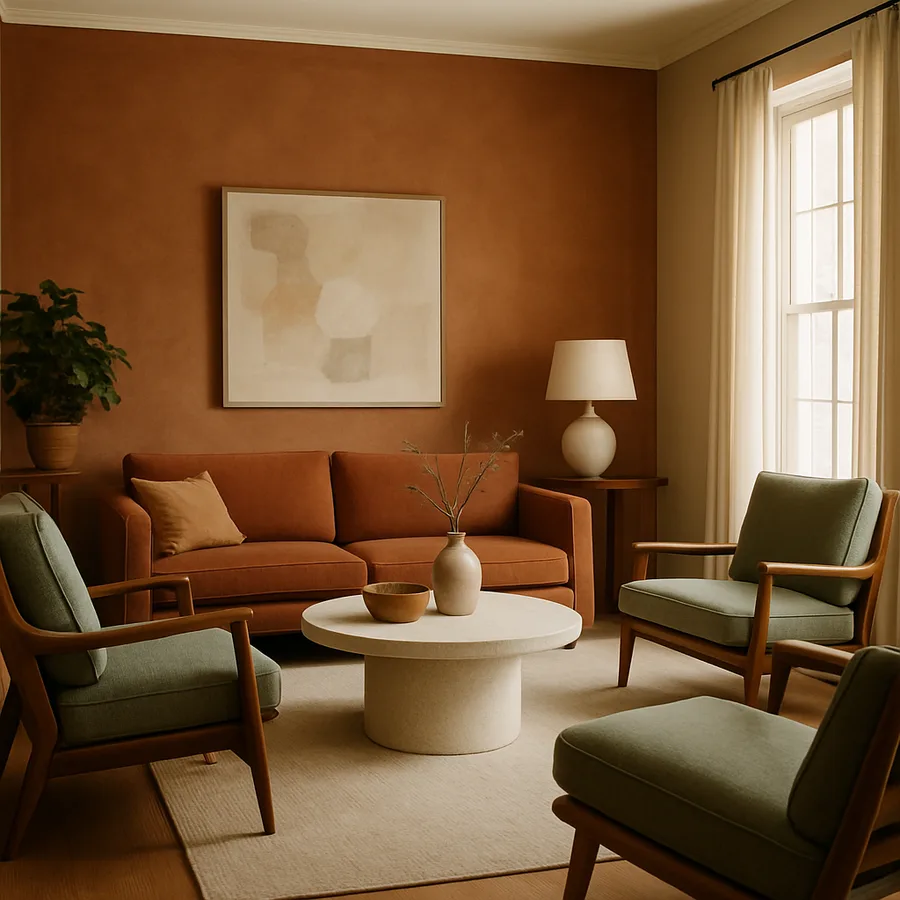
For decades, the default living room layout in American homes has been organized around a single inescapable focal point: the television. Sofas have faced screens, side chairs have angled toward screens, coffee tables have been positioned to provide a clear sightline to screens, and the entire choreography of the room has been driven by an electronic device that, ironically, tends to discourage the human interaction the room was originally designed to foster. A growing number of homeowners and designers are now actively rejecting this default and reorganizing the living room around the radical premise that it should be a room for talking to other people. The results, when done thoughtfully, are some of the most welcoming and beautiful living spaces being designed today.
This shift is not anti-technology so much as it is pro-presence. The television has not disappeared from these homes, but it has been demoted from primary focal point to optional element, often relocated to a media room, basement, or bedroom where its use is intentional rather than ambient. According to the American Society of Interior Designers, conversation-first living room design has become one of the most-requested approaches in residential remodels of the past several years, with clients explicitly asking for layouts that encourage extended in-person interaction without the gravitational pull of a screen.
Why the TV-Focused Layout Quietly Discourages Talking
Before designing a conversation-first room, it is worth understanding exactly how the TV-focused layout sabotages the social function of a living room even when the screen is off. When all seating faces a single direction, the people sitting in those seats are positioned shoulder-to-shoulder rather than face-to-face, which is the body posture humans use for parallel activity rather than for conversation. The acoustic environment is also typically tuned for screen-watching, with the sofa positioned at the optimal viewing distance from the screen rather than the optimal distance from other seats.
The coffee table in a TV-focused layout often becomes a service surface rather than a social center, used primarily for setting down drinks and remote controls rather than for collaborative activity like board games, puzzles, or shared snacking. The visual emphasis of the room is on the technology wall, which means the artwork, books, and personal objects that create conversational starting points are pushed to the periphery where they receive less attention. Over years of accumulated micro-decisions driven by screen orientation, the living room can become a space where families and friends gather but rarely actually engage with each other.
Have you ever noticed how naturally conversation flows in a kitchen where people are gathered around an island, or in a restaurant where tables seat people facing each other? These environments are designed for human interaction at the level of seating geometry, and the absence of that intentional design in the typical TV-focused living room is one of the quiet reasons modern households increasingly socialize in the kitchen rather than the living room.
Choosing a Non-Screen Focal Point
Every successful living room needs a focal point, and the first creative challenge in conversation-first design is selecting what will replace the television in that role. The most natural candidate in many homes is a fireplace, either traditional masonry, a contemporary linear gas insert, or even a beautifully designed electric model that provides visual interest without venting requirements. A fireplace anchors the room with warmth and movement, provides ambient sound, and historically is the focal point that domestic architecture was designed around long before screens existed.
For homes without a fireplace, a large-scale piece of art can serve the same anchoring function. A single substantial painting, a tapestry, a sculptural wall piece, or a carefully curated gallery wall can all command the room and become a conversation starter rather than a passive backdrop. Architectural Digest regularly features living rooms where a single dramatic artwork performs the focal-point function, and the results consistently demonstrate that a static visual element can be every bit as engaging as a screen, often more so because it invites discussion rather than passive consumption.
Other focal-point options include a substantial bookcase or library wall, a beautifully styled built-in shelving system displaying objects collected over a lifetime, a striking architectural feature like an exposed brick wall or a large window with a notable view, or a custom-designed central element like a cocktail bar or a sculptural light fixture suspended over the seating area. The key requirement is that the focal point provides enough visual interest and personal meaning to anchor the room without dominating it.
The Conversation-Friendly Seating Arrangement
The geometry of conversation-friendly seating is well-documented in environmental psychology and is built around the principle of facing or angled seating rather than parallel seating. The most reliable arrangement is two sofas facing each other across a central coffee table, sometimes called a "library" or "drawing room" layout. This configuration places everyone in direct sightline of everyone else, creates natural acoustic reflection between the two seating surfaces, and establishes the coffee table as the literal and metaphorical center of the room.
For rooms that cannot accommodate two full-size sofas, a single sofa paired with two facing armchairs accomplishes the same goal with reduced footprint. The chairs should be positioned at roughly forty-five to sixty degrees relative to each other and to the sofa, close enough that conversation can be conducted at a normal indoor volume without anyone needing to project. The conversational distance between facing seating surfaces should generally be six to eight feet, measured between the front edges, which is close enough for natural conversation but far enough that no one feels crowded.
The American Society of Interior Designers recommends that conversation-friendly living rooms accommodate at least four to six seated people in the primary grouping, with additional seating available for larger gatherings. Avoid arrangements where seats are widely separated or where any single seat is isolated from the main grouping, as these create awkward conversational dynamics and tend to be the seats that no one chooses to occupy.
Coffee Tables and Side Tables That Serve Conversation
The central table in a conversation-first living room is one of the most important furniture decisions in the entire space. It needs to be large enough that everyone in the seating area can comfortably reach it for setting down a drink or a book, sturdy enough to hold actual meal-style snacking when guests are over, and beautiful enough to remain a positive visual element rather than disappearing under accumulated remote controls and magazines.
Round and oval coffee tables work particularly well in conversation-first layouts because they have no head or foot, no privileged seating position, and they soften the geometry of the seating arrangement. A round table also allows conversation to flow in any direction without the implicit hierarchy that a rectangular table creates. For larger seating groupings, two smaller round tables or a coffee table paired with a small ottoman can provide better access than a single oversized rectangular piece.
Side tables deserve equal attention. Every seating position should have access to a surface within easy reach, ideally without requiring anyone to lean forward awkwardly. Better Homes and Gardens has noted in multiple living room features that the absence of adequate side-table surface area is one of the most common complaints about otherwise beautiful rooms, because it forces guests to either hold drinks throughout a visit or set them on the floor where they become hazards. Plan side tables before placing accent chairs, not after, to ensure that every seat has its own service surface.
Lighting That Supports Conversation
Lighting design in a conversation-first room is fundamentally different from lighting designed around a television. Without the need to control screen glare or accommodate variable screen brightness, the lighting can be optimized purely for ambiance and for the comfortable visibility of facial expression, which is essential to natural conversation. Layered lighting using multiple sources at different heights produces vastly more flattering and engaging illumination than single overhead fixtures or single floor lamps.
The most effective conversation lighting combines a soft ambient layer from indirect sources, a task layer from reading lamps positioned near each seating area, and an accent layer that highlights the focal point and any artwork or objects on display. Warm color temperatures in the range of 2700 to 3000 Kelvin produce the most flattering light for facial features, while cooler temperatures can make a room feel clinical and discourage extended lingering. Dimmer switches on every primary fixture allow the lighting to be adjusted for different times of day and different social occasions.
The American Society of Interior Designers publishes guidance on residential lighting design that emphasizes the relationship between light quality and social comfort. Following these principles consistently produces rooms that people actually want to spend time in, which is the entire point of the conversation-first approach.
Acoustic and Soft-Furnishing Considerations
A room designed for conversation must be acoustically comfortable, which means it needs enough soft surfaces to absorb the natural reverberation of speech. Hard floors, bare walls, and minimal furniture combine to produce an acoustic environment in which conversation feels effortful and where everyone instinctively keeps their voices down. Adding a substantial area rug under the central seating arrangement, drapery on at least one wall, upholstered furniture rather than hard-surface alternatives, and even acoustic wall art or fabric-wrapped panels can dramatically improve the conversational acoustics of the room.
Have you noticed how some restaurants and cafes are easy to talk in for hours while others leave you exhausted after thirty minutes? The difference is almost entirely acoustic, and the same physics applies in residential living rooms. A well-tuned acoustic environment makes extended conversation feel effortless and pleasant, while a hard, reverberant environment quietly punishes the conversational use of the room.
Textile selections also contribute to the inviting quality of a conversation-first space. Throw blankets folded over sofa arms, an abundance of pillows in varied textures, and rich upholstery fabrics all contribute to the sense that the room is designed to be lived in rather than merely looked at. Better Homes and Gardens has covered the specific role of textiles in welcoming room design in numerous features, and the consistent pattern is that more soft material almost always produces a more comfortable and conversation-friendly environment.
Conclusion
Designing a living room around conversation rather than around a television is one of the most quietly radical decisions a homeowner can make, and the results can fundamentally change how a household uses its primary social space. The room becomes a destination for actual interaction with family members and friends rather than a default backdrop for parallel screen-watching, and the qualities that make it pleasant to spend time in expand beyond the technical specifications of a display into the realms of acoustics, lighting, seating geometry, and social design. The end result is a room that feels welcoming in a way that purely screen-focused rooms rarely achieve.
The journey from a TV-focused layout to a conversation-first layout does not need to happen all at once. Small adjustments like rotating a sofa, adding a facing armchair, repositioning the coffee table, or replacing the screen with a piece of art can produce immediate improvements that build the case for more substantial reorganization later. Many homeowners find that even partial moves in the conversation-first direction noticeably improve how the room feels, and that the desire to continue the transformation grows naturally from the experience of those first changes.
The choice to deprioritize the television does not mean abandoning it. Many successful conversation-first homes maintain a separate media room, a basement entertainment area, or a bedroom-mounted screen for the times when watching is the actual goal. This separation of functions tends to make both rooms more effective at what they are designed for, and it removes the constant low-grade compromise that comes from trying to make a single room serve two opposing purposes simultaneously.
Take the first step this weekend by sitting in your living room without the TV on and honestly assessing how the space encourages or discourages the kinds of social interaction you want to have. Photograph the layout, sketch one or two alternatives, and try moving the furniture for a single evening to test how a different arrangement feels. The most beautiful and welcoming living rooms in the world were not designed around screens, and yours does not have to be either. The difference in how the room feels and how it functions is genuinely surprising, and once experienced, rarely reversed.
More Articles You May Like



Comments
Post a Comment