Interior French Doors as Office Walls With Privacy Window Film
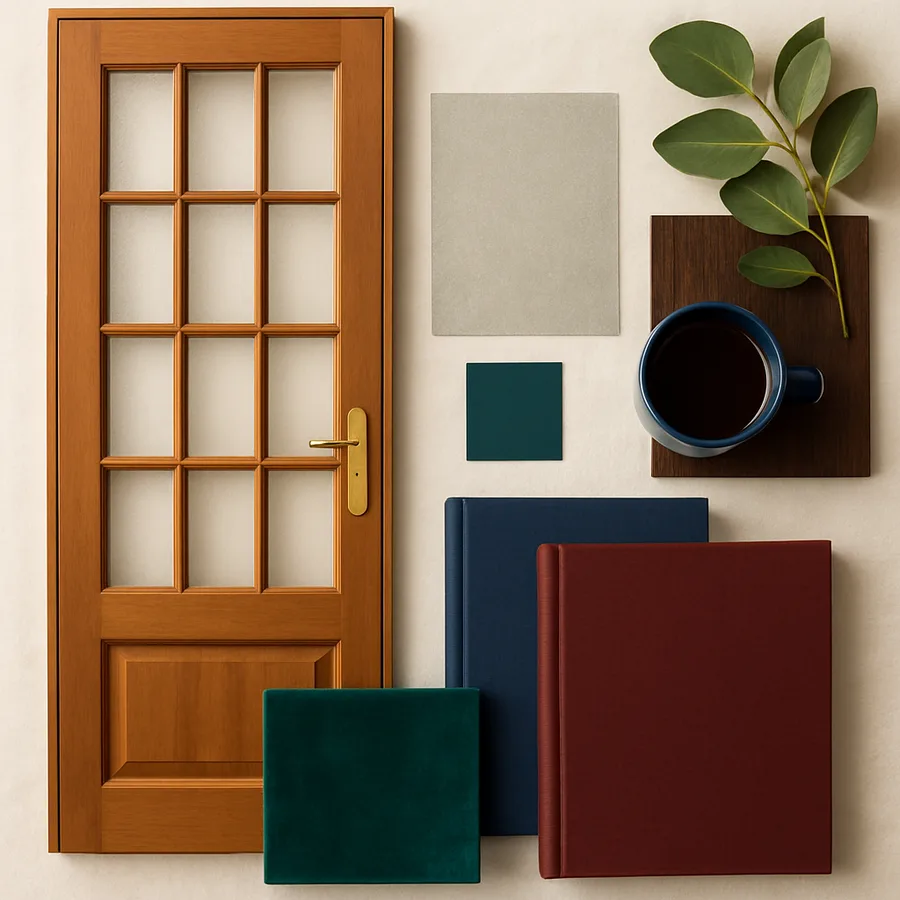
The home office has become a permanent fixture of residential design, and one of the most graceful ways to define one without sacrificing daylight or sightlines is the pairing of interior French doors with privacy window film. French doors deliver a partition that reads as architectural rather than improvised, with traditional proportions, divided lights, and the satisfying weight of a real swinging assembly. Privacy film transforms the glazing from a fishbowl into a softly diffused panel that admits light while obscuring activity. Together they create an office wall that supports concentration during deep work, casual visibility during family hours, and the kind of finished look that turns a former dining room into a credible workspace.
The shift from temporary work-from-home setups to designed home offices is well documented. The U.S. Bureau of Labor Statistics has reported that a meaningful share of the workforce now performs at least part of their week from home, and design-trade surveys through the American Society of Interior Designers have repeatedly cited home office construction as a top remodeling category over the past four years. Glass-walled offices borrowed from commercial architecture have entered residential vocabulary, but the pure-glass partition often feels too corporate at home. French doors with film soften that vocabulary while preserving the daylit quality that makes glass partitions appealing in the first place.
Why French Doors Work as Office Partitions
The instinct to wall off a home office with drywall is understandable but often regretted. Solid walls darken adjacent rooms, complicate air circulation, and create a sealed-off space that feels disconnected from the rest of the home. French doors solve the daylight problem because divided light glazing transmits a substantial portion of the natural light that would otherwise be blocked. The room behind the doors borrows light from the larger living spaces, and the larger living spaces borrow light from any window inside the office.
Acoustic performance is better than first-time buyers expect. While French doors do not match the sound transmission class ratings of fully insulated drywall, modern interior French doors with full-perimeter weatherstripping and a properly fitted center astragal can reduce conversational sound by enough to support most knowledge-work calls. The American National Standards Institute publishes acoustic performance categories for residential interior partitions, and a well-built French door pair typically lands in a usable middle tier. How loud is your household during your typical workday, and which calls actually require silence rather than reasonable quiet? Honest answers help calibrate whether French doors are sufficient or whether you need additional acoustic treatment.
The architectural integration is the quiet superpower. French doors borrow the trim, casing, and proportional language of the rest of the home, while glass-walled commercial-style partitions often read as a foreign vocabulary in a residential context. Designers credentialed through the National Association of the Remodeling Industry often note that French doors solve the visual continuity problem that pure-glass partitions create, particularly in homes with traditional or transitional design language elsewhere.
Choosing the Right Privacy Film for the Job
Privacy window film is a category, not a product. The film options range from heavily frosted opaque films that block essentially all visual detail to lightly tinted films that obscure only fine detail while preserving silhouettes. The right choice depends on what you are actually trying to obscure. For a home office that hosts video calls, a frosted or sandblasted-effect film is usually correct because it prevents anyone in the hallway from being captured on the call's background. For an office that simply needs to look professional during family hours, a lighter decorative film with linear or geometric patterns can deliver visual interest without full obscurement.
Application matters as much as selection. Static-cling films are removable and renter-friendly but tend to develop bubbles over time and can be peeled by curious children. Adhesive films require careful application but stay flat and look better at five-year horizons. Pre-cut film kits for standard French door light counts simplify installation, but custom cuts are necessary for non-standard divided light grids. The ENERGY STAR window film guidance generally treats privacy films and solar films as related but distinct categories, with some products serving both functions and others specializing.
For households that want both privacy and daylight tuning, layered film strategies work well. A frosted film on the lower two-thirds of each light grid provides privacy at seated eye height while leaving the upper third clear to support daylight transfer. This banded approach mimics the schoolhouse window aesthetic and reads as intentional design rather than improvised privacy. Sample film panels before committing to a full installation, and view the samples at the actual time of day when you most use the office. Does the film still feel right at 4 p.m. on a winter afternoon when daylight is low? If not, the film is wrong for the room.
Sizing, Swing, and Practical Layout Decisions
Standard interior French door pairs come in widths from 48 to 72 inches with each leaf typically half the total. For most home offices the 60-inch pair is the workhorse size because it provides a generous opening for moving furniture in and out while preserving room on the wall for adjacent shelving or art. The leaf height typically matches the surrounding interior doors at 80 inches, although taller homes with 9- or 10-foot ceilings often benefit from custom 84- or 96-inch French doors that scale to the room rather than to the rest of the doors.
Swing direction is one of the most consequential decisions. Inswing French doors require interior office floor space for the leaves to clear, which can interfere with desk placement, bookshelves, and the office chair travel zone. Outswing French doors push the swing into the hallway or adjacent room, which can interfere with circulation patterns. Many home office installations choose pocket French doors that disappear into the wall when open, eliminating both swing problems at the cost of more complex framing and higher installed price. The American Institute of Architects design guidance suggests evaluating both indoor and adjacent-room swing implications before specifying any French door, and the same guidance applies to office partitions.
For offices that need to be visually closed but physically connected, consider a fixed sidelight in addition to the operating French door pair. The sidelight provides additional glazing without additional swing leaves, and it can carry the same privacy film treatment for a unified look. This configuration works particularly well in former dining rooms where the original opening is wider than a standard French door pair would fill.
Acoustic Tuning and Privacy Layering
Privacy in a home office is partly visual and partly acoustic, and addressing only one half leaves the other half exposed. French doors with privacy film handle the visual side cleanly but require additional thought for acoustic privacy. Full-perimeter weatherstripping, including the bottom edge with an automatic door-bottom or a felt sweep, dramatically reduces sound transmission compared with bare French doors. The center astragal between the two leaves should include a rabbeted overlap rather than a flush meet, which adds a mechanical sound dam to the visual seal.
For households where calls truly require quiet, consider acoustic glazing on one or both leaves. Laminated glass with an acoustic interlayer outperforms standard tempered glass in sound transmission tests, often by enough to make the difference between a workable office and a barely workable office. The cost premium is meaningful but generally less than a full drywall partition, and the acoustic interlayer also adds security benefit because laminated glass remains intact when broken. The Builders Hardware Manufacturers Association publishes related guidance on multipoint locking systems for French doors, which can further reduce air gaps that double as sound paths.
Layered privacy strategies extend beyond the door itself. White-noise machines or dedicated office audio systems mask remaining sound transmission and create acoustic comfort even when the actual sound transmission class falls short of full silence. Have you ever tried to take a serious call in a room with intermittent household noise versus the same call with steady background noise? The steady masking effect is often more comfortable than partial silence. Pair the French doors and film with a small fan or noise generator and the perceived privacy improves noticeably.
Hardware, Trim, and Finish Coordination
Hardware on French office doors should support both the function and the aesthetic. Lever handles with full mortise locks work well for offices that need genuine privacy locking, while dummy levers without locks suffice for offices that only need a visual partition. Multipoint locking systems borrowed from exterior French doors are usually overkill for interior offices but can be appropriate for offices that double as guest spaces or that store sensitive equipment. Choose finishes that coordinate with adjacent door hardware throughout the home rather than introducing a competing palette.
The center astragal hardware deserves particular attention. A flush bolt on the inactive leaf engages into the head jamb and the floor, holding that leaf stationary while the active leaf operates as a single door for daily use. The flush bolt should operate smoothly without requiring two-handed force, and the strikes should be mortised flush so the floor strike does not become a trip hazard. Consider concealed flush bolts if visual cleanliness matters more than convenience, since they integrate into the leaf edge and disappear from view.
Trim coordination ties the installation to the rest of the home. The casing profile around the French door should match other interior trim, the head height should align with adjacent doorways, and the floor transition should be flush rather than stepped. The American Society of Interior Designers design guidance often emphasizes that retrofit doors look retrofit when the trim does not match, regardless of how beautiful the door itself is. A skilled trim carpenter can scribe new casing to existing profiles in a way that makes the office addition read as original to the home.
Cost, Permits, and Working with the Right Trades
Total installed cost for interior French office doors with privacy film typically lands between 3,500 and 9,000 dollars for standard sizes, including doors, hardware, framing modifications, trim, and film. Custom sizes, premium materials, or pocket configurations push the upper end well past 15,000 dollars. The National Association of Home Builders Cost vs. Value reports consistently show that home office upgrades return between 50 and 70 percent of cost at sale, and qualitative listing-agent feedback suggests that documented home offices photograph well in marketing materials. The investment carries both daily functional value and reasonable resale support.
Permits are usually unnecessary for replacing an existing door with a French door pair of the same width, but they may be required for widening the rough opening, installing a structural header, or relocating electrical or HVAC components. Always check with your local building department before assuming a permit-free path. Members of the National Association of the Remodeling Industry typically handle permit logistics on behalf of their clients, but verify this in writing before signing a contract.
Trade selection matters. A trim carpenter handles the door installation cleanly but may not handle film application, electrical adjustments, or acoustic glazing supply. A general contractor coordinates the trades but adds overhead. For a single French door installation in an existing opening, a skilled trim carpenter is usually sufficient. For a project that involves opening a wall, relocating outlets, and applying custom film, a general contractor is the better choice. Either way, request references from at least two prior home office projects and visit one if possible.
Conclusion
Interior French doors with privacy window film deliver one of the best value-per-dollar partition strategies for a home office, balancing daylight, acoustic privacy, visual privacy, and architectural integration in a single architectural gesture. The doors carry the proportional language of residential design while the film tunes the glazing to match the household's privacy needs. Together they avoid both the dark cave of a fully drywalled office and the corporate fishbowl of a pure-glass partition. The result is a workspace that feels intentional, daylit, and connected to the rest of the home.
The patterns that distinguish a successful installation from a regretted one are clear. Choose film that matches the privacy task you actually need, sample it at the worst-case time of day, and consider banded approaches when both privacy and daylight matter. Specify proper weatherstripping, consider acoustic glazing if calls demand it, and engage a trim carpenter who has installed French doors before. Coordinate hardware and trim finishes with the rest of the home so the office reads as original architecture rather than a recent retrofit. Each detail compounds into a partition that supports years of focused work.
If a home office upgrade is on your list this season, schedule a measurement visit with a qualified trade this week and bring sample film panels, hardware finish chips, and a rough sketch of your desk and bookshelf placement. Ask the trade to walk through swing clearances, weatherstripping options, and whether your existing rough opening can support the door pair you have in mind. With those decisions made early, the resulting office becomes a quiet daily pleasure rather than a slowly accumulating list of regrets, and the French doors and film earn their place as one of the smarter renovation moves in the home.
More Articles You May Like



Comments
Post a Comment