Mirrors in Feng Shui: Where to Hang Them and Where Not To
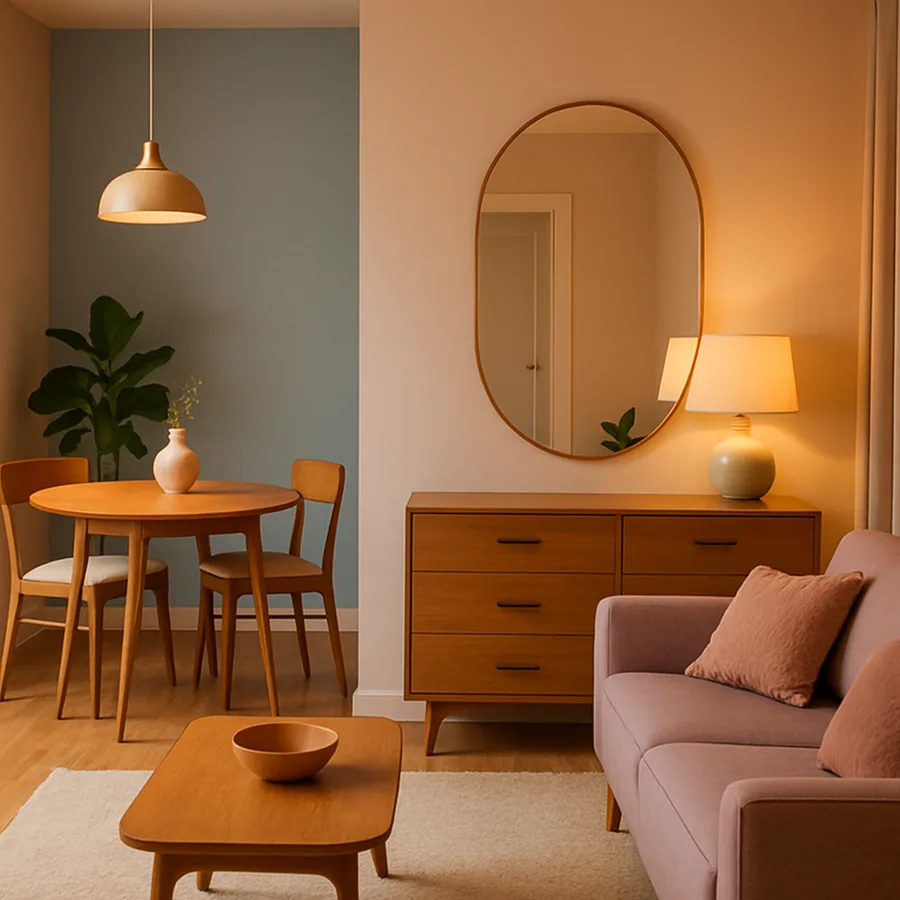
Mirrors have been called the aspirin of feng shui, and for good reason. These reflective surfaces possess the remarkable ability to redirect energy flow, expand visual space, and correct architectural imbalances within a home. According to the International Feng Shui Guild, mirrors rank among the most frequently recommended cures in traditional and contemporary practice alike. Whether you are furnishing a new home or rethinking a room that has always felt slightly off, understanding where mirrors belong and where they absolutely do not can transform your living environment.
The ancient Chinese practice of feng shui treats mirrors as powerful tools that double whatever they reflect. A mirror facing a beautiful garden view effectively brings that natural energy indoors, while one reflecting clutter simply amplifies visual chaos. The American Society of Interior Designers (ASID) notes that nearly 68 percent of designers consider energy flow and spatial psychology when placing mirrors for clients, a statistic that underscores how mainstream these principles have become. Have you ever walked into a room and felt instantly unsettled without being able to explain why? The position of a mirror may have been the culprit.
This guide walks through every major room in a typical home, explaining exactly where mirrors support positive chi and where they disrupt it. Each recommendation draws from classical feng shui texts, the bagua map framework, and modern interior design best practices. You will also find practical tips on mirror shapes, sizes, and frame materials that complement each placement. By the end, you will have a clear, room-by-room action plan for using mirrors intentionally rather than decoratively.
Feng shui is not about superstition; it is about the conscious arrangement of a living space to support well-being. Mirrors are simply one of the most accessible and affordable tools in that process. A single repositioned mirror can shift the atmosphere of a room more dramatically than a fresh coat of paint. The key is knowing the rules and understanding when to bend them for your specific floor plan.
The Entryway: Your Home's First Impression
The entryway, or mouth of chi, is where energy first enters your home. Feng shui practitioners universally agree that this space deserves careful attention, and mirror placement here can either welcome abundance or push it right back out the door. A mirror placed on a side wall of the foyer expands the space and gives residents a moment to collect themselves before stepping outside. The Feng Shui Society recommends this placement because it allows chi to circulate rather than stagnate in a narrow corridor.
However, hanging a mirror directly facing the front door is one of the most cautioned-against placements in all of feng shui. The reasoning is straightforward: a mirror opposite the entrance reflects incoming energy straight back outside before it has the chance to flow through the home. A survey conducted by Houzz found that 42 percent of homeowners who consulted feng shui professionals were advised to remove or relocate a mirror from this exact position. If your entryway is small and you feel a mirror is essential, angle it toward an adjacent wall or place it perpendicular to the door so it redirects rather than repels.
Round and oval mirrors work particularly well in entryways because their curved edges promote smooth energy flow. Sharp rectangular frames can create cutting chi, which feels harsh in a welcoming space. Frame materials matter too: wood frames support growth energy, metal frames enhance clarity, and ornate gilded frames add a touch of wealth symbolism. Choose a frame that complements your decor while reinforcing the energetic intention you want to set at your home's threshold.
If your entryway opens onto a long, narrow hallway, a strategically placed mirror can slow rushing chi. Position it on the wall at the end of the corridor at a slight angle rather than perfectly flat. This prevents the energy from accelerating straight through and encourages it to meander. Think of chi like water: it should flow gently through your home, not rush like a river through a canyon.
The Dining Room: Doubling Abundance and Togetherness
The dining room is widely considered the single best room in any home for a large mirror. In feng shui philosophy, the dining table represents nourishment, family connection, and prosperity. A mirror reflecting the dining table symbolically doubles the food and the gathering, amplifying abundance. The National Kitchen and Bath Association (NKBA) has noted that dining rooms with mirrors consistently photograph as more spacious and inviting, which aligns perfectly with feng shui goals.
For maximum effect, the mirror should be large enough to reflect the entire table or at least most of it. A small decorative mirror above a sideboard is aesthetically pleasant but does not carry the same energetic weight as a generous wall mirror that captures the full dining scene. Position the mirror so it reflects the table from a comfortable height, ideally so that seated diners can see themselves without the reflection cutting off their heads, which is considered inauspicious in feng shui.
The dining room mirror also benefits from reflecting natural light or a window view. If your dining area is adjacent to a garden or has pleasant window scenery, angling the mirror to capture that view effectively brings the outdoors inside. This connection to nature strengthens the wood element and promotes health within the family. Avoid positioning the mirror so it reflects a kitchen doorway, as this can symbolically drain the wealth energy that the dining table is meant to accumulate.
Consider the frame carefully in this room. A wooden frame supports the family and health sector of the bagua, while a gold or brass frame reinforces wealth associations. The mirror should feel like a deliberate design choice, not an afterthought. According to Architectural Digest, oversized dining room mirrors have become one of the most requested features in high-end residential projects, suggesting that both design professionals and feng shui practitioners agree on this placement.
The Bedroom: Where Mirrors Cause the Most Debate
No feng shui topic generates more discussion than bedroom mirrors. The classical rule is unambiguous: mirrors in the bedroom disrupt sleep and create restless energy. When you sleep, your body is in a yin state, recovering and processing the day. A mirror introduces active yang energy into this restorative environment, creating an energetic contradiction that many people report feeling as insomnia, anxiety, or disturbed dreams. The Sleep Foundation has published research indicating that reflective surfaces in bedrooms can contribute to difficulty falling asleep, lending scientific support to what feng shui has taught for centuries.
The most problematic placement is a mirror directly facing the bed. Traditional feng shui warns that this position allows your spirit to be startled by its own reflection during the night, a poetic way of describing the jolt many people experience when they catch unexpected movement in a dark mirror. If you must have a mirror in the bedroom for practical reasons, such as a dressing mirror, position it inside a closet door or on a wall that is not visible from the bed. Some practitioners recommend covering bedroom mirrors with a decorative fabric panel at night.
Mirrored closet doors present a common dilemma. Many modern homes come with floor-to-ceiling mirrored sliding doors that directly face the bed. If replacing them is not an option, consider applying a frosted film to reduce reflectivity while maintaining the illusion of space. Another approach is to hang a curtain rod above the closet and draw curtains across the mirrored doors at bedtime. These solutions honor both the practical need for a full-length mirror and the feng shui principle of creating a calm, dark sleeping environment.
For couples, a mirror reflecting the bed is said to invite third-party energy into the relationship, which symbolically represents interference or infidelity. While this is a traditional interpretation rather than a literal prediction, many couples who have relocated bedroom mirrors report feeling a greater sense of intimacy and calm in the space. If your bedroom is small and you rely on mirrors to create the perception of more room, use them on side walls where they will not catch the bed in their reflection.
The Living Room: Balancing Light and Social Energy
Living rooms offer some of the most flexible opportunities for mirror placement in feng shui. Because this room serves as the social heart of the home, mirrors here should enhance conversation, amplify natural light, and create a sense of openness. A well-placed mirror on a wall adjacent to a window can effectively double the daylight entering the room, reducing dependence on artificial lighting and connecting the indoor space to the outdoor environment. Research from the American Lighting Association suggests that mirrors reflecting natural light can increase perceived brightness by up to 30 percent in a room.
Position living room mirrors so they reflect something beautiful: a piece of art, a vase of fresh flowers, a bookshelf, or a window view. What the mirror reflects is as important as where it hangs. Reflecting a blank wall wastes the mirror's potential, while reflecting a television or electronic equipment amplifies the frenetic energy those devices emit. If your living room doubles as a media room, keep mirrors on the same wall as the screen so they do not reflect it.
Avoid placing mirrors directly behind seating areas, especially sofas. In feng shui, having a mirror behind you while seated creates a sense of vulnerability because you cannot see what is being reflected behind your back. This is related to the commanding position principle, which states that you should always be able to see the door from where you sit. A mirror that reflects the room's entrance from a seating area can actually strengthen the commanding position by giving you visual access to the door through the reflection.
Do you have an L-shaped living room or an awkward alcove that feels disconnected from the main space? A mirror placed at the junction can visually bridge the two areas and ensure that chi flows continuously through the entire room rather than getting trapped in a dead corner. This is one of the most practical applications of feng shui mirror theory: using reflection to correct architectural irregularities that disrupt the natural movement of energy.
The Bathroom and Kitchen: Rooms That Require Caution
Bathrooms already contain mirrors as a functional necessity, and feng shui does not suggest removing them. However, the bathroom itself is considered a space where energy drains away, quite literally through pipes and drains. The concern is not about the mirror inside the bathroom but about mirrors outside the bathroom that reflect its doorway. A hallway mirror that catches the bathroom door in its reflection is said to amplify the draining quality of that room and spread it into the rest of the home.
The simplest remedy is to keep the bathroom door closed when not in use and avoid hanging mirrors in the hallway directly opposite the bathroom entrance. Inside the bathroom, standard vanity mirrors are perfectly acceptable. Some practitioners recommend placing a small mirror on the outside of the bathroom door, facing outward, to symbolically repel the draining energy back into the bathroom and prevent it from escaping into the hallway.
Kitchens present a nuanced situation. The stove represents wealth and nourishment in feng shui, and a mirror reflecting the burners is sometimes recommended because it symbolically doubles your prosperity. However, this placement is controversial. Critics argue that reflecting fire with a mirror creates excessive yang energy that can lead to arguments and agitation. The American Society of Interior Designers observes that kitchen mirrors are more common in commercial restaurant design than residential settings, where they serve a supervisory rather than energetic function.
If you want a reflective surface in the kitchen, a mirrored backsplash behind the stove is the most traditional feng shui recommendation. It allows the cook to see behind them, strengthening the commanding position, while also reflecting the burners. A less intense alternative is a polished metal backsplash or a glass tile backsplash with subtle reflective qualities. These provide the visual expansion without the full energetic amplification of a true mirror.
Mirror Shapes, Sizes, and the Bagua Map
The shape of a mirror carries its own feng shui significance beyond its placement. Round mirrors represent the metal element and promote unity, completeness, and heaven energy. They are considered the most universally safe shape because they have no sharp edges to create cutting chi. Oval mirrors share similar properties but add a softening, yin quality that makes them ideal for bedrooms if a mirror must be present. The International Interior Design Association reports that round mirror sales have increased by 35 percent over the past five years, reflecting a broader cultural shift toward softer, more organic design elements.
Square and rectangular mirrors represent the earth element and provide grounding, stable energy. They work well in offices, study areas, and any room where clarity and focus are desired. However, their sharp corners should be positioned so they do not point directly at seating areas or beds. An easy remedy is to choose a rectangular mirror with slightly rounded corners, which maintains the grounding energy while softening the edges.
The bagua map can guide mirror placement by sector. In the wealth corner (southeast), a mirror can amplify prosperity energy. In the relationship corner (southwest), mirrors should be used carefully because they can either strengthen a partnership by reflecting a pair of objects or introduce instability if they reflect clutter or a single chair. In the career sector (north), mirrors enhance water element energy, which supports professional flow and opportunity. Each sector responds differently to the reflective quality of mirrors.
Size matters practically and energetically. A mirror that is too small for its wall looks lost and creates a sense of inadequacy in the space. A mirror that is too large can overwhelm a room with reflected energy and make the space feel unsettled. The general guideline is to choose a mirror that fills roughly two-thirds of the available wall space above a piece of furniture, or that stands as a confident focal point on an otherwise bare wall. Proportion communicates intentionality, and intentionality is at the heart of feng shui.
Conclusion: Placing Mirrors With Purpose and Awareness
Feng shui mirror placement is not a rigid set of superstitions but a thoughtful framework for using reflection to shape the energy of your home. The core principles are consistent: reflect what is beautiful, avoid reflecting what drains or disturbs, and always consider what the mirror sees from every angle in the room. A mirror in the dining room doubles abundance. A mirror in the bedroom disrupts rest. A mirror in the entryway can welcome or repel depending on its exact position.
Start with one room. Walk through your home with fresh eyes and notice where mirrors currently hang. Ask yourself what each mirror is reflecting and whether that reflection serves the room's purpose. Move or remove any mirror that reflects a toilet, a cluttered corner, a staircase, or the front door directly. Then add mirrors where they can do real work: expanding a dark hallway, reflecting a garden view, or amplifying the warmth of your dining table.
The investment required is minimal. A single well-chosen mirror, properly positioned, costs less than most home improvement projects and delivers a noticeable shift in how a room feels. Feng shui practitioners and interior designers increasingly speak the same language on this topic because the underlying logic is sound: what you see in your environment affects how you feel. Take fifteen minutes this weekend to audit your mirrors, and you may be surprised by how much one small change shifts the energy of your entire home.
Ready to start your mirror audit? Begin with the room where you spend the most waking hours and work outward from there. Share your before-and-after mirror placement results with your household and notice together how the energy of each space responds to the change.
More Articles You May Like



Comments
Post a Comment