Fire Pit Distance From House and Trees for Safety and Code
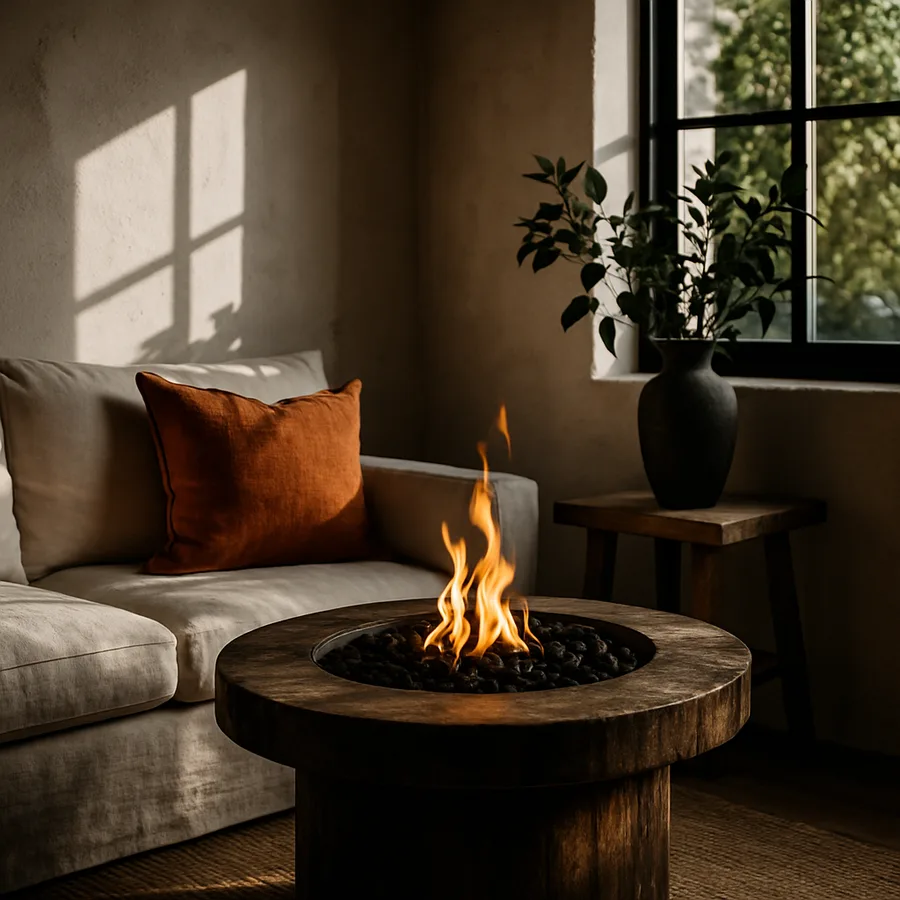
The single question new fire pit owners ask most often is also the question they research least carefully. How far does a fire pit need to be from a house? The honest answer is more nuanced than the round numbers most online checklists offer, and getting it wrong creates real safety, code, and insurance exposure. Whether you are placing a portable steel bowl on a small urban patio or designing a permanent masonry feature in a suburban yard, setbacks deserve their own dedicated planning hour.
This guide unpacks the relevant national codes, summarizes the most common municipal additions, and walks through the practical questions that determine the safe distance for your specific situation. Codes set the legal floor, but real-world placement should respect a few additional factors codes do not capture: prevailing wind, tree species, eave overhang, and the path embers actually travel on a windy night. Plan for both compliance and conservatism.
National Code Baselines and What They Actually Say
The two most consequential national documents for residential fire features are NFPA 1, the Fire Code published by the National Fire Protection Association, and the International Fire Code (IFC) published by the International Code Council. These two documents inform almost every U.S. municipality's local fire code, but adoption varies and local amendments are common.
The most cited baseline is the 25-foot setback for permanent open-flame recreational fires from any structure or combustible material, with smaller portable units allowed at 15 feet. NFPA guidance and ICC model code both include language consistent with these distances, though the precise wording varies between editions and code cycles. Always verify the current edition adopted in your jurisdiction.
For gas-fueled fire features, several jurisdictions allow shorter setbacks because of the dramatically lower ember risk. A 10-foot or even 8-foot setback for a low-flame gas pit table on a non-combustible patio is not unusual. Check both your fire code and your manufacturer's installation manual; the manufacturer's listing must align with the code clearance, and the more restrictive of the two prevails.
House Walls, Eaves, and Window Considerations
Measuring 25 feet from a house wall is the easy part. The harder question is which point on the house you measure from. The setback applies to the nearest combustible material, which often means an eave or roof overhang rather than the wall itself. A house with a 30-inch eave overhang has effectively moved the relevant edge 30 inches outward from the wall plane.
Vertical clearance matters too. Most code interpretations require open flame to remain a minimum of 12 to 21 vertical feet below any combustible roof or branch, although gas pits with low documented flame heights sometimes earn shorter clearances per their listing. A small gas table on a covered patio is permissible if the structure is rated and the clearances are met. A wood-burning pit under any roof structure is almost universally prohibited because of unpredictable flame height and ember escape.
Windows and air intakes deserve attention even when setbacks are technically met. Smoke and combustion byproducts pulled into a basement window well or a fresh-air HVAC intake will fill a house surprisingly fast. Position the pit so prevailing wind moves smoke away from any opening into the home, not toward it. The U.S. Environmental Protection Agency publishes guidance on residential combustion product exposure that reinforces this practical concern.
Trees, Branches, and Canopy Risks
Trees are where most homeowners underestimate setback risk. A 25-foot horizontal distance from a tree trunk does not mean 25 feet from the canopy. A mature oak with a 60-foot crown spreads branches 30 feet from its trunk, putting the canopy directly above a pit that looks correctly placed at ground level. The relevant measurement is from the flame to the nearest combustible branch, not to the trunk.
Species matters more than people expect. Resinous evergreens such as pine, spruce, and cedar drop combustible needles that ignite from a single airborne ember. Hardwoods such as oak, maple, and beech are far less ember-sensitive. If your only viable pit location sits under any evergreen canopy, either choose a different location, switch to a contained gas unit, or have an arborist crown-raise the tree to lift the lowest branches well above the pit.
Drought changes the math. During regional drought designations or red-flag wind warnings, many jurisdictions impose temporary open-burn restrictions that suspend recreational fires entirely regardless of setback. Sign up for your county emergency notification list so you receive these alerts. The EPA Burn Wise program provides background on why these restrictions exist and how they reduce wildfire and air quality risk.
Fences, Sheds, and Property Line Setbacks
Wood fences are combustible structures and trigger the same setback as a house wall in most jurisdictions. A pit placed 6 feet from a wood fence is technically a code violation in most cities even if the fence is only your property boundary marker. The fence is also typically your neighbor's property in some sense; flame damage to it creates both a code issue and a civil liability issue.
Detached garages, sheds, and pool houses count as structures for setback purposes. So do detached pergolas, trellises, and any shade sail you might mount overhead. Many homeowners legally place a pit 25 feet from the main house only to discover the new shed they built last year now violates the same setback from the same pit. Re-measure whenever you add new structures to the yard.
Property-line setbacks are jurisdictional. Some municipalities require a minimum 10-foot setback from any property line for permanent fire features regardless of what the neighbor has built on their side. Others impose no specific property-line setback and rely entirely on the structure-clearance rule. Your local building department or fire marshal's office is the authoritative source. A 5-minute phone call resolves the question definitively.
Surface Materials and Ember Mitigation
The surface beneath and around your pit affects the practical safe distance. A pit on a wood deck or composite deck creates a small but real risk that an ember falling between deck boards will smolder unseen. Place a pit on natural stone, concrete, brick, or porcelain pavers whenever possible. If the only available surface is wood, install a non-combustible deck pad rated for fire feature use that extends at least 36 inches beyond the pit on all sides.
Ground cover within the immediate hot zone deserves attention. Dry mulch, pine straw, and dead leaves all ignite from airborne embers far more readily than green grass or bare gravel. Maintain a clear non-combustible zone of at least 36 inches around any pit, and rake or sweep regularly during fire-pit season. The National Association of Home Builders has published outdoor living guidance recommending wider clear zones in regions with elevated wildfire risk.
Spark screens reduce but do not eliminate ember escape. A properly fitted spark screen on a wood-burning pit catches the largest embers but smaller particles still rise. The Hearth, Patio & Barbecue Association recommends spark screens specifically for wood-burning units and notes they substantially reduce ember-flight distance. Gas pits do not produce embers and do not need screens.
Wind Patterns and Ember Travel Distance
Code setbacks treat distance as the primary safety variable, but the practical risk picture is dominated by wind. A 15-mile-per-hour gust can carry an ember from a wood-burning pit substantially farther than the basic 25-foot setback would suggest. The combination of wind speed and ember size determines how far airborne particles travel before cooling below ignition temperature. Hot pine needles can ignite a dry roof from surprising distances during dry windy conditions.
Pay attention to channeling effects on your specific lot. Houses, fences, and dense plantings can funnel wind into a narrow corridor that locally exceeds the prevailing speed by a factor of two or three. The space between two houses is often a wind tunnel, as is the gap between a house and a detached garage. If your intended pit location sits near such a corridor, expect ember travel to be longer and smoke transport to be more directional than a simple wind rose would predict.
Time of day matters too. Wind speed and direction often shift markedly between afternoon and evening, with evening hours typically calming as the surface temperature drops. The pit you light at 8 p.m. may experience completely different wind behavior at 11 p.m. as the temperature gradient flips. Plan for the worst-case wind window during your typical use hours, not the average condition you observed once on a single afternoon.
Insurance, Permits, and Documentation
Notify your homeowners insurance carrier before installing any permanent fire feature. Some carriers require an endorsement, some impose a small premium adjustment, and a few will exclude coverage for fire damage caused by an unpermitted permanent installation. The disclosure conversation is short, the savings if a claim ever happens are large, and your agent will appreciate the proactive communication.
Permits are jurisdictional but increasingly common for permanent installations. A permanent gas line tap typically requires a plumbing permit and inspection. A permanent masonry fire feature often requires a building permit. Portable units rarely require permits but may still trigger HOA approval processes. Document the permit, the inspection sign-off, and the manufacturer's installation manual in a single file in case you ever need it.
Photograph your installation in finished condition with a tape measure visible in a few shots showing the actual setback distances. This documentation is invaluable if a future buyer's home inspector questions the install or if your insurance carrier ever requests proof of clearance after a claim. A 10-minute photo session today saves potentially significant friction years from now.
Conclusion
Fire pit setbacks are one of the few safety topics where a small amount of upfront diligence dramatically reduces lifetime risk. The 25-foot rule is a useful starting point, but the practical right answer depends on your structure overhangs, tree species, fence material, prevailing wind, and the precise unit you are installing. Spend an hour on the phone with your local fire marshal and an hour reading your manufacturer's installation manual before you cut a single sod or pour a single footing. That two-hour investment will outlast the patio.
Have you mapped the prevailing wind on your specific lot? Wind patterns at house level differ from those at canopy level and can shift seasonally. A pit that smokes harmlessly into the woods in summer can blow smoke straight into a bedroom window every fall when leaves drop and the wind shifts. A simple year of observation, or a conversation with neighbors who have lived there longer, surfaces these patterns.
The other question worth answering honestly is who else will use this pit. If you host gatherings of 12 children plus their parents, your effective hot zone is much larger than the manufacturer's clearance suggests because kids do not respect setbacks. Plan for the worst-case use case, not the average evening. Furniture placement, walkway routing, and the location of children's play structures all interact with the pit position.
Common neighborhoods present recurring placement challenges worth thinking through in advance. Suburban quarter-acre lots almost always force at least one trade-off because the 25-foot rule consumes a disproportionate share of available yard. Townhouse and zero-lot-line properties may simply lack legal placement for any wood-burning pit and effectively require a gas unit to comply at all. Rural acreage offers placement freedom but introduces wildland fire considerations that override the simple structure-clearance math. Each context calls for different planning, and the right pit for a quarter-acre suburban yard is often a different pit entirely from the right pit for a five-acre rural parcel.
Slope and topography also affect setback strategy. A pit placed downhill from the house benefits from rising warm air carrying smoke away from the structure rather than toward it. A pit placed uphill from the house can produce smoke and ember drift that travels back toward the home on prevailing wind, even when the horizontal distance technically meets code. If your yard has any meaningful slope, walk the contour and choose the downhill side whenever the patio layout allows.
Take the next step today. Walk your yard with a 25-foot tape measure and identify every combustible item within 30 feet of your intended pit location. Take photos, list them, and use that list as the agenda for a 10-minute call with your local fire marshal. The clarity you gain in that one phone call will inform every decision that follows, from pit type to permit strategy to long-term landscape planning.
More Articles You May Like



Comments
Post a Comment