Indoor Living Plant Walls With Built-In Drip Irrigation Systems
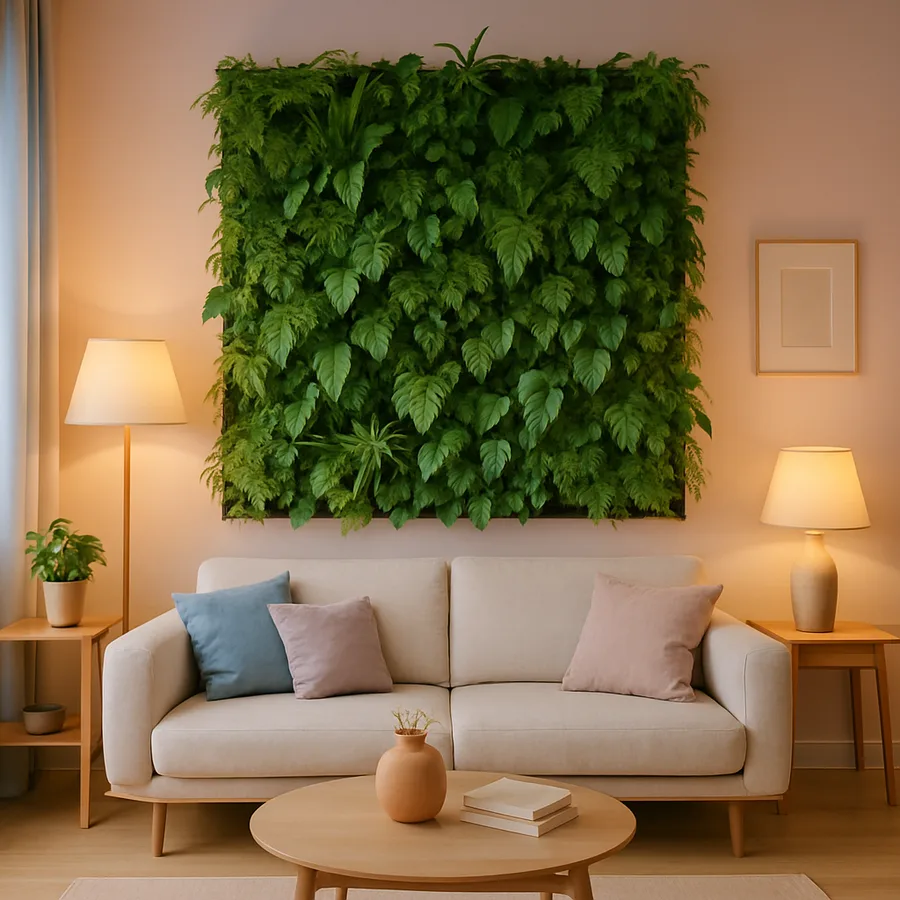
Indoor living plant walls have moved from boutique hotel lobbies into ordinary living rooms, kitchens, and home offices, and the technology making this possible is the built-in drip irrigation system. A vertical garden installed inside a home used to demand near-daily attention, with mist bottles, watering wands, and constant fussing over which species in which pocket needed water on which day. Today, modular wall systems with self-regulating tubing have flipped that effort upside down, allowing a properly built green wall to thrive on as little as five minutes of attention per week.
The category is growing fast for good reason. According to a 2025 market analysis from Allied Market Research, residential vertical garden installations grew by 34 percent year over year, with drip irrigated systems making up the majority of new installs. The driver is not just aesthetics. Living plant walls have measurable benefits for air quality, humidity, and even acoustic absorption, all delivered by a feature that takes up zero floor space. Once you understand how the irrigation works, designing one becomes far less intimidating than it first appears.
How Built-In Drip Irrigation Actually Works
The core of any indoor plant wall is a thin network of polyethylene tubing that runs behind the planting modules, fed by a small reservoir or a direct plumbing line. Pressure-compensating emitters drop water at precise intervals into each pocket or pot, ensuring that plants at the top receive the same volume as plants at the bottom. This pressure compensation is what separates modern wall systems from the gravity-fed versions that dominated the early 2010s, which often left lower plants drowning while top plants withered.
Most contemporary residential walls use 0.5 gallon per hour emitters spaced six to nine inches apart, controlled by a small inline timer. The timer triggers brief watering pulses several times a day, typically running for one to two minutes per cycle. Short, frequent watering outperforms long deep soaks on vertical surfaces because gravity is not your friend on a wall, and soggy roots are the leading cause of indoor wall failure.
A drain channel at the base of the wall captures any overflow, which is then either recirculated by a small pump or routed into a discreet floor drain. Recirculating systems are increasingly favored because they reduce water consumption by as much as 70 percent compared to drain-to-waste setups, according to research summarized by the Royal Horticultural Society. The savings add up, but the bigger win is the closed loop, which eliminates the need to refill reservoirs more than once a month.
If you have ever wondered whether a drip system can handle plants with very different water needs, the answer is yes, but the design has to allow it. Two-zone systems split the wall into thirsty plants on one circuit and drought-tolerant ones on another, each with its own timer line. This zoning is what allows ferns to thrive next to succulents on the same vertical surface, something that would be impossible with a single uniform watering schedule.
Choosing Plants That Thrive on a Vertical Surface
Not every indoor plant performs well on a wall, and the species you choose will dictate how forgiving the irrigation needs to be. Pothos, philodendron, peperomia, and tradescantia are the workhorses of indoor green walls because they tolerate fluctuating moisture, recover quickly from over or under watering, and trail or mound attractively. These four genera together appear in roughly eighty percent of residential plant wall installations tracked by the International Living Wall Association.
Ferns are the next layer of complexity. Boston ferns, maidenhair, and bird's nest ferns add lush texture but demand higher humidity and more consistent moisture, which makes them excellent indicators of whether your irrigation is dialed in. If your ferns thrive, every other plant on the wall is almost certainly happy, because they are the most demanding species in the typical residential mix.
Air plants and small bromeliads occupy specialized pockets that are intentionally drier, often hand misted weekly rather than included in the drip circuit. Many designers leave specific pockets dry on purpose to make room for these textural accent species, which adds visual variety without requiring custom plumbing. The famous NASA Clean Air Study highlighted several plants commonly found in vertical gardens, including peace lily and English ivy, for their measurable effects on indoor air pollutants such as benzene and formaldehyde.
One question that comes up often is whether to mix flowering and foliage plants. The honest answer is that flowers complicate maintenance because they introduce dropped petals, spent blooms, and seasonal dormancy. Foliage-forward walls hold their visual quality year-round, which is why most designers limit flowering species to a few accent pockets rather than letting them dominate the composition.
Wall Construction and Waterproofing Essentials
Behind every successful living wall is a layer of waterproofing that keeps a hidden drama out of the drywall. The standard approach uses a marine-grade plywood backing sealed with multiple coats of waterproof membrane, followed by a moisture barrier of EPDM rubber or pond liner. Without this layer, even a perfectly tuned drip system will eventually telegraph moisture into the wall behind it, causing structural damage over time.
The framing must also be capable of supporting the saturated weight of the wall, which is heavier than most people expect. A square foot of planted, fully saturated wall typically weighs between fifteen and thirty pounds, depending on the substrate. Walls larger than three feet by three feet should be anchored directly into wall studs or, in masonry construction, into expansion bolts rated for shear loads. Hanging hardware is not optional and not negotiable, and skipping this step is the single most common DIY mistake.
The planting modules themselves come in three primary formats: felt pocket panels, modular plastic trays, and grow boxes with integrated reservoirs. Felt pockets are lightweight and inexpensive but dry out faster, requiring more frequent irrigation cycles. Plastic trays hold soil better and are easier to plant but weigh more when wet. Grow boxes with integrated reservoirs offer the most stability but are the most expensive option and add to overall depth.
Drainage is the unsung hero of every wall. A catch basin at the base, ideally a full-width tray with a pump float switch, handles overflow gracefully and protects floors from leaks. Without a catch basin, the system relies entirely on perfect timer calibration, which is risky when emitters can clog or pumps can fail. Designers featured by Better Homes and Gardens repeatedly emphasize redundant drainage as the difference between a wall that lasts a decade and one that fails within a year.
Light Requirements and Grow Light Integration
An indoor plant wall lives or dies by its light source, and most homes simply do not provide enough natural light for a thriving vertical garden. Even south-facing windows lose intensity quickly with depth into a room, and a wall placed more than six feet from a major light source usually requires supplemental grow lights to keep plants healthy long-term. The Royal Horticultural Society notes that interior plants typically need 200 to 400 foot-candles for sustained health, while many indoor walls receive less than 100 without supplementation.
Modern LED bar lights have transformed this challenge. Slim full-spectrum fixtures mounted just above the wall can deliver the right wavelength bands without the heat or yellow cast of older grow lights. Quality LED bars consume around 25 to 40 watts per linear foot and last well over 50,000 hours, which makes them economically practical for daily use. Newer fixtures even adjust color temperature throughout the day, simulating the dawn-to-dusk cycle plants evolved to follow.
Mount the lights at least eight to twelve inches above the top of the wall, angled slightly forward, so the light fans across the entire surface. Side lighting is just as important as top lighting on tall walls, because plants in the lower third often suffer when only an overhead bar is installed. Two parallel bars, one above and one below the plant zone, keep growth even from edge to edge and top to bottom.
Have you considered how many hours of light your wall actually receives in winter compared to summer? Putting your grow lights on a smart timer that adjusts seasonally is a small detail that pays off enormously over a year. Plants that receive consistent total light hours stay in active growth far longer, which is what gives a green wall the lush, full appearance that attracts so much attention.
Air Quality, Humidity, and Acoustic Benefits
The functional benefits of an indoor plant wall extend far beyond aesthetics. The original NASA Clean Air Study identified more than a dozen common houseplants capable of removing volatile organic compounds from sealed environments, and a vertical wall multiplies that effect because it concentrates many plants into a small footprint. Subsequent research from the University of Technology Sydney found that walls of twenty or more plants can measurably reduce indoor carbon dioxide levels in residential rooms, particularly when paired with active airflow such as a small circulation fan.
Humidity is the second hidden benefit. A typical living wall releases moisture through transpiration at a rate of roughly one to three liters per day, which can raise humidity in a small room by five to ten percent. In dry climates and during heating season, this is enough to relieve the dry skin, scratchy throats, and static electricity that come with overly dry indoor air. Cleverly placed walls can substitute for a small humidifier in many homes.
Acoustic absorption is the third quiet benefit, and one rarely advertised by manufacturers. Plant walls absorb mid and high frequency sound waves through both the foliage and the moist substrate, reducing echo and reverb in hard-surfaced rooms. Studios and home offices that install plant walls frequently report that the room feels softer and calmer, an effect that designers describe as biophilic acoustics. The same principle is why botanical gardens feel quieter than the streets outside them.
Finally, there is the well-documented mental health benefit of living plants. Studies referenced by the American Society of Interior Designers (ASID) indicate that workspaces incorporating substantial greenery report lower stress markers and higher reported satisfaction. A plant wall is the most concentrated form of this benefit you can install short of a greenhouse, and it requires only the wall space you already have.
Maintenance, Troubleshooting, and Long-Term Care
The promise of automated drip irrigation does not eliminate maintenance, but it does compress it into manageable rhythms. Plan on a fifteen-minute weekly check to verify reservoir levels, clear any clogged emitters, and prune leggy growth. Monthly tasks include flushing the lines with a mild solution to prevent mineral buildup, fertilizing through the irrigation system at quarter strength, and rotating any plants that have grown lopsided.
The most common failure mode is emitter clogging, especially in homes with hard water. Calcium and magnesium scale builds up inside emitters over time, gradually reducing flow until specific pockets dry out. Quarterly cleaning with a vinegar flush or installation of a basic inline filter and water softener can prevent most of this. If a single pocket starts looking sad, ninety percent of the time the cause is a clogged emitter rather than a plant problem.
Algae growth in tubing or trays is the second most common nuisance. Light infiltration into the irrigation lines feeds algae, which then sloughs off and clogs emitters. Using opaque black tubing rather than clear, and keeping reservoirs covered, almost completely eliminates this issue. Sunlight plus standing water is a recipe for green slime, and a few cents of opaque material at install saves hours of cleaning later.
Plant replacement is normal and expected. Even on a perfectly maintained wall, individual plants will fail occasionally, and rotating them out is part of the rhythm. Designers featured in Architectural Digest often plan for around ten to fifteen percent annual plant turnover, treating it as a styling opportunity rather than a problem. A wall that evolves over the years feels more alive than one that stays static.
Conclusion: Bringing the Garden Indoors with Confidence
An indoor living plant wall with built-in drip irrigation is one of the most transformative additions you can make to a home, combining wellness, aesthetics, and architectural impact into a single feature. The technology has matured to the point where homeowners with no horticultural background can run a thriving wall on a few minutes of weekly attention, provided the system is designed properly from the start. Choosing the right plants, the right substrate, and the right irrigation zoning makes the difference between a feature that delights for a decade and one that frustrates within a season.
The systems thinking behind a great wall is similar to the thinking behind any well-built integrated home feature. Waterproofing protects the structure, plant selection determines the visual story, and irrigation logic governs daily life. When all three are aligned, the wall almost runs itself. The wall becomes a living tenant rather than a demanding houseguest, and that shift in perception is what allows people to enjoy these features rather than dread their upkeep.
The benefits stack up over time. Cleaner air, gentler humidity, softer acoustics, and the sheer presence of a living wall touching the room's edge with vines and fronds combine into an environment that feels qualitatively different from a conventional interior. Visitors notice immediately, and homeowners often report that the wall becomes the room's emotional anchor, the feature people gravitate toward without consciously knowing why.
Ready to start planning your wall? Map the available space, identify the nearest water source and electrical outlet, and decide whether you want a stand-alone reservoir system or a plumbed installation. The next step is sketching plant zones based on light, then choosing modules and irrigation hardware that match your wall size. A modest residential wall can be installed in a long weekend, and the day you turn on the water for the first time, you will understand why this category is growing as fast as it is.
More Articles You May Like



Comments
Post a Comment