Indoor Cat Shelves and Climbing Walls That Blend With Decor
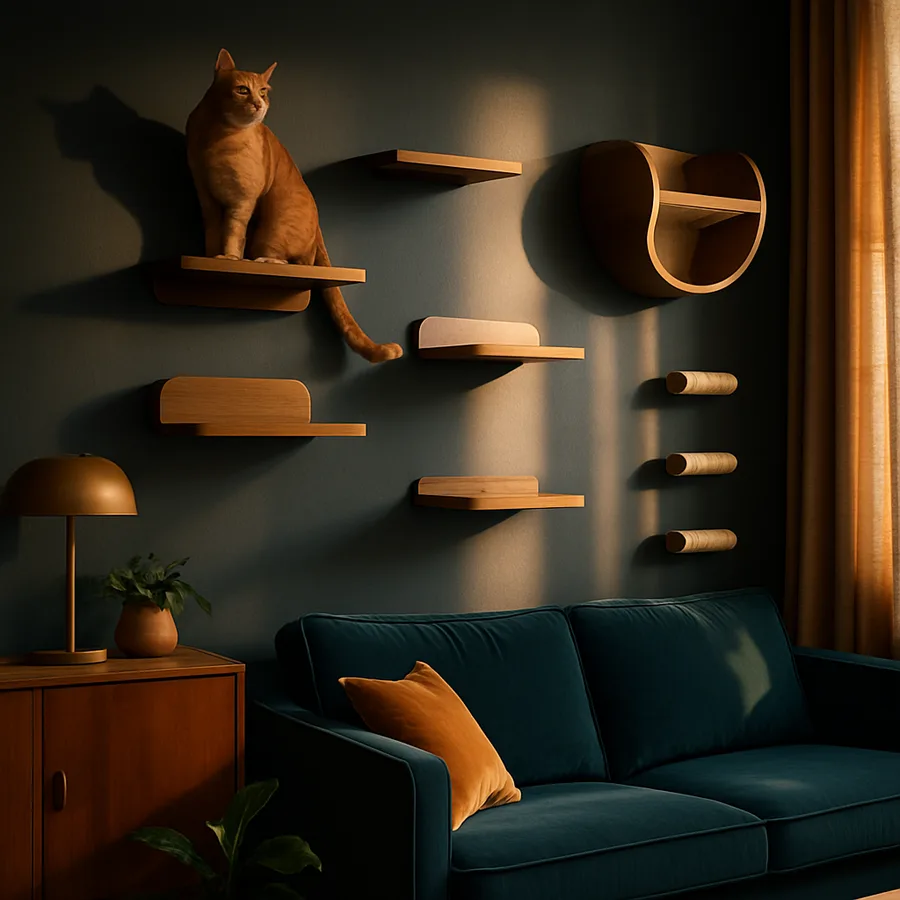
Living with cats does not mean surrendering your carefully curated interior aesthetic to bulky carpet-covered towers and garish plastic perches. A growing number of homeowners are discovering that cat-friendly vertical spaces can be integrated into a room so seamlessly that visitors never suspect the floating shelves or accent wall serves a feline purpose. According to the American Pet Products Association, roughly 47 million households in the United States include at least one cat, and many of those pet owners now rank interior appearance alongside animal enrichment when shopping for furniture. The challenge, then, is finding solutions that honor both the cat's instinct to climb and the homeowner's commitment to cohesive design. This guide walks through every consideration, from material selection and layout planning to installation techniques and real-world inspiration, so you can build a vertical playground your cat will adore without compromising the look of your home.
Why Vertical Space Matters for Indoor Cats
Cats are natural climbers whose wild ancestors spent much of their time navigating tree branches and rocky outcrops. Confining a cat to the horizontal plane of a floor removes a critical dimension of its behavioral repertoire, often leading to stress, obesity, and destructive scratching. The American Association of Feline Practitioners recommends providing vertical territory as a core component of an enriched indoor environment because elevation satisfies a cat's need for surveillance, safety, and exercise. When a cat can leap from shelf to shelf, it engages muscles throughout its body, burns calories, and satisfies predatory instincts that would otherwise go unmet.
Vertical enrichment is especially important in multi-cat households where competition for territory can spark aggression. Elevated perches create additional "real estate" that allows each cat to claim its own preferred vantage point without encroaching on another's space. Behaviorists at the International Association of Animal Behavior Consultants have noted that adding vertical options often reduces inter-cat conflict more effectively than adding square footage at ground level. For homeowners, this means fewer behavioral problems and a calmer household, all achieved by making smart use of wall space that was already empty.
Beyond behavioral benefits, climbing infrastructure encourages cats that spend most of their time sleeping to become more active. A study cited by the Association for Pet Obesity Prevention found that an estimated sixty percent of domestic cats in the United States are overweight or obese. Vertical pathways turn a static room into an exercise circuit, prompting even the laziest house cat to leap, balance, and explore. When those pathways also happen to look like art installations or architectural accents, every member of the household benefits.
Have you ever noticed your cat perched on top of the refrigerator or balanced on a narrow bookshelf ledge? That behavior is a clear signal that your cat craves height. Rather than fighting this instinct, the smartest design approach channels it into purpose-built structures that keep the cat safe and your furniture intact. The sections that follow explain exactly how to make that happen without sacrificing a single ounce of style.
Choosing Materials That Complement Your Interior
The first decision in any cat shelf project is material selection, and this choice determines whether the finished installation looks like pet equipment or a thoughtful extension of your existing decor. Solid hardwoods such as walnut, white oak, and maple offer warmth and grain patterns that coordinate beautifully with mid-century modern and Scandinavian interiors. If your home leans toward an industrial aesthetic, powder-coated steel brackets paired with reclaimed wood planks deliver the right visual weight. For minimalist spaces, matte-white MDF shelves with hidden mounting hardware virtually disappear against a painted wall, letting the cat's movement become the focal point.
Fabric choices matter just as much as the shelf material itself. Many commercial cat trees rely on low-grade carpet that clashes with surrounding textiles, but you can sidestep that problem entirely by upholstering landing pads in the same bouclé, linen, or performance velvet used on your sofa. Performance fabrics treated with stain-resistant finishes stand up to claws remarkably well and can be vacuumed or spot-cleaned in seconds. Houzz editors have highlighted performance textiles as one of the fastest-growing categories in residential design, precisely because they merge durability with high-end appearance.
Sisal rope remains a favorite surface for scratching zones, but its color and texture can be selected to match your palette. Natural tan sisal pairs well with earthy, bohemian schemes, while bleached or dyed sisal in charcoal or ivory integrates more quietly into contemporary rooms. When wrapping sisal around a wall-mounted post or shelf edge, use a hot-glue method that keeps the wrap tight and prevents fraying. The result is a scratch surface your cat will prefer over your furniture, presented in a finish that looks intentional rather than added as an afterthought.
Do not overlook the hardware. Exposed L-brackets in brushed brass or matte black can become decorative elements in their own right, while concealed floating-shelf brackets create a cleaner line. The choice depends on your overall design language. In a farmhouse kitchen, visible wrought-iron brackets reinforce the rustic character. In a gallery-style hallway, invisible mounts keep the focus on the shelves themselves. Whichever direction you choose, ensure the hardware is rated for the dynamic load of a jumping cat, which the National Association of Home Builders advises should be calculated at roughly three times the cat's static weight to account for impact forces.
Layout Strategies for Every Room
Designing a cat climbing wall is fundamentally an exercise in spatial planning, and the best layouts treat the wall the way an architect treats a floor plan. Start by mapping the room's existing features: windows, doors, light switches, artwork, and HVAC vents. These fixed elements create constraints, but they also create opportunities. A cat highway that routes past a sunny window gives the cat a basking spot it will use daily, which means the shelf sees constant, photogenic use rather than gathering dust.
The staggered-step layout is the most popular configuration for good reason. Shelves are mounted at varying heights with horizontal gaps of twelve to eighteen inches, creating a staircase effect that cats navigate with ease. This arrangement works particularly well in living rooms where the shelves can ascend from sofa height to a high perch near the ceiling. From a design perspective, staggered shelves echo the asymmetric gallery-wall trend that has dominated interior magazines for several seasons, making the installation feel intentional and curated rather than utilitarian.
For hallways and narrow spaces, a linear highway running along one wall at a consistent height is more practical. A single row of evenly spaced shelves with a bridge or two connecting them transforms dead corridor space into a feline expressway. In children's rooms or playrooms, consider a loop configuration that lets the cat circuit the room continuously, entering and exiting the loop via a floor-to-ceiling scratching post disguised as a decorative column. Every layout should include at least one dead-end perch wide enough for the cat to curl up and sleep, because observation and rest are as important to a cat's routine as movement.
What room in your home has the most underused wall space? That is almost certainly the best candidate for your first installation. Measure the wall, sketch the layout on graph paper or in a free tool like SketchUp, and mark stud locations before committing to a design. Planning on paper prevents costly mistakes and lets you visualize how the shelves interact with existing furniture, art, and lighting. Once you are satisfied with the proportions, transfer the measurements to the wall with painter's tape to confirm the spacing in three dimensions before drilling a single hole.
Installation Techniques That Protect Your Walls
Proper installation is non-negotiable when mounting structures that a ten-pound animal will leap onto from several feet away. Every shelf must be anchored into wall studs or, when stud alignment is not possible, secured with heavy-duty toggle bolts rated for at least fifty pounds per fastener. The American Society of Interior Designers emphasizes that wall-mounted furniture of any kind should meet or exceed the load expectations described in the manufacturer's specifications, and cat shelves are no exception. A shelf that pulls away from the wall under a cat's weight is both a safety hazard and a renovation headache.
Use a reliable stud finder and confirm each stud location with a small pilot hole before committing to a full-size fastener. In older homes with plaster-and-lath walls, toggle bolts may be the only viable option outside of stud locations, and you should test each anchor point by applying manual pressure equivalent to a cat's jumping force. For drywall installations, French cleats offer a hidden mounting system that distributes weight across a longer span and allows easy removal for cleaning or reconfiguration. French cleats are especially attractive for renters because the wall damage is limited to a single horizontal strip that can be patched and painted upon move-out.
Cable management is an often-overlooked detail. If your climbing wall passes near a television, sconce, or outlet, route any exposed cords behind the shelves and secure them with adhesive clips so the cat cannot chew or tangle them. Electricians recommend using cord covers that match the wall color for any run longer than twelve inches. These small finishing touches are what separate a polished, magazine-worthy installation from one that looks like a weekend hack job. Take the extra thirty minutes to conceal every wire, fill every visible screw hole with wood filler, and touch up paint around each bracket.
If you rent your home and cannot drill into walls, freestanding tension-pole systems offer a drill-free alternative. These floor-to-ceiling poles use spring-loaded mechanisms to wedge securely between the floor and ceiling, and modular platforms clamp onto the poles at adjustable heights. While they lack the sleekness of true wall-mounted shelves, tension poles in powder-coated white or black steel can coordinate with contemporary interiors and provide the vertical territory your cat needs without triggering a security deposit dispute.
Blending Cat Features With Existing Decor Themes
The hallmark of a well-designed cat-friendly interior is invisibility. When the cat infrastructure blends so thoroughly with the surrounding decor that a guest cannot immediately identify it as pet furniture, you have achieved the gold standard. One proven technique is to integrate cat shelves into a larger shelving composition that includes books, plants, and decorative objects. By alternating cat perches with display shelves in the same material and finish, the eye reads the entire wall as a unified design element rather than a collection of pet accessories.
Color coordination is equally powerful. If your walls are painted in a warm greige, choosing shelves in a complementary tone or staining raw wood to match the baseboard trim creates visual continuity. Architectural Digest has featured multiple homes where cat walkways finished in the same wood species as the flooring read as architectural details rather than add-ons. This principle applies to any style: in a coastal interior, whitewashed pine shelves with rope-wrapped supports reinforce the nautical theme while giving the cat a climbing surface it loves.
Consider incorporating cat access points into built-in cabinetry. A small opening cut into the side of a media console allows the cat to enter a hidden sleeping nook inside the unit. Similarly, a bookcase can include one or two open cubbies lined with a washable cushion, offering the cat a semi-enclosed retreat that looks no different from a decorative cubby holding a folded throw blanket. These hidden integrations work because they leverage furniture the room already needs, adding feline function without adding visual clutter.
Lighting can elevate the entire installation from functional to theatrical. LED strip lights mounted beneath each shelf create a soft glow that highlights the cat's silhouette as it moves along the wall and adds ambient warmth to the room. Battery-operated puck lights inside enclosed cubbies give the cat a cozy, lit den while doubling as accent lighting for the display around it. When planned thoughtfully, the lighting for your cat wall becomes part of the room's overall illumination scheme, contributing atmosphere rather than drawing attention to a pet feature.
Maintenance, Safety, and Long-Term Enjoyment
A cat climbing wall is a long-term investment that requires periodic maintenance to remain safe and attractive. Inspect mounting hardware every three months by gently pulling on each shelf to confirm it remains firmly anchored. Over time, the repeated impact of a cat landing on a shelf can loosen fasteners, especially in drywall. Tighten any hardware that shows movement and replace toggle bolts that have enlarged their holes. This simple quarterly check takes less than ten minutes and prevents the kind of catastrophic shelf failure that endangers both the cat and anything stored below.
Fabric surfaces should be vacuumed weekly to remove fur and dander, and removable cushion covers should be laundered monthly. If you chose performance fabric, most spills and stains can be addressed with a damp cloth and mild soap. Sisal scratching surfaces will eventually show wear, but replacement is straightforward: unwrap the old rope, clean the underlying surface, and rewrap with fresh sisal using the same adhesive method. Keeping a spare roll of sisal in the correct color ensures you can refresh a scratching zone the moment it begins to look tired, maintaining the installation's polished appearance year-round.
Safety extends beyond hardware integrity. Ensure that no shelf is positioned where a missed jump would send the cat tumbling onto a hard or sharp surface. Placing a soft rug or upholstered bench below the highest perch provides a safe landing zone. Avoid placing shelves directly above stovetops, open flames, or aquariums. The American Society of Interior Designers recommends thinking of pet-accessible zones the same way you would think of child-proofing: anticipate the worst-case scenario and design accordingly.
Ready to transform an empty wall into a vertical adventure your cat will use every single day? Start with a single three-shelf configuration in a room you use frequently, observe how your cat interacts with it, and expand from there. The beauty of a modular approach is that you can add shelves, bridges, and perches incrementally, refining the layout based on your cat's preferences and your evolving design vision. With the right materials, thoughtful planning, and regular upkeep, your indoor cat climbing wall will be the feature that makes guests say, "I want that in my house," long before they realize it was built for the cat.
More Articles You May Like



Comments
Post a Comment