Built-In Coffee Bar Plumbing for Espresso Machines With Water Lines
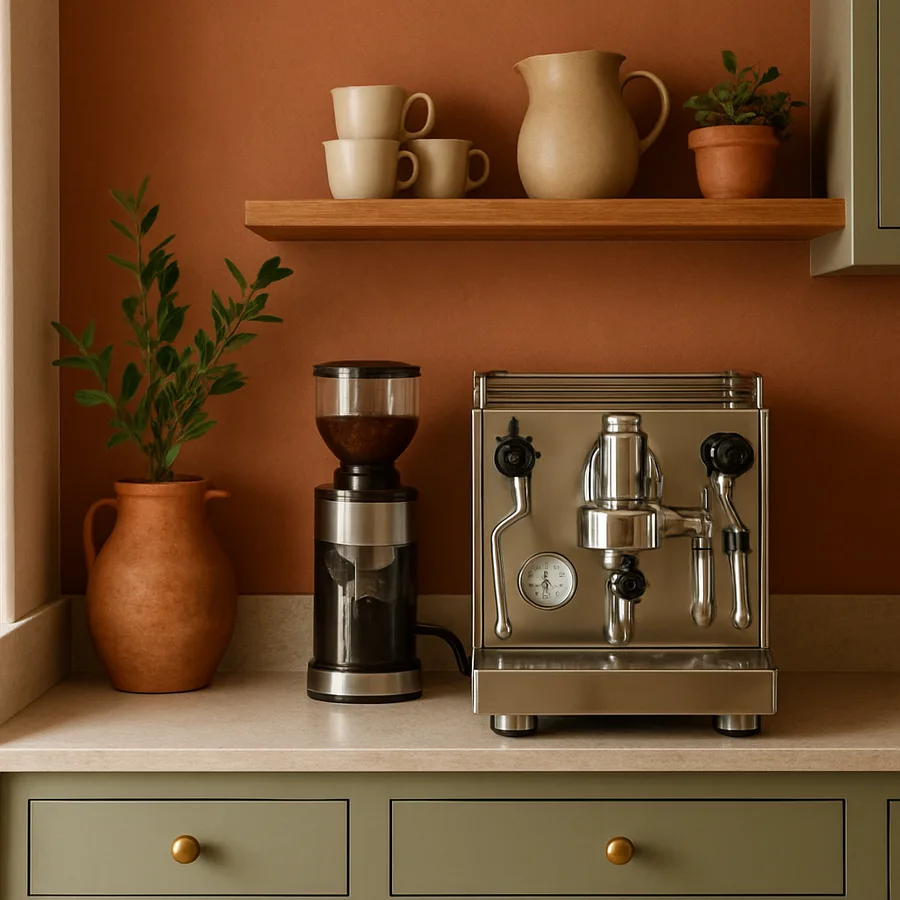
A plumbed-in espresso machine is the holy grail of home coffee setups. No more refilling reservoirs, no more lugging gallon jugs from the sink, no more half-pulled shots while you fetch water. A direct water line transforms the daily coffee ritual from mechanical chore to seamless flow. The catch is that doing it properly requires plumbing planning that most homeowners never anticipated when they sketched the kitchen layout.
This guide covers the design and installation of a built-in coffee bar with plumbed espresso service. We will look at water supply lines, filtration, drainage, pressure regulation, code compliance, and the specific machines that make plumbing worthwhile. Whether you are renovating a kitchen, finishing a basement bar, or building a butler pantry from scratch, the principles below will save you headaches and rework.
The investment is meaningful but the payoff is enormous. Owners who have transitioned from reservoir-fed machines to plumbed setups uniformly describe the change as transformational, often comparing the difference to the leap from a pour-over kettle to a properly calibrated espresso machine in the first place. The morning ritual shifts from a multi-step process to a single button press, and the coffee itself improves as a result of consistent water pressure and temperature.
Why Plumb an Espresso Machine in the First Place
Reservoir-fed espresso machines work fine for occasional use, but they have real limitations. The reservoir holds 2 to 3 liters typically, which lasts a few days for a single user but disappears in a single morning of entertaining. Plastic reservoirs also impart subtle off-flavors over time and harbor biofilm if not cleaned weekly. Direct plumbing eliminates both problems and unlocks features like automatic boiler refill, plumbed steam wands with water rinse, and integrated brew water tracking.
Prosumer and commercial-style machines from brands like La Marzocco, Slayer, Synesso, and Profitec are designed primarily for plumbed operation. Their boiler refill systems pull from the line as needed and maintain consistent water levels for stable temperature and pressure. Reservoir use on these machines is technically possible but compromises the design intent.
The NSF International certifies food-contact components in plumbing fittings, and you should source any pre-machine valves and connectors from NSF-listed suppliers to avoid contamination. Have you considered how many shots and milk drinks your household actually pulls in a typical week?
The math on plumbing-versus-reservoir typically tips at around 20 drinks per week. Below that threshold, reservoir refills are an acceptable inconvenience. Above it, the daily refill chore becomes irritating enough to justify the upfront plumbing work. Households with multiple coffee drinkers reach the threshold quickly, especially when guests visit on weekends.
Water Supply Lines and Connection Points
Espresso machines connect to cold water supply lines, typically 1/4-inch or 3/8-inch flexible braided stainless tubing. The connection point is usually a tee on a nearby cold water pipe, often the same line that feeds the kitchen sink or a refrigerator ice maker. A dedicated shutoff valve at the connection point lets you service the machine without disrupting other fixtures.
Run the supply line through cabinetry to the back of the espresso machine location, leaving a service loop of about 18 inches so you can pull the machine forward for cleaning. Use compression or push-fit fittings rated for potable water service. Avoid sharp bends, which restrict flow and stress the tubing over time.
For new construction, rough in the supply during framing using 1/2-inch PEX or copper, then transition to 3/8-inch flexible at the appliance connection. Existing kitchens often use a saddle valve as a quick tap into existing copper, but professional installations replace saddle valves with proper tees because saddle valves frequently fail over time. Plumbing inspectors commonly flag saddle valves during home inspections, which can affect resale value.
Tubing material matters for flavor. Avoid clear vinyl tubing, which can leach plasticizer flavors into the water over time. Stainless braided lines and PEX-A are the preferred options for any food-contact application. Length matters too: long tubing runs allow water to stagnate between uses, which can support bacterial growth. Keep supply runs under 15 feet when possible, and flush the line for several seconds after any extended period of disuse.
Water Filtration and Treatment Systems
Espresso is roughly 98 percent water, which means water quality directly determines shot quality. Hard water scales boilers in months, soft water corrodes brass components, and chlorinated municipal water dulls flavor extraction. Proper filtration is not optional for plumbed espresso machines.
The Specialty Coffee Association publishes target water specifications: 50 to 175 parts per million total dissolved solids, 50 to 100 parts per million calcium hardness, 40 milligrams per liter alkalinity, and zero chlorine. Most municipal water exceeds the chlorine limit and one or both hardness limits. A two-stage filter with a sediment cartridge and a carbon block addresses chlorine and particulates, and a softening stage or remineralization cartridge tunes the mineral profile.
Reverse osmosis systems strip almost everything from the water, then add back specific minerals through a remineralization cartridge for ideal espresso chemistry. RO is the gold standard for serious home setups but adds $300 to $600 in equipment and requires drain access. Whichever filter you choose, source through suppliers certified by IAPMO for mechanical and plumbing compliance.
Filter maintenance is the most-skipped task in home espresso ownership. Most cartridges need replacement every six to twelve months depending on water quality and usage volume. Set a recurring calendar reminder at install time and budget $40 to $120 per year for replacement cartridges. Skipping filter maintenance leads to scale buildup that shortens machine life dramatically and produces noticeably worse-tasting shots within weeks.
Drainage Design and Code Compliance
Plumbed espresso machines also benefit from direct drain connections, which carry away the constant trickle of group flushes, drip tray overflow, and steam wand purges. Without a drain, you empty a drip tray two or three times daily, which is annoying and risks spills onto cabinetry. With a drain, the machine operates hands-free for weeks at a time.
Drain lines run from the machine drip tray through cabinetry to a tee on the kitchen sink drain, ideally above the trap to ensure water seal integrity. Use 5/8-inch flexible drain hose rated for hot water, since steam purges and boiler discharges can exceed 200 degrees Fahrenheit. Slope the line continuously downward to prevent standing water and bacterial growth.
Local plumbing codes vary, but most require an air gap between the machine drain and the sink drain to prevent backflow contamination. The IAPMO Uniform Plumbing Code details air gap requirements, typically 1 inch above the highest possible flood level of the receiving fixture. A simple air gap fitting installed under the cabinet satisfies this requirement and is inexpensive insurance against contamination.
Drain line maintenance involves periodic flushing with a coffee-equipment-safe cleaner to prevent biofilm and oil buildup from used coffee. Espresso oils accumulate in drain lines and can produce off-odors if neglected. A monthly flush with a brewery cleaner or a dedicated espresso machine cleaner keeps the drain pathway clean and odor-free.
Pressure Regulation and Pre-Machine Hardware
Espresso machines expect water at 40 to 80 PSI inlet pressure, with most happiest around 50 to 60 PSI. Residential water pressure varies widely, from 35 PSI in older neighborhoods to 100 PSI or more in some municipal systems. A pressure regulator at the machine connection ensures consistent feed pressure regardless of household plumbing variations.
Pair the regulator with a check valve to prevent backflow, an isolation ball valve for service, and a small expansion tank if your home has a closed plumbing system. Closed systems with backflow preventers can develop pressure spikes from thermal expansion that stress espresso machine components. The expansion tank absorbs these spikes and protects the machine.
For premium installations, add a pressure gauge visible through the cabinet door so you can verify proper inlet pressure during routine maintenance. According to Association of Home Appliance Manufacturers data, plumbed appliances with proper pressure regulation experience 40 percent fewer pump failures compared to unregulated installations over a five-year operating window.
Pressure spikes from washing machine fills, dishwasher cycles, or toilet flushes can briefly drop or spike supply pressure to the espresso machine. The pressure regulator and expansion tank combination buffers these transients, but installation timing matters: pull a shot during a washing machine fill cycle and you can see the difference in the pressure profile of the shot. Plan your daily routine to avoid simultaneous high-demand events when possible.
Cabinet Layout, Service Access, and Ventilation
Espresso machines generate heat and moisture during operation, particularly during steam production. Cabinet layout must allow ventilation around the machine and easy access for descaling, water filter changes, and seal replacement. A typical built-in coffee bar allocates 30 to 36 inches of countertop width for the machine, plus 18 to 24 inches for an in-line grinder.
Plan the under-cabinet space as a service zone, not just a hidden plumbing chase. The water filter cartridge needs 12 inches of vertical clearance for replacement. The shutoff valves and pressure regulator need hand access. The drain cleanout should be reachable without tools. Group these components on a small panel or board that mounts to the cabinet floor for clean organization.
Above the machine, leave 18 to 24 inches of clear vertical space so you can lift the bean hopper for refilling and access the steam wand without obstruction. Avoid wall cabinets directly above the steam wand path; the moisture eventually damages cabinet finishes. The National Kitchen and Bath Association design standards recommend 24 inches minimum clearance above any steam-generating appliance.
Storage planning around the coffee bar makes daily use frictionless. Allocate drawer space for tampers, distribution tools, milk pitchers, and cups within arm's reach of the machine. A shelf for beans and a dedicated container for spent puck disposal complete the workflow. The best built-in coffee bars feel like a barista station: every tool is within reach, and nothing requires walking across the kitchen to fetch.
Lighting deserves dedicated attention. Under-cabinet LED strips above the machine illuminate the portafilter and milk pitcher during preparation, which makes a meaningful difference for early-morning drinks before the kitchen overhead lights wake the rest of the household. Choose a warm-white temperature around 2700K to keep the bar area inviting and to complement crema color when evaluating shot quality.
Outlets matter more than most plans account for. A dedicated 20-amp circuit at the coffee bar location handles the espresso machine, the grinder, an optional milk frother, and any auxiliary equipment without nuisance trips. Place at least two outlets in the backsplash within arm's reach of the machine, and consider a dedicated outlet inside the cabinet for low-power accessories like LED lighting and a small dehumidifier if your installation is in a humid basement.
Conclusion
A plumbed-in espresso machine, properly designed and installed, becomes the single most-used appliance in many serious coffee households. The morning routine compresses from a multi-step ritual of refills and rinses to a single button push, the shot quality stabilizes thanks to consistent water pressure and filtration, and the machine itself lasts longer because it operates the way the manufacturer designed.
The keys are: a proper supply tee with shutoff, certified filtration tuned to coffee water specifications, a code-compliant drain with air gap, and pressure regulation appropriate to your household plumbing. Each of these elements is straightforward in isolation, but the combination requires planning before you commit to cabinetry and finishes. Retrofitting a coffee bar after the kitchen is finished costs three to five times what it would during initial construction.
Beyond the daily quality-of-life upgrade, a built-in coffee bar adds genuine real estate value. Buyers in premium markets increasingly look for dedicated coffee stations the same way they once looked for wine refrigerators. A well-executed plumbed espresso setup signals quality and attention to detail throughout the kitchen. Have you priced what your favorite cafe charges per drink lately, and how quickly that math favors home pulls?
Begin planning this week: identify the cabinet location, locate the nearest cold water and drain points, and consult a plumber about access. Order a water test kit to characterize your supply, and shortlist two or three machines that fit your budget and counter footprint. Within a month you can have a fully plumbed setup pulling cafe-quality shots on demand. Your future self, free of the reservoir-refill chore, will thank you every single morning.
More Articles You May Like



Comments
Post a Comment