Headboard Hidden Storage Compartments Behind Upholstered Panels
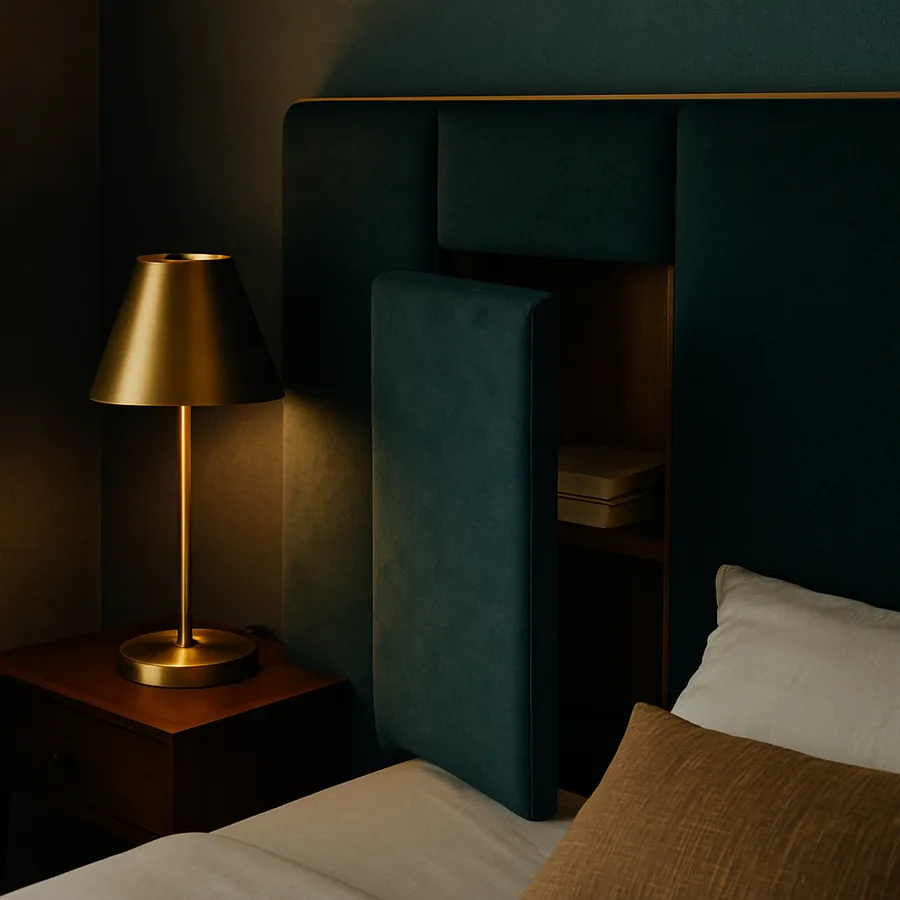
The wall behind a bed is one of the most under-utilized vertical zones in any home, and the rise of hidden storage compartments built into upholstered headboard panels represents one of the cleverest solutions to bedroom space constraints in recent design history. Unlike traditional headboards that function purely as a decorative or comfort element, a panel-based concealed-storage headboard transforms an entire wall into a discreet repository for books, jewelry, electronics, sleep accessories, and emergency supplies, all without disturbing the calm visual surface of the upholstery. Designers working in dense urban markets have championed these systems for years, and the trend has now firmly migrated into mainstream residential design.
What makes the upholstered-panel approach particularly compelling is the combination of acoustic softness, tactile warmth, and visual subtlety it provides. A hard wood storage headboard is functional but often feels institutional, while a tufted velvet or boucle panel system feels like luxury furniture even though it is performing significant utilitarian work behind the scenes. The American Home Furnishings Alliance has reported steady annual growth in custom upholstered bedroom orders, and storage-integrated designs are among the fastest-growing subcategories within that market.
Reclaiming Wall Real Estate That Most Bedrooms Waste
Stand in your bedroom and look at the wall behind your bed. In most homes, that vertical surface is occupied by nothing more than a few inches of headboard followed by empty paint and perhaps a piece of art that does little to justify the square footage it occupies. By reframing that wall as a storage opportunity rather than purely decorative real estate, a homeowner can effectively gain four to six cubic feet of accessible storage without expanding the footprint of the bedroom by a single inch. For studio apartments, master bedrooms in compact urban condos, or guest rooms doing double duty as offices, that gain can be transformative.
The compartments themselves can be configured in countless ways depending on the depth available behind the headboard structure. A typical installation uses a frame that extends six to ten inches from the wall, with individual upholstered panels mounted on hinges, magnetic catches, or push-to-open hardware. Inside each compartment, custom shelves, fabric-lined trays, or simple open cubbies can be tailored to the specific contents the user wants to store. Have you ever wished you had a place to keep a single emergency flashlight, a backup phone charger, and a small first-aid kit within arm's reach but completely out of sight? A headboard compartment makes this trivial to accomplish.
For bedrooms where the bed is the visual centerpiece, the storage system can be designed to either disappear into a single seamless wall of upholstery or to create deliberate decorative segmentation through panel size, button-tufting placement, or contrasting trim. Either approach can read as intentional luxury rather than budget-driven compromise, which is the key marker that separates professional-quality work from a DIY shortcut.
Construction Approaches for the Hidden Compartment System
There are essentially three construction philosophies for upholstered storage headboards, each with its own trade-offs in cost, complexity, and final appearance. The first and simplest is the wall-mounted panel system, in which individual upholstered tiles are hung directly on the wall using French cleats or heavy-duty interlocking brackets. Storage is created in the cavity behind each panel, either using the existing wall depth between studs or by building a shallow box that protrudes from the wall surface.
The second approach is the integrated cabinet system, where the entire headboard structure is built as a piece of casework with a finished plywood carcass, internal compartments, and upholstered panel doors mounted on European-style concealed hinges or piston-activated lifting hardware. This is the most furniture-like approach and produces the highest-quality result, but it also requires either professional fabrication or a skilled DIYer with experience in cabinet building. Architectural Digest has featured several award-winning bedroom designs using this approach, where the storage capacity rivals a small wardrobe while the visible surface remains entirely soft upholstery.
The third approach is the modular component system, where pre-fabricated upholstered storage units sold by furniture brands are simply assembled and stacked to create the appearance of a custom installation. This is the lowest-effort path and has become increasingly viable as several mainstream furniture retailers have introduced modular bedroom storage lines specifically designed to function as headboard backdrops. The trade-off is somewhat reduced design flexibility and the visible seams between modules, though these can often be hidden through careful placement of decorative trim.
Choosing Fabrics That Hide Wear and Conceal Hardware
Fabric selection for an upholstered storage headboard requires balancing aesthetic preference against the practical reality that the panels will be touched and opened repeatedly over years of use. High-traffic upholstery should have a rub count of at least 30,000 double rubs as measured by the Wyzenbeek test, which is the industry standard for residential furniture durability. Performance fabrics such as polyester-blend boucle, treated linen, or solution-dyed acrylic blends are excellent choices because they resist soiling, can be spot-cleaned without water rings, and maintain their texture even with frequent handling.
Color matters more than many homeowners initially realize. Very light fabrics like ivory, blush, or pale gray will eventually show fingerprints and oils from repeated panel opening, so consider either treating them with a fabric protector or choosing a slightly more forgiving mid-tone. Deep jewel tones like emerald, sapphire, and rust are extremely popular for headboard installations because they hide minor wear, photograph well in design publications, and provide a strong color anchor for the rest of the bedroom palette. Better Homes and Gardens has noted in recent home decor coverage that saturated headboard colors are increasingly replacing the neutral upholstery that dominated bedroom design for the past decade.
Texture is another lever that affects both visual appeal and functional performance. Velvet has a luxurious appearance but shows nap direction changes wherever it has been touched, which can either be charming or annoying depending on perspective. Boucle and chunky weaves have become popular partly because they hide handprints and minor compression marks far better than smooth fabrics. Leather and faux leather offer the easiest cleaning of all but can feel cold to the touch and may show punch holes from any internal mounting hardware that protrudes through the back of the panel.
Hardware That Makes the System Disappear
The hardware behind an upholstered storage panel is what determines whether the system feels like luxurious custom millwork or like a DIY project gone wrong. Push-to-open magnetic catches are widely used in modern installations because they eliminate the need for visible handles, knobs, or pulls on the panel face. A single firm push opens the compartment, and the same gesture closes it. The mechanism is similar to what is used in high-end European kitchen cabinetry and is sold by several furniture-hardware suppliers in residential-friendly formats.
For larger or heavier panels, gas-piston lift hardware is the appropriate choice. These are the same mechanisms used in vehicle hatchbacks and storage ottomans, and they provide controlled, smooth opening with no risk of the panel slamming closed on hands or stored items. Look for pistons rated for the actual weight of your panel plus a small safety margin, and always install a secondary stop or strap that prevents the panel from opening beyond its safe range. The American Home Furnishings Alliance publishes safety guidance for residential furniture hardware that applies directly to these installations.
For everyday compartments that hold lightweight items, simple European concealed hinges with self-closing action are the workhorse solution. They are inexpensive, widely available, and allow the panel to swing open ninety degrees or more without exposing any visible hardware on the face. Combine these with soft-close dampers to prevent the small but irritating sound of a panel slapping shut.
Organizing the Interior for Real Daily Use
A storage compartment is only as useful as its internal organization, and headboard storage in particular benefits from careful thought about what actually belongs there. The defining quality of headboard storage is its proximity to the bed, which makes it ideal for items used at the start and end of the day: a journal, a small reading lamp with a built-in clip, prescription medications, a sleep mask, hand cream, an alarm clock you actually want to use, and the small personal items that would otherwise clutter the nightstand surface.
Resist the temptation to fill every compartment to capacity. The pleasure of well-designed storage comes partly from the breathing room around stored items, which makes finding and replacing them effortless. Consider lining each compartment with a soft fabric or felt to protect both the contents and the upholstery from each other, and use small fabric-covered trays or boxes to subdivide larger compartments into purposeful zones.
Have you considered seasonal rotation? Some homeowners use the upper, harder-to-reach compartments for items they only need occasionally, like extra blankets folded thin, a weighted sleep blanket, or holiday-specific decor that they want to keep accessible without storing in the closet. The lower, easier-to-reach compartments are reserved for daily-use items. This kind of intentional zoning extends the practical capacity of the system without compromising the appearance.
Lighting and Electrical Integration
One of the most overlooked opportunities in headboard storage design is the integration of lighting, both inside the compartments and on the visible face of the headboard wall. Battery-powered LED puck lights with motion sensors can be mounted inside each compartment to illuminate the contents whenever a panel is opened, and they require no wiring whatsoever. For a more permanent installation, low-voltage LED strip lighting can be wired through the back of the headboard wall and switched from a small concealed button.
On the visible side, sconces or integrated reading lights mounted to the upholstered panels themselves can replace traditional bedside lamps and free up nightstand surface area for other uses. Make sure any electrical work is performed by a qualified electrician and complies with local building codes, particularly with respect to junction box accessibility and proper wiring methods within finished walls. The National Association of Home Builders publishes resources on residential electrical work that can help homeowners understand when professional involvement is necessary.
USB charging ports can also be discreetly integrated into the side or top edge of the headboard structure, providing the same hidden-charging benefit discussed earlier in this category but at a height where devices like e-readers or phones can be tucked into a compartment while charging through the night. The combination of concealed storage, integrated lighting, and hidden charging creates a headboard wall that functions like a small piece of architecture rather than a single furniture element.
Conclusion
A headboard wall outfitted with hidden storage compartments behind upholstered panels is a project that rewards careful planning with daily benefits that compound over years of use. The bedroom gains substantial usable storage without adding any visible furniture, the visual character of the room is anchored by a luxurious soft surface that elevates the entire space, and the practical infrastructure of modern life, from books to chargers to sleep accessories, finds a permanent home that does not announce itself. The combination of these benefits is what has driven the steady growth of this style in both custom and modular furniture markets.
The decision to invest in this kind of installation comes down to how you actually use your bedroom and how much value you place on a calm, organized environment. For homeowners who treat the bedroom as a sanctuary, the hidden-storage headboard is a transformative element that can make the room feel both more luxurious and more functional. For those who simply need more storage in a space-constrained home, it is a practical solution that does not require major renovation or sacrifice of floor space.
Whether you choose to commission a custom installation from a local upholsterer, purchase a modular system from a mainstream retailer, or build your own using readily available hardware and fabric, the underlying principles are the same. Plan the compartments around the items you actually want to store, choose hardware that operates smoothly and silently, select fabric that will look as good in five years as it does on day one, and integrate lighting and electrical features thoughtfully rather than as an afterthought.
If your current headboard is decorative-only and your bedroom feels short on storage, take the next step by sketching the wall behind your bed at scale and identifying the compartments you would actually use. Measure your bed's dimensions, photograph the wall, and either schedule a consultation with a local upholsterer or begin researching modular systems online. The transformation from blank wall to working storage architecture is more accessible than most homeowners realize, and the result will reshape how you experience your bedroom every single day.
More Articles You May Like


Comments
Post a Comment