Hat and Cap Storage Wall Mounted Display Solutions
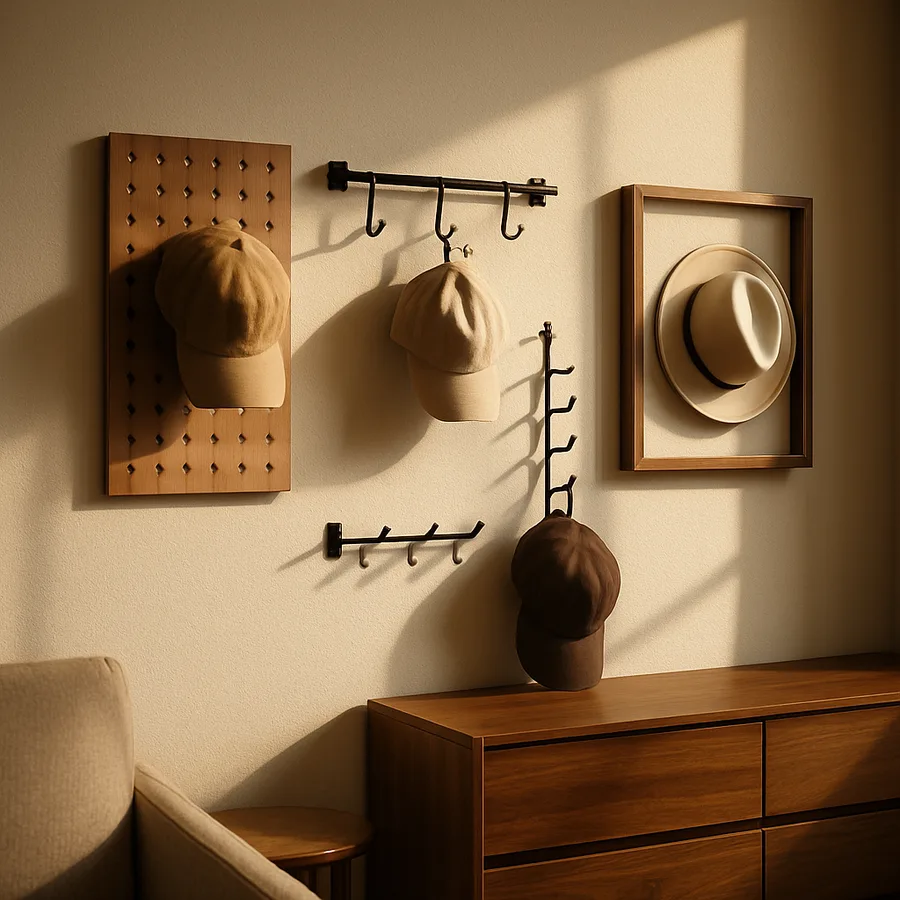
Hat and cap collections have grown substantially over the past decade, driven by the resurgence of athletic-leisure styling, the cap as everyday accessory, and the renewed appreciation for fine dress hats among younger style-conscious dressers. Industry data referenced by the American Home Furnishings Alliance (AHFA) suggests that the average American household with at least one hat enthusiast holds far more pieces than any closet shelf was originally designed to accommodate, and the storage solutions on offer have evolved rapidly to meet the demand. Wall-mounted display has emerged as the dominant approach because it removes hats from cramped shelves, prevents brim damage, and turns the collection itself into a design feature.
The category, however, is more nuanced than catalog photography suggests. Pegboards, rail systems, modular hook arrays, glass-fronted display frames, and wire mesh organizers each handle different collection types with very different visual results. Choosing the wrong system can crush brims, scuff materials, or create a wall that looks chaotic rather than curated. This guide walks through the major solutions with the practical detail needed to specify, install, and live with a wall-mounted hat display that protects your collection and elevates the room around it.
Pegboard Systems for High-Density Cap Collections
Pegboards have moved well beyond their workshop origins and now appear in some of the most polished closet and dressing-room photography on the market. The format works exceptionally well for cap collections because each peg can hold one cap at the brim, allowing the crown to retain its shape without the compression that occurs in stacked shelf storage. Capacity is the strongest argument for pegboards; a four-foot-by-four-foot pegboard wall can hold sixty or more caps with full visibility of every piece.
The visual quality of a pegboard installation depends heavily on the board itself. Inexpensive perforated hardboard reads as utilitarian and rarely fits a residential aesthetic, but modern pegboard alternatives in oak, walnut, or powder-coated steel transform the format into a deliberate design element. Wall-mounted pegboards from premium retailers and custom millworkers now appear in primary closets, dressing rooms, and even open hallways where the collection becomes part of the home's visual story.
Installation matters as much as material. Pegboards must be mounted with appropriate spacers behind the board to give the pegs room to engage their holes, and the wall behind needs blocking or anchors rated for the eventual loaded weight of the full collection. Resources from the National Association of Productivity and Organizing Professionals (NAPO) consistently flag improper mounting as the leading cause of pegboard failure, with the second most common issue being undersized peg diameter that allows caps to slip off when the wall is bumped.
Wall Rails and Linear Hanging Systems
Wall rails take a different approach by running a continuous horizontal bar or strip across the wall and allowing hats to hang from sliders, hooks, or specialized brim clips. The format originated in retail merchandising where hat collections needed to remain reorganizable without rebuilding the entire wall every season. The format has become popular in residential applications because it offers similar flexibility while looking crisper than a busy pegboard.
Rails work especially well for mixed collections that include caps, fedoras, panamas, and seasonal hats of varying weights. The slider hardware can be repositioned in seconds, which means the collection layout can evolve as new pieces arrive or as seasonal rotations bring different hats forward. A rail wall reads as more architectural than a pegboard, with cleaner sight lines and a more deliberate sense of composition.
The trade-off is that rails typically hold fewer hats per linear foot than pegboards because each piece needs more horizontal clearance to prevent brim contact. The Container Store and various boutique closet companies offer rail systems with integrated brim supports that ease the spacing constraint somewhat. Have you considered whether your collection growth rate suggests you should specify more capacity than you currently need? Rails handle gradual expansion more gracefully than fixed-format storage.
Modular Hook Arrays and Custom Wall Compositions
The modular hook approach treats each hat or hat group as a discrete sculptural element on the wall, with hooks placed individually to create a deliberate composition rather than a uniform grid. This format dominates in premium dressing rooms and any installation where the collection itself functions as decorative art. The visual result can be stunning when executed well, with each hat occupying the right amount of negative space and the arrangement reading as intentional rather than improvised.
Modular composition demands more design thought up front than other formats. The wall needs to be planned around the actual collection, with hooks mounted to specific stud or anchor locations and the spacing calibrated to the dimensions of the hats themselves. Adjustable hook systems using picture-rail style hangers allow some flexibility after installation, and the format supports gradual collection growth more gracefully than fixed-spaced grid systems.
The category includes several subtypes worth knowing about. Antler-style natural hooks suit rustic and traditional interiors with hat collections that include felt fedoras and dress hats. Brass and bronze sculptural hooks elevate dressing rooms in transitional and traditional homes. Powder-coated steel and matte black hooks dominate modern interiors where the hats themselves are the visual story and the hardware should disappear into the wall. According to features published in Better Homes & Gardens, modular hook arrays are now one of the most common solutions specified by interior designers working on hat-collector clients.
Glass-Fronted Display Frames for Heritage Hats
Some hats deserve museum-grade protection, and glass-fronted display frames provide it. The format suits heritage pieces, vintage acquisitions, hats with sentimental value, and any item where dust accumulation and casual handling would gradually degrade the piece. The frame protects the hat from environmental damage while still allowing full visibility, turning the piece into a wall-mounted art object.
Quality matters disproportionately in this category. Cheap shadow boxes use thin acrylic that scratches easily and yellows over time, while archival-grade display frames use UV-filtering glass that prevents the gradual fading and fiber degradation that affects natural materials like felt, straw, and leather. UV protection is essential for any hat displayed in a room with significant natural light, and the cost difference between basic and archival framing is far smaller than the cost of replacing a damaged heritage piece.
Display frames work best for collections of fewer than ten high-value pieces, with bulk collection storage handled by other formats. The wall budget per hat is significantly higher than rails or pegboards, but the protection and visual impact justify the cost for the right pieces. Resources from organizations including the ASID and conservators referenced in major design publications consistently recommend professional framing for any hat with significant monetary or historical value.
Wire Mesh, Cubby Walls, and Hybrid Systems
Wire mesh systems offer a middle path between pegboards and rails, using a perforated metal grid that accepts S-hooks, brim clips, and shelf attachments interchangeably. The format suits collections that include both caps and other accessories, and the open mesh visual quality reads as either industrial-modern or studio-loft depending on the surrounding interior. Wire systems also tolerate humidity better than wood-based pegboards in spaces like mudrooms and three-season porches.
Cubby walls take the opposite approach by giving each hat or small group its own enclosed compartment. The format protects hats from dust and provides individual visual frames that work well for highly varied collections, but it consumes more wall depth than open-front systems and requires careful sizing to accommodate the largest hats in the collection. Built-in cubby walls can become signature architectural features in walk-in closets and dressing rooms.
Hybrid systems combine multiple formats on a single wall, perhaps with a pegboard section for daily-wear caps, a rail section for dress hats, and a small display frame area for heritage pieces. This is increasingly the dominant approach in custom closet installations because it matches the storage method to the actual character of each segment of the collection. The AHFA reports that hybrid hat storage now appears in the majority of custom closet specifications that include hat-specific requirements.
Materials, Lighting, and Making the Wall Look Intentional
The wall surface behind any hat display affects the perceived quality of the installation as much as the storage hardware itself. Painted drywall in a rich saturated tone reads as gallery-like and makes the hats themselves the visual focus. Natural wood paneling, fluted millwork, or limewashed plaster transforms the wall into a textural feature that complements rather than competes with the collection. Have you considered how the wall's color and texture will photograph alongside the hats themselves?
Lighting elevates a hat display from functional to editorial. Picture lights mounted above the wall, recessed downlights aimed at the display, or LED strips integrated into the storage hardware all transform daytime-only walls into around-the-clock features. Warm-white color temperatures around 2700K to 3000K flatter felt, straw, and leather without distorting color, while cooler temperatures can make natural materials look tired.
Hardware finishes should coordinate with the broader interior. Matte black hooks in a dark luxury closet, brushed brass in transitional spaces, polished nickel in classic interiors, and natural oak pegs in Scandinavian or Japanese-influenced rooms all signal that the hat wall belongs in the space rather than feeling imposed on it. Finish coordination is one of the most reliable indicators of professional design intent and one of the easiest details to get right when specifying a custom installation.
Conclusion: A Wall That Honors the Collection
Hat and cap storage is one of the highest-impact small projects available to anyone with even a modest collection. The right wall-mounted system protects the pieces, accelerates daily selection, and turns what would otherwise be a closet shelf chaos into a deliberate design feature that elevates the room around it. The transformation typically takes a single weekend, costs less than a new piece of furniture, and produces results that compound in pleasure every single day the collection is used.
The format that best fits your situation depends on the size and character of your collection. High-volume cap collections reward pegboard or rail systems that maximize density without crushing crowns. Mixed collections of caps and dress hats benefit from hybrid systems that match storage method to hat type. Heritage pieces and valuable acquisitions deserve museum-grade display frames that protect them from light, dust, and casual contact. The design choice should follow the collection, not the other way around.
Resources from professional organizations including NAPO, the AHFA, and the ASID all reinforce the value of dedicated hat storage in their published guidance. The investment in quality hardware, thoughtful wall surface treatment, and integrated lighting delivers a feature wall that quietly improves daily routines for years. Take inventory of your current hat collection, photograph the chaos that probably exists today, and use it as the design brief for the wall you actually want.
If you are working with a designer, share images of your hats laid out flat alongside any reference photography from showcases or magazines that capture the visual mood you want. The designer can use this brief to specify hardware, wall treatment, and lighting that produce the intended atmosphere, which is the difference between a hat display that feels custom and one that feels improvised. Your collection deserves the wall, and the wall is far easier to build than most homeowners assume.
One additional dimension that deserves consideration is climate control for sensitive hat materials. Felt, straw, leather, and certain woven materials respond poorly to high humidity, direct sunlight, and temperature extremes, all of which can be present in closets and dressing rooms positioned along exterior walls or near windows. A thoughtful installation considers airflow, light exposure, and proximity to HVAC vents when locating the hat wall, and high-value collections may justify a dedicated dehumidifier or smart climate sensor in the surrounding space. These environmental factors are far more important to long-term collection care than most homeowners realize, and a small investment in monitoring and control pays back substantially in preserved condition over the years.
More Articles You May Like


Comments
Post a Comment