French Doors vs Sliding Glass Doors for Patio Access Compared
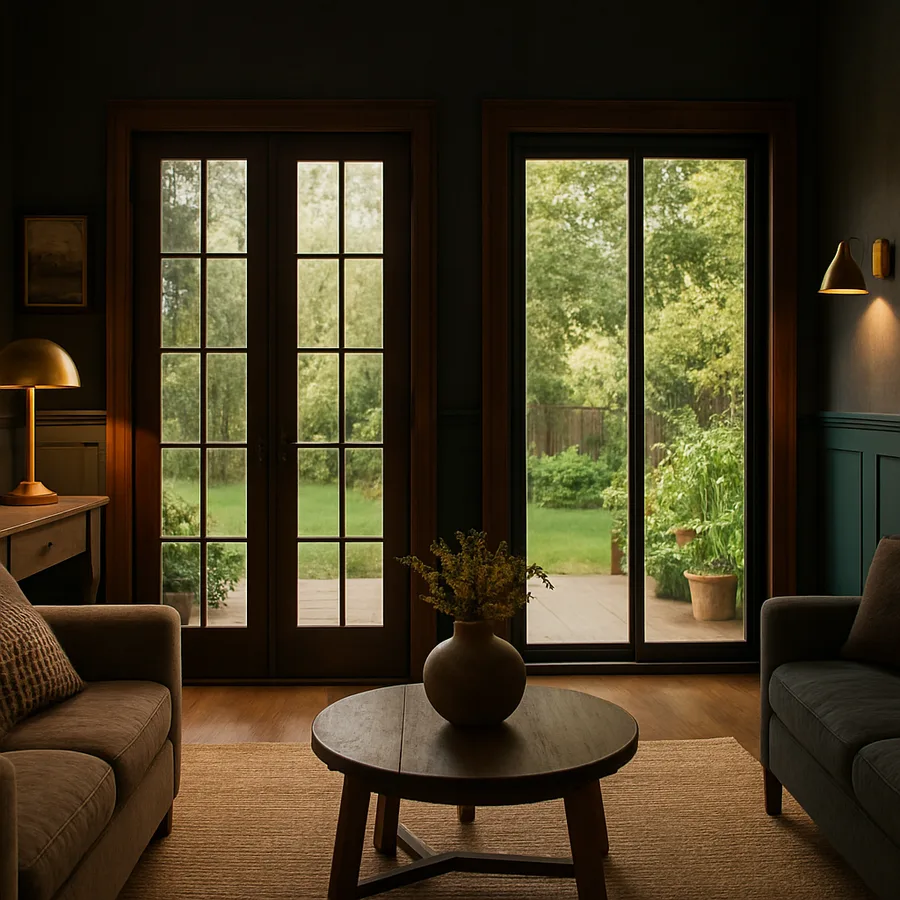
The decision between French doors and sliding glass doors for patio access is one of the most consequential choices in any rear-elevation remodel, and yet it often gets reduced to a quick aesthetic preference. That brevity hides genuine differences in airflow, daylighting, security, energy performance, and the way a household actually moves between the kitchen and the backyard. Both door types serve the same physical function of connecting interior conditioned space to an outdoor patio, but the way they accomplish that connection produces measurably different daily experiences. The right answer depends on your home's geometry, your climate, your security profile, and how often a tray of food crosses the threshold during a busy summer.
Industry data shows the trend lines do not favor a single winner. Window and door product manufacturers reporting through the American Architectural Manufacturers Association note that both French and sliding patio doors have grown share over the last decade, with French doors gaining in higher-end residential renovations and large-aperture sliding doors gaining in modern new construction. Builder surveys from the National Association of Home Builders consistently rank patio door selection among the top ten decisions homeowners discuss in detail with their builders, which suggests the choice carries weight that justifies a careful comparison.
How Each Door Type Actually Operates
French doors swing open like any traditional door, typically with two leaves meeting at a center astragal. When both leaves are open, the entire opening clears to a width almost equal to the rough opening minus the frame jambs, allowing for unobstructed pass-through with serving trays, large furniture, or wheeled equipment. Sliding glass doors operate by gliding one or more panels along a horizontal track, with at least one panel always remaining stationary. The clear opening is therefore always smaller than the total door width, typically half the total in a two-panel configuration or two-thirds in a three-panel configuration.
This basic geometry drives most downstream decisions. French doors maximize peak openness for entertaining moments. Sliding doors maximize available daylight even when closed because they typically include larger uninterrupted glass panels. How often do you actually need the maximum opening width versus daily glass-area benefit? Households that entertain frequently on the patio tilt toward French doors. Households that prize the daylit interior more than the open-air entertaining moment tilt toward sliding doors. There are exceptions to both patterns, but starting with this question prevents most subsequent regret.
Operation in inclement weather differs too. French doors can be difficult to open against strong wind because the swing leaf catches the gust like a sail. Sliding doors are unaffected by wind during operation but can become difficult to slide if the track collects sand, leaves, or pet hair. Each type asks for different maintenance habits, and a household that struggles with one set of habits should weigh the other type more heavily.
Energy Performance and Climate Suitability
Energy performance comparisons between French doors and sliding glass doors have narrowed dramatically as both product categories have adopted modern glazing packages. Both are now available with double or triple pane insulated glass, low-emissivity coatings, argon or krypton fills, and thermally broken frames. The ENERGY STAR certification program lists qualified products in both categories with comparable U-factor and Solar Heat Gain Coefficient ratings, so blanket statements about one type being more efficient than the other are usually outdated.
The differences that remain are at the perimeter rather than the glass. French doors include a center astragal between the two leaves where weatherstripping must seal a moving joint, and that joint is statistically more likely to develop air leakage over time than the perimeter seals on a sliding door. Sliding doors, in turn, rely on bottom-track weatherstripping that can wear from foot traffic and grit, especially in homes that face a sandy yard or a region with heavy pollen. Climate, regional debris load, and household maintenance habits typically matter more than the door type label when projecting fifteen-year energy performance.
For coastal homes, hurricane-rated impact glass options exist in both categories. The American Architectural Manufacturers Association publishes test standards that both French and sliding doors can meet, but the impact-rated French doors often carry a higher cost premium because reinforcing two swinging leaves requires more hardware than reinforcing a single sliding panel against a fixed frame. In hurricane-prone coastal markets, sliding glass doors often win on impact-cost-per-opening even when French doors win on aesthetics.
Security Considerations Without Alarmism
Both door types can be secured well or poorly. Modern French doors include multipoint locking systems that engage three or more locking points along the leaf, distributing prying force across the frame. Modern sliding doors include foot-locks, head-bolts, and anti-lift devices that prevent a panel from being lifted off its track. Either system, properly specified and properly installed, meets the standards published by the Builders Hardware Manufacturers Association for residential entry doors.
The differences that practitioners do see relate to the failure modes when the systems are not properly maintained. French doors with worn weatherstripping or a deflected astragal can develop a gap that lets a pry bar bite into the locking points. Sliding doors with damaged anti-lift devices can be jiggled out of the track if the head clearance is incorrect. Households that have not inspected their patio doors in five years should do so before any vacation departure, regardless of which type is installed.
Glazing strategy plays into security too. Tempered safety glass is required by code for both types in most jurisdictions, but the glazing thickness and lamination options differ. Laminated glass with an interlayer remains intact even when broken, which slows entry attempts substantially. Have you ever checked whether your patio door glazing is laminated or merely tempered? If you cannot answer that question quickly, your patio door deserves a closer look this week.
Cost Ranges and Total Installed Pricing
Cost is where the comparison gets genuinely complicated because both categories span an enormous range. Entry-level vinyl sliding patio doors can be installed for 1,500 to 3,500 dollars including labor, while premium aluminum-clad multi-panel sliding doors can exceed 25,000 dollars for wide openings. Entry-level fiberglass French doors install for roughly 2,500 to 5,000 dollars, while custom solid wood French doors with multipoint locks can run 12,000 to 18,000 dollars or more. The medians often surprise first-time buyers because both categories now include serious mid-tier products that were luxury features a decade ago.
Beyond the door itself, framing modifications change the total. Replacing a smaller existing patio door with a similar-size new one is straightforward, but expanding the rough opening to accommodate a wider sliding system or a French door pair requires header reframing and often a permit. Members of the National Association of Home Builders recommend including a 15 to 20 percent contingency in any patio door budget to absorb framing surprises that surface only after the existing door is removed and the wall is opened.
Long-term cost factors include glazing replacement, hardware replacement, and weatherstripping replacement. French doors generally need hinge maintenance and astragal seal replacement on a longer cycle, perhaps every 10 to 15 years. Sliding doors need track cleaning and roller replacement on a shorter cycle, often every 7 to 10 years for high-traffic openings. Neither pattern is dramatically cheaper than the other across a full home ownership period, but homeowners who hate periodic maintenance lean toward whichever type matches their preferred maintenance rhythm.
Indoor Flow, Furniture, and Floor Plan Implications
Indoor furniture placement is one of the underrated factors in the patio door decision. French doors require swing clearance on the interior, typically 36 to 40 inches per leaf, which often eliminates a wall of useful floor space. Sliding doors need no swing clearance because the panels move within their own plane. For kitchens with islands, dining rooms with tables, or living rooms with sectional sofas already positioned near the patio wall, the absence of swing clearance often tips the decision toward sliding doors.
Outdoor furniture placement matters too. French doors swing outward on patios in some configurations, which can interfere with outdoor seating or grill placement. The American Institute of Architects design guidance suggests verifying both indoor and outdoor swing clearances during schematic design, before any door is ordered. Outswing French doors solve the indoor furniture problem but create the outdoor furniture problem, and vice versa for inswing French doors. Sliding doors avoid the swing question entirely.
For households that frequently move between indoor and outdoor space during entertaining, the threshold detail matters too. Modern sliding doors offer flush-track options that eliminate the trip hazard of older raised tracks. French doors typically have a low threshold that is easier for senior family members and small children to clear without thinking. Accessibility-focused households often prefer French doors for this reason, although flush-track sliding doors close most of the gap.
Making the Decision for Your Specific Home
The right comparison framework starts with how you actually live, not with the cover photo of any catalog. Walk to your existing patio door and answer four questions before scheduling any showroom visits. First, how often do you carry oversized items across the threshold during peak entertaining season? Second, how much wall space on either side of the opening is available for swing clearance or panel stacking? Third, what is your climate's worst day for wind, sand, or driving rain, and which door type would you rather operate that day? Fourth, what is your household's tolerance for periodic track cleaning versus astragal seal replacement?
The American Society of Interior Designers typically recommends specifying patio doors with the same level of attention as windows because the door becomes the largest single visual element on most rear elevations. A door that looks magnificent in a showroom can read awkward on your specific elevation if the proportions, divided lights, or panel counts conflict with the rest of the architecture. Bring elevation photographs to any showroom visit so the salesperson can match products to your actual home rather than to a generic facade.
For households still uncertain after answering the four questions, ask the showroom for a side-by-side operational demo. Open and close both door types, lift a tray-sized object across each threshold, and test how each handles a simulated gust by pushing on the open leaf or panel. Five minutes of physical testing usually clarifies the decision more than two hours of catalog browsing. Reputable showrooms welcome this kind of testing because their best customers tend to make confident decisions and refer additional work to the same store.
Conclusion
French doors and sliding glass doors are not interchangeable products competing for the same job. They solve overlapping but distinct problems, and the right choice depends on your indoor flow, your climate, your security profile, your maintenance rhythm, and the way your household actually uses the patio. French doors deliver maximum opening width, traditional aesthetics, and a low threshold that supports easy pass-through. Sliding doors deliver maximum daylit glass area, no swing clearance demands, and operation that ignores wind. Neither is universally better, and the better question is which set of tradeoffs matches your specific home.
The patterns that emerge from honest comparison are clear. Households that entertain heavily on the patio with oversized objects often pick French doors. Households with limited interior swing clearance or modern aesthetic preferences often pick sliding doors. Coastal homes with hurricane requirements often pick sliding doors on cost grounds. Senior-focused households often pick French doors on threshold accessibility grounds. Every household has a tilt, and the showroom visit should confirm rather than create that tilt.
If a patio door upgrade is on your near-term list, schedule consultations with two qualified contractors this month and bring elevation photographs, interior floor plans, and a written list of how you actually use the threshold during a typical week. Ask each contractor to provide an itemized quote for both French and sliding options at the same opening, and compare not only the door cost but the framing, hardware, and trim implications. With that information in hand, the decision becomes a confident pick rather than a hesitant guess, and your patio access serves your household for the next two decades rather than the next two years.
More Articles You May Like



Comments
Post a Comment