Beer Tap Tower Selection for Built-In Kegerators Three vs Four Tap
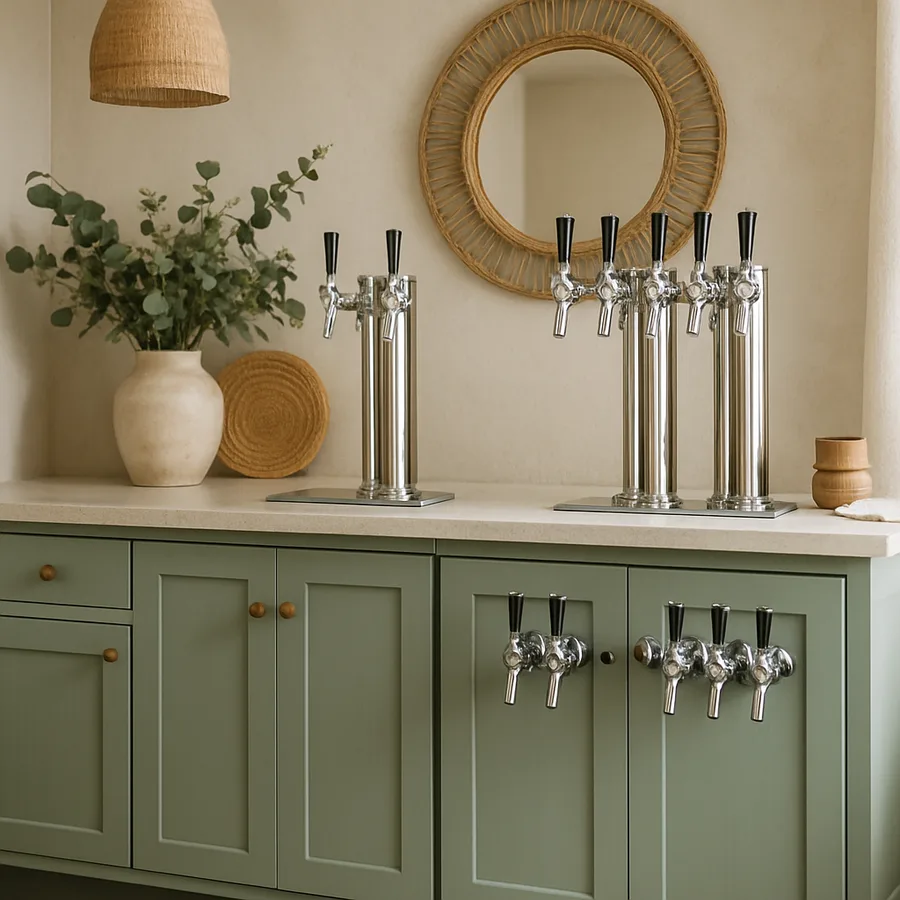
The tap tower is the visible centerpiece of any built-in kegerator, and the choice between a three-tap and a four-tap configuration shapes everything from cabinet sizing to long-term flexibility. Built-in units differ from freestanding mini fridge conversions because they slot under counters, vent forward, and integrate with cabinetry, which means the tower decision intersects with millwork, plumbing, and even electrical layout. Get it right at the planning stage and you avoid expensive retrofits later, including cabinet rebuilds and countertop modifications that can run into thousands of dollars.
This guide unpacks the trade-offs between three and four tap towers in built-in service. We will look at internal volume, cooling logistics, line balance, finishes, and the realistic return on investment for each option. By the end, you should have a clear sense of which fits your space, your beer style preferences, and your entertaining patterns. The decision feels small in the showroom but has compounding implications for the next decade of ownership.
Both configurations have legitimate use cases, and there is no universal right answer. The right answer depends on your cabinetry footprint, your typical guest count, your willingness to manage multiple kegs, and your taste for variety. We will work through each of those variables systematically so you can make a confident, well-informed decision.
Cabinet Width and Internal Capacity Trade-offs
Built-in kegerators come in two dominant footprints: 15-inch and 24-inch wide cabinets. A 15-inch unit holds one sixtel comfortably, sometimes two if the CO2 is rear-mounted. A 24-inch unit can hold two sixtels or one half-barrel, which determines how many independent beer styles you can pour. A three-tap tower paired with a 15-inch cabinet usually means routing one keg to all three taps, which only works if you accept identical pours, or running pin-lock home-brew kegs which are smaller in diameter and let you fit more kegs side by side.
A four-tap tower demands the 24-inch cabinet at minimum, and ideally a custom 30-inch build if you want each tap to have its own dedicated keg. The National Kitchen and Bath Association publishes design standards that recommend a minimum of 36 inches of clearance in front of an appliance for comfortable use, so plan that aisle space when choosing a wider cabinet. Aisle width matters more than people expect during parties when guests congregate around the bar.
Internal capacity also affects gas distribution. Each independent keg ideally gets its own regulator output for style-specific carbonation. With four kegs, you need a four-output secondary regulator manifold, which adds 12 inches of length to the gas side of the build. Plan the back wall for that hardware. Some built-in units include factory manifolds; others leave the gas plumbing to the installer, which is worth confirming before purchase.
Vertical clearance matters as well. Built-in units typically offer 24 to 26 inches of usable interior height, which accommodates sixtels and Corny kegs but not half-barrels. If your build vision includes pouring full-size half-barrels, you need a specialty tall-cabinet model that adds an extra 4 to 6 inches of overall height and may not fit under a standard 36-inch counter. Check this dimension early because it cascades into countertop height decisions for the entire bar area.
Cooling Performance Across Tower Configurations
The biggest enemy of a multi-tap system is warm beer at the faucet. Each additional shank and faucet adds thermal mass that needs to be kept cold. A three-tap tower has roughly 30 percent less metal at the top than a four-tap tower, which translates to faster cooldown after a pour and less condensation. However, modern four-tap towers ship with built-in glycol-ready cores or pre-installed fan ducts that compensate effectively when properly powered and positioned.
For built-in units that pour daily, a glycol chiller adds significant cost but solves the thermal problem permanently. A simpler solution is a 12-volt computer fan in the riser that pulls cold air from the cabinet up through the tower body. Insulating the shanks with closed-cell foam sleeves rated for low temperatures completes the package. The Brewers Association Draught Beer Quality Manual recommends maintaining beer between 36 and 38 degrees Fahrenheit from keg to glass for optimal flavor expression, and any deviation degrades pour quality measurably.
On a four-tap configuration, the outermost faucets are the slowest to cool because they are farthest from the riser airflow. If you frequently pour from one tap more than others, position your most-used style in an outer position so the line stays purged. The middle taps stay coldest because they are closest to the airflow path, making them ideal for occasional-pour styles that benefit from continuous cold immersion.
Ambient room temperature affects tower cooling more than most builders realize. A bar room that runs warm during summer entertaining sees tower temperatures rise 4 to 6 degrees above the keg temperature without active cooling. The fix is either room air conditioning or a beefier tower cooling system; ignoring it leads to foamy first pours every time the room warms up. Have you measured the temperature differential between your bar room in winter versus summer?
Line Balance and Pressure Variation Across Multiple Taps
Each tap on a multi-output system needs its own balanced line length. If your IPA pours at 14 PSI and your stout serves at 11 PSI through a separate regulator output, the line lengths must compensate. A common configuration uses 10 feet of 3/16-inch vinyl per tap, but if one beer is significantly more carbonated than the others, you may need 12 feet on that line and 8 feet on a less-carbonated session beer.
Three-tap towers simplify this calculation because there are fewer variables. Four taps introduce more complexity and more opportunities for one line to misbehave. New builders often discover this the hard way when their fourth tap pours pure foam for the first month. Plan ahead by buying 50 feet of beer line and trimming each line to its tested ideal length over the first few weeks. A bench rest of 10 to 14 days lets each beer carbonate fully before final line tuning.
Have you considered how often you actually rotate beer styles? If you tend to keep a house IPA and a house lager on permanent rotation, three taps with one rotating slot may serve you better than four taps that each demand a fresh keg every few weeks. Consider also that each kegerator slot represents a real-world commitment of $100 to $250 in beer inventory at any given time, plus the fridge space to store backup kegs.
Cleaning frequency scales linearly with tap count. A four-tap system requires four times the line cleaning effort of a single-tap unit. A dedicated cleaning pump kit and a recurring calendar reminder solve this, but the time commitment is real. Skipping cleaning leads to beer stone buildup, off-flavors, and eventually clogged faucets that ruin the entire pour experience.
Finishes, Materials, and Aesthetic Integration
Tower aesthetics matter when the kegerator sits in a visible bar area. Polished chrome remains the classic look and pairs with stainless appliances. Brushed stainless hides fingerprints better and matches modern flat-front kitchens. Matte black has surged in popularity since 2024 and looks striking against light counters. Powder-coated brass tarnishes if not maintained, so reserve it for low-humidity environments and accept that the patina becomes part of the look over time.
Tower base diameter on a three-tap unit is typically 3 inches, while four-tap towers run 4 inches. The wider base means more surface for cabinet penetration and a slightly larger drip footprint. Match the tower base to a properly sized hole in the cabinet top with a thermal gasket; an undersized hole restricts airflow, while an oversized one leaks cold air and invites condensation. NSF-certified materials in the food-contact path are the baseline for any system you intend to serve guests from, and most reputable manufacturers carry the certification on their faucet and shank lines.
Faucets themselves come in standard, forward-sealing, and stout configurations. Forward-sealing faucets cost more but resist sticking and bacterial growth, making them the right choice for lighter-use home bars where a faucet might sit unused for weeks. Stout faucets with restrictor plates are a separate category and require a beer-gas blend, so reserve those for dedicated nitro stouts or coffee on tap rather than treating them as universal.
Tap handles round out the visual presentation. Generic black handles work but feel cheap; custom wood, ceramic, or brewery-branded handles transform the tower into a personal statement. Many homeowners maintain a small library of handles to swap with each new keg, which doubles as a record of past pours and a conversation starter for guests.
Cost, ROI, and Realistic Use Patterns
A three-tap built-in kegerator commonly retails for $1,400 to $2,200, while four-tap units range from $1,800 to $3,500 depending on cooling features and finish quality. The marginal cost of the fourth tap is roughly $400 to $1,300 once you factor in the tower upgrade, the additional shank and faucet hardware, and the larger cabinet required to hold a fourth keg. Per the Association of Home Appliance Manufacturers, premium beverage centers have grown nearly 15 percent in unit shipments since 2022 as home entertaining patterns shift toward dedicated bar spaces.
The ROI question depends on how you use the system. Frequent entertainers who pour 10 to 20 pints per gathering recover the additional investment quickly because they avoid the markup of buying bottles or growlers. Casual users who pour two pints a day from one tap will rarely benefit from the fourth output. Look at your last six months of beer purchases to estimate realistic throughput before committing to the larger system. A spreadsheet-driven analysis often reveals that the three-tap option pays back faster despite offering less variety.
Resale value also favors the four-tap configuration in markets where craft beer enthusiasm is high. Real estate listings frequently note built-in beverage centers as a feature, and a four-tap unit photographs more impressively than a three-tap, which subtly elevates the perceived quality of the bar area. In tight housing markets, distinctive bar features can shift buyer attention faster than generic appliance upgrades.
Operating costs are nearly identical between the two configurations. Both use roughly 1.5 to 2.5 kWh per day of electricity and consume CO2 at a rate of one 5-pound cylinder per 6 to 8 sixtels poured. The only meaningful operating-cost difference is line cleaning supplies, which scale with tap count but remain modest at $30 to $60 per year.
Installation, Venting, and Built-In Cabinet Requirements
Built-in kegerators require front venting, which distinguishes them from freestanding units that exhaust heat from the back or sides. Confirm the spec before you order, because installing a freestanding unit in a built-in cabinet voids most warranties and overheats the compressor. Cabinet openings need a minimum of 1/8 inch of clearance on each side and at least 1 inch above the unit for service access.
Electrical service is straightforward: a dedicated 15-amp 120-volt circuit is typical. Some larger units with built-in glycol chillers need a 20-amp circuit, so check the data plate before the electrician roughs in. Plumbing is not required unless you are adding a rinse station, in which case a small drain line tied into the bar sink trap follows the standards published by IAPMO, the International Association of Plumbing and Mechanical Officials.
For new construction, run the gas line and the temperature controller wiring during framing. Retrofits into existing cabinetry are doable but often require removing a base cabinet and rebuilding the toe kick to allow front airflow. Budget two to three days of contractor time for a clean retrofit, plus material costs for the cabinet modifications and any electrical work.
Floor protection matters for any beverage appliance. Even with proper drip trays, occasional spills happen, and a plastic boot under the cabinet protects hardwood or LVP flooring from long-term water damage. The boot is invisible once the unit is installed and adds 30 minutes to a typical install.
Conclusion
Choosing between a three-tap and a four-tap tower for a built-in kegerator comes down to honest assessment of your space, your pouring patterns, and your willingness to manage four independent kegs. The three-tap configuration is forgiving, easier to balance, and a strong choice for bars in tighter footprints or for owners who keep two house beers and one rotating slot. The four-tap configuration unlocks variety and impressive entertainment value but demands a wider cabinet, more gas hardware, and more ongoing line management.
Whichever you choose, invest in proper cooling, balanced line lengths, and quality faucets. These three elements separate professional-feeling pours from frustrating drips. A small upfront investment in a temperature controller and forward-sealing faucets pays back continuously through cleaner pours, less waste, and longer equipment life. Cutting corners on these specific items is the most common regret reported by home draft owners after their first year of operation.
Think also about the long arc of ownership. A built-in kegerator is typically a decade-long fixture, and your beer preferences will evolve over those years. The four-tap option gives you room to experiment with cider, kombucha, or cold-brew coffee on one of the lines, which has become a popular trend in custom home bars. The three-tap option keeps the system focused and easier to maintain. Neither is wrong; both reward thoughtful planning.
Take the next step today: measure your cabinet opening, sketch your tap layout on paper, and call a draft equipment supplier to walk through your specific build. Bring your countertop dimensions and your typical guest count and you will leave with a tailored configuration. Your future self, pouring a perfect pint without lifting a finger, will thank you.
More Articles You May Like



Comments
Post a Comment