Flame-Effect Fireplace Logs vs Crystal vs River Rock Beds
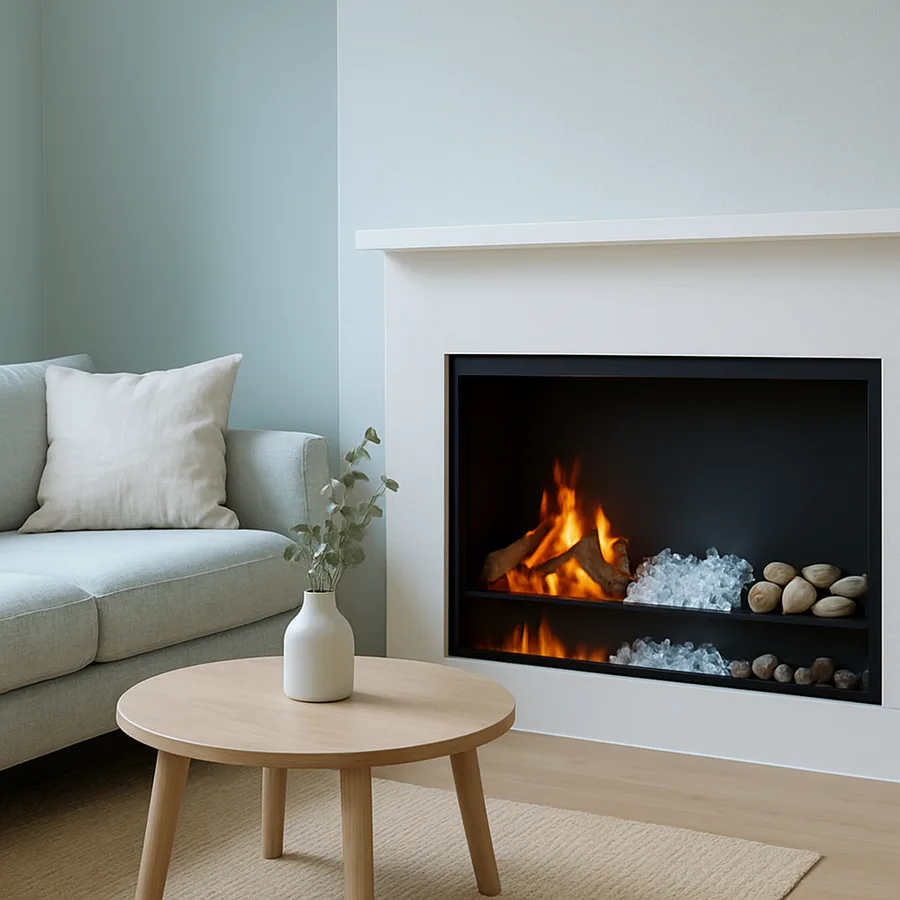
The choice between a traditional ceramic log set, a modern crystal media bed, and a smooth river rock arrangement has quietly become one of the most consequential decisions in contemporary fireplace design. The bed sitting beneath your flames does more than fill the firebox; it dictates the visual register of an entire room, telegraphing whether your space leans rustic-traditional, mid-century modern, or coastal-organic. According to data published by the Hearth, Patio & Barbecue Association (HPBA), gas fireplace shipments accounted for roughly 40 percent of the residential hearth market in recent years, and demand for contemporary media beds has grown faster than any other category in that segment.
Yet most homeowners still default to whatever logs the dealer pre-installed, never realizing that swapping the media is one of the cheapest, fastest visual upgrades available to a modern home. The right bed can pull a tired suburban living room into editorial territory; the wrong one can make a million-dollar architectural fireplace look like a builder-grade afterthought. Realism, heat output, maintenance burden, ember authenticity, and total installed cost all shift dramatically depending on which path you choose, and the trade-offs deserve far more attention than the typical showroom conversation provides.
Understanding the Three Categories Before You Compare
A flame-effect bed is the visual foundation of any vented or vent-free gas fireplace. Ceramic fiber log sets are sculpted, painted, and refractory-coated to resemble real cordwood, complete with bark texture, char patterns, and split-grain detailing. They are the legacy choice and still represent the bulk of installed inventory in older homes. They sit on a burner pan with vermiculite or rockwool ember material packed between, glowing red when the flames lick across them and reinforcing the impression of a real wood fire.
Crystal media beds use tempered fire glass in cubes, chunks, or pebble shapes. The glass is annealed at high temperatures so it neither melts nor discolors under typical burner output, and it reflects flame light back through itself, creating a multi-point shimmer that no log set can replicate. Crystal beds emerged from outdoor fire pit design in the early 2010s and migrated indoors as architects pushed for cleaner sightlines in linear fireplace installations.
River rock and stone beds sit between the two extremes. They use rounded ceramic, lava rock, or specially fired stone shapes that look organic but reject the literal log metaphor. River rock has become the default for spa-inspired primary suites, biophilic open-plan rooms, and any installation where the homeowner wants warmth without committing to either rustic or ultra-modern visual language. Have you walked into a model home recently and noticed which bed type appears in the most aspirational photography? It is almost always rock or crystal, rarely traditional logs.
Realism, Visual Drama, and How Each Bed Reads on Camera
If your fireplace will be photographed for a listing, used for video calls, or featured in any kind of editorial content, the visual difference between bed types becomes the dominant factor. Ceramic logs, when well-made, can produce stunning realism in person but often photograph flat, particularly under the slightly cool color temperature of phone cameras. The shadows between logs read as black voids on screen, and the painted char marks lose nuance.
Crystal beds photograph extraordinarily well. The reflective faceting of fire glass produces dozens of small flame highlights that survive compression, low-light capture, and aggressive smartphone processing. Designers shooting for portfolios on platforms recommended by the American Society of Interior Designers (ASID) have increasingly specified crystal beds in linear fireplaces precisely because the resulting images need almost no retouching to feel premium.
River rock occupies an interesting middle position. The matte surface of high-quality ceramic rocks absorbs flame color rather than reflecting it, so the visual effect is softer, more meditative, and reads as expensive without screaming for attention. Rock beds tend to age better in design photography because they do not key into a single decade-defining aesthetic the way crystal can when it is paired with overtly modern surrounds.
Heat Output, Combustion Quality, and Practical Warmth
A common misconception is that the bed material itself produces heat. It does not; the burner does. However, the bed dramatically affects how that heat is distributed, radiated, and perceived. Ceramic logs absorb burner heat and re-radiate it gradually, producing the slow, steady warmth that most closely mimics a real wood fire. The thermal mass of a full log set continues warming the room for several minutes after shutoff.
Crystal beds have less thermal mass per cubic inch and tend to release heat faster, which can be either a benefit or a drawback. In a tightly insulated condominium, this rapid response feels luxurious. In a drafty older home with high ceilings, it can mean the room cools quickly the moment the fire dies down. The HPBA notes that vent-free gas fireplaces in particular convert roughly 99 percent of fuel energy into heat, but the perceived warmth still depends heavily on how the bed material radiates that energy.
River rock falls between the two on thermal performance. Larger stones store more heat than crystal cubes but less than dense ceramic logs, and the irregular voids between rocks help convect warm air upward more efficiently. Convection efficiency matters more than most homeowners realize, especially in great-room layouts where a fireplace functions as a secondary heat source on shoulder-season evenings.
Maintenance, Cleaning, and Long-Term Durability
This is where the categories diverge most sharply. Ceramic log sets are vulnerable to chipping, soot accumulation, and gradual paint loss, particularly on vent-free systems where combustion byproducts deposit directly on the logs. A high-quality log set should be inspected and gently cleaned annually, with full replacement typically recommended every seven to ten years depending on use. Replacement sets for premium fireplaces routinely run several hundred dollars, and matching the original aesthetic on an older unit can become genuinely difficult once the manufacturer discontinues a series.
Crystal beds are remarkably low-maintenance in sealed direct-vent applications. The glass does not chip in normal use, does not fade, and does not require painting or refinishing. A simple vacuum with a soft brush attachment once or twice a year handles most cleaning needs. In vent-free installations, however, crystal beds can accumulate a thin film over time that requires more careful cleaning to avoid scratching the surface.
River rock occupies a friendly middle ground. Quality ceramic rocks resist chipping better than logs and clean up almost as easily as crystal. They tolerate rearrangement well, which means a homeowner can occasionally redistribute the bed for a fresh look without buying new media. National retailers like The Container Store and specialty hearth dealers now stock supplemental rock packs that allow gradual bed expansion or color blending over time, an option that is much more limited with curated log sets.
Cost Analysis Across the Three Categories
Pricing varies wildly, but useful patterns emerge once you separate the bed cost from the burner and surround. Entry-level ceramic log sets for standard 24-inch and 30-inch fireboxes typically run between 200 and 500 dollars, with hand-painted premium sets from heritage manufacturers reaching 1,200 dollars or more. Replacement cycles add up over a fireplace's lifetime, and many homeowners are surprised to learn that lifetime log spending often exceeds the original cost of a basic gas fireplace insert.
Crystal beds have a higher entry price by volume but a longer effective service life. A quality fire glass fill for a typical residential firebox runs between 250 and 800 dollars depending on color, clarity, and crystal size, with designer color blends from boutique suppliers commanding premium pricing. Because crystal does not need replacement on a regular cycle, the lifetime cost can actually be lower than logs in many installations.
River rock pricing tends to be the most accessible at the entry level, with quality ceramic rock sets starting near 150 dollars and topping out around 600 dollars for designer-curated mixes. Lava rock options sit at the budget end, while specially sourced and fired ceramic rocks command the premium tier. Have you considered how often you actually look at your fireplace bed when the fire is off, and whether the off-state appearance might justify spending more on visual quality?
Choosing the Right Bed for Your Interior Style
Style alignment is where this decision either elevates or undermines an entire room. Traditional, transitional, and farmhouse interiors almost always benefit from ceramic log sets. The literal wood reference reinforces the architectural language, and a well-styled log bed paired with a stone or brick surround communicates immediate warmth and continuity with the home's vocabulary. Skipping the logs in these rooms tends to read as a missed opportunity rather than a bold modern choice.
Modern, minimalist, and contemporary interiors strongly favor crystal beds, particularly in linear fireplaces with limestone, plaster, or steel surrounds. The reflective sparkle of fire glass becomes part of the architectural composition, and the absence of any literal wood reference reinforces the abstract sculptural quality that modern design rewards. Black or smoked crystal in particular pairs beautifully with the dark luxury aesthetic that has dominated premium residential design over the past several seasons.
Coastal, biophilic, spa-inspired, and Japanese-influenced interiors gravitate toward river rock and stone beds. The organic forms reinforce the natural materiality these styles depend on, and the muted color palette of quality rock blends with limewash walls, oak millwork, and travertine surrounds without competing for attention. Resources from Better Homes & Gardens consistently feature rock-bed fireplaces in their wellness-focused renovation features, reflecting how mainstream this aesthetic has become.
Conclusion: Matching Bed to Room, Lifestyle, and Budget
The choice between flame-effect logs, crystal beds, and river rock is ultimately a question about which visual register you want your fireplace to occupy and how you want that register to age over the next decade. Ceramic logs offer the most traditional warmth and the most direct reference to real fire, but they carry the highest replacement burden and the strongest commitment to a specific design vocabulary. Crystal delivers the most photogenic drama and the lowest long-term maintenance, but it locks the room into a contemporary frame that may feel dated faster than its supporters expect.
River rock is the quiet category winner for homeowners who want flexibility, longevity, and a softer aesthetic statement. It photographs well without dominating, it cleans easily, it tolerates style evolution as the rest of the room changes, and it suits the biophilic and wellness-oriented design directions that have shown the most staying power in mainstream residential work. Resources from organizations including the HPBA and ASID increasingly feature rock and crystal applications as the modern default, with logs reserved for explicitly traditional contexts.
Before committing, take a long honest look at your room's existing materials, your tolerance for periodic media replacement, and whether your fireplace functions primarily as a heat source, a sculptural focal point, or both. The dealer who installed your fireplace can almost always swap the bed during a routine service visit, often for less than the cost of a single high-end accent chair. Audit your firebox this season, photograph it on and off, and decide whether the bed currently sitting there is doing the work your room actually needs it to do.
If you are planning a renovation or new build and the fireplace specification is still open, consult a hearth professional certified through the HPBA before finalizing the bed selection. Bring photos of your intended surround material, your largest seating piece, and any artwork that will share visual space with the firebox. The right bed, chosen with intention, will outperform every other accent decision you make in the room and will quietly elevate every gathering you host for years to come.
One additional consideration that often gets overlooked is the role of ember bed material beneath the visible bed, which provides the orange glow that makes a gas fire feel real. Vermiculite, rockwool, and modern silica-based ember materials each produce slightly different glow characteristics, and the visual effect can be tuned by combining them. Premium installations sometimes layer a thin band of designer glow material at the front of the bed for a more saturated visual signature, with budget materials filling the back where they cannot be seen. This kind of detail is invisible in catalog photos but transforms the in-person impression of any gas fireplace.
Climate also affects which bed type performs best. Coastal homes with high humidity put more stress on ceramic logs because the porous painted surface can absorb moisture and develop micro-cracks over years, while crystal and rock beds tolerate humid conditions almost indefinitely. Mountain homes with dry winter air can produce static buildup on crystal beds that occasionally attracts dust, while rock beds stay cleaner with minimal effort. Matching the bed to the local climate, not just the room style, is one of the small refinements that separates a satisfying long-term installation from one that gradually disappoints.
More Articles You May Like


Comments
Post a Comment