Hidden Deck Fasteners vs Top Screw Visibility Differences
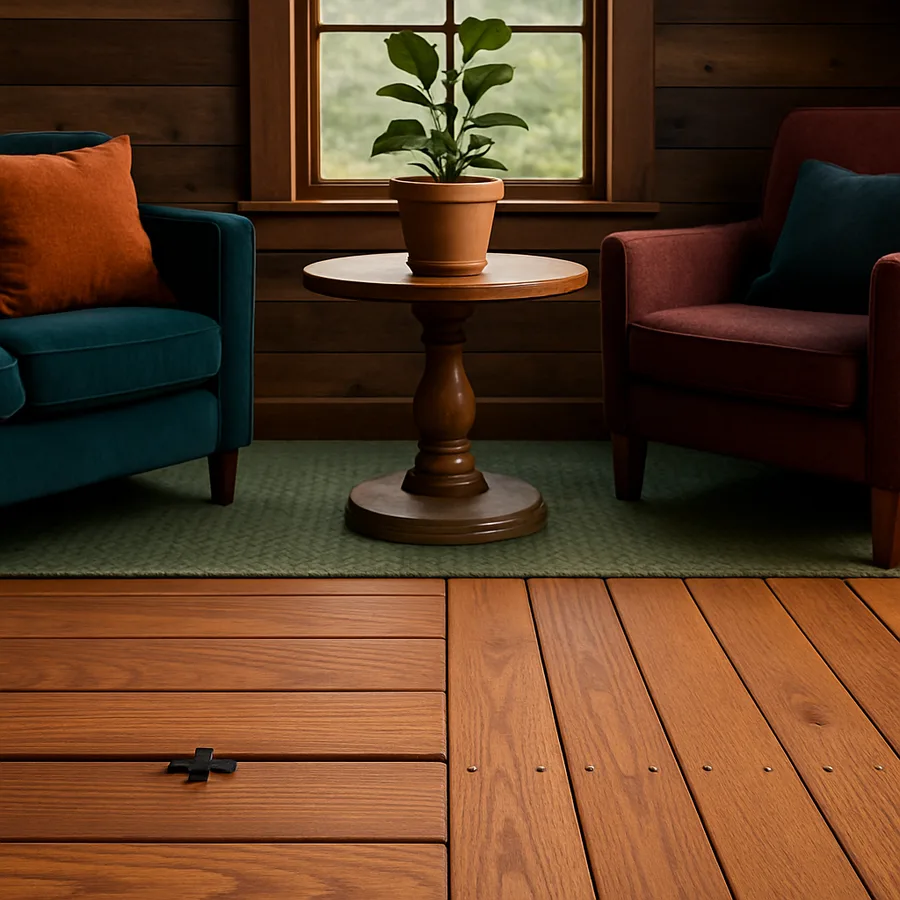
Walk across a freshly built deck and your eye does something predictable: it scans the surface for pattern, color variation, and texture. The single biggest factor controlling that first impression is not the species of wood or the stain color, but whether you can see the heads of the fasteners holding the boards down. Builders often debate this choice with the heat usually reserved for foundation specs, because the fastener decision drives long-term maintenance costs, board movement, and the ability to refinish a surface without snapping screw heads off five years later.
This guide walks through the visibility differences, structural trade-offs, cost realities, and species-specific quirks that decide whether you should specify hidden deck fasteners or stick with traditional top-down deck screws. The North American Deck and Railing Association (NADRA) reports that more than half of new residential decks built in the last five years used some form of concealed fastening for at least the field area of the deck, with top screws still dominating perimeter and structural attachments. The right answer is rarely all-or-nothing.
What Each Fastener System Actually Is
A traditional top-screw fastener is exactly what most homeowners picture: a coated, stainless steel, or composite-rated screw driven straight down through the face of the deck board into the joist below. The head sits flush with or slightly below the board surface. Modern versions use square, star, or hex drives to reduce cam-out, and trim-head profiles have shrunk noticeable head diameters down to roughly 7 to 9 millimeters.
A hidden deck fastener is any system that anchors a board from the side, the bottom, or through a pre-machined groove in the edge so that no metal is visible from above. The most common types are biscuit-style clips that drop into a routed groove and screw down into the joist, edge-mount clips that pinch the board sides, and proprietary track systems that lock multiple boards into a single rail. A small but growing category uses adhesive plus a pin set from below.
The American Wood Council notes in its DCA 6 prescriptive deck guide that any fastener used in pressure-treated lumber must be rated for ACQ or copper azole exposure, regardless of whether it is hidden or visible. That detail matters: a cheap zinc clip rusting inside a groove is far harder to diagnose than a rusty screw head you can simply see and replace.
Visibility, Aesthetics, and Why It Matters More Than You Think
Top screws produce a regular pattern of dots across the surface. With two screws per board per joist and 16-inch joist spacing, a 16-foot board contributes 24 visible heads. A 400 square foot deck typically shows somewhere between 1,500 and 2,200 fastener heads, which is enough that the brain reads the field as dotted rather than smooth even from twenty feet away.
Hidden systems remove that pattern entirely. The change is most dramatic on dark, monochromatic boards where the contrast between board color and fastener head is highest. On a charcoal-colored capped composite, a stainless screw head reads as a bright fleck; remove it and the surface reads as continuous, almost like a poured floor. Designers who specify wide-plank, long-length boards almost always pair them with concealed fasteners because the linear emphasis collapses if it is broken every 16 inches by visible hardware.
Texture interacts with visibility in a way many homeowners only discover after install. Wire-brushed and cathedral-grain composite boards can disguise a colored screw head reasonably well, while smooth boards highlight every fastener. Have you ever walked onto a deck and felt that something looked off without being able to name it? Often, the answer is fastener pattern fighting with the grain direction of the boards.
Strength, Pull-Through, and Long-Term Hold
Visibility is the marketing argument; structural performance is the engineering one. A traditional top screw passes directly through the thickest part of the board and bites into the joist along its full thread length. The board is mechanically pinned in two axes and resists both uplift and side-to-side racking. According to International Code Council (ICC) test data referenced in evaluation reports for residential deck fasteners, top-driven structural deck screws can show withdrawal values north of 400 pounds per fastener in southern yellow pine joists.
Hidden fasteners hold from the side or edge of the board. The clip transfers load to the joist, but the board itself is gripped along a much shorter contact patch, often only a quarter inch deep on each side. In ideal conditions this is plenty. In real conditions, with seasonal moisture cycling and freeze-thaw, edge-grip systems are more sensitive to manufacturing tolerances. Boards with slightly oversize or out-of-square grooves can develop creak, lift, or lateral shift that a top screw would have prevented.
Two engineering compromises are common. Builders often top-screw the first and last boards along walls, stairs, and railing posts, then hide fasteners across the field. Some builders also through-screw every board at high-traffic transitions like stair landings and door thresholds, accepting visible heads in those zones in exchange for predictable hold where the deck takes the most pounding. The American Wood Council points out that fastener choice does not change required joist spacing, so you cannot use a hidden system to compensate for marginal framing.
Material Compatibility and Why It Drives the Decision
The single most important question before you specify a fastener is what you are fastening. Capped composite boards from major manufacturers ship with proprietary or branded hidden clips already approved for that product line. Using a generic clip can void the surface warranty, which often runs 25 to 50 years. PVC boards expand and contract more aggressively with temperature, and edge-mount clips that allow micro-movement are usually preferred over rigid through-fastening.
Tropical hardwoods like ipe, cumaru, and garapa are dense enough that standard top screws require pilot holes to avoid splitting. Many specifiers prefer side-mount hidden systems with these species precisely because the install workflow is faster: route the groove once, drop the clip in, no pre-drilling required for each fastener. Pressure-treated softwood is the most forgiving substrate; either system works, and decision usually comes down to budget.
The National Association of Home Builders has surveyed deck contractors annually for several years. NAHB data consistently shows that composite board sales now outpace pressure-treated softwood for new residential decks, which mechanically increases hidden-fastener adoption because most composite manufacturers actively design their groove profiles around clip systems.
Installation Time, Skill, and Total Labor Cost
Top-screw installation is the simpler workflow. A two-person crew with a positioning tool can lay a 200 square foot deck in one long day, including cuts. Square the first board, set spacing with a gap gauge, and drive screws on a rhythm. Mistakes are easy to spot and easy to fix because every fastener is visible.
Hidden fastener installation looks faster in product videos than it is in practice. The first three boards take the same time as top screws because you are still aligning to a wall or rim joist. Beginning with the fourth board, the workflow shifts: you must seat each board fully against the previous clip before driving the next set, and any debris in the groove translates into uneven gap. Most contractors report that the first hidden-fastener deck takes 30 to 50 percent longer than a comparable top-screw deck, falling to roughly 10 to 20 percent longer once the crew has built a few.
What does that mean for the homeowner? Labor is usually the largest single line on a deck quote, often 40 to 60 percent of the total. A hidden-fastener premium of 10 to 20 percent on labor, plus the higher per-square-foot cost of clips compared to bulk screws, typically produces a finished-cost difference of 8 to 15 percent for the same board. That is the number worth negotiating against, not the cost of the clips alone.
Replacement, Refinishing, and the 10-Year Reality
Decks fail board-by-board, not all at once. Knowing how a fastener system behaves at year ten is more useful than how it behaves at year one. Top screws on softwood decks can develop head corrosion, especially if the original screws were not properly rated for treated lumber chemistry. Re-driving a stripped or rusted screw is a five-minute task per fastener; replacement boards can be lifted and reset cleanly.
Hidden fasteners present a different challenge. Pulling a single damaged board out of the middle of a deck without disturbing neighbors is difficult by design: the clips that hold board A also hold board B. Manufacturers sell repair clips that allow a top-screw replacement to mimic the hidden look on a single board, but the patch is visible on close inspection. Have you ever dropped a heavy planter and gouged a deck board? With top screws, the fix is straightforward; with hidden fasteners, you may need to lift several adjacent boards or accept a single visible repair screw.
Refinishing is the other long-term factor. Sanding a hardwood deck flush requires moving over fastener heads. Top-screw heads can be re-counter-sunk and re-finished, but rusted or stripped heads sometimes need replacement before sanding can begin. Hidden-fastener decks have a perfectly smooth substrate to work with, which is part of why high-end ipe deck specifications almost universally call for concealed hardware. AWC publishes guidance on appropriate fasteners for treated and untreated wood decks that is worth consulting before selecting any clip system for hardwood.
Conclusion
The visibility difference between hidden fasteners and top screws is the most immediately obvious change you can make to a deck surface, but it is the long-term consequences that deserve the most thought. Hidden fasteners deliver a continuous, premium look that suits wide planks, dark composites, and tropical hardwoods, while top screws remain the default choice anywhere the deck takes structural punishment, sees frequent board replacement, or needs to be built on a tight budget. Both can produce a deck that lasts 30 years; neither can compensate for poor framing, inadequate joist spacing, or improper flashing.
The middle path that most experienced builders settle on is hybrid: hidden fasteners across the visible field, top screws at perimeter trim, stair treads, and any board that may need to come out for service access. This keeps the cost premium manageable, preserves the clean look across 90 percent of the surface, and leaves you with a sane repair path when a planter falls or a section needs to come up to address joist rot. A 400 square foot field-only application typically adds something in the range of 600 to 1,400 dollars over an all-top-screw build, depending on board species and clip choice.
Before you commit, walk a few finished decks in person. Compare a top-screw composite deck installed two summers ago against a hidden-fastener equivalent of similar age. Notice how the patterns read in raking light, how the boards meet the railing posts, and where the inevitable scratches and gouges live. Talk to the homeowners about what they have replaced, refinished, or regretted. The best fastener choice depends on factors no spec sheet captures: how often you entertain, whether kids drag furniture, and how forgiving you want the deck to be when life happens to it.
Ready to plan your deck? Sketch your board layout on paper, mark every joist line, and circle every place where a top screw would actually bother you visually. If those circles cover most of the deck, hidden fasteners earn their premium. If they cover only the central field with the perimeter being utility space anyway, a hybrid install will save real money without compromising the look you want. Start there, then size your fastener order against your final board count and contact your local building inspector for any prescriptive requirements that apply to your specific framing plan.
More Articles You May Like


Comments
Post a Comment