Exterior Light Fixture Pairs Flanking Front Doors for Symmetry
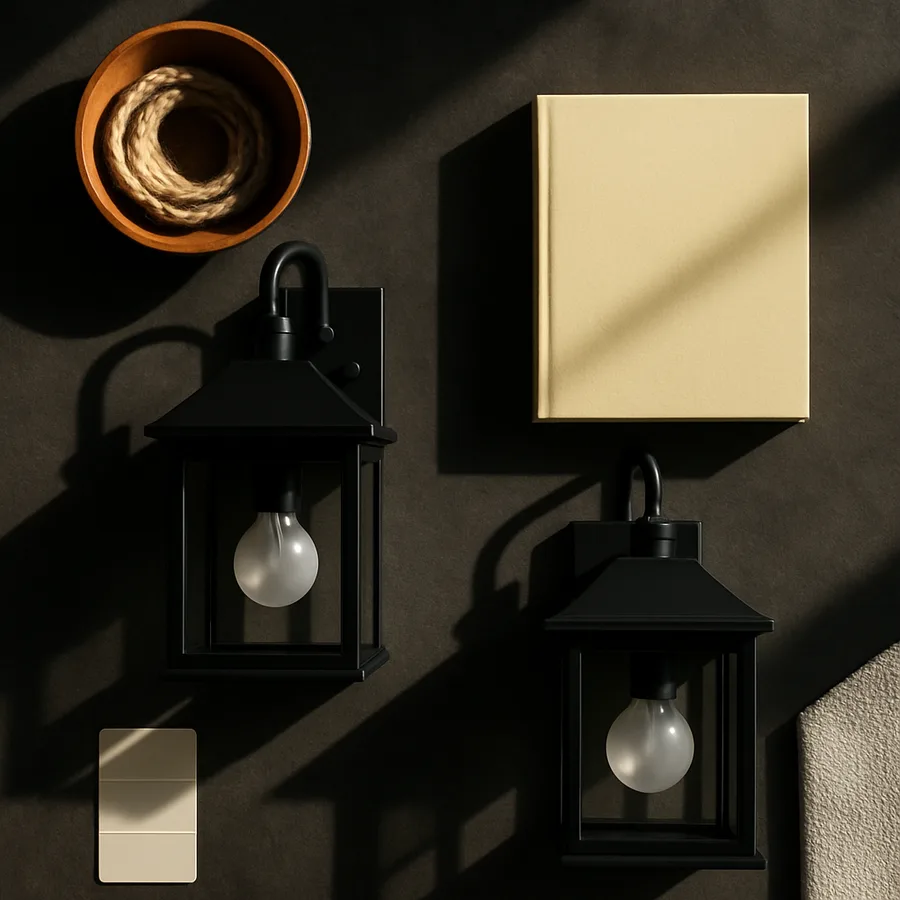
There is a reason the most photographed front entries in the world tend to share one detail: a matched pair of lanterns or sconces flanking the door. Symmetry is one of the oldest design principles, woven through classical architecture, religious iconography, and even the proportions of the human face. When applied to a front entry, a matched pair of exterior light fixtures does more than illuminate. It composes the facade, frames the door, and signals to anyone approaching that the home was designed with intention rather than convenience.
Builder-grade exteriors typically install a single small sconce on the strike side of the door, an arrangement that is both visually unbalanced and functionally underlit. Replacing that single fixture with a thoughtful pair, scaled to the architecture and properly positioned, is one of the highest-leverage exterior upgrades a homeowner can make. The National Association of Realtors (NAR) has reported that exterior lighting upgrades return roughly 87% of cost in resale value, and National Association of Home Builders (NAHB) surveys show that 91% of buyers consider exterior lighting an important feature. The pair of lanterns at the front door is the most visible expression of that investment.
The Power of Symmetry at the Threshold
Architectural symmetry has a measurable effect on how a home reads. Studies in environmental psychology have shown that symmetrical facades are perceived as more stable, more trustworthy, and more cared-for than asymmetrical ones. The pair of lanterns at the door is the most visible symmetry gesture on most homes, and it pays disproportionate dividends in curb appeal.
This is true even when the rest of the facade is not strictly symmetrical. A craftsman bungalow with offset windows, a modern home with a cantilevered second story, or a farmhouse with an asymmetrical porch can all benefit from a centered, matched pair of lights at the entry. The pair creates a small zone of order that the eye reads as the focal point, allowing the rest of the architecture to relax around it.
Have you ever driven through a neighborhood at dusk and noticed how some homes glow welcomingly while others seem dim and uninviting? Almost always, the welcoming homes have matched lights at the door. The asymmetric, single-sconce homes feel half-finished by comparison. Editors at Better Homes & Gardens have repeatedly noted that paired lanterns are among the top five upgrades that change a home's curb personality.
Sizing the Pair: The Most Common Mistake
The single most common mistake in exterior lighting is choosing fixtures that are too small. Builders default to small sconces because they are inexpensive and conservative, but on a typical front door, a small fixture looks like a postage stamp on an envelope. The result is undersized and undersigned.
The professional rule of thumb is that each fixture should be roughly one-quarter to one-third the height of the door. For a standard 80-inch door, that means each lantern should measure between 20 and 27 inches tall, including any decorative cap or finial. For a taller 96-inch door (common in modern construction), the lantern should measure between 24 and 32 inches tall. These dimensions feel large in a showroom but read as appropriately scaled when mounted on the actual house.
Width matters too. The fixture should be wide enough to balance the door visually, typically between 7 and 12 inches in diameter or width. Slimmer fixtures disappear; wider fixtures dominate. Designers often advise mocking up the dimensions with painter's tape on the actual wall before purchasing, since a 24-inch lantern feels very different in a paint-store box than it does mounted next to a real door.
Mounting Height and Spacing
Once you have the right size, placement becomes the next decision. The center of each fixture should be mounted at approximately eye level, generally between 60 and 66 inches above the porch floor. Higher than that, the lights cast unflattering downlight on visitors' faces. Lower than that, the lights feel cramped and out of proportion with the door surround.
Spacing from the door is equally important. The inside edge of each fixture should sit roughly 6 to 12 inches from the door casing. Closer than 6 inches, the fixtures crowd the door and feel pinched. Farther than 12 inches, they detach from the entry and feel disconnected. The goal is for the door, the lights, and any side windows or sidelights to read as a single composed unit rather than three separate elements.
If your door has sidelights (the narrow vertical windows that flank some entries), mount the fixtures outside the sidelights, not between the door and the sidelights. This expands the visual width of the entry and makes the home feel more substantial. If your home does not have sidelights, the fixtures should still be spaced symmetrically around a clear visual centerline through the door.
Style Choices: Lantern, Sconce, or Modern Cylinder
The right fixture style depends on the home's architectural language. Traditional and colonial homes welcome classic lantern shapes: square or hexagonal cages, glass panes, decorative caps, and a vertical orientation that mimics gas lanterns. Materials in aged bronze, antique copper, or unlacquered brass age beautifully and signal historicism. Brands like Bevolo, The Federalist, and Authentic Models are reference points for this category, though more accessible options exist from Visual Comfort, Hudson Valley, and Generation Lighting.
Craftsman and bungalow homes favor wider, more horizontal sconces with mica or seeded glass shades. Mission-style or Arts and Crafts fixtures with hammered copper, oil-rubbed bronze, and amber glass complement the era's emphasis on natural materials. Farmhouses, both traditional and modern, look beautiful with simple bell-shaped sconces, gooseneck barn lights, or simple lantern profiles in matte black or galvanized steel.
Modern and minimalist homes invite cleaner geometry: cylindrical up-and-down sconces, slim rectangular fixtures, or even discreet wall washers in matte black or warm brass. Midcentury modern homes welcome conical or globe shapes in brass, bronze, or matte black with simple lines. The key in every category is to choose fixtures that echo the proportions and material vocabulary of the home itself.
Bulbs, Color Temperature, and the Quality of Light
The fixture is only the housing. The light it produces is the actual experience, and bulb choice is where many otherwise beautiful installations fall short. The most flattering exterior light comes from warm-white bulbs in the 2700K to 3000K range, which approximate incandescent or candlelight color. Higher color temperatures (4000K or above) read as cold, fluorescent, and clinical, undermining even the most carefully chosen fixture.
Wattage equivalency matters too. Most front-door sconces look best with a 40 to 60 watt incandescent equivalent, which translates to roughly 450 to 800 lumens. Brighter than that, the fixtures glare and flatten the architecture. Dimmer than that, they fail to illuminate the entry and visitor's face. If you have control over the wiring, install a smart switch or dimmer that allows you to adjust based on time of day and occasion.
Consider also whether you want flickering filament bulbs, frosted glass, clear glass, or seeded glass. Clear glass with a visible filament bulb reads as authentic to gas-lantern tradition but can produce harsh point-source glare. Frosted or seeded glass softens the light source, casting a more even glow that flatters everyone who arrives. ASID designers often specify seeded glass for residential exteriors precisely because it produces a softer, more welcoming pool of light.
Wiring, Installation, and Smart Controls
Most front-door sconce installations are straightforward, but they do involve electrical work. If your home already has a single sconce, you have one wiring box installed; you will need to add a second box on the opposite side of the door, which typically requires fishing wire through the wall or running it along an interior chase. This is generally a job for a licensed electrician, though confident DIYers with experience in residential wiring can handle it.
If you are installing both fixtures from scratch (for example, on a new build or after extensive renovation), plan for both boxes during the rough-electrical phase. Position the boxes precisely, since shifting them later involves drywall repair and exterior siding work. Consider running both fixtures off a single switch, so they always operate as a pair, and add a second switch or dimmer if you want independent control.
Smart lighting has expanded the options substantially. Many homeowners now install fixtures with integrated motion sensors, dusk-to-dawn photocells, or smart bulbs that integrate with home automation systems. A motion-activated upgrade improves both security and welcome, brightening as guests approach and dimming when no one is present. The Federal Bureau of Investigation has long noted that well-lit entries deter property crime, and a smart pair of sconces achieves both aesthetic and security goals simultaneously.
Conclusion: A Pair That Composes the Entire Facade
A matched pair of exterior light fixtures flanking the front door is one of the simplest and most consequential upgrades a homeowner can make. It introduces classical symmetry to even an asymmetrical facade. It improves visibility and security after dark. It sends a signal of care and intention that visitors register before they ring the bell. And it pays back its cost many times over in resale value, photographic appeal, and daily quality of life.
The principles are simple. Size the fixtures at one-quarter to one-third the height of the door. Mount them at eye level, 6 to 12 inches outside the door casing. Choose a style that echoes the architectural language of the home. Use warm-white bulbs in the 2700K to 3000K range. Match the metal finish to your other exterior hardware. Verify the result at noon and at midnight, since lighting is the only design element that performs in two completely different conditions.
Have you stood across the street from your home at dusk recently and looked at how the entry reads? If your home has a single small sconce, you are likely looking at the most cost-effective upgrade opportunity on your entire exterior. Replacing that sconce with a properly sized, properly placed pair will transform the visual weight of your front entry in a single afternoon.
Plan the upgrade for the next dry weekend, source the fixtures and bulbs together so you can test the warmth before installation, and consider hiring a licensed electrician for any new wiring runs. The result will change how your home looks at every arrival, every dinner-party dropoff, and every package delivery for the next decade. A pair of lights at the door is not a luxury. It is the single most photographed detail on the most photographed homes in the world, and there is a reason for that.
One additional consideration is long-term maintenance. Exterior fixtures live in punishing conditions, exposed to rain, snow, sun, and pollen across every season. Choose fixtures with solid brass, copper, or marine-grade stainless steel construction rather than aluminum or pot metal. The lower-tier materials may look identical in showroom photographs, but they degrade rapidly in the first few years and require complete replacement rather than refinishing. A higher-quality pair, while initially more expensive, will outlive multiple paint refreshes and resale cycles. Plan to clean the fixtures twice a year, in spring and fall, with a soft cloth and mild soap. Replace bulbs proactively rather than waiting for them to burn out, since a dark fixture undermines the entire composition until the next time you happen to notice it from the curb.
Finally, think about how the lighting integrates with the rest of your exterior plan. The pair of lanterns at the door should harmonize with any path lighting, soffit lighting, garage sconces, or landscape uplighting elsewhere on the property. A common mistake is to install beautiful entry sconces in warm 2700K and then pair them with cool 4000K floodlights elsewhere, creating a jarring color-temperature mismatch that flattens the whole composition. Commit to a single warm color temperature across every exterior fixture you control, and the property reads as one coherent designed environment rather than a series of disconnected upgrades. Editors at major design publications consistently rank consistency of light temperature as one of the top markers separating professionally lit homes from amateur installations.
More Articles You May Like



Comments
Post a Comment