Entryway Bench Cushion Material That Resists Boots and Snow
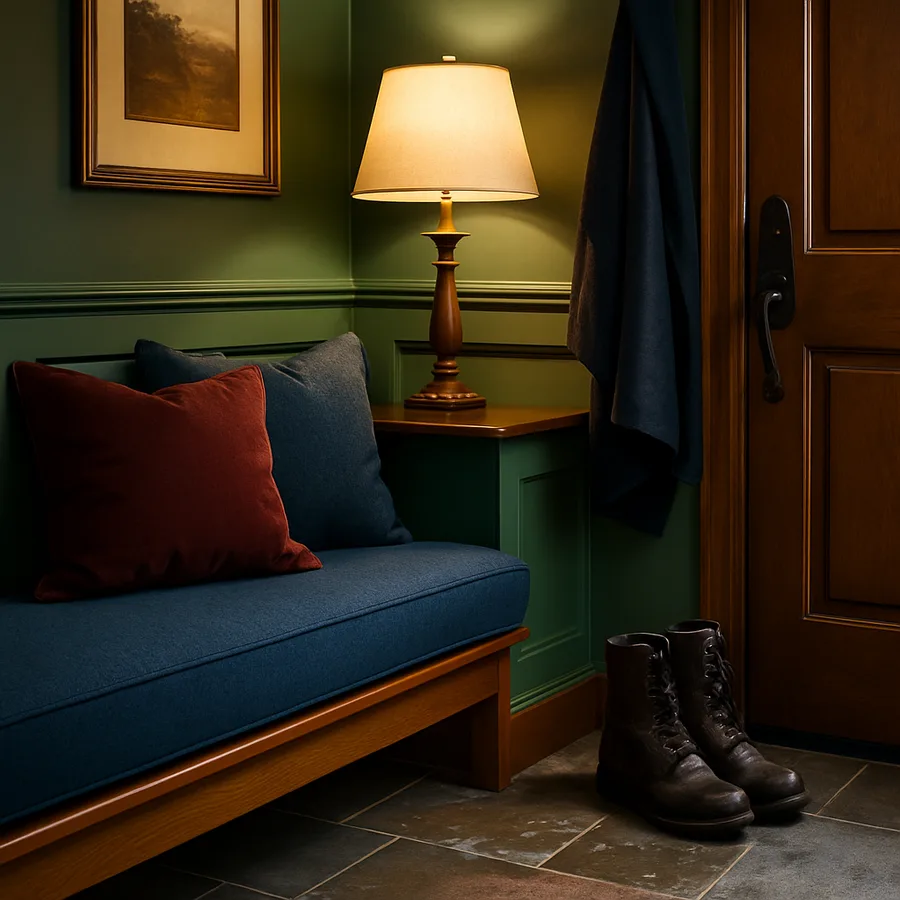
The entryway bench is the unsung hero of a working household. It is where boots are pulled on and off, where snowy backpacks land, where wet dogs sit while their paws are wiped, and where toddlers wrestle with their winter gear. The cushion on top of that bench takes a punishing daily beating from salt, slush, mud, and sharp boot heels, and most cushions are not engineered for any of it. The result is a soggy, stained, sagging surface that gets replaced every two seasons, which is wasteful, expensive, and entirely avoidable.
Choosing the right cushion material from the start changes that math completely. A properly specified outdoor-grade or contract-grade cushion can survive a decade of mudroom abuse, look better at year five than most living-room cushions look at year one, and wipe clean with a damp cloth after the worst snowstorm. This guide covers the fabrics, fills, and construction details that actually perform in boot-and-snow conditions, and the specific products and certifications to look for when you shop.
Why Standard Indoor Fabrics Fail in Mudrooms
Most cushion fabrics sold for residential furniture are designed for living rooms and bedrooms, environments where the worst contaminants are crumbs, pet hair, and the occasional spilled drink. These fabrics, including most cottons, linens, velvets, and untreated wool blends, absorb moisture readily, hold onto salt crystals, and stain permanently when sidewalk de-icer or road grime makes contact. The American Cleaning Institute notes that calcium chloride and sodium chloride, the two most common winter de-icers, can leave white residue rings on absorbent fabrics that are nearly impossible to remove without professional treatment.
Indoor fabrics also rely on cushion fills that compress permanently when they get wet repeatedly. Standard polyfill, low-density foam, and feather-down blends all break down faster in humid or wet conditions, which is why a beautiful linen cushion in a snowy mudroom will look tired within a single winter. The combination of moisture-absorbing fabric on top of moisture-degrading fill is a guarantee of early failure.
The fix is not to baby the cushion but to specify materials that were designed for outdoor or commercial use, where moisture, UV exposure, and heavy wear are the design assumptions rather than edge cases. These materials cost more up front but pay back many times over in lifespan and appearance.
Performance Fabric Categories That Actually Work
The single best category for an entryway bench cushion is solution-dyed acrylic, the family of fabrics that includes Sunbrella, Outdura, and similar performance lines. Solution-dyed means the color is added to the acrylic before the fiber is extruded, so the dye runs all the way through the strand rather than sitting on the surface. This is why solution-dyed acrylics resist fading, bleach cleaning, and the white salt rings that destroy ordinary fabrics.
According to manufacturer specifications confirmed by independent contract textile testing, solution-dyed acrylics typically rate 30,000 to 50,000 double rubs on the Wyzenbeek abrasion test, compared to 15,000 for residential-grade fabrics. The Association for Contract Textiles considers anything above 30,000 double rubs suitable for heavy-duty commercial use, which is roughly the level of abuse a busy family mudroom delivers.
The second strong category is polyurethane-coated polyester, sold under brand names like Crypton, Revolution Performance, and Inside Out. These fabrics have a microscopic moisture barrier woven or coated into the textile, so liquids bead on the surface and wipe away rather than soaking in. Crypton in particular is rated for healthcare and hospitality use, which means it has been tested against bleach cleaning, body fluids, and aggressive disinfectants, all of which are far harsher than anything a snowy boot can deliver.
A third option, often overlooked, is marine vinyl. The same material used on boat seats and outdoor restaurant booths is essentially impervious to water, salt, and mud, and it wipes clean with a single pass of a damp cloth. The trade-off is aesthetic: marine vinyl reads more utilitarian than fabric, and it can feel cool or sticky against bare skin in extreme temperatures. For a hardworking mudroom where appearance is secondary to performance, vinyl is hard to beat.
Cushion Fill That Survives Repeated Wetting
The fabric is only half the battle. The fill underneath determines whether the cushion stays plump and supportive or compresses into a sad, flat pad after one bad winter. For mudroom and entryway use, the gold standard is quick-dry outdoor foam, often called reticulated foam or open-cell drainage foam. This material has an open cellular structure that lets water pass straight through rather than absorbing it, so a soaked cushion drains and air-dries within a few hours rather than mildewing over days.
Quick-dry foam should be wrapped in polyester fiber batting rather than cotton, because polyester does not retain moisture and does not support mildew growth. The combination of reticulated foam core with polyester batting wrap, all encased in a solution-dyed acrylic or coated polyester cover, is the construction sequence used by virtually every outdoor furniture manufacturer that warranties their cushions for five years or more.
Avoid traditional high-density polyurethane foam without the open-cell structure, even if it is marketed as moisture-resistant. Closed-cell foam absorbs water at the edges and holds it indefinitely, which is the recipe for both mildew and the sour smell that develops in cushions exposed to repeated wetting.
Cleaning Protocols That Preserve the Investment
Even the best performance cushion benefits from a regular cleaning routine, and the routine for performance fabric is dramatically easier than the equivalent for indoor textiles. For solution-dyed acrylic, the manufacturer-recommended cleaning is mild dish soap diluted in warm water, applied with a soft brush, and rinsed thoroughly. Bleach cleaning, at a one-to-ten dilution, is safe for solution-dyed acrylics and is effective against mildew, salt rings, and most stubborn winter stains.
For coated polyester fabrics like Crypton, the cleaning protocol is even simpler: a damp microfiber cloth handles routine cleaning, and the same dilute bleach solution handles deeper stains. The Carpet and Rug Institute, while focused primarily on flooring, notes in its general textile cleaning guidance that prompt blotting with cool water removes nearly all winter contaminants if done within the first hour.
Marine vinyl is the easiest of all: a damp cloth with mild soap removes everything short of permanent ink. The only caution with vinyl is to avoid solvent-based cleaners and oil-based products, which can cause the vinyl to crack or yellow over time.
Have you established a weekly cleaning ritual for your mudroom bench? Most homeowners skip this entirely and then wonder why their cushion looks tired. A five-minute wipe-down every Sunday evening, paired with a deeper cleaning at the change of every season, will keep a performance cushion looking nearly new for a decade.
Construction Details That Separate Good from Great
Beyond fabric and fill, several construction details quietly determine whether a cushion will last. The first is seam construction. Look for double-stitched seams with UV-resistant outdoor thread, ideally Tenara or PTFE thread, which does not degrade in sunlight or moisture the way standard polyester thread does. The seams are usually the first failure point on any cushion, and good thread doubles or triples the lifespan.
The second detail is zipper quality. The cushion cover should be removable for deep cleaning, which means it needs a zipper, and that zipper should be marine-grade plastic rather than metal. Metal zippers corrode in salt and humidity, while marine plastic zippers last indefinitely. The zipper should run the full length of one side of the cushion so the cover can be peeled off easily.
The third detail is drainage grommets. The best outdoor cushions include small mesh-covered drainage holes on the bottom face, which let water escape if the cushion gets soaked rather than trapping it inside. Grommets are inexpensive to add and dramatically improve drying time, but most residential cushions skip them to save a few cents in manufacturing.
Finally, consider the cushion thickness. A bench cushion in a high-use entryway should be at least 3 inches thick, ideally 4 inches. Thinner cushions feel hard after a few months as the foam compresses, while thicker cushions retain their loft and support for years. The slightly higher up-front cost of thicker foam is one of the best returns on investment in the entire mudroom.
Pulling It All Together for a Real Mudroom
The ideal entryway bench cushion for boot-and-snow conditions combines a solution-dyed acrylic or coated polyester cover, a quick-dry reticulated foam core wrapped in polyester batting, double-stitched seams with PTFE thread, marine-grade zippers, drainage grommets, and a minimum 3-inch thickness. A cushion built to this specification will cost between 150 and 350 dollars depending on size, compared to 60 to 100 dollars for a standard residential cushion of the same dimensions.
The math works out heavily in favor of the performance cushion. A 250-dollar cushion that lasts ten years costs 25 dollars per year, while an 80-dollar cushion that needs replacing every two winters costs 40 dollars per year and adds the hassle and waste of repeated replacement. According to consumer research summarized by sources including Better Homes and Gardens, the American Society of Interior Designers consistently advises clients to invest in the highest-traffic, hardest-working pieces in the home, and an entryway bench cushion is exactly that piece in any household with kids, pets, or a real winter.
For color, lean toward mid-tone neutrals like greige, charcoal, soft black, or muted forest green. These tones hide salt residue and mud smudges between cleanings far better than light cream or white, and they coordinate with virtually any mudroom palette. Patterns can also help: small-scale tweeds, herringbones, and subtle textures camouflage minor staining in a way that solid colors cannot.
What does your current mudroom cushion look like at the end of a tough week? If the answer involves stains, sagging, or a faintly sour smell, it is time to upgrade to a real performance cushion and never think about it again.
Conclusion
An entryway bench cushion is not a decorative afterthought; it is a functional piece of equipment in any household that deals with real weather. The materials and construction details that separate a five-year cushion from a two-decade cushion are well established in the contract and outdoor furniture industries, and they are entirely available to residential buyers who know what to ask for. Solution-dyed acrylics, coated polyesters, marine vinyl, quick-dry foam, polyester batting, marine zippers, and drainage grommets are not exotic specifications; they are the baseline for any cushion that will see boots and snow.
The investment math favors the performance cushion in every realistic scenario. Higher up-front cost translates to dramatically lower lifecycle cost, less landfill waste, and a mudroom that looks intentional rather than worn down. Combine the right cushion with a simple weekly cleaning ritual and a deeper seasonal clean, and the cushion will outlast multiple paint colors, multiple boot collections, and probably several pets.
If you are designing or refreshing a mudroom this year, make the cushion decision first rather than last. Specify the fabric, the fill, and the construction before you choose the bench frame, the hooks, or the storage baskets. The cushion is the single most abused piece in the entire room, and getting it right sets the tone for everything else, including the design coverage you might find in House Beautiful and other publications that profile mudroom renovations.
Save this guide, take it with you when you shop, and ask retailers specifically about the fabric brand, the foam type, and the seam thread. If they cannot answer, walk away and find a vendor who can. Then come back and tell us how your new cushion performed through its first winter; reader stories help everyone make better decisions.
One additional move worth considering for households with serious mudroom traffic is the two-cushion rotation. Order two identical cushions instead of one, swap them seasonally, and let the off-season cushion air out fully and get a deep cleaning while the in-season cushion handles daily duty. This rotation strategy doubles the effective lifespan of each cushion because neither one is ever continuously stressed for more than six months at a time, and it lets you address any salt residue, mildew risk, or compression damage with a quarterly deep clean rather than emergency interventions during peak winter use. The up-front cost roughly doubles, but the per-year cost stays nearly flat because the cushions last far longer when they are rotated, and the mudroom always looks fresh because the active cushion never has time to accumulate visible wear.
More Articles You May Like



Comments
Post a Comment