Dining Room Banquette Seating Built In Versus Free Chairs
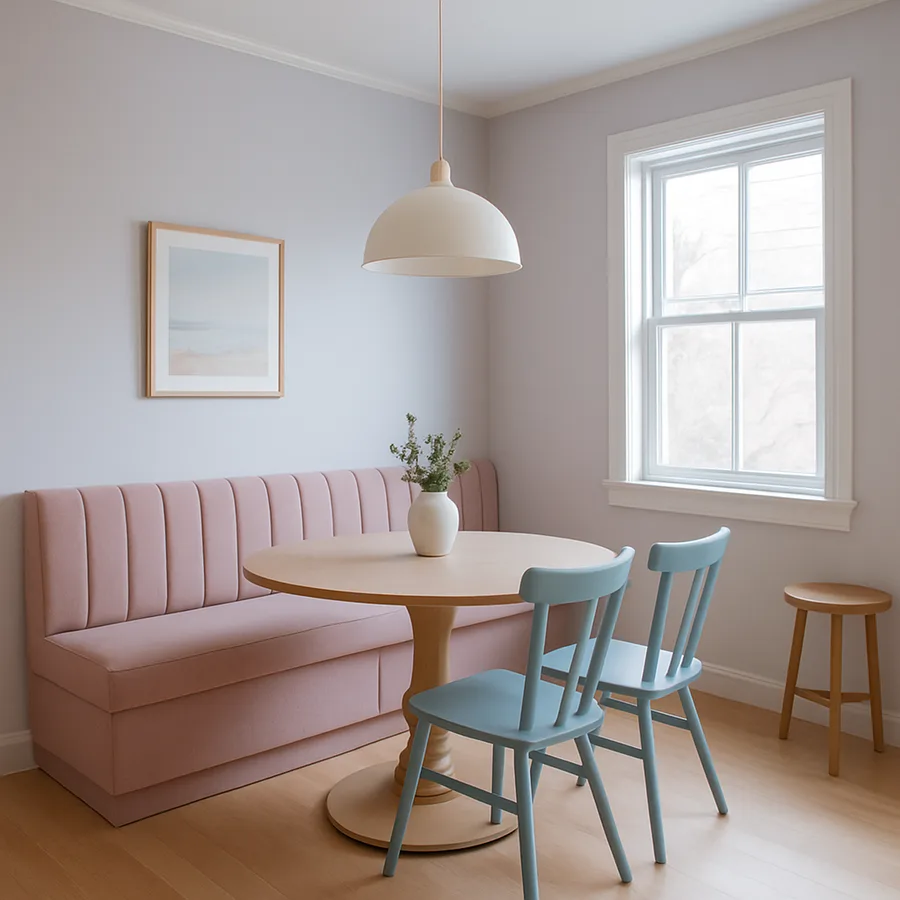
The decision between built-in banquette seating and traditional free-standing chairs is one of the most consequential furniture choices a homeowner makes in a dining space. The two approaches deliver dramatically different daily experiences, occupy different proportions of the room, and represent very different financial and structural commitments. Banquettes have surged in popularity over the past decade as homes have grown smaller and as kitchen-dining hybrids have replaced the formal dining room as the heart of family life. According to surveys by the National Kitchen and Bath Association, banquette seating now appears in roughly one in five new kitchen renovations, up from a much smaller share two decades ago.
The case for free chairs, however, remains strong. They offer flexibility, lower upfront cost, and broad resale appeal. They can be reconfigured, replaced piecemeal, and moved when life circumstances change. The decision between the two formats is not a question of which is objectively better but rather which fits your specific room, household, and lifestyle. This guide walks through the major decision criteria so you can make the choice with full information rather than instinct alone.
Space Efficiency and Seating Capacity
The single most cited advantage of built-in banquette seating is space efficiency. A banquette pushed against a wall or into a corner uses what would otherwise be dead space and seats more people in less floor area than the same configuration with chairs. A standard four-person dining table needs roughly 36 inches of clearance behind each chair to allow people to slide in and out comfortably. With a banquette, that clearance disappears on the wall side, freeing two to three feet of floor space that can be used for traffic flow, storage, or a larger table.
The capacity benefit becomes more dramatic in corner installations. An L-shaped banquette wrapping a corner can seat five or six adults around a table that would only accommodate four with traditional chairs. Families that regularly host extended family or weeknight friend dinners often find this difference decisive. Architectural Digest has highlighted in numerous residential features that banquettes are particularly effective in homes with frequent multigenerational gatherings, where the ability to squeeze an extra person or two onto the bench matters more than the formality of individual chairs.
Free chairs, however, offer a flexibility that fixed banquettes cannot match. When you host a larger dinner, you can pull additional chairs from elsewhere in the home and expand around the table. When you host a smaller intimate gathering, you can remove chairs entirely. A banquette commits you to a single seating geometry, and adapting it to different group sizes requires creative repositioning of the table itself. Have you considered how often your dining situation actually changes from week to week? For some families the answer is rarely; for others it is constantly.
Comfort Across Long Meals
Comfort is more nuanced than most people realize when comparing the two formats. A well-designed banquette with proper seat depth, back angle, and cushioning can be more comfortable than a typical dining chair, particularly for long meals where guests linger over wine and conversation. The continuous bench encourages relaxed posture and allows shorter people to sit cross-legged or sideways without the awkwardness imposed by a chair's fixed dimensions. Children, in particular, often prefer banquette seating because they can move and reposition without fighting the chair's geometry.
The challenge is that most banquettes are not well designed. The standard dimensions used by many builders are inherited from restaurant seating, where the goal is comfort for 45 minutes of dining followed by table turnover. Residential banquettes for two-hour family dinners need different proportions: a seat depth of 18 to 20 inches, a back angle of 100 to 105 degrees, and substantial cushioning over a sprung or webbed base. Cheap banquettes built directly over plywood with thin foam cushions become uncomfortable within 30 minutes and discourage the long meals that motivated the installation in the first place.
Free chairs, by contrast, can be specified individually for the exact comfort profile you want. A well-chosen wooden chair with a contoured seat and a slight back recline will support an adult comfortably through a three-hour dinner. The downside is that you need to choose carefully and test before buying, and the cost of high-quality chairs adds up quickly across a set of six or eight. The American Home Furnishings Alliance publishes guidance on residential seating ergonomics that is worth reviewing before either type of investment.
Cost Comparison and Hidden Expenses
The headline cost comparison favors free chairs in most situations. A set of six quality dining chairs runs roughly 1,500 to 4,000 dollars depending on materials and brand. A custom built-in banquette of similar capacity runs 3,500 to 12,000 dollars or more, depending on size, materials, and whether the cushions are made by the same fabricator or sourced separately. The banquette is roughly two to three times the cost of comparable seating in chairs.
However, the total cost equation includes elements that are easy to miss. A banquette eliminates the need for two to four chairs that you would otherwise have purchased. It often includes integrated storage in the bench base, replacing buffets or cabinets that would have cost separately. And it typically increases the home's appeal in resale, particularly in markets where space efficiency is valued. Real estate professionals frequently note that built-in features in kitchens and dining areas can improve buyer perception of the space, though specific resale value claims vary by market.
The hidden costs of free chairs include replacement and reupholstery over time. Dining chairs experience heavy daily wear, and even quality chairs typically need seat reupholstery every five to ten years. A set of six chairs reupholstered at 200 to 400 dollars each adds up to a substantial recurring cost. Banquette cushions can also need recovering, but the geometry is simpler and the labor cost per square foot of fabric is generally lower.
Storage and Multifunction Opportunities
One of the strongest arguments for built-in banquettes in modern homes is the storage opportunity. The volume beneath the bench can be configured as drawers, lift-up lid storage, or open shelving, providing 10 to 30 cubic feet of storage in a location that would otherwise be unused. For households with limited closet or cabinet space, this storage can be transformative, holding seasonal table linens, serving pieces, board games, or even pantry overflow.
Drawer storage is generally preferred over lift-up lid storage because it does not require clearing the cushions to access the contents. The drawer fronts can be designed to be invisible from a distance, integrated into the bench skirt, or treated as a feature with decorative pulls. The National Association of Home Builders reports that storage capacity is one of the most consistently valued features in residential renovations, and built-in banquettes deliver storage in a location that is otherwise extremely difficult to use.
Free chairs offer no equivalent. The space beneath chairs is open and accessible only to objects that can fit between the legs, which is essentially nothing useful. A buffet or sideboard can provide dining-area storage but consumes its own floor space, often eating into the very room that the banquette would have preserved. For small dining areas, the storage argument frequently tips the balance decisively toward the banquette.
Aesthetic Character and Stylistic Range
Banquettes and chairs project different aesthetic registers, and the choice should reinforce the broader character of the home. Banquettes read as more casual, more European, and more rooted in the home. They suggest long Sunday breakfasts, family conversations, and the kind of dining that happens in jeans rather than dress clothes. They are particularly at home in farmhouse, French country, Mediterranean, and contemporary kitchens with strong informal character.
Free chairs, particularly in matched sets, project more formality and flexibility. They suggest a dining space that can shift from family weeknight dinner to dinner party with guests with only a tablecloth change. They work in nearly every aesthetic register from traditional to ultramodern, and they allow the dining room to read as a distinct, formal space when desired. For homes with a separate formal dining room, free chairs are almost always the right answer.
Mixing the two approaches is increasingly common and often the best of both worlds. A banquette on one side of the table with two or three free chairs on the other side delivers the space efficiency and informal character of the banquette without losing the flexibility and easy access of chairs. Have you considered that the answer might not be either-or? Architectural Digest regularly features dining rooms with this hybrid configuration, and it has become one of the most-imitated formats in residential design.
Resale, Removability, and Long-Term Flexibility
For homeowners who anticipate selling within five to ten years, the resale calculation deserves serious thought. A well-designed built-in banquette can be a strong selling point in the right market, particularly for homes targeting young families or buyers in dense urban areas where space efficiency is valued. A poorly designed banquette, by contrast, can be a liability, suggesting awkward proportions or restrictive layouts that future buyers will have to address.
Free chairs are universally portable. They move with you when you sell, they can be sold separately if you downsize, and they impose no constraint on future buyers' use of the dining space. This portability has real financial value, particularly for homeowners who change residences frequently or who anticipate significant lifestyle changes such as children leaving home.
The middle path, increasingly popular among design-forward homeowners, is the freestanding banquette: a piece of furniture that delivers the bench seating experience without being permanently built into the architecture. These freestanding banquettes can be moved when needed, can be sold separately, and can be replaced piecemeal if damaged. They cost more than basic free chairs but less than a custom built-in, and they preserve much of the flexibility that buyers value at resale time.
Conclusion
The choice between built-in banquette seating and free chairs is not a question of which is universally better but of which better fits your specific household, room, and timeline. Banquettes win on space efficiency, storage, character, and the comfort of long lingering meals when properly designed. Free chairs win on flexibility, lower upfront cost, broader resale appeal, and adaptability to changing circumstances. The right answer depends on which of these dimensions matters most for your particular situation.
For households with frequent large gatherings, limited dining floor space, and a long expected stay in the home, the built-in banquette is often the more rewarding investment. The combination of capacity, storage, and embedded character cannot be matched by free chairs at any price. For households that value flexibility, anticipate moves, or want a more formal dining presentation, the free chair route preserves options that the banquette forecloses. Both choices are legitimate, and the worst outcome is making either choice without first evaluating the alternative on equal terms.
The hybrid approach of banquette plus chairs deserves more attention than it usually gets. The combination delivers most of the space and storage benefits of a full banquette while preserving the access and flexibility advantages of chairs. For dining areas large enough to support both formats, this combination is often the highest-functioning solution and the one that ages best as family circumstances change over the years.
If you have been postponing this decision because the choice felt overwhelming, take this as your nudge to start measuring and sketching. Map your dining area, count the maximum and typical number of diners you host, and try a few configurations on paper before committing to either format. A few hours of planning at this stage will save years of regret about a choice that affects your daily life every time you sit down to eat.
One final consideration worth raising: the way each format ages over a long ownership period. A built-in banquette accumulates daily wear in a fixed location, and the upholstery, cushion fill, and finish surfaces all show that history over time. The wear pattern is part of the piece's character but cannot be redistributed across multiple components the way it can with chairs. A set of free chairs, by contrast, ages unevenly because some chairs see more use than others, and individual chairs can be reupholstered or replaced without disturbing the rest of the set. This makes long-term maintenance simpler with chairs but also means that a chair set never develops the unified, lived-in patina that defines a well-loved banquette. Both aging patterns have their own appeal, and the right choice depends on whether you value the unified character of a single built-in element or the flexibility of replaceable individual pieces over the decades you expect to spend in the home.
More Articles You May Like



Comments
Post a Comment