Banquette Seating in Kitchens for Space-Saving Dining Nooks
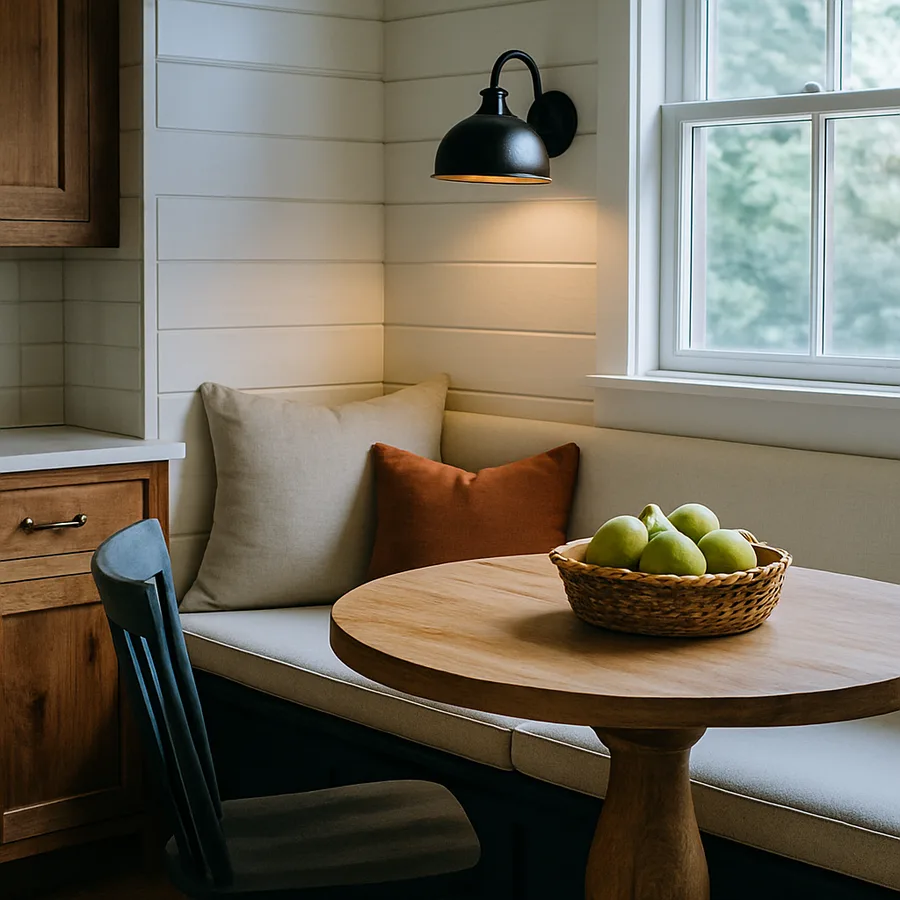
What Makes Banquette Seating the Ultimate Space-Saving Solution
Every kitchen faces the same fundamental tension: the room needs to accommodate cooking, storage, and dining, but most floor plans do not provide enough square footage for all three to coexist comfortably with freestanding furniture. Banquette seating -- a built-in bench arrangement typically positioned against one or two walls -- resolves this tension by converting underused wall space and awkward corners into fully functional dining areas. Where a standard dining chair requires 36 inches of clearance behind it for someone to sit down and stand up, a banquette needs zero clearance on its wall side, immediately recovering significant floor area.
The space savings are quantifiable and substantial. According to the National Kitchen and Bath Association (NKBA), a banquette dining nook seats the same number of people as a freestanding table-and-chairs setup while occupying 30 to 40 percent less floor area. In a kitchen where space is measured in inches rather than feet, that difference can mean the gap between a cramped, compromised layout and one that flows comfortably. For families who eat most meals in the kitchen rather than a formal dining room, this efficiency is not a luxury -- it is a necessity.
Beyond raw space savings, banquettes change the social dynamics of the kitchen. A built-in bench draws people into the room rather than pushing them to a separate dining area, keeping the cook connected to the conversation. Children can sit at the banquette for homework while a parent prepares dinner nearby. Weekend mornings unfold at a relaxed pace in a cushioned nook that feels more like a living room than a hard-chaired dining table. The American Society of Interior Designers (ASID) has consistently ranked kitchen banquettes among the most requested features in kitchen renovations, citing their combination of functionality, comfort, and space efficiency as the primary drivers.
The beauty of banquette design is its adaptability. It works in galley kitchens, open-plan kitchen-living rooms, eat-in kitchens with awkward angles, and everything in between. The bench can be straight, L-shaped, U-shaped, or curved. It can incorporate hidden storage, integrate with existing cabinetry, or stand as an independent design element. This flexibility means there is almost always a banquette configuration that fits your kitchen, no matter how challenging the layout. The following sections break down the most effective configurations, materials, and design strategies for building a banquette that works as hard as the rest of your kitchen.
Five Banquette Configurations and When to Use Each
The straight single-wall banquette is the simplest configuration and works best in narrow kitchens where only one wall is available for seating. A bench runs along a single wall with a table positioned in front of it and individual chairs on the opposite side. This arrangement seats three to four people on the bench and two to three on chairs, depending on the table length. It requires the least construction and integrates easily into existing kitchens without major structural modifications. The drawback is that it provides the least seating density per square foot, since only one side benefits from the bench's space efficiency.
The L-shaped banquette fits into a corner and is the most popular configuration in American kitchens. Two benches meet at a right angle, creating a protected nook that wraps around a square or rectangular table. The corner seat accommodates one additional person compared to a straight bench of the same linear length, and the two-wall anchoring creates a sense of enclosure that makes the nook feel like a distinct zone within the kitchen. L-shaped banquettes are particularly effective in kitchens with a bump-out window area, where the corner catches natural light and frames a view. Have you noticed how corner seating in restaurants always fills up first? The same psychology applies at home.
The U-shaped banquette maximizes seating capacity by wrapping the bench around three sides of the table, leaving only one side open for entry. This configuration seats six to eight people in a footprint that would accommodate only four with conventional chairs. It is ideal for larger families or households that entertain frequently, though it requires a wider space to avoid feeling like a booth in a crowded diner. The open side should face the kitchen's main traffic flow so that entering and exiting the bench feels natural rather than obstructed.
The curved or semicircular banquette introduces a softer geometry that works beautifully in kitchens with open floor plans. A gently curved bench paired with a round table creates a dining area with no sharp corners and excellent conversation flow, since everyone is angled slightly toward the center. Curved banquettes require custom construction, as the bench frame must follow the arc precisely, and upholstery must be tailored to the curve. The investment is higher, but the result is distinctly elegant. Finally, the freestanding banquette -- a movable bench that is not built into the wall -- offers flexibility for renters or homeowners who want the banquette aesthetic without permanent construction. These pieces can be repositioned or taken with you when you move.
Hidden Storage: The Banquette's Secret Superpower
One of the most compelling practical advantages of banquette seating is the built-in storage concealed beneath the seat. A standard banquette bench is 18 inches tall and 18 to 20 inches deep, creating a substantial cavity that would otherwise be wasted space. Outfitting this cavity with hinged-top storage, pull-out drawers, or a combination of both transforms the banquette into a significant storage asset that can absorb items that would otherwise crowd kitchen cabinets or pantry shelves.
Hinged-top storage is the most straightforward approach: the entire seat cushion and its supporting panel lift on piano hinges to reveal a deep bin below. This is ideal for storing bulky items used less frequently -- seasonal table linens, large serving platters, picnic supplies, or backup pantry staples. The trade-off is that you must remove anything sitting on the bench (cushions, people) to access the storage, which makes it less convenient for daily-use items. Gas-lift struts, like those used on car trunks, make the heavy seat panel easy to lift and hold open safely.
Pull-out drawers built into the bench face provide much more accessible storage for everyday items. Shallow drawers at the top can hold place mats, napkins, and flatware for quick table setting, while deeper lower drawers accommodate cookbooks, children's art supplies, or small kitchen appliances. Drawer-front banquettes cost more to build due to the additional hardware and precise fitting required, but the daily convenience justifies the premium for most families. The Houzz kitchen survey found that 68 percent of homeowners who installed banquette seating chose configurations with some form of built-in storage, confirming that functionality is as important as aesthetics in this application.
A hybrid approach combines both storage types: drawers on the front face for frequently accessed items and hinged-top storage in the corner section of an L-shaped banquette where drawers would be impractical due to the angled geometry. This configuration maximizes storage volume while maintaining convenient access to the items you use most. Label the interior of each section or use bins and dividers to prevent the storage cavities from becoming disorganized catch-alls. Organized storage is useful storage; a jumbled bin beneath the seat quickly becomes ignored, defeating the purpose of the investment.
Materials, Upholstery, and Cushion Construction
The materials you choose for a kitchen banquette must withstand daily use in the most demanding room in the house. The bench frame is typically constructed from cabinet-grade plywood or solid hardwood, built to support the weight of multiple adults sitting, leaning, and shifting throughout a meal. MDF and particleboard, while less expensive, are poor choices for structural bench components because they lack the screw-holding strength and moisture resistance needed in a kitchen environment. The bench face -- the visible front panel -- can be finished to match existing kitchen cabinetry, painted in a complementary color, or clad in beadboard or shiplap for a more casual aesthetic.
Upholstery fabric selection is critical because kitchen banquettes face exposure to food spills, greasy hands, pet fur, and daily abrasion that would destroy delicate textiles in months. Performance fabrics engineered for high-traffic use are the standard specification for kitchen banquettes. Brands like Crypton, Sunbrella, and Revolution offer woven fabrics that resist staining, repel moisture, and clean easily with soap and water, all while looking and feeling like conventional upholstery. These fabrics are available in a wide range of colors and textures, from smooth linens to textured weaves, so choosing a performance fabric does not mean sacrificing aesthetics.
Vinyl and faux leather are practical alternatives that offer the easiest cleaning and strongest moisture resistance. Modern faux leathers have improved dramatically in both appearance and feel, and options like Ultrafabrics' Brisa line are nearly indistinguishable from genuine leather by touch. Vinyl and faux leather are particularly well-suited for households with young children, where spills are frequent and thorough cleaning is a daily event. The wipeable surface also eliminates the need for removable cushion covers, simplifying the overall construction of the bench seat.
Cushion construction determines long-term comfort and durability. A minimum of three inches of high-density foam (1.8 pounds per cubic foot or higher) provides firm yet comfortable seating that resists compression over years of daily use. Lower-density foam feels soft initially but quickly bottoms out, leaving you sitting on the hard bench surface beneath. Adding a half-inch layer of Dacron wrap over the foam softens the initial feel and gives the cushion a slightly rounded, tailored appearance. Cushions should be either securely fastened to the bench with hook-and-loop strips or made heavy enough to stay in place without sliding -- a banquette cushion that shifts every time someone sits down is a persistent daily annoyance.
Table Selection and the Geometry of Comfortable Dining
The table you pair with your banquette is just as important as the bench itself, and the relationship between the two determines whether the dining nook feels comfortable or awkward. The first rule is table height relative to seat height: a standard dining table is 30 inches tall, and a banquette seat with cushion should be 18 to 19 inches off the floor. This combination creates the comfortable 11-to-12-inch differential between seat and tabletop that allows adults to eat, write, and work without hunching or reaching. Deviating from this relationship by more than an inch in either direction produces noticeable discomfort over the course of a meal.
Pedestal tables are the preferred choice for banquette nooks because they eliminate corner legs that interfere with the bench and block easy entry and exit. A single center pedestal or a trestle base provides full structural support while leaving the space beneath the tabletop open for legs and feet. This is especially important for L-shaped and U-shaped banquettes, where diners must slide along the bench to reach their seats. Four-legged tables can work with straight single-wall banquettes, where entry is only from the front, but even in that configuration, a pedestal table provides a more gracious experience.
Table shape affects both space efficiency and social dynamics. Round tables are the most space-efficient option for banquette nooks, as they have no corners to waste space and they allow equal access from every seat. A 42-inch round table comfortably seats four people in a banquette arrangement and requires less total floor area than a rectangular table of equivalent capacity. However, round tables do not push flush against a wall, which means they work best with L-shaped, U-shaped, or curved banquettes where the table is surrounded by seating. For straight wall banquettes, a rectangular or oval table that aligns with the bench creates a more cohesive, space-efficient layout.
The material and style of the table should complement the banquette without matching it too precisely. If the bench is upholstered in a warm fabric with a wood frame, a table with a contrasting material -- marble top, metal base, or painted finish -- introduces visual variety that keeps the nook from looking like a matching furniture set. The Architectural Digest interiors team frequently advises mixing materials in dining areas to create collected, layered spaces that feel personal rather than showroom-staged. A vintage or reclaimed table paired with a newly built banquette is one of the most effective ways to achieve this lived-in quality. What table shape do you think would work best with your kitchen's proportions?
Lighting, Styling, and Making the Nook Feel Like a Destination
A well-designed banquette nook deserves lighting that sets it apart from the kitchen's general task illumination. A pendant light or small chandelier hung directly above the center of the table defines the dining nook as its own zone within the kitchen and provides focused, warm light that makes meals feel more intentional. The fixture should hang 28 to 34 inches above the tabletop -- low enough to create intimacy but high enough that no one bumps their head reaching across the table. A dimmer switch is essential, allowing the light to shift from bright task lighting during homework time to soft ambient glow during dinner.
If ceiling-mounted lighting is not possible (in rental apartments or kitchens with structural constraints), plug-in wall sconces mounted on the wall above the banquette provide a similar layered lighting effect. Two sconces flanking the bench create balanced illumination and add a decorative element to what might otherwise be a blank wall. Battery-operated LED sconces have improved significantly in recent years, offering warm, dimmable light that installs with adhesive strips and requires no wiring whatsoever -- a practical solution for renters who cannot modify the electrical system.
The wall area above a banquette is prime real estate for art, shelving, or a combination of both. A single large framed piece centered above the bench anchors the nook and gives it visual weight. Alternatively, a narrow floating shelf running the length of the bench provides a ledge for rotating artwork, small plants, or decorative objects that personalize the space. Open shelving also offers additional storage for cookbooks, spice containers, or attractive pantry items in glass jars. Be cautious not to overload the wall with too many elements -- the goal is to create a focal point, not a gallery wall that competes with the dining experience.
Textiles complete the banquette's transformation from built-in furniture to a genuine living space within the kitchen. Throw pillows in coordinating but not matching fabrics add comfort and color to the bench, making it feel more like a sofa than a hard seat. Limit pillows to one per two-foot section of bench to avoid overcrowding the seating area -- guests should not have to rearrange a pile of pillows every time they sit down. A small throw blanket draped over one end of the bench signals warmth and welcome, particularly in kitchens with hard flooring. According to the Interior Design Society (IDS), textured and patterned textiles are the most effective tool for making utilitarian built-ins feel residential and inviting, and the kitchen banquette is a perfect application of this principle.
From Concept to Kitchen: Building Your Banquette
Building a kitchen banquette is a project that ranges from a manageable weekend DIY endeavor to a professional carpentry job, depending on the complexity of your chosen configuration. A straight single-wall banquette with hinged-top storage is the most approachable DIY project: the bench is essentially a plywood box with a hinged lid, padded cushion, and finished face panel. Detailed build plans are available from woodworking communities and home improvement sites, and the materials cost for an 8-foot bench typically falls between $200 and $400, excluding upholstery.
L-shaped, U-shaped, and curved banquettes involve more complex joinery and require precise fitting to the room's dimensions, making professional construction a worthwhile investment. A skilled carpenter or cabinet shop can build and install a custom banquette in two to four days, with costs ranging from $1,500 to $5,000 depending on materials, storage features, and complexity. Having the same shop that built your kitchen cabinets construct the banquette ensures a seamless visual match between the bench and the surrounding cabinetry, which is the most polished approach for an integrated kitchen design.
Upholstery can be handled as a separate step after construction. Many upholsterers offer banquette cushion fabrication as a standard service, and they can guide you through foam density, fabric selection, and fastening options. Expect to pay $300 to $800 for professional cushions for a standard L-shaped banquette, depending on fabric choice. Ready-made cushions from companies like Cushion Source offer a less expensive alternative, with custom sizing to fit your specific bench dimensions and a wide selection of performance fabrics.
The return on this investment extends well beyond the kitchen. A well-built banquette with quality upholstery and thoughtful storage adds measurable value to a home, as it demonstrates the kind of custom, space-optimized thinking that buyers appreciate in a kitchen. More importantly, it creates a gathering place that anchors daily life -- the spot where morning coffee is lingered over, where children spread out their drawings, where guests gravitate during parties. Start by sketching your kitchen's floor plan and identifying the corner or wall that could become your family's favorite seat in the house, then request quotes from at least two local carpenters to compare approaches and pricing.
More Articles You May Like



Comments
Post a Comment