Dining Table Pads Heat Resistant Protection From Hot Dishes
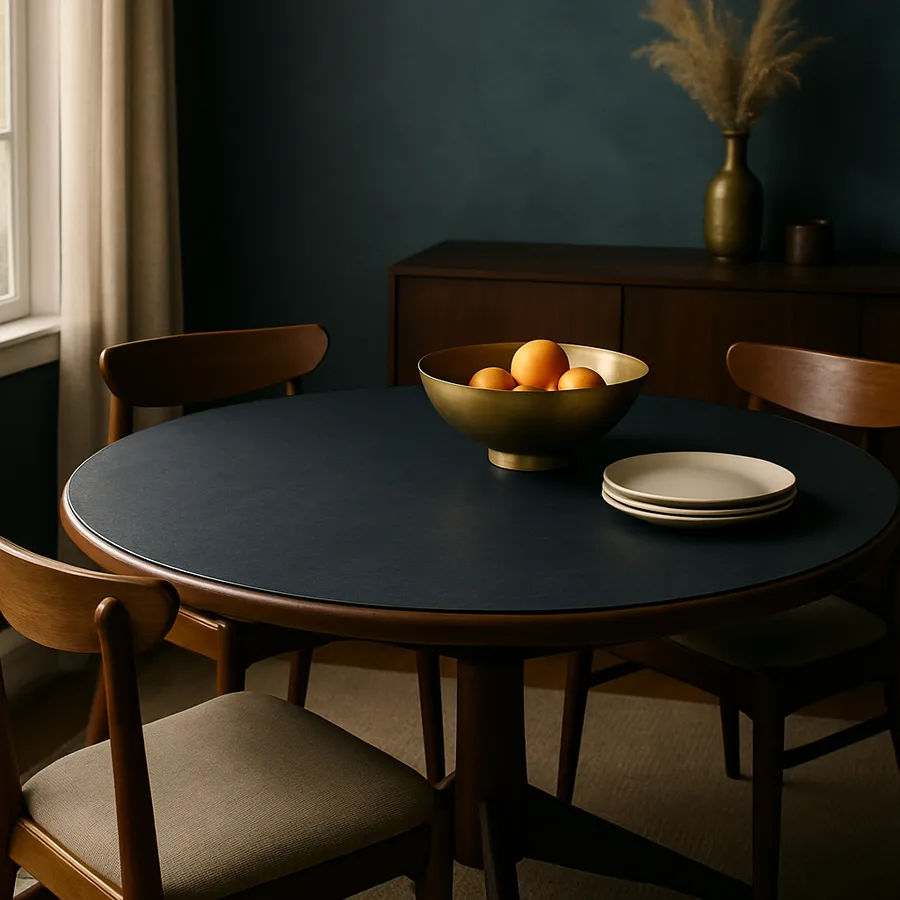
A casserole straight from a 425-degree oven sets on a beautiful walnut dining table for ninety seconds. The damage is invisible at first. Two days later, a faint white ring has bloomed in the finish, or worse, the wood beneath has scorched and the only fix is sanding back to bare timber. Dining table pads exist for exactly this reason, and despite being one of the cheapest investments a homeowner can make, they remain dramatically underused in American homes.
This article walks through the materials, thicknesses, and configurations that actually protect a dining table from real kitchen heat. We look at custom-fit padded covers, modular trivets, and silicone runners, with a focus on what works for everyday cooking versus formal entertaining. The recommendations draw on guidance from AHFA, finish manufacturers, and a 2024 thermal-protection study published in a wood-finishing trade journal.
Why Dining Tables Need Heat Protection In The First Place
The damage profile is also affected by humidity and the wood species itself. Soft hardwoods like cherry and walnut show heat damage more readily than dense hardwoods like white oak and maple. In humid climates, the moisture in the wood can amplify heat damage by causing rapid expansion and contraction at the heated zone. The Forest Products Laboratory at the USDA has published extensive research on wood movement under thermal stress, and the consistent finding is that prevention of heat exposure dramatically extends the useful life of any wood furniture surface.
The most common dining table finishes in residential use are polyurethane, lacquer, hard wax oil, and shellac. Each has a different temperature threshold beyond which it begins to soften, cloud, or burn. Polyurethane, the most common factory finish, begins to soften at roughly 200 degrees Fahrenheit and shows visible damage at 250. Hard wax oil, increasingly popular on premium tables, fares slightly better with damage thresholds around 275 degrees. A standard hot casserole leaving the oven sits at 350 to 425 degrees and stays above 200 for an extended period.
Stone tabletops are not immune either. While granite and quartzite tolerate direct heat reasonably well, quartz composite (engineered stone) contains polymer resins that can yellow or crack with sudden heat exposure. The Marble Institute of America warns against placing items above 300 degrees directly on quartz composite, and pads or trivets are universally recommended.
The damage from a single hot dish can range from a $200 refinishing job for a localized burn to a complete table refinish in the $800 to $2,000 range for a full top. Compared with the $80 to $400 cost of a quality table pad, the math heavily favors prevention.
Custom Quilted Table Pads And How They Are Made
The interior fiberboard core in quality pads is typically made from compressed plant-based fibers bonded under heat and pressure. This material has been used in the table pad industry for decades because it offers a rare combination of heat resistance, dimensional stability, and modest weight. Cheaper pads substitute foam or polyester batting for the fiberboard core, and these alternatives offer significantly less thermal protection. When evaluating a pad, ask specifically about the core material, and avoid any pad whose core is described only as foam or padding.
The premium category of dining table pads is the custom quilted pad, also called a table cover or table protector. These are constructed in three layers: a heat-resistant top of vinyl or felt-faced fabric, a dense fiberboard or bonded foam middle, and a soft non-slip felt bottom that contacts the wood. The middle layer is what stops heat. Quality pads use a high-density bonded fiberboard that reflects heat upward and prevents conduction to the wood below.
Manufacturers like Berger's Table Pads and The Table Pad Company have been in this business for decades and produce pads in custom sizes with leaves and rounded corners exactly matching specific tables. The pads typically arrive as several panels that lock together with a tongue-and-groove or hook-and-loop edge so they can be removed for daily use and stored when the table is set formally.
Costs for a custom pad set range from $150 for a small four-foot round to $500 or more for a large extension table with multiple leaves. The pad is essentially permanent: a quality custom pad lasts 15 to 25 years and travels with the table if you ever move. Compared with the cost of the table itself, the protection-to-investment ratio is excellent.
Silicone Trivets Cork Mats And Modular Heat Solutions
Stone trivets in materials like marble, slate, or soapstone offer excellent heat resistance and visual weight. They look intentional on a styled table and handle direct heat from oven dishes without issue. The downside is mass: a 10-inch marble trivet weighs three to five pounds and can scratch the table beneath if it shifts. Felt-backed stone trivets solve this by adding a soft contact layer underneath. For households that already use natural stone elsewhere in the dining room or kitchen, stone trivets create a coherent material story.
For households unwilling to commit to a full table cover, modular heat protection works almost as well at the point of contact. Silicone trivets rated to 500 degrees Fahrenheit are widely available for $10 to $30 each and stack flat for storage. OXO, Le Creuset, and many cookware brands sell trivets that match their pots, and a set of four to six placed strategically can protect a table during a typical dinner service.
Cork mats are the traditional choice and remain effective for moderate temperatures. A 6mm cork trivet handles dishes up to roughly 350 degrees comfortably, but extended exposure to a 425-degree skillet may scorch the cork itself and discolor the table beneath. For the truly hot pieces, silicone outperforms cork by a wide margin and is dishwasher safe to boot.
A useful intermediate solution is a long silicone runner that stretches the length of the table during meal service. These run $40 to $80 and look intentional rather than improvised. They protect the entire serving zone without the visual heaviness of a full table cover and roll up for storage between meals. NKBA-credentialed kitchen designers often recommend these to clients who entertain frequently but do not want a permanent pad in place.
Thickness Standards And What Real Protection Requires
The protective capacity of any pad depends heavily on its thickness and density. A 2024 wood finish protection study found that a standard 5/8-inch quilted table pad reduced surface temperature on the wood beneath by approximately 85 percent when a 400-degree dish was placed on top for two minutes. A thinner 1/4-inch felt-only pad reduced that temperature by only 40 percent, leaving the wood at roughly 240 degrees, which is enough to damage most finishes.
The takeaway is that thickness matters as much as material. A flimsy decorative tablecloth provides almost no thermal protection and gives a false sense of security. The 2024 study found that a single layer of cotton tablecloth reduced surface temperature by less than 15 percent. A doubled and folded thick cotton runner performed better but still allowed harmful temperatures to reach the table beneath when the dish sat for more than 90 seconds.
For wood tables in regular family use, a minimum 1/2-inch protective layer between hot dishes and the wood is the practical standard. This can be a single thick pad or a combination of a tablecloth plus a substantial trivet. Anything thinner is decoration, not protection.
Care Cleaning And Storage Of Dining Table Pads
For households with frequent moves or seasonal storage needs, the long-term durability of the storage method affects pad lifespan more than daily use. Pads stored leaning against a wall develop a slight curl that can interfere with reinstallation, while pads stored flat on a closet shelf retain their shape indefinitely. The original shipping box is often the best storage container; many manufacturers design these boxes specifically for long-term flat storage and they protect against dust and pet hair during off-season periods.
Custom table pads require modest but consistent care. The vinyl or fabric top wipes clean with a damp cloth and mild soap. Most manufacturers warn against soaking the pad because moisture trapped in the fiberboard core can cause swelling and warping. For storage between meals or seasonal use, the panels should be laid flat or rolled loosely; folding sharply creates permanent creases that can show through to the table when reinstalled.
Silicone trivets and runners are dishwasher safe and require essentially no care beyond an occasional wash. Cork mats need to stay dry; soaking cork can cause it to swell and crumble, so a quick wipe rather than a soak is the right approach. Cotton tablecloths and runners launder normally but should be removed after meals if they have absorbed liquid that could transfer to the table beneath.
One often-overlooked detail: even non-heat-related moisture can damage a finish if trapped between a tablecloth and the wood for an extended period. A wet glass leaving a ring through a thin cotton runner is a frequent cause of finish damage. The same pad that protects from heat also creates a moisture barrier that prevents these slower forms of damage. Architectural Digest design editors have noted this dual function as a primary reason high-end clients invest in custom pads even for tables they could afford to replace.
Buying Guide With Brand Recommendations And Sizing
Color and finish of the pad's exposed surface deserve thought. The standard finish is a leather-look or fabric vinyl in beige or wood-tone brown, designed to disappear when the table is set with linens. Newer manufacturers offer a wider range of colors and even patterned finishes that can serve as a casual everyday surface when the table is not being formally set. For households that use the dining table as a workspace or homework station between meals, this everyday-use finish is a useful upgrade over the traditional under-the-tablecloth design.
For custom quilted pads, get measurements taken with the table fully extended including all leaves. Most manufacturers will send a measurement template; using their template avoids the most common mistake, which is ordering a pad slightly too small that does not cover corner overhangs. Berger's Table Pads, The Table Pad Company, and Pad-A-Table all offer custom sizing with delivery in three to six weeks.
For silicone trivets, look for ones rated to at least 450 degrees Fahrenheit and made of food-grade silicone. Avoid the cheapest no-name trivets sold in bulk packs; they often deform under heat and may release odors when first exposed to high temperatures. OXO Good Grips, Le Creuset, and Lodge make reliable options at reasonable prices, typically $15 to $35 each.
Have you ever inherited or purchased a beautiful dining table only to watch it slowly accumulate small finish flaws over years of meals? The pad you wish you had bought was almost always less expensive than the refinishing job you eventually pay for. For more on furniture care standards, see resources at AHFA and finish-care guides at Better Homes and Gardens.
Conclusion And Choosing The Right Pad System
Dining table pads are one of those quiet investments that pay back many times over across a table's lifetime. The choice between a custom quilted full-coverage pad and a modular trivet system depends mostly on how you eat. Households that serve family-style with hot dishes constantly traveling across the table benefit most from full coverage. Households that plate meals in the kitchen and bring out individual portions need only strategic trivets at the few hot points.
The biggest mistake is doing nothing and trusting a tablecloth or a hot pad pulled from the kitchen drawer at the last moment. A 425-degree casserole on a thin layer of cotton will damage almost any wood finish within minutes. The second-biggest mistake is buying a single decorative trivet and assuming it covers the table. A real protection plan accounts for every hot dish that will land on the table during a meal, not just the centerpiece.
Take ten minutes this week to assess your dining table. What is the finish, what is the most aggressive heat exposure it sees, and what is currently between hot dishes and wood? If the answer is a tea towel, you are gambling with a piece of furniture that is probably worth tens of times more than the pad set you would otherwise own. The remedy is a single online order or a single weekend trip to a furniture or kitchen specialty store.
Take the next step. Measure your dining table tonight, request a custom pad quote from one of the established manufacturers, and order at minimum a set of high-quality silicone trivets in the meantime. Your future self, and the next generation of family meals at that table, will thank you for the small investment that prevents a large regret.
More Articles You May Like



Comments
Post a Comment