Concrete Fire Pit DIY Build With Lava Rock Filler and Form
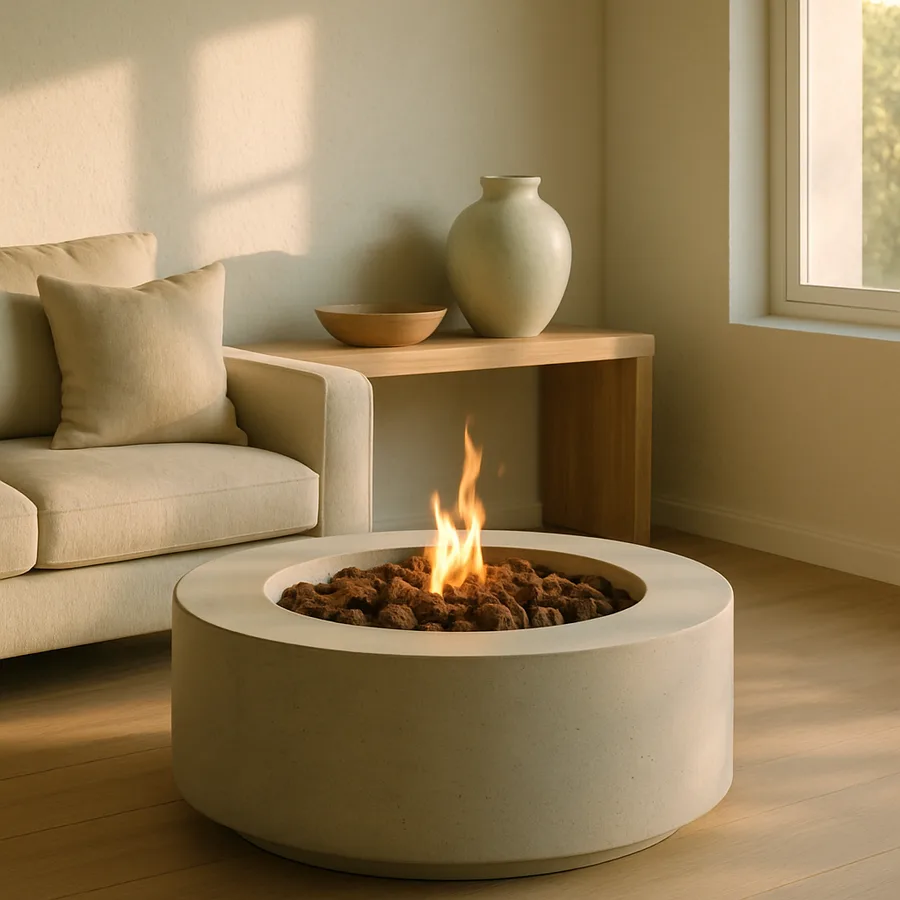
Building your own concrete fire pit is one of the most rewarding hardscape projects a weekend builder can take on. The combination of cast concrete and lava rock filler produces a durable, weather-tolerant feature that looks like it was milled by a high-end studio but costs a small fraction of a custom installation. Done right, the pit will outlast the patio it sits on and develop a richer character with every season.
This walkthrough assumes you have basic carpentry and mixing skills but have never cast a structural concrete piece before. We will cover form design, mix selection, reinforcement, curing, lava rock specification, gas plumbing options, and the code setbacks every builder should respect. Plan on roughly 14 to 18 hours of active labor split across two weekends, with a 28-day cure window before you light the first fire.
Choosing a Form Shape and Footprint
Form choice drives everything that follows. A round form built from flexible 1/8-inch tempered hardboard produces a sculptural look but demands careful seam taping and double-walled construction. A square or rectangular form built from melamine-faced particleboard is much easier for a first-time builder, releases cleanly thanks to the slick surface, and can be screwed and unscrewed quickly during demold.
For a backyard pit that comfortably seats six to eight people, target a finished outside dimension between 36 and 48 inches and a finished height between 14 and 18 inches. Going taller than 18 makes the pit feel walled-off and pushes flames higher than typical patio chairs want them. Going wider than 48 starts to consume serious patio square footage and forces a much larger lava rock budget. The National Association of Home Builders (NAHB) recommends approximately seven feet of clear circulation around any backyard fire feature, so check your patio dimensions before sizing the form.
Wall thickness should be a minimum of 3 inches to handle the thermal cycling of repeated fires without cracking. Thicker is better for durability but heavier to move. A 40-inch square pit with 3-inch walls and an 18-inch height typically lands around 480 to 540 pounds when cured, which is heavy enough to require either pouring in place or recruiting four strong people to lift the cured piece onto its final base.
Mix Design and Reinforcement
Standard ready-mix Portland concrete works for this project, but a fiber-reinforced countertop mix performs noticeably better against the heat cycling and freeze-thaw stress a fire pit endures. Look for a mix labeled GFRC or for a high-strength bag mix rated above 6,000 PSI. Add a small dose of chopped basalt fiber or PVA fiber per the bag instructions to fight micro-crack propagation around the burner opening.
Color is up to you, but two principles always apply. First, use only iron-oxide pigments rated for concrete because organic dyes will fade or burn out under repeated fire exposure. Second, weigh your pigment carefully relative to dry mix weight. Most manufacturers cap pigment loading at 6% of cement weight to preserve compressive strength. Charcoal grays, warm tans, and deep terracottas are all classic choices that hide soot patina well over time.
For reinforcement, embed a welded wire mesh grid of 14-gauge galvanized wire roughly halfway through wall thickness. Cut a corresponding mesh ring or square for the base slab. Avoid placing mesh too close to the inner surface where it will sit nearer the fire because thermal expansion of the steel can crack the surrounding concrete. Keep at least 1.5 inches of cover between any reinforcement and the inner wall surface.
Building the Form Step by Step
Cut your melamine into the outside form panels and the inside void panels. Pre-drill and assemble using coarse-thread drywall screws driven from the outside so all heads are accessible during demold. Run a thick bead of 100% silicone caulk along every interior seam and tool it to a clean concave fillet. The silicone seam is what gives the cured concrete its crisp edge; sloppy silicone will bleed through and require hours of grinding to clean up.
The inside void must be smaller than the outside form by exactly twice your wall thickness. Build a wooden cradle to suspend the inside void perfectly centered when you pour. Many builders forget this step and end up with one wall an inch thicker than the others, which creates uneven thermal expansion and the eventual hairline crack. Spend 20 minutes leveling and double-checking with a tape before you mix a single bag.
Drill a burner penetration in the bottom of the form before assembly. A 2-inch hole sized for a flexible gas line or a 4-inch hole for a larger air-mixing burner pan are typical. Insert a short section of PVC pipe through the hole during the pour to leave a clean cylindrical void; pull it gently after initial set but before final cure. If you plan to use the pit only for wood-burning logs, you can skip this step entirely and rely on a removable steel insert.
Mixing, Pouring, and Vibrating
Mix in batches small enough that you can place each batch within 20 minutes. A 5-cubic-foot mixer or a clean wheelbarrow handles two 80-pound bags at a time. Aim for a workable but stiff mix; a slump that flows like pancake batter has too much water and will cure weak. The bag's printed water ratio is your starting point; reduce slightly if the day is humid.
Pour in lifts no taller than 6 inches. After each lift, vibrate the form to release entrained air. The cheapest reliable vibration method is an orbital sander pressed flat against the outside of the form for 30 seconds per face. You will see bubbles rise to the top; that is the sign you wanted. Skip vibration and you will demold a piece pocked with cosmetic voids that look like a moonscape.
Top off the form to the brim, then strike off the top with a straight 2x4. If you want a perfectly flat top edge, float lightly with a magnesium float. If you want a more textural top, leave the strike-off marks alone and let the patina of use do the rest. Cover the form with damp burlap and plastic sheeting and ignore it for 48 hours.
Lava Rock Filler Selection and Layering
Lava rock does three jobs simultaneously. It diffuses the gas flame across the burner pan into a wider visual fire pattern, it absorbs heat and reradiates it gently after the fire shuts off, and it fills volume so you do not need to look down into a deep dark void. Specifying the right rock matters more than most DIY guides admit.
Use only kiln-dried volcanic lava rock rated for fire features. Wet or river rock will trap moisture inside porous voids, then steam-explode when first heated, sometimes throwing fragments. The Hearth, Patio & Barbecue Association publishes safety guidance on appropriate fire-rated media. Buy roughly 50 pounds of 3/4-inch lava rock for the base layer and 25 pounds of 1/2-inch lava rock or matching crushed glass for the visible top dressing of a 40-inch pit.
Layer the rock with the larger pieces on the bottom directly over the burner ring, sloping smaller rock outward toward the perimeter. Leave a 1-inch gap between the burner ring itself and the rock immediately above it; gas needs room to mix with air before combustion. Top with about an inch of decorative media. If you want the polished modern look, replace the top dressing with tempered fire glass instead of small lava rock.
Code, Setbacks, and First-Fire Safety
Before you light anything, confirm your local code. Most jurisdictions adopt the International Fire Code published by the International Code Council with local amendments. Common requirements include a minimum 25-foot setback from any structure for permanent fire features, with portable units allowed at 15 feet, and clear airspace overhead with no combustible eave or branch within 12 vertical feet of the flame. Your local fire marshal can confirm setback specifics and tell you whether a permit is required for the pit you have built.
Gas connections must be made by a licensed plumber in nearly every U.S. jurisdiction. Even if your municipality permits a homeowner to do the work, the gas company will often refuse to turn on service to an uninspected line. Pay the licensed plumber. The cost is modest compared to the consequences of a leak.
For the first fire, allow your concrete to cure a full 28 days. Run the burner at low for the first hour to drive off any residual moisture in the lava rock. Watch carefully for hairline cracks; a few cosmetic surface cracks are normal in concrete and not a structural concern, but any crack wider than a credit card warrants stopping the fire and inspecting before reuse.
Conclusion
A well-built DIY concrete fire pit rewards careful planning and unhurried execution. The form, the mix, the reinforcement, the burner penetration, and the lava rock layering each have small details that separate a piece you will be proud of for 20 years from one that cracks within a season. Take the extra 30 minutes to vibrate the form thoroughly, the extra hour to silicone every interior seam, and the extra day to let the cure finish. Each of those small disciplines compounds into a markedly better finished product.
Have you decided yet whether to plumb natural gas, run propane from a hidden tank, or keep the pit wood-burning with a removable steel insert? Each path has trade-offs in convenience, fuel cost, and code complexity, and changing your mind after the form is poured is far more expensive than choosing carefully now. Sketch the gas line route on the same drawing where you sketch the patio dimensions and seating arc. The integrated drawing will show conflicts you would otherwise discover with a shovel.
Once cured and lit, your concrete pit will need almost no maintenance. Sweep ash and debris when needed, replace lava rock every three to five years as it weathers, and rinse the exterior with plain water once a season. Avoid pressure washing because the high-PSI stream can erode the cement paste at the surface. With basic care, the pit will outlive the trees you plant around it.
One overlooked benefit of building your own pit: the design freedom. Off-the-shelf gas pit tables come in a narrow band of shapes and finishes, almost always optimized for retail shelf appeal rather than the specific patio they will sit on. A custom cast piece can match the exact wall thickness, height, and proportion that your patio geometry calls for, and it can echo other concrete elements such as steps, planters, or counters elsewhere in your landscape. That visual continuity is what separates a designed yard from a yard with stuff in it.
The same is true for budget. A $4,000 retail gas pit table is mostly an aesthetic markup over the underlying components, which together cost a fraction of the retail price. Building your own redirects that markup into either savings or upgrades. Many DIY builders use the savings to step up to a larger burner pan, a better gas valve, premium lava rock or fire glass, and a CSA-listed safety shutoff that an entry-level retail unit may omit. The finished pit ends up costing roughly the same money but performs noticeably better and lasts longer.
Are you planning to integrate the pit with seating you build at the same time? If yes, sketch both elements together on the same drawing. The bench foundation and the pit foundation often share frost-protected footing depths and can sometimes share a poured slab, which saves materials and produces a more visually unified finished area. Coordinating the two projects also lets you run gas line and low-voltage lighting conduit in the same trench, halving your excavation labor.
Ready to start? Pull out a tape measure tonight, sketch your form on grid paper, and price out the materials at your local concrete supplier. If you build it within the next four weekends, you will be hosting your first fire-pit dinner before the season is over. Send a photo of your finished pit when it is lit; we love seeing reader builds.
More Articles You May Like



Comments
Post a Comment