Cold Plunge Tub Setup at Home for Wellness Enthusiasts
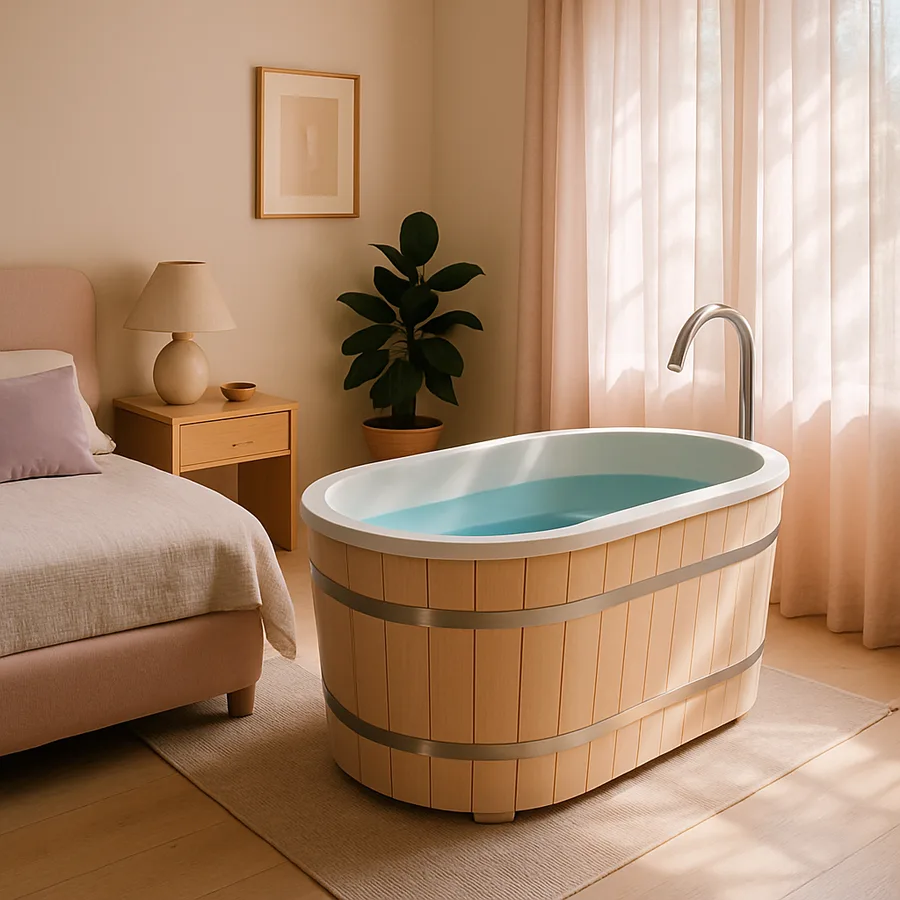
Cold plunging has migrated from professional athletic recovery rooms to suburban garages in the span of about three years. What used to require a sponsorship deal or a spa membership is now a $5,000 piece of equipment that ships to your driveway. The category has matured fast, but homeowner expectations have not always kept up with the realities of installation: dedicated electrical, drainage, water chemistry, and the surprisingly tricky question of where to put the thing in your house.
This guide walks through a serious home cold plunge setup from the first decision (where it goes) through the last detail (water care and maintenance), with enough numbers to size your circuit, your chiller, and your floor loading correctly. The goal is a plunge that you actually use, not a tub that sits unused after the novelty wears off because the ergonomics of getting into it daily are wrong.
Why Cold Plunge: The Evidence and the Hype
The wellness industry is good at outrunning the science, and cold therapy is no exception. The honest summary is that the research is genuinely promising for specific outcomes, less robust for the broader claims, and worth taking seriously without overstating. A widely cited European Journal of Applied Physiology review found that cold-water immersion at 50 to 59 degrees Fahrenheit for 10 to 15 minutes produces measurable reductions in delayed-onset muscle soreness and inflammation markers after intense exercise.
The cardiovascular adaptation is also documented. Brief cold exposure triggers a vasoconstriction-vasodilation cycle that, repeated regularly, appears to improve circulatory tone and contribute to a measurable increase in brown adipose tissue activation, which the Mayo Clinic has discussed as a potential metabolic benefit. Mood effects are reported subjectively by nearly everyone who plunges regularly; the mechanism likely involves norepinephrine release, which a 2020 study in Medical Hypotheses documented at concentrations roughly two to three times baseline after a typical plunge.
What the research does not yet support strongly is the broader claim that cold plunging cures depression, accelerates fat loss meaningfully, or substitutes for sleep and exercise. It is one tool among many. The honest framing for most homeowners is that a plunge gives you a daily ritual that briefly stresses the body in a controlled way and leaves you feeling sharper afterward. That alone is worth the equipment for many people. Have you considered how many minutes per week you would realistically spend in the tub once the novelty fades?
Choosing a Tub: Materials, Capacity, and Ergonomics
The market splits into roughly four tiers. At the entry end, inflatable or insulated plastic stock-tank-style tubs in the $300 to $1,500 range work as a starting point if paired with a separate chiller. Mid-tier insulated polyethylene shell tubs with built-in chillers run $3,000 to $7,000 and represent the sweet spot for most buyers. Premium stainless steel or wood-clad tubs with integrated filtration and ozonation run $8,000 to $15,000 and beyond. Custom tile-finish plunges built like small pools can exceed $25,000 once construction is included.
Material affects more than aesthetics. Stainless steel is the most durable and the easiest to sanitize but transmits cold to the touch on the rim. Insulated polyethylene is less durable cosmetically but holds temperature better between plunges and uses less electricity to maintain a setpoint. Wood-clad tubs (typically a polyethylene or fiberglass liner inside a cedar or larch surround) split the difference visually and are the most photogenic, which matters more than people admit because a beautiful plunge gets used and an ugly one quietly gets sold.
Ergonomics matter for daily use. A tub you can step into without a stepstool, sit in with your shoulders submerged, and exit cleanly when your hands are cold and slightly numb is a tub you will actually use. Look for an interior depth of at least 30 inches, an interior length sufficient for your height when seated upright, and either a built-in seat or a flat bottom that lets you sit cross-legged. A tub that requires you to hold your knees to your chest is a tub you will use twice.
Chiller Sizing and Electrical Requirements
The chiller is the heart of the system and the most commonly undersized component. Chiller capacity is rated in BTUs per hour or in horsepower, with most home plunge chillers running between 1/4 horsepower (roughly 3,000 BTU/hr) and 1 horsepower (12,000 BTU/hr). The right size depends on tub volume, ambient temperature where the tub is located, and how cold you want the water.
A reasonable rule for an indoor tub of 100 to 130 gallons targeting 45 to 50 degrees Fahrenheit in a 70-degree room is a 1/2 horsepower chiller. The same tub outdoors in summer heat will struggle on a 1/2 horsepower unit and is better served by a 3/4 horsepower chiller. Undersized chillers will reach setpoint eventually but cycle continuously, shorten compressor life, and fail to recover quickly after multiple back-to-back sessions.
Most home chillers run on a standard 120-volt 15-amp circuit and are plug-and-cord, which simplifies installation. Larger 1-horsepower units and certain commercial-grade chillers require a 240-volt circuit. A dedicated GFCI-protected outlet is required regardless of voltage; the National Electrical Code mandates GFCI protection for any outlet within 6 feet of water in residential settings. Confirm panel capacity before purchase, particularly if the tub will live in a garage or accessory building with limited subpanel headroom.
Placement: Indoor, Garage, Patio, or Backyard
Where you place the tub determines how often you use it more than any other variable. The two best locations for daily use are typically a covered patio adjacent to the bathroom or an insulated garage with a floor drain. Both let you walk a few steps from the tub to a hot shower without dripping through finished spaces. Backyard placements are atmospheric but lose to weather and distance from bathroom in actual usage data; many homeowners report use dropping to once or twice per week within six months of a backyard install.
Floor loading is a real consideration. A 130-gallon plunge weighs roughly 1,100 pounds when full, plus the user. That is well within the capacity of a slab-on-grade garage or a properly built deck, but it is a meaningful load on a wood-frame second-floor balcony or a porch built to minimum code. The International Residential Code requires residential decks to support 40 pounds per square foot live load; a plunge concentrates roughly 280 pounds per square foot, which is fine over reinforced framing but not over standard 2x8 joists at 16 inches on center.
Drainage is the second placement question. A tub needs to be drained periodically for water changes, typically every 4 to 8 weeks depending on use frequency and sanitation system. A nearby floor drain or sufficient slope to route a garden hose to a yard or storm drain is essential. Draining 130 gallons through a kitchen sink is annoying once and unbearable by the third time. The American Society of Civil Engineers recommends consulting local stormwater regulations before draining chlorinated or chemically treated water onto landscapes or into storm drains; some jurisdictions prohibit this and require dechlorination first.
Water Care: Filtration, Sanitation, and Schedule
Water quality is the part of the system that most owners underestimate. Cold water hosts microbial growth more slowly than hot water but is not sterile, and the body oils, sweat, and skin cells you deposit during each session require active management. The standard sanitation approaches are chlorine, bromine, ozone, ultraviolet, and hydrogen peroxide, often used in combination.
For a daily-use home plunge, the most common modern approach is an ozone generator paired with a low-dose hydrogen peroxide regimen and a fine particulate filter. Ozone oxidizes organic contaminants without leaving chemical residue, and the peroxide handles the rest. Chlorine works but produces chloramines that smell unpleasant and can irritate skin in cold water, where the contact time is longer than in a hot tub. Bromine is a reasonable alternative if you prefer a simple residual sanitizer.
The minimum equipment package for a serious setup is a circulation pump running 6 to 12 hours per day, a 20-micron filter cartridge changed every 60 to 90 days, an ozone injector on the return line, and a weekly water test for pH and oxidation reduction potential. The Centers for Disease Control and Prevention publishes guidance for residential pool and spa chemistry that translates directly to cold plunge maintenance, with target ranges for pH (7.2 to 7.6) and free chlorine (1 to 3 ppm) that apply equally well to cold water.
Building the Routine: Temperature, Duration, and Recovery
The protocol matters as much as the equipment. The therapeutic range cited in most research is 50 to 59 degrees Fahrenheit for 5 to 15 minutes, with newer adopters starting at the warmer end and shorter duration. Below 45 degrees the marginal benefit declines and the cold-shock response intensifies, which is why the popular Wim Hof method recommendations cap most home practitioners around 50 degrees.
Build a session structure rather than improvising every time. A reasonable starter routine is three sessions per week of 3 to 5 minutes at 55 degrees, progressing over a month to five sessions per week of 8 to 12 minutes at 50 degrees. Always exit before shivering becomes uncontrollable, dry off thoroughly, and dress warmly. Resist the urge to immediately follow with a hot shower; passive rewarming over 15 to 30 minutes appears to extend the metabolic benefits, although the research on this point is still developing.
Safety is non-negotiable. Cold-water immersion meaningfully stresses the cardiovascular system; the American Heart Association recommends consulting a physician before starting cold therapy if you have any history of heart disease, hypertension, or arrhythmia. Never plunge alone if you are new to it, never combine cold plunging with alcohol, and exit immediately if you feel chest tightness, dizziness, or unusual breathlessness. Have you talked to your doctor before starting this practice if you have any cardiac risk factors? It is a five-minute conversation that may avert a five-figure problem.
Conclusion
A home cold plunge is a legitimate piece of wellness infrastructure when the installation is done thoughtfully and a slow path to disappointment when it is improvised. The equipment is no longer the limiting factor; the chiller, tub, and sanitation systems available at the consumer level are robust and well-documented. The variables that determine whether the tub becomes a daily ritual are placement, ergonomics, and the simple discipline of building water care into a weekly routine.
Spend more time choosing the location than choosing the brand of tub. A modest tub adjacent to your bathroom will out-earn a beautiful tub at the back of a long yard, every time. Size the chiller for the tub volume and the local climate rather than buying the smallest unit that meets the manufacturer's minimum spec, because under-sized chillers fail early and disappoint daily. Decide your sanitation strategy before the tub arrives so you can size the plumbing, ozone injection, and filtration correctly during install rather than retrofitting.
Plan the routine before you plunge. Three minutes at 55 degrees is the right starter dose for most healthy adults, and progression should be gradual over weeks rather than days. Track session times and water temperatures for the first month so you can match anecdotal feel to the actual variables; many owners discover that what felt like 50 degrees was actually 48, and that the unpleasant sessions were the cold ones rather than the long ones.
Take the next step by walking your home this weekend with a tape measure and identifying two candidate locations: one indoor and one covered outdoor. Note proximity to a bathroom, available outlets, and floor type. Then request quotes from two reputable plunge brands with the specific dimensions and electrical situation in hand. For evidence-based health information on cold therapy, the Mayo Clinic publishes a clear consumer overview, and the American Heart Association offers safety guidance that should inform any decision to start a cold-exposure practice.
More Articles You May Like


Comments
Post a Comment