Paneled Refrigerator vs Stainless: Cost and Resale Comparison
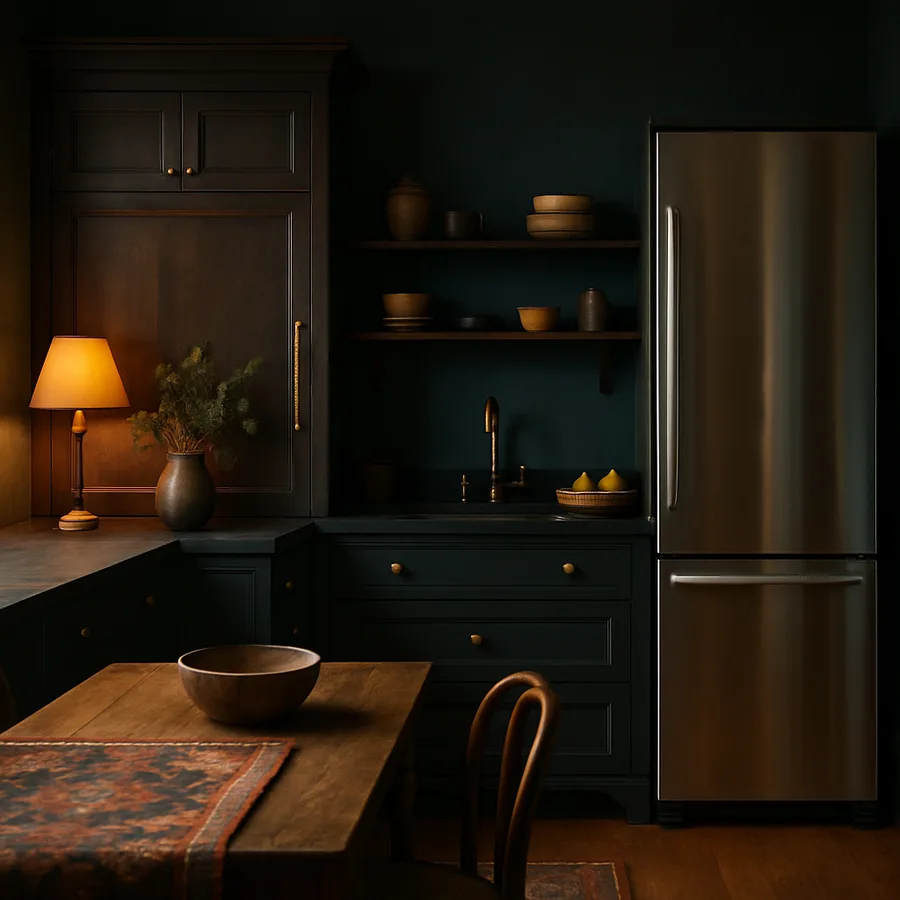
Choosing between a paneled refrigerator and a stainless steel model is one of the most consequential aesthetic and financial decisions in a kitchen renovation. The choice affects not only the daily visual experience of the room but also the total project budget, the long-term maintenance burden, and the home's resale positioning in the local real estate market. Stainless steel has dominated kitchen appliance finishes for more than two decades, establishing itself as the default expectation among home buyers and real estate agents alike. Paneled refrigerators, which conceal the appliance behind custom cabinetry fronts, represent a fundamentally different design philosophy that prioritizes architectural unity over appliance visibility. According to the American Institute of Architects (AIA) Home Design Trends Survey, paneled appliances appeared in 34 percent of custom home projects in the most recent reporting period, while stainless steel appeared in 58 percent, with the gap narrowing each year as integrated kitchen designs gain market share. This analysis compares the two approaches across every dimension that matters to homeowners making this decision.
Upfront Cost Differences and What Drives Them
The price gap between a paneled and a stainless steel refrigerator begins with the appliance itself and widens when panel fabrication and installation are factored in. A panel-ready refrigerator from a premium brand like Sub-Zero starts at approximately $8,000 for a 36-inch built-in model, while Thermador and Bosch offer panel-ready options in the $4,000 to $7,000 range. The comparable stainless steel models from the same manufacturers cost 15 to 25 percent less because they ship with a finished door, eliminating the engineering for panel brackets and the additional quality control required for flush-mount door alignment. At the mid-market level, brands like Fisher & Paykel and Beko have introduced panel-ready models starting near $3,000, significantly narrowing the gap with their stainless counterparts, which begin around $2,000 to $2,500.
Panel fabrication adds $400 to $2,000 to the project depending on the material, the door style, and whether the panels are produced by the cabinet manufacturer or an independent shop. A pair of French-door panels in painted MDF ordered alongside the kitchen cabinetry might add $500 to the cabinet invoice, while custom solid walnut panels with integrated handles from an artisan shop can exceed $1,800. Installation labor for the panels, including leveling, bracket mounting, reveal adjustment, and hardware placement, adds another $200 to $500. The total premium for a paneled refrigerator, including appliance, panels, and installation, ranges from $1,000 to $5,000 above the equivalent stainless steel setup, depending on the market tier.
The stainless steel option carries its own cost considerations that are less visible at the point of purchase. Stainless finishes show fingerprints, water spots, and smudges that require frequent cleaning with specialized stainless steel cleaners, a recurring consumable expense that is modest individually but accumulates over the appliance's lifespan. Some manufacturers now offer smudge-proof or fingerprint-resistant stainless finishes at a premium of $100 to $300 over standard stainless, partially addressing this maintenance cost but introducing a slightly different surface texture that may not match existing stainless appliances in the kitchen. The economics of stainless are simpler upfront but carry a long tail of minor maintenance expenditures.
Are you budgeting for the refrigerator in isolation or as part of a comprehensive kitchen renovation? The answer significantly affects the cost calculus. When paneled refrigeration is specified during a full kitchen remodel, the panel fabrication cost is absorbed into the cabinetry package at a marginal increment. When it is added to an existing kitchen, the need to source matching panels from the original cabinet manufacturer, or to find a shop that can replicate the existing finish, can inflate the panel cost substantially. Stainless steel, by contrast, is equally straightforward to specify whether the kitchen is new or existing, which contributes to its popularity in partial renovations and appliance-only replacements.
Resale Value and Real Estate Market Perception
The resale implications of the paneled-versus-stainless decision are nuanced and depend heavily on the local market, the home's price tier, and the buyer demographic. In the luxury segment, defined as homes priced in the top 15 percent of their market, paneled appliances are increasingly expected rather than exceptional. A survey conducted by the National Association of Realtors found that 73 percent of luxury home buyers expected integrated appliance panels in the kitchen, and 61 percent said they would discount their offer if a kitchen at the luxury price point featured exposed stainless appliances. In this segment, paneled refrigerators are not a premium feature but a baseline expectation, and their absence is noticed more than their presence is appreciated.
In the mid-market segment, stainless steel remains the dominant finish and the one that most buyers expect to see. Real estate agents consistently report that stainless appliances photograph well for listings, create a perception of a recently updated kitchen, and serve as a visual shorthand for quality that buyers process instantly. A paneled refrigerator in a mid-market kitchen may go unrecognized by buyers who simply see it as another cabinet, which means the homeowner receives no credit for the premium spent. Worse, some mid-market buyers interpret the absence of visible stainless as an indication that the kitchen has not been updated, even when the concealed appliance is newer and more expensive than the stainless model they expected to see.
The National Association of Home Builders publishes annual data on features that influence home purchase decisions, and kitchen appliance finishes consistently rank among the top 15 considerations for buyers across all price segments. The data shows a clear segmentation: stainless steel is the most valued finish in homes priced below $500,000, while integrated panels gain preference steadily above that threshold and become the majority preference above $1 million. Homeowners planning to sell within five to seven years should align their appliance finish choice with the expectations of their target buyer demographic rather than with personal aesthetic preference, as the resale impact can exceed the cost difference between the two options.
One counterintuitive finding from recent market data is that homes with paneled kitchens tend to have shorter days on market in the luxury segment not because of the panel itself but because paneled kitchens signal a higher overall design quality. A kitchen that has invested in appliance integration has usually also invested in superior cabinetry, thoughtful layout, and quality countertops. The panel is a proxy for comprehensive design attention, and sophisticated buyers read it accordingly. In contrast, a stainless steel kitchen can range from a basic builder grade to a professional-series installation, making the finish alone a less reliable indicator of overall kitchen quality.
Aesthetic Impact and Design Flexibility
The aesthetic argument for each option depends on the kitchen's overall design direction, and understanding this context prevents the common mistake of choosing a finish that conflicts with the room's visual strategy. Paneled refrigerators excel in kitchens where the cabinetry is the hero, where the designer has invested in a distinctive wood species, a custom paint color, or a detailed door profile that defines the room's character. In these kitchens, an exposed stainless refrigerator acts as a visual interruption, a large metallic rectangle that breaks the cabinetry rhythm and competes for attention with the material that was carefully selected to set the room's tone. The panel eliminates this interruption, allowing the cabinetry to make an unbroken statement from one end of the room to the other.
Stainless steel refrigerators command the room differently, serving as a focal point that announces the kitchen's functionality and introduces an industrial material into what might otherwise be entirely warm, organic surfaces. In kitchens designed around a professional cooking aesthetic, with commercial-style ranges, pot fillers, and open shelving, stainless appliances are not interruptions but essential participants in the design vocabulary. A paneled refrigerator in this context would look oddly timid, concealing an appliance that the room's design language suggests should be proudly displayed. The Viking and Wolf brands have built their market identity around the visual statement of exposed stainless, and their customers are buying presence, not concealment.
Color and material trends influence the relative appeal of each option over time, and this temporal dimension has financial implications for homeowners who plan to stay in their kitchens for a decade or more. Stainless steel has been the dominant kitchen finish since the early 2000s, and its ubiquity has led some designers to describe it as visually fatiguing, a finish so common that it no longer conveys the modernity and quality it once signified. Alternative finishes like black stainless, matte black, and white appliances have emerged in response to this fatigue, fragmenting the market and reducing stainless steel's dominance. Paneled refrigerators sidestep this trend cycle entirely because their appearance is determined by the cabinetry, which can be refreshed independently of the appliance through repainting or refacing.
Does your kitchen have a strong enough design identity to sustain the paneled approach? A kitchen with builder-grade oak cabinets and laminate countertops will not benefit from the investment in panel integration because the cabinetry itself does not warrant the attention that continuity demands. The panel approach works best when the cabinetry is the result of deliberate design decisions, quality materials, and professional fabrication. If the cabinets are worth extending across the refrigerator, then the panel makes sense. If the cabinets are functional but unremarkable, the stainless refrigerator may actually improve the kitchen's perceived quality by introducing a material with stronger associations of modernity and investment.
Maintenance, Durability, and Daily Living
The daily maintenance experience differs substantially between the two finishes, and homeowners who underestimate this difference often regret their choice within the first year. Stainless steel surfaces show every fingerprint, every water droplet, and every cooking grease splatter, particularly under the directional lighting common in modern kitchens. Maintaining a clean appearance requires wiping the surface daily with a microfiber cloth and a stainless-specific cleaner, working in the direction of the grain to avoid streaking. Households with young children who touch the refrigerator frequently report cleaning the surface multiple times per day, a maintenance burden that some families tolerate cheerfully and others find maddening.
Paneled refrigerators transfer the maintenance profile to whatever material the panel is made from. Painted wood or MDF panels hide fingerprints far better than stainless steel, requiring only occasional wiping with a damp cloth. The matte and satin finishes common on cabinetry are inherently more forgiving of casual contact than the reflective surface of stainless. Wood-grain panels show even less marking because the grain pattern visually absorbs minor smudges. The trade-off is that painted surfaces can chip if struck by hard objects, and touching up a chipped panel requires matching the exact paint color and sheen, which becomes more difficult as the finish ages and weathers slightly. Stainless steel, while high-maintenance for cleanliness, is extremely durable against impact and does not chip or peel.
Scratch resistance favors stainless steel in theory but often not in practice. Stainless alloys resist corrosion and withstand heavy use, but the brushed finish that gives stainless its characteristic appearance is vulnerable to scratching in the cross-grain direction. A single scratch running perpendicular to the grain is highly visible and can only be remedied by a professional refinishing process or by resigning to the imperfection. Paneled surfaces scratch differently depending on their material: painted MDF shows scratches as bare substrate, laminate shows them as white lines, and solid wood can be sanded and refinished. Neither option is scratch-proof, but the repair paths differ in cost and complexity.
According to Consumer Reports appliance reliability data, the mechanical and cooling performance of a refrigerator is unaffected by its exterior finish. Panel-ready and stainless models from the same manufacturer use identical compressors, evaporators, and control systems. The panel adds a small thermal insulation effect to the door, which some engineers argue marginally improves energy efficiency by reducing heat transfer through the door face, though the effect is too small to appear in standardized energy ratings. The practical implication is that the choice between paneled and stainless is purely an exterior decision with no impact on cooling performance, food preservation, or energy consumption.
Making the Decision for Your Specific Situation
The paneled-versus-stainless decision is best made by evaluating five specific factors in the context of your kitchen, your budget, and your plans for the home. First, cabinetry quality: if the cabinetry is custom or semi-custom with a distinctive style, paneling extends and amplifies that investment. If the cabinetry is builder-grade, the panel investment lacks a proportional visual foundation. Second, budget allocation: the $1,000 to $5,000 premium for paneling may deliver stronger returns if redirected to better countertops, improved lighting, or upgraded plumbing fixtures, depending on which element will have the greatest impact on the kitchen's overall quality.
Third, consider the replacement timeline. If the refrigerator is approaching the end of its service life, investing in panels that may not transfer to the replacement model represents a shorter-term investment. If the appliance is new and expected to serve for 12 to 15 years, the panel investment is amortized over a longer enjoyment period. Fourth, evaluate the local real estate market. Research recently sold comparable homes to determine whether paneled kitchens command a measurable premium in your specific neighborhood and price tier. A conversation with a local real estate agent who specializes in your home's segment provides market-specific insight that national statistics cannot.
Fifth, and perhaps most importantly, assess your personal tolerance for the maintenance profile of each option. If daily fingerprint wiping sounds like an acceptable trade for the gleaming, professional look of stainless, that finish will deliver satisfaction. If the idea of a surface that looks clean without effort is more appealing, the panel's matte or satin finish aligns better with your lifestyle. Neither choice is objectively superior. Both serve their design purpose effectively. The mismatch between the homeowner's maintenance expectations and the finish's maintenance demands is the most common source of post-renovation disappointment in kitchen appliance selection.
Request a side-by-side cost estimate from your cabinet maker and appliance dealer that includes the total installed cost of both options, factoring in the appliance, panels, installation, and five-year maintenance supplies, so you can compare the true lifetime cost rather than just the purchase price. This comprehensive comparison, which takes your suppliers less than an hour to prepare, reveals the actual financial difference between the two paths and provides the data foundation for a confident decision. The National Kitchen and Bath Association recommends this total-cost-of-ownership approach for all major kitchen specification decisions, recognizing that purchase price alone captures only part of the financial picture.
Conclusion
The comparison between paneled and stainless steel refrigerators is not a question of which option is universally better but which option is specifically better for a given kitchen, homeowner, and market context. Paneled refrigerators deliver unmatched visual integration, lower daily maintenance effort, and strong resale positioning in the luxury segment, at a meaningful cost premium and with greater complexity in installation and future appliance replacement. Stainless steel offers broad market recognition, simpler procurement, lower upfront cost, and a professional aesthetic that complements commercial-style kitchen designs, with a higher daily cleaning burden and increasing competition from alternative finishes.
The financial analysis reveals a clear segmentation by market tier. In homes priced above $500,000, the paneled approach increasingly pays for itself through resale positioning and buyer expectations. Below that threshold, stainless steel's universal recognition and lower cost make it the safer financial choice. In between, the decision rests on the kitchen's specific design quality and the homeowner's prioritization of visual cohesion versus financial conservation.
Ultimately, both options place a high-quality, reliable refrigerator in the kitchen. The difference is entirely about the exterior experience, which is to say it is entirely about design. For homeowners who view their kitchen as an architectural composition where every surface contributes to a unified narrative, the paneled refrigerator removes the composition's most prominent disruption. For those who view their kitchen as a functional workspace where quality appliances deserve to be seen and celebrated, stainless steel delivers that visibility with confidence and proven market appeal.
More Articles You May Like



Comments
Post a Comment