Awning Window Placement High on Walls for Privacy and Ventilation
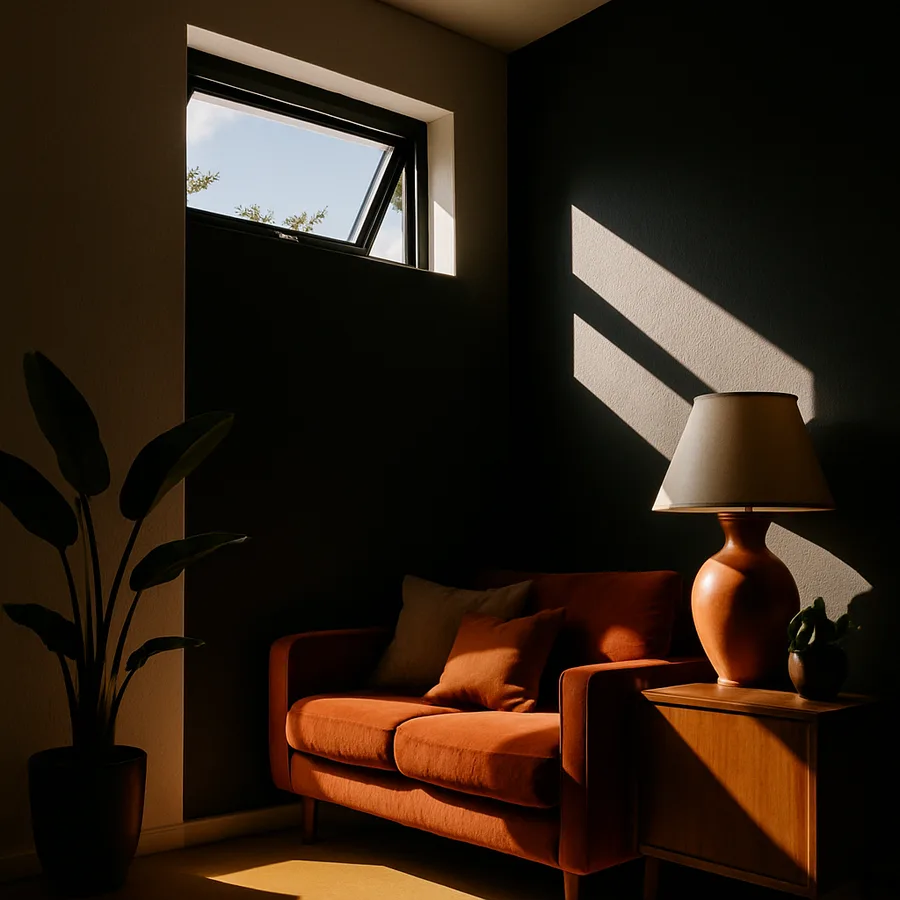
Awning windows are hinged at the top and swing outward at the bottom, which is exactly the opposite of a hopper window and quite different from a casement. The geometry produces a small canopy that lets the window stay open during light rain without water reaching the sill. That single property has made the awning window the workhorse choice for high-on-the-wall placements where designers want light and airflow without giving up privacy or wall space below for furniture, art, or cabinetry.
This article is about that specific placement strategy. Why high awnings work so well, where they fail, how to size them, what to specify, and how to integrate them with adjacent windows so the wall reads as composed rather than haphazard. Have you considered which wall in your project genuinely needs ventilation but cannot accept a window at standard sill height? Are you working in a bathroom, a bedroom that backs to a neighbor, or a stairwell where light is welcome but views are not the priority? Those rooms are exactly where this technique earns its keep.
Why High Awnings Solve a Specific Design Problem
The fundamental tension in window placement is that windows need to be high enough to admit good daylight deep into a room, low enough for views and connection to outside, and positioned to balance privacy against light. In rooms where views and connection are not priorities, but light and ventilation are, the high-window-only solution becomes attractive, and the awning operation type is the right operation for that placement.
A window mounted with its sill at 60 to 72 inches above finished floor (well above eye level for most adults) admits daylight that bounces off the ceiling and washes the upper half of the room while leaving the lower half in privacy. The room feels bright, but anyone outside the window cannot see in unless they are at exterior elevations equal to or above the window itself. That privacy effect is the reason high awnings are the default solution for ground-floor bathrooms, urban bedrooms close to neighbors, dressing rooms, and similar private spaces.
Awning operation specifically wins at this height because the outward-swinging hinge geometry creates that rain canopy. Casement windows at high mounts swing wide and require interior reach (a long crank handle or pole) to operate, while a hopper window at high mount admits rain straight onto the floor when open. Awnings open enough to ventilate without inviting weather inside, and they close securely against weatherstripping with a tight multi-point or roto-operator lock.
For privacy guidelines and ventilation rates, the ENERGY STAR windows resource discusses how operable windows contribute to whole-house ventilation strategies, and the U.S. Environmental Protection Agency has published guidance on natural ventilation as part of indoor air quality strategies.
Privacy Mathematics: Sill Height and Sightlines
Privacy is a function of sill height and the elevation of any potential viewer. For ground-floor windows, the relevant viewer is a pedestrian on a sidewalk or a neighbor at ground level on adjacent property. For second-floor windows, the relevant viewers are second-story windows on neighboring buildings. The math is simple in principle: if the sill is above the viewer's eye level, they cannot see in.
Standard adult eye height is roughly 60 to 65 inches above the surface they are standing on. For a ground-floor window, a sill at 66 inches above interior finished floor puts the bottom of the glass roughly 60 to 70 inches above the exterior grade once you account for typical floor-to-grade differentials. From a sidewalk five to ten feet away, that sill height shields all interior activity below the sill from view. Walk past your own ground-floor windows and check the actual angle; you will see that any meaningful interior tells from a passerby's eye level happen well below where a high awning window opening even begins.
For taller spaces or unusual conditions (a bathroom adjacent to a sloped lawn, for instance), draw the section. A simple sketch from the actual exterior elevation, with eye-height lines from likely viewer positions, will tell you the minimum sill height required to defeat sightlines into the private space. Have you drawn this section for your specific lot? It takes 15 minutes and prevents a window placement that looks great on paper but fails in practice.
For second-story windows, the calculation flips. You want to defeat the sightlines from neighboring upper-floor windows back into your own. This often pushes high awning sill heights up further, sometimes requiring the awning to be a clerestory band running just below the ceiling at 84 to 96 inches above floor. At that height, only ceiling reflection is visible from neighboring properties, and the privacy is essentially absolute.
Ventilation: How Much Air a High Awning Moves
High-mounted operable windows are uniquely effective at ventilation because they sit at the level where warm air collects. Hot air rises in any space, and any operable window mounted near the ceiling will exhaust that warm layer when opened, drawing replacement air in from lower openings. This stack-effect ventilation works even on still days when there is no breeze to pressurize windows from outside.
An awning window with its head near the ceiling and a bottom-pivoting opening that pushes outward becomes a high exhaust port, especially when paired with a low intake (a door, a low operable window in another room, or even a vent). In a typical 12 by 14 foot bedroom, a 3 foot wide by 1.5 foot tall awning at 72 inches sill height opened to its full angle of about 45 degrees will exchange the room's air every 20 to 30 minutes on a still day, faster with even slight breeze.
Sizing matters. Awning windows are typically wider than they are tall (because the geometry constrains how far the bottom can swing out), and a sash much taller than 24 inches becomes awkward to operate and impractical for hardware. Plan instead for several smaller awnings ganged horizontally if you need significant openable area at high mount. A continuous band of three 30-inch wide awnings, each 18 inches tall, gives you 7.5 square feet of openable area while maintaining proportions that look architectural rather than chunky.
Pair high awnings with low intake openings for best results. A door undercut or a low transom in an interior wall can serve as the intake when no other window is available. Without an intake, the high awning ventilates only the volume of air it can draw out before negative pressure stalls the flow.
Code Requirements and Egress Considerations
High awning placements often run into building code questions, particularly egress and emergency-rescue-opening requirements. Most residential codes require sleeping rooms to have at least one window meeting egress dimensions: a minimum opening height of 24 inches, minimum opening width of 20 inches, minimum net clear opening of 5.7 square feet (5.0 at grade level), and a maximum sill height of 44 inches above the finished floor.
The 44-inch maximum sill height is the killer for high awning placements in bedrooms. A 66-inch high awning cannot serve as the bedroom egress window because it is too high to climb out of in an emergency. The solution in privacy-sensitive bedrooms is to provide a separate egress window (often a casement at 30 to 36 inch sill height) somewhere else on the room's exterior wall, and use the high awnings for ventilation and daylight. The two windows together can do what a single window cannot.
Bathrooms, dressing rooms, mudrooms, mechanical rooms, stairwells, hallways, kitchens, and most non-sleeping rooms do not have the same maximum sill restriction, so high awnings can be the only operable windows in those rooms without code conflict. Always confirm with your local building code jurisdiction; the National Association of Home Builders has published numerous resources discussing how the International Residential Code is adopted with local amendments that vary the specifics by jurisdiction.
Mechanical operators are another code consideration for very high awnings. A window above 78 inches sill height requires either a long crank handle (impractical and ugly), a pole-actuated chain, or an electric motor for daily operation. Motorized awnings are increasingly common at premium price points and integrate with smart home systems, but factor the cost into the spec if you are placing windows above easy hand reach.
Weather Sealing and Detailing the Sill
Awning windows are generally good at shedding weather because of their geometry, but high placements demand careful detailing of the head flashing, the sill pan, and the surrounding cladding. Water that hits the wall above the window must be diverted around the window rather than dropped onto the head; water that runs down the glass must be channeled away by the sill rather than wicked into the framing.
The standard detail is a sill pan flashing that wraps up the rough opening sides at least 4 inches and slopes outward at the sill. Self-adhered membrane around the rough opening, properly sequenced with the building wrap, is non-negotiable on any modern installation. The American Architectural Manufacturers Association has installation standards (AAMA InstallationMasters and related publications) that detail this sequence; reputable installers follow them, and inexpensive crews often do not.
For high awnings on second-floor walls or in locations exposed to wind-driven rain, specify a window with a proven Design Pressure (DP) rating appropriate for your climate. DP30 to DP40 are typical for residential exposure; DP50 and above are appropriate for coastal or high-wind locations. Glazing should be low-emissivity insulated glass with argon fill at minimum; consider laminated glass for security or sound dampening if the window is in a privacy-sensitive room near a noise source.
Insulation around the rough opening is another weak point. A continuous bead of low-expansion foam between the window frame and the rough opening, applied after the window is shimmed and squared but before interior trim is installed, eliminates the air leakage path that often shows up in thermal images of poorly installed high windows.
Designing the Wall Composition Around High Awnings
A single high awning floating alone on a wall almost always looks awkward. The window has to be composed with adjacent windows, with wall-mounted elements (sconces, mirrors, art, cabinetry), and with the room's overall proportional logic. Three patterns work consistently well.
Continuous clerestory band. Three to seven awning windows ganged horizontally just below the ceiling, mulled into a continuous run with shared frame heights, read as an architectural band rather than a row of holes. This is the strongest move for modern bathrooms, dressing rooms, and bedrooms with privacy concerns. The band defines the upper datum of the room and brings light in evenly across the wall.
Stacked transom over a fixed window. A fixed picture window at standard view height with an operable awning transom above it provides view, ventilation, and daylight without sacrificing privacy below. This works particularly well in stairwells, bathrooms with garden views (where you want some view but want privacy at sill level), and second-floor reading nooks.
Operable awning above cabinetry. In kitchens, dressing rooms, and mudrooms, an awning placed above upper cabinets at roughly 84 inches sill height provides ventilation that exhausts cooking smells, perfume, or coats drying on a rack. The cabinetry below provides storage that the higher window allows you to reach without obstruction.
For each pattern, mock the window placement up at full scale before committing. Painter's tape on the actual wall, marking the rough opening, will reveal whether the proportions sit comfortably with adjacent elements. Plans frequently look right on paper and feel wrong in the room because adjacent fixtures, casework, or trim were not drawn to true scale.
Conclusion
High awning windows are a precise instrument for a specific design problem: rooms where privacy, daylight, and ventilation matter but views and lower-wall connection do not. When the brief calls for that combination, no other window operation type does the job as well. The outward-swinging top-hinged sash sheds rain, the high mount defeats sightlines from outside, and the multi-point seal closes tightly against weather when not in use. Bathrooms, dressing rooms, urban bedrooms, mudrooms, stairwells, and mechanical spaces all benefit from this placement strategy, and modern manufacturers offer the geometry in dozens of sizes and configurations.
The placement deserves more design attention than it usually gets. Sill height has to defeat the actual sightlines from your specific lot, not a generic textbook eye-height; window width and height have to ventilate the actual room volume; egress requirements have to be met by a separate window if the awning is in a sleeping room. Each of these is a 15-minute calculation done at the drawing stage that prevents 15 years of frustration after construction. Have you sketched the actual sightlines on a section drawing of your specific lot? That sketch is the single highest-leverage piece of design work in this category.
Quality matters more than at standard mounts because high windows are harder to reach for repair. Specify a window with a proven design pressure rating, a multi-point lock, an operator that will last 20 years, and weatherstripping that can be replaced from inside without removing the window. Ask the dealer to demonstrate the operator at full extension and listen for any binding or roughness; high windows you cannot easily reach to lubricate or repair will become silent failures within a decade if the hardware is cheap.
Cost-wise, awning windows fall in the same range as casements (typically slightly less per unit because the operator is simpler) and substantially less than bay or bow units. The total budget for a clerestory band of three to five awnings is comparable to a single large picture window of the same total area, but the functionality is dramatically different and the privacy benefit is decisive in the right room.
If your project includes a privacy-sensitive room without good window options, sketch a section through the wall right now. Mark eye height of likely viewers from outside, mark the sill height that defeats those sightlines, and then draw the awning band you would need above that line. Take that sketch to a window showroom, ask the dealer to mock the configuration with their actual products, and price it. The exercise takes a single afternoon and reveals the right window solution faster than a month of catalog browsing ever will.
More Articles You May Like



Comments
Post a Comment