Apron Sink Drain Position Centered vs Offset Choices
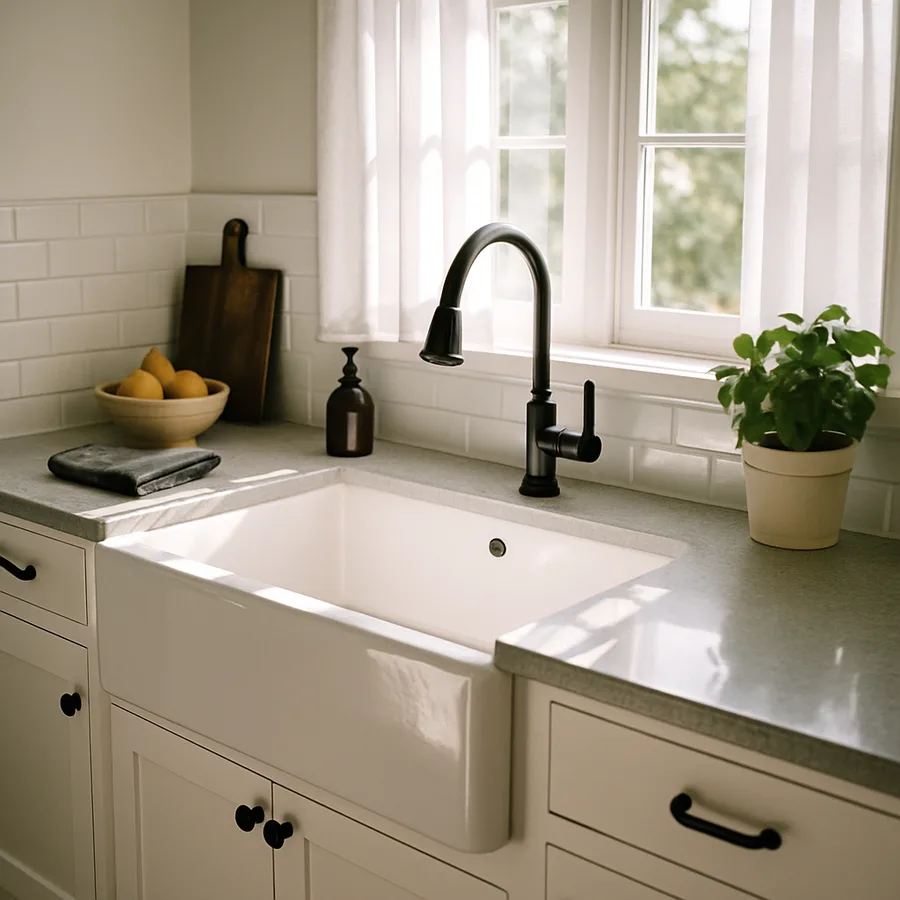
The apron-front sink, also called a farmhouse sink, has graduated from cottage kitchens into nearly every cabinetry catalog in North America. Once specified, the next decision is one that most buyers never anticipate at the showroom: where does the drain go? Manufacturers offer three main configurations, centered drain, offset drain, and rear-corner drain, and the choice has real consequences for daily usability, garbage disposal fit, plumbing routing, and resale value.
According to recent National Kitchen and Bath Association member surveys, more than 62 percent of newly specified single-bowl apron sinks in residential remodels now use a non-centered drain configuration, a sharp shift from a decade ago when centered was the default. The reason is functional. Designers and homeowners discovered that drain placement is one of the cheapest ways to dramatically improve a sink's daily ergonomics without changing the cabinet, the faucet, or the plumbing rough-in significantly.
What Drain Position Actually Means
The phrase "drain position" describes where the strainer opening is located within the basin, viewed from above. A centered drain sits exactly in the middle of the basin, equidistant from front, back, and both sides. An offset drain is moved off-center toward the rear, the side, or the rear corner of the basin. The most popular offset position in modern designs is rear-left or rear-right, which leaves the front and opposite-side basin floor clear for stacking dishes, soaking pots, or working over the basin without obstruction.
Drain position is not the same as basin slope. A well-designed apron sink slopes the basin floor toward the drain regardless of where the drain is, so water still evacuates fully. The slope is engineered into the sink itself by the manufacturer, and a quality sink will drain completely whether the drain is centered or offset, with no standing water remaining. A cheaply made sink may pool water in the corners regardless of drain position, which is a manufacturing defect rather than a design choice.
Industry references for sink performance, including the International Association of Plumbing and Mechanical Officials certification under the IAPMO Uniform Plumbing Code, focus mostly on drain size and water-flow standards rather than drain position, leaving placement decisions to the homeowner and designer. That makes drain position one of the few sink decisions that is purely about function and aesthetics rather than code compliance.
The Case for a Centered Drain
Centered drains have been the default for so long because they offer real advantages, especially in double-bowl sinks and in installations with limited cabinet depth. The centered position keeps the drain pipe rough-in directly behind the sink center, which simplifies rough plumbing for new construction and matches how most existing homes are already plumbed.
For households that frequently fill the basin with water, either to wash large items or to soak cookware, a centered drain creates symmetric water depth, which can be useful when fitting tall pots that need to be fully submerged. Centered drains also tend to be slightly less expensive at the manufacturer level because the basin tooling is simpler, although the price difference at retail is often negligible compared to the cost of the sink itself.
From a resale perspective, centered drains read as traditional and conservative, which can be an asset in higher-end markets where buyers expect a classic farmhouse aesthetic. They are also the safer choice for rental properties or flips where a wide range of future occupants will use the kitchen, because no cooking style is favored or penalized by the drain position. Have you considered how your kitchen is actually used day-to-day, and whether centered would slow you down or help?
The Case for an Offset Drain
Offset drains have gained popularity precisely because they make the sink more useful in real cooking workflows. With the drain pushed to the rear-corner of the basin, the front and opposite-side basin floor become a flat, clear work surface inside the sink. That space can be used to stack rinsed dishes while washing, park a colander over the drain side without blocking water flow, or set down a cutting board across the basin to extend the prep counter.
The same offset position also improves garbage disposal fit in cabinets where vertical clearance is tight. Because the disposal hangs directly below the drain, moving the drain rearward gives the disposal more clearance from the cabinet floor and from any drawers or pull-outs installed in the sink base cabinet. This matters increasingly in modern kitchens where homeowners want pull-out trash bins, recycling drawers, or cleaning supply organizers in the sink cabinet.
Plumbing routing is another quiet advantage. A rear-offset drain places the P-trap closer to the back of the cabinet where it interferes least with under-sink storage. The American Society of Interior Designers resources frequently note that under-sink usability is one of the most under-considered aspects of kitchen design, and drain position is one of the cheapest interventions to improve it.
Garbage Disposal and Plumbing Considerations
Drain position affects both the type of disposal that fits and the way the entire drain assembly is plumbed. A standard 3/4 horsepower garbage disposal typically extends about 13 to 15 inches below the drain flange, and that vertical envelope must clear the cabinet floor with room for the discharge tube to angle into the wall drain.
In a centered drain configuration, the disposal hangs in the middle of the cabinet, which can interfere with center-mounted pull-outs and trash bins. In a rear-offset drain configuration, the disposal hangs at the back of the cabinet against the wall, leaving the center and front of the cabinet clear. For homeowners installing a trash pull-out or spice pull-out in the sink base, this difference can be the difference between a functional cabinet and a cabinet that looks great but cannot fit the accessory.
The drain itself must comply with applicable plumbing codes, which in most North American jurisdictions follow either the Uniform Plumbing Code published by IAPMO or the International Plumbing Code published by the International Code Council. Both require a minimum 1.5-inch drain line for kitchen sinks, a P-trap within 24 inches of the drain, and proper venting to prevent siphoning. Drain position does not change any of these requirements, but it does change the routing of the trap and the practical layout of the drain line inside the cabinet.
Sink Bowl Configuration and Workflow
Drain position should respond to bowl configuration, which is the other major sink decision homeowners face. A single-bowl apron sink with a deep, wide basin almost always benefits from a rear-corner offset drain because it maximizes the usable flat work surface inside the basin. A 50/50 double-bowl apron sink generally uses two centered drains, one in each bowl, because the bowls are too narrow to benefit much from offsets.
A 60/40 double-bowl apron sink, which has one larger basin and one smaller basin, is the most flexible configuration. The larger basin typically gets an offset drain to maximize its work surface, while the smaller basin gets a centered drain because there is no advantage to offsetting in a narrow basin.
Workflow matters more than spec sheets in this decision. Households that wash a lot of large cookware, cast iron, sheet pans, and stockpots tend to prefer the offset configuration because it gives them more room to maneuver large items. Households that primarily rinse small items, fill water glasses, and use the sink as a quick rinse station will be perfectly happy with a centered drain. Have you watched yourself work at the sink for a week to see what you actually do there?
Resale Value and Long-Term Considerations
From a real estate standpoint, drain position is a niche detail that most buyers will not consciously notice but will subconsciously feel during a home tour. A sink that feels easy to use during a five-minute walkthrough tends to leave a positive impression, and offset drains tend to score better on that intuitive test because the basin reads as more spacious and more functional.
Replacement and repair are essentially identical regardless of drain position. Strainers, baskets, P-traps, and disposals are all standardized to the drain opening, not to its position in the basin, so any standard plumbing part will fit any drain location. The only repair scenario where position matters is if the entire sink needs to be replaced and the new sink has a different drain location than the old one, which can require minor plumbing adjustments under the cabinet.
Cost differential between centered and offset drain configurations from major manufacturers is typically under 10 percent at retail, and is often zero on premium lines where multiple drain positions are offered as standard options. Given the small price difference and the potentially significant usability difference, the recommendation in most modern kitchens is to choose the drain position that matches the workflow rather than defaulting to whichever costs slightly less. Useful technical references for sink and drain specification are available from NKBA and from the International Association of Plumbing and Mechanical Officials.
Conclusion
Apron sink drain position has shifted from an afterthought to one of the most consequential small decisions in modern kitchen design. The shift toward offset drains is not a fashion trend, it is a recognition that modern cooking workflows favor maximum usable basin space and maximum cabinet flexibility, and offset drains deliver both at minimal cost premium.
The right answer for any specific kitchen depends on three things: bowl configuration, primary cooking workflow, and cabinet utilization plans. A single-bowl apron sink with deep basin in a serious cook's kitchen almost always benefits from a rear-corner offset drain. A double-bowl sink in a smaller kitchen often does fine with centered drains. A budget-driven flip or rental will not be hurt by either choice and might lean centered for the slight cost saving and traditional read.
What matters most is making the choice deliberately. Drain position is one of those details that gets defaulted in spec sheets, then lived with for fifteen years, then noticed every time the homeowner washes a large pan and the disposal opening sits exactly where they want to put the pan down. The five minutes of conversation at the showroom is the cheapest moment in the project to get this right, and the most expensive moment to get it wrong.
If you are specifying a new apron sink, the recommended next step is to talk through your typical cooking and cleaning workflow with your designer or sink supplier before committing to a configuration. Ask specifically about the trash and recycling pull-out you plan to install, the size of cookware you wash most often, and whether you plan to use the sink for filling tall vases or buckets. The drain position that emerges from that conversation, rather than from the catalog default, is the one you will be glad you chose every single day.
Beyond the drain itself, the broader sink decision should also account for basin depth, basin material, and faucet reach, all of which interact with drain position to define the sink's daily ergonomics. A deep basin with a centered drain may feel awkward for shorter cooks, while a shallower basin with an offset drain can feel ideal for the same person. Faucet reach must extend far enough to direct water flow over the drain regardless of position, which is rarely an issue with offset drains but can constrain centered-drain installations with very wide basins. Walking through these interlocking choices with your kitchen designer or supplier in a single sitting, rather than choosing each variable in isolation, produces noticeably better outcomes than treating drain position as a checkbox at the end of the order form.
Finally, take the time to think about accessory compatibility. Many premium apron sinks are sold with optional cutting boards, colanders, drying racks, and trivets that fit precisely across or inside the basin. These accessories almost always assume a specific drain position, and using them with a non-matching configuration can be awkward or impossible. If you intend to use a custom-fit cutting board across the sink, confirm at order time that the accessory is sized for the drain position you have selected. The same applies to bottom grids that protect the basin floor, which are often offered in centered or offset versions to match the drain placement. A small spec-sheet check at order time prevents months of frustration once the sink is installed and accessories arrive that simply do not fit the way the catalog photos suggested they would.
More Articles You May Like


Comments
Post a Comment